


Engineering Guide to Metal Mesh Filters for Industrial Piping Systems
In industrial fluid handling, the integrity of downstream equipment—such as high-pressure pumps, control valves, flow meters, and spray nozzles—depends heavily on the removal of particulate contaminants. A metal mesh filter for pipe systems serves as the primary line of defense, providing a robust, heat-resistant, and cleanable solution for liquid and gas filtration. Unlike disposable polymer filters, stainless steel wire mesh components offer structural stability and chemical compatibility required in sectors ranging from chemical processing to food and beverage production.
Selecting the correct filtration component requires a deep understanding of fluid dynamics, material science, and mechanical design. This guide examines the technical specifications and engineering considerations for Wire Mesh Filter Cylinders & Tubes, helping technical professionals optimize their filtration performance and reduce the total cost of ownership.
Understanding the Function of Metal Mesh Filters in Pipe Networks
The primary role of a metal mesh filter within a piping circuit is to intercept solids while maintaining a manageable pressure drop. These filters are typically integrated into the flow path to capture scale, sediment, or process-generated debris. Because they are constructed from metallic alloys, they can withstand extreme temperatures and corrosive environments that would cause synthetic media to fail.
In many B2B industrial applications, these filters are utilized as "last chance" filters or as primary strainers in recirculating systems. The choice of a mesh-based solution is often driven by the need for a reusable medium. By specifying a stainless steel metal mesh filter for pipe applications, engineers ensure that the filtration system can be cleaned through backwashing or ultrasonic treatment, significantly reducing waste and operational downtime compared to cartridge-swapping protocols.
Material Selection and Chemical Compatibility
The performance of a pipe filter is fundamentally limited by its material of construction. Industrial environments often involve aggressive chemicals, high-salinity fluids, or strict hygienic requirements.
Stainless Steel 304 vs. 316L
Stainless steel is the industry standard due to its mechanical strength and oxidation resistance.
- SS304: Suitable for general industrial use, water treatment, and mild chemical applications. It provides excellent structural integrity at a lower cost point.
- SS316L: The "L" denotes low carbon, which improves weldability and resistance to intergranular corrosion. This alloy contains molybdenum, making it the preferred choice for pharmaceutical, food and beverage, and marine environments where chloride-induced pitting is a risk.
Specialized Alloys
For extreme environments involving high concentrations of acids or high-temperature oxidation, specialized alloys like Monel, Inconel, or Hastelloy may be used. These materials ensure that the filter mesh does not become a source of contamination through corrosion or structural degradation.
Key Technical Specifications: Micron Rating and Mesh Count
When specifying Wire Mesh Filter Cylinders & Tubes, the two most critical metrics are the mesh count and the micron rating. These determine the filtration efficiency and the size of particles that will be retained.
Mesh Count
Mesh count refers to the number of openings per linear inch. A higher mesh count indicates a finer weave with smaller openings. However, mesh count alone does not define filtration accuracy, as the wire diameter also influences the size of the aperture. Engineers must consider the "open area percentage," which dictates the flow capacity and initial pressure drop across the filter.
Micron Rating: Nominal vs. Absolute
- Nominal Rating: This indicates the filter's ability to retain a majority of particles of a specified size (usually 60% to 90%). It is an estimate based on the pore size but does not guarantee 100% retention.
- Absolute Rating: This refers to the diameter of the largest hard spherical particle that will pass through the filter under specific test conditions. For critical applications, such as protecting precision nozzles in a chemical reactor, an absolute rating is necessary to prevent bypass.
Structural Design: Cylinders, Tubes, and Reinforcement
A metal mesh filter for pipe must be designed to withstand the mechanical stresses of the flow, including hydraulic shocks and the pressure buildup that occurs as the filter becomes loaded with contaminants.
Single-Layer vs. Multi-Layer Construction
Single-layer mesh cylinders are cost-effective for coarse filtration or low-pressure applications. However, for finer filtration (below 100 microns), the mesh becomes delicate. In these cases, multi-layer sintered mesh is utilized. Sintering bonds multiple layers of wire cloth together through heat and pressure, creating a composite material that combines fine filtration layers with heavy-duty support layers. This results in a filter tube that is both precise and structurally rigid.
Internal and External Support
To prevent the mesh from collapsing or bursting under high differential pressure, filter cylinders often incorporate a perforated metal core or an external cage. This reinforcement allows the filter to handle high flow velocities and ensures that the mesh remains properly aligned within the pipe housing.
Hydraulic Performance and Pressure Drop
One of the most common mistakes in filter selection is undersizing the component, which leads to excessive pressure drop ($ΔP$) and frequent cleaning cycles. The clean pressure drop is a function of the fluid's viscosity, flow velocity, and the filter's effective open area.
Engineers should aim for a design where the initial pressure drop does not exceed 2-3 PSI (0.14-0.21 bar). As the metal mesh filter for pipe captures debris, the effective open area decreases, and the $ΔP$ increases exponentially. Monitoring this differential pressure is the standard method for determining when a filter requires cleaning. If the pressure drop exceeds the structural limit of the mesh (the collapse pressure), the filter may deform, allowing unfiltered fluid to bypass the system.
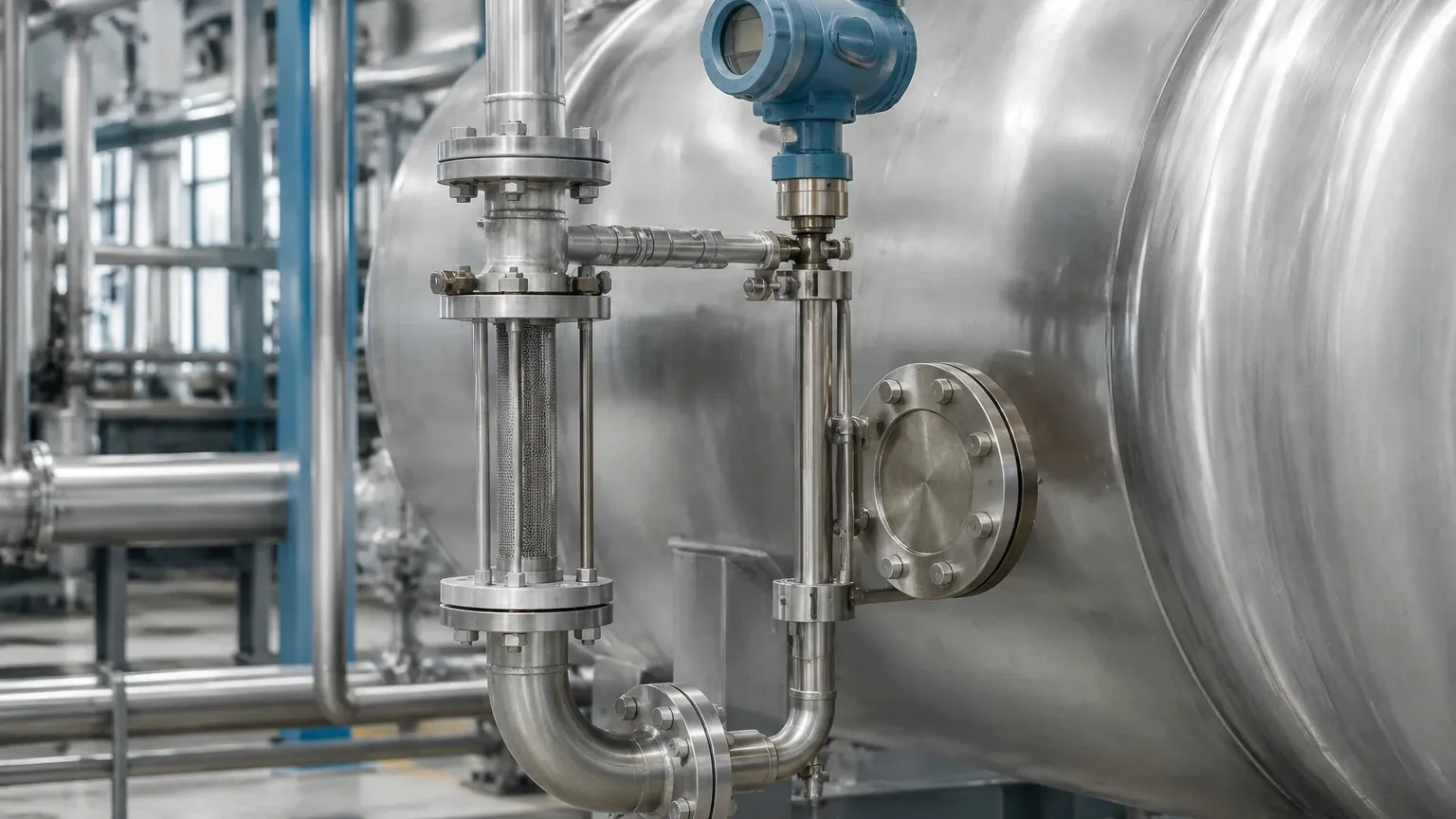
Installation Configurations for Piping Systems
How a filter is integrated into a pipe determines its ease of maintenance and its impact on the system's footprint. Common configurations include:
1. Inline Basket Filters: The filter cylinder is housed in a vessel where the flow enters the center of the cylinder and exits through the mesh. This "inside-out" flow pattern traps debris within the basket, making it easy to remove and clean.
2. Conical (Witch’s Hat) Strainers: These are temporary or permanent filters installed between flanges. They are often used during system start-up to capture construction debris.
3. T-Type and Y-Type Strainers: These utilize a mesh tube inserted into a branch of the pipe. They allow for cleaning without completely dismantling the main piping run.
4. Custom Cartridges: For OEM equipment, Wire Mesh Filter Cylinders & Tubes can be designed with specific end-fittings (threaded, flanged, or O-ring seals) to fit proprietary housings.
Maintenance, Cleaning, and Service Life
The primary advantage of a metal mesh filter is its longevity. Unlike disposable media, stainless steel filters can be restored to near-original performance through several cleaning methods:
* Backwashing: Reversing the flow of the fluid to dislodge particles from the surface of the mesh. This is often automated in continuous process industries.
* Ultrasonic Cleaning: Using high-frequency sound waves in a cleaning solvent to remove fine particles trapped within the weave of the mesh. This is highly effective for sintered multi-layer filters.
* Chemical Cleaning: Using acids or alkalis to dissolve organic or mineral deposits that have scaled onto the metal surface.
Regular maintenance prevents "blinding," where particles become permanently wedged in the mesh openings. A well-maintained stainless steel filter can last for several years, providing a significantly lower total cost of ownership than polymer alternatives.
Procurement Checklist: Information for International Buyers
When sourcing a metal mesh filter for pipe applications from a manufacturer like Kaifil, providing detailed technical requirements is essential for ensuring the product meets the application's demands. Buyers should confirm the following parameters:
* Fluid Characteristics: What is the fluid (water, oil, acid, gas)? What is its viscosity at operating temperature?
* Operating Temperature and Pressure: What are the normal and maximum limits? This dictates the material grade and the need for reinforcement.
* Filtration Target: What is the specific micron rating required? Is it nominal or absolute?
* Flow Rate: What is the maximum volume of fluid passing through the filter per minute? This determines the required surface area.
* Contaminant Load: Is the fluid heavily contaminated or relatively clean? High loads require larger filter surface areas or pleated designs to extend the time between cleanings.
* Connection Standards: Does the filter need to interface with NPT threads, BSP, or specific flange standards (ANSI, DIN, JIS)?
Conclusion
Specifying the right Wire Mesh Filter Cylinders & Tubes is a balance between filtration precision, mechanical durability, and hydraulic efficiency. By selecting high-grade materials like 316L stainless steel and employing reinforced structural designs, engineers can ensure reliable protection for their industrial piping systems. Whether the application involves high-pressure hydraulics or hygienic food processing, a custom-engineered metal mesh filter provides the performance and longevity required for demanding B2B industrial environments.
