


Coffee Filter Packs 12 Cup
In the commercial beverage industry, the consistency and quality of the final product depend heavily on the precision of the filtration components used during the brewing and processing stages. While consumer-grade brewing often relies on disposable paper, industrial and high-volume commercial applications—specifically those utilizing standard sizes like coffee filter packs 12 cup—increasingly turn to advanced metal filtration solutions. For engineers and procurement specialists in the food and beverage sector, understanding the technical nuances of these components is essential for optimizing flavor profiles, ensuring equipment longevity, and maintaining high throughput.
Industrial coffee filtration is not merely about separating solids from liquids; it is a complex engineering challenge involving fluid dynamics, thermal stability, and material science. Stainless steel Filter Discs & Packs have become the gold standard for these applications due to their durability and the precision they offer in controlling sediment and oils.
Understanding Coffee Filter Packs 12 Cup in Commercial Environments
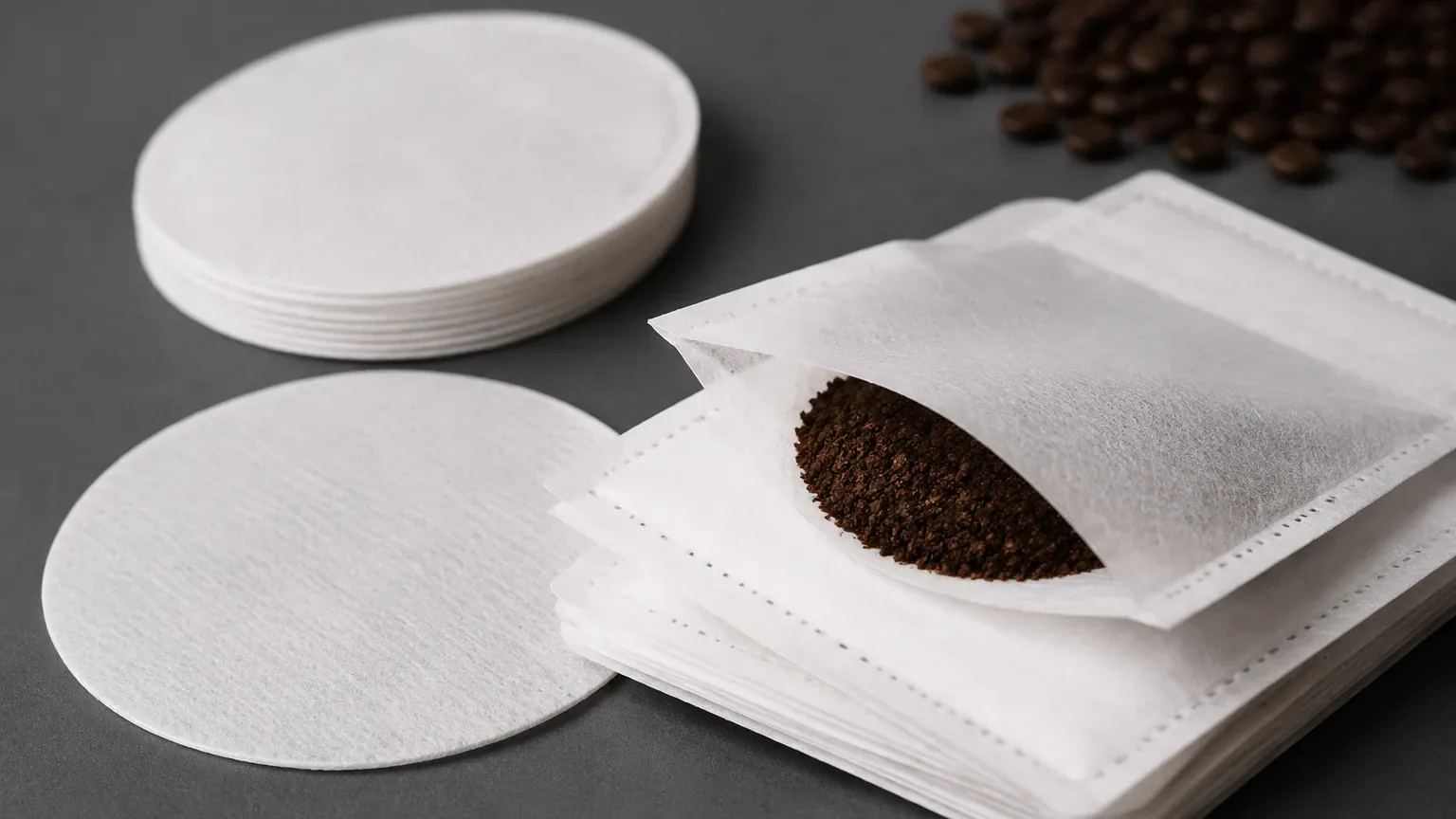
The term "12 cup" refers to a standard capacity for commercial drip brewers common in hospitality, office environments, and small-scale food service operations. In these settings, the choice of filtration media directly impacts the total cost of ownership (TCO) and the sensory quality of the beverage. While traditional paper coffee filter packs 12 cup are convenient for low-volume use, they present several challenges in a professional B2B context.
Paper filters can absorb essential oils, altering the intended flavor profile of specialty beans. Furthermore, they generate significant waste and require constant restocking. In contrast, stainless steel filter discs designed for these dimensions provide a permanent, sustainable alternative. These metal components are engineered to fit precisely within the filter basket, ensuring that water flow is uniform across the coffee bed. This uniformity prevents "channeling," a common brewing defect where water finds the path of least resistance, leading to uneven extraction and a bitter or sour taste.
For large-scale industrial coffee processing, such as the production of cold brew concentrates or instant coffee extracts, the scale of filtration moves beyond the simple 12-cup basket. Here, multi-layered filter packs are utilized to handle higher pressures and flow rates while maintaining the same level of precision required for a high-quality beverage.
Material Engineering: Stainless Steel vs. Traditional Media
When evaluating filtration solutions for coffee and other food-grade liquids, material selection is the most critical factor. Industrial filtration components are typically manufactured from 304 or 316L stainless steel. These alloys are preferred for several technical reasons:
1. Corrosion Resistance: Coffee is naturally acidic. Stainless steel 316L, containing molybdenum, offers superior resistance to pitting and crevice corrosion, which is vital for components that are frequently exposed to acidic liquids and high-temperature cleaning cycles.
2. Thermal Stability: Industrial brewing often involves temperatures near the boiling point. Unlike synthetic or paper media, stainless steel Filter Discs & Packs do not degrade or release particulates when exposed to thermal stress.
3. Mechanical Strength: In high-pressure extraction systems, the filter media must withstand significant differential pressure without deforming. Metal wire mesh provides the structural integrity necessary to maintain its shape and filtration accuracy under load.
4. Food Safety Compliance: Stainless steel is non-reactive and easy to sanitize, meeting the stringent requirements of the FDA and other global food safety standards.
By moving away from disposable coffee filter packs 12 cup and toward permanent metal filtration, facilities can achieve more predictable results. The fixed pore size of a precision-woven wire mesh ensures that the particle retention remains constant over thousands of cycles, something that is difficult to achieve with the variable fiber density of paper.
Technical Specifications of Filter Discs & Packs
For engineers designing or maintaining brewing equipment, the technical specifications of Filter Discs & Packs determine the efficiency of the system. These components are rarely single layers of mesh; instead, they are often sophisticated multi-layer assemblies designed for specific performance targets.
Layer Configuration
Industrial filter packs often consist of a filtration layer, a support layer, and a drainage layer. The filtration layer (the finest mesh) determines the micron rating, while the support layers provide the necessary rigidity to prevent the fine mesh from collapsing under pressure. These layers are often spot-welded or rimmed with a metal edge to ensure the assembly remains intact during operation and cleaning.
Micron Ratings and Mesh Types
In coffee filtration, the micron rating typically ranges from 20 to 100 microns, depending on the desired clarity of the beverage. A finer mesh (lower micron rating) will remove more sediment and oils, resulting in a cleaner, lighter body. A coarser mesh allows more oils to pass through, which is often preferred for full-bodied brews like French press or certain commercial espresso-style extractions.
Common weave patterns include:
* Plain Weave: The most standard weave, offering high flow rates and easy cleaning.
* Dutch Weave: A denser weave that provides higher strength and finer filtration, often used in high-pressure applications.
* Twilled Weave: Allows for a heavier wire diameter in a given mesh count, increasing the durability of the disc.
Performance Factors in Large-Scale Beverage Filtration
When scaling up from a standard coffee filter packs 12 cup size to industrial processing, several performance factors must be monitored to ensure system efficiency.
Flow Rate and Pressure Drop
The "clean pressure drop" is the initial resistance the filter offers to the fluid flow. As particulates accumulate on the surface of the filter (forming a "filter cake"), the pressure drop increases. In a B2B environment, it is essential to select a filter disc that balances filtration fineness with an acceptable flow rate. If the mesh is too fine, the system will require frequent cleaning, leading to excessive downtime. If it is too coarse, the final product quality will suffer.
Effective Filtration Area (EFA)
The EFA is the total surface area of the mesh available for filtration. In custom-designed Filter Discs & Packs, maximizing the EFA within a confined space—such as a 12-cup brewing basket or a large industrial housing—is key to extending the time between maintenance cycles. Pleated designs or multi-disc stacks are often used in industrial settings to increase the EFA without increasing the overall footprint of the equipment.
Maintenance and Longevity of Industrial Filter Components
One of the primary advantages of stainless steel filtration over disposable coffee filter packs 12 cup is the ability to clean and reuse the components. However, to maintain optimal performance, a structured maintenance protocol is required.
Cleaning Methods
* Backwashing: Reversing the flow of fluid through the filter to dislodge accumulated particles. This is common in automated industrial systems.
* Ultrasonic Cleaning: Using high-frequency sound waves in a cleaning solution to remove microscopic debris from the mesh pores. This is the most effective method for restoring a filter disc to its original flow characteristics.
* Chemical Cleaning: Using food-grade caustic or acidic solutions to dissolve organic buildups, such as coffee oils and proteins.
Replacement Cycles
While stainless steel filters are designed for long-term use, they are not infinite. Mechanical wear, repeated thermal cycling, and accidental damage during handling will eventually necessitate replacement. Engineers should monitor the pressure drop across the filter; when the "dirty" pressure drop can no longer be reduced through standard cleaning, the filter has reached the end of its functional life. In most commercial beverage applications, a well-maintained stainless steel filter pack can last several years, providing a significant return on investment compared to daily paper filter usage.
Selection Criteria for Custom Filtration Solutions
When sourcing Filter Discs & Packs for new equipment or as replacement parts for existing systems, procurement teams should confirm several key details with their manufacturer to ensure compatibility and performance.
1. Dimensional Accuracy: For components like coffee filter packs 12 cup, the outer diameter (OD) must be precise to prevent bypass. Even a millimeter of clearance can allow unfiltered liquid to bypass the media.
2. Edge Treatment: Should the disc be plain, spot-welded, or bound with a metal rim? Rimming provides extra strength and prevents fraying of the wire mesh, which is critical in food-safe environments to prevent wire fragments from entering the product stream.
3. Micron Rating Verification: Ensure the manufacturer provides certified micron ratings based on bubble point testing or other standardized methods to guarantee the filtration precision required for your specific coffee grind size.
4. Customization Requirements: Many industrial applications require unique shapes or multi-stage filtration. Working with a manufacturer that offers OEM services allows for the development of bespoke filter packs that fit non-standard brewing housings or specialized extraction vessels.
Conclusion
In the professional beverage industry, the transition from disposable coffee filter packs 12 cup to engineered stainless steel Filter Discs & Packs represents a shift toward precision, sustainability, and long-term cost efficiency. By understanding the technical properties of wire mesh—from alloy selection to weave patterns and maintenance requirements—engineers can significantly improve the reliability of their filtration processes. Whether you are managing a high-volume commercial kitchen or a large-scale industrial coffee extraction plant, selecting the right metal filtration components is a fundamental step in achieving consistent, high-quality results.
