


Technical Engineering Guide to Metal Mesh Grease Filter 385.5 x 173 mm
In industrial ventilation and food processing environments, the management of airborne grease and oil mist is a critical safety and operational requirement. The metal mesh grease filter 385.5 x 173 mm represents a specialized component designed to capture particulate matter before it enters exhaust ductwork. This prevents the accumulation of flammable residues and protects downstream equipment such as fans, heat exchangers, and sensors.
For engineers and procurement professionals, selecting the correct filtration media involves more than matching dimensions. It requires an understanding of fluid dynamics, material science, and the specific mechanical requirements of the extraction system. This article examines the technical specifications, performance variables, and engineering considerations associated with high-performance metal mesh filters.
The Engineering Principles of Grease Filtration
Metal mesh grease filters operate primarily through the principle of mechanical impingement. Unlike membrane filters that rely on sieving, grease filters utilize multiple layers of woven or knitted wire mesh to create a tortuous path for the airflow.
As grease-laden air passes through the filter, the rapid changes in direction force heavier grease particles to lose momentum and collide with the metal surfaces. Once these particles strike the wire, they adhere to the surface and coalesce into larger droplets. These droplets eventually drain into a collection trough or remain trapped within the mesh structure until cleaned.
Multi-Layer Mesh Configuration
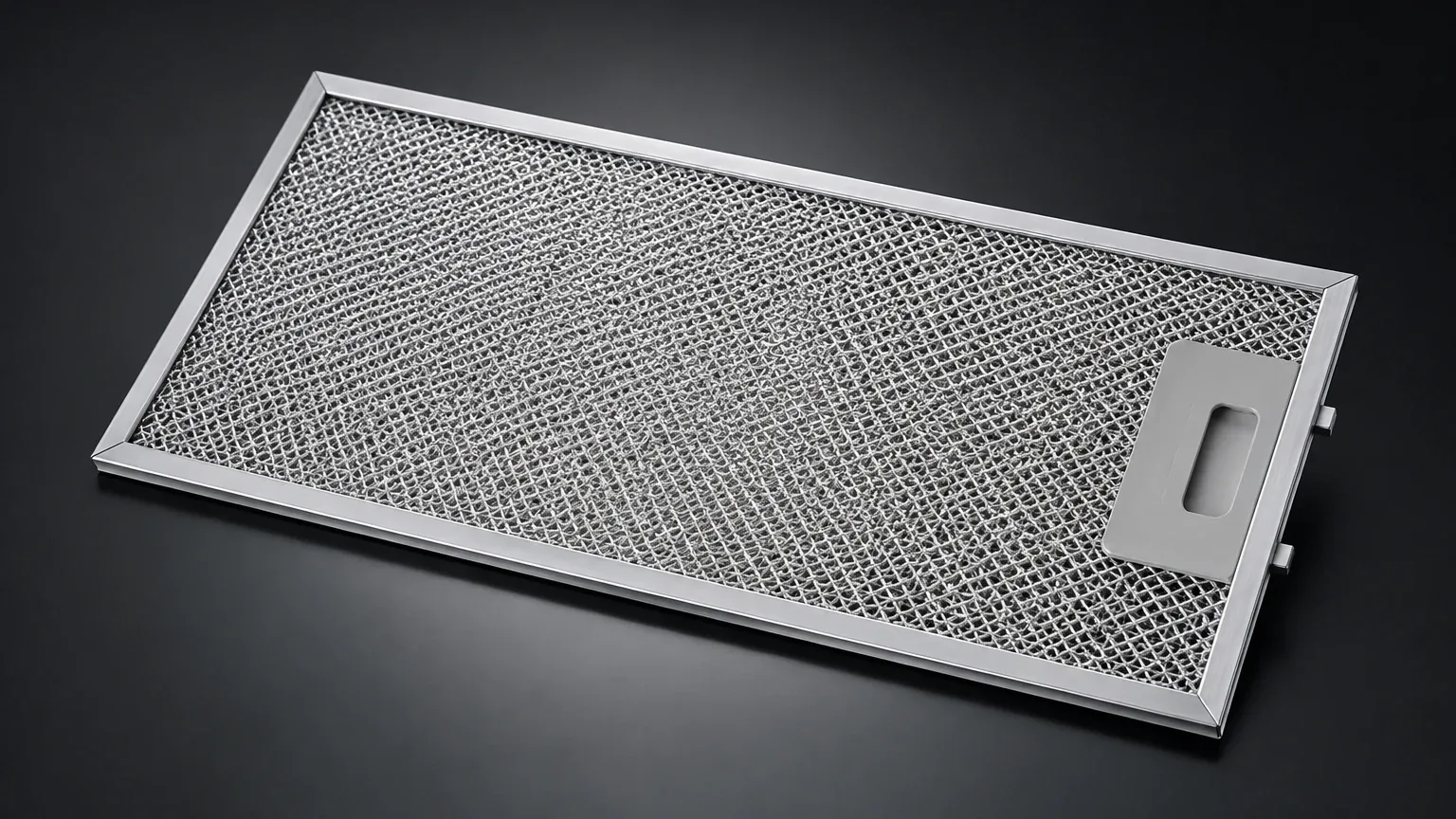
The effectiveness of a metal mesh grease filter 385.5 x 173 mm is largely determined by its internal architecture. Most industrial-grade filters utilize between 3 and 7 layers of mesh. These layers may be graduated in density—coarser mesh on the intake side to capture large droplets and finer mesh on the exhaust side to trap smaller aerosols. This depth-loading capability ensures that the filter does not clog prematurely, maintaining a stable pressure drop over a longer operational cycle.
Material Selection: Stainless Steel vs. Aluminum
When specifying a filter for industrial applications, material selection is the primary determinant of longevity and chemical resistance. While aluminum is lightweight and cost-effective for light-duty commercial use, industrial environments typically demand stainless steel.
1. Stainless Steel (Grade 304 or 316): These materials offer superior resistance to corrosion, especially in environments where acidic or alkaline cleaning agents are used. Stainless steel also withstands higher operating temperatures without losing structural integrity, making it the standard for heavy-duty industrial kitchens and chemical processing plants.
2. Aluminum: Suitable for applications where weight is a primary concern and the environment is non-corrosive. However, aluminum is susceptible to pitting and degradation when exposed to the harsh caustic chemicals often found in industrial degreasers.
3. Galvanized Steel: Occasionally used as a mid-range option, though it lacks the long-term durability of stainless steel in high-moisture environments.
For specialized industrial scrubbers or high-pressure systems, engineers may also consider Wire Mesh Filter Cylinders & Tubes which offer high structural rigidity and are often integrated into larger filtration assemblies where flat panels like the 385.5 x 173 mm format are not applicable.
Technical Specifications of the 385.5 x 173 mm Format
The dimensions 385.5 x 173 mm are precise. In industrial extraction systems, even a 1 mm deviation in size can lead to "air bypass," where untreated air flows around the filter rather than through it. This bypass significantly reduces the efficiency of the entire ventilation system and leads to grease buildup in inaccessible duct areas.
Frame Design and Sealing
The frame of the filter must be robust enough to withstand repeated handling and high-pressure cleaning. A typical high-quality metal mesh grease filter 385.5 x 173 mm features a roll-formed or mitered frame with integrated drainage holes. These holes are essential for allowing captured oils to migrate to the system's grease tray, preventing the filter from becoming a fire hazard due to excessive saturation.
Pressure Drop and Face Velocity
Engineers must calculate the pressure drop (resistance) the filter introduces to the system. A filter that is too dense will capture more grease but will require a more powerful (and energy-consuming) fan to maintain the required Air Changes Per Hour (ACH). Conversely, a filter with too low a resistance may allow fine grease particles to pass through.
Standard industrial face velocities typically range from 1.5 m/s to 2.5 m/s. Within this range, the 385.5 x 173 mm filter must provide a balance between capture efficiency and static pressure to ensure the ventilation system operates within its designed curve.
Performance Metrics and Selection Criteria
When evaluating a metal mesh grease filter 385.5 x 173 mm for a specific project, B2B buyers should request data on the following performance metrics:
* Grease Extraction Efficiency: Often rated as a percentage of grease by weight removed from the air stream at a specific flow rate.
* Dust Holding Capacity: Although primarily for grease, these filters also capture airborne dust. Knowing the capacity helps in determining maintenance intervals.
* Temperature Rating: For applications involving high-heat processes, the filter must be rated to withstand temperatures that could exceed 200°C without warping or mesh separation.
* Flame Barrier Performance: In many jurisdictions, grease filters must act as a flame barrier to prevent a cooktop fire from entering the exhaust plenum.
Customization and Industrial Integration
While the 385.5 x 173 mm is a standard size for many modular hood systems, industrial applications often require bespoke filtration solutions. Manufacturers like Kaifil provide extensive OEM capabilities, allowing for the customization of mesh density, layer count, and frame thickness.
In some complex industrial scrubbers, flat panels are replaced by Wire Mesh Filter Cylinders & Tubes to increase the surface area within a compact footprint. This is particularly common in hydraulic systems or high-volume chemical mist eliminators where radial flow is preferred over axial flow.
Application Risks to Consider
Failure to specify the correct filter can lead to several industrial risks:
1. Fire Hazards: Inadequate grease capture leads to buildup in ducts, which is the leading cause of fires in food processing facilities.
2. Equipment Failure: Grease accumulation on fan blades causes imbalances, leading to vibration, bearing wear, and eventual motor failure.
3. Environmental Non-Compliance: Many regions have strict regulations regarding the emission of VOCs and grease particles into the atmosphere. High-efficiency metal mesh filters are the first line of defense in meeting these standards.
Maintenance and Total Cost of Ownership (TCO)
One of the primary advantages of metal mesh filters over disposable media is their reusability. However, the TCO is heavily influenced by the ease of cleaning.
Cleaning Protocols
For a metal mesh grease filter 385.5 x 173 mm to maintain its performance, it must be cleaned regularly. In high-volume industrial settings, this usually involves:
* Caustic Soaking: Submerging filters in a tank with industrial degreasers.
* Ultrasonic Cleaning: Using high-frequency sound waves in a solvent bath to dislodge grease from the inner layers of the mesh.
* High-Pressure Washing: Effective for surface grease but must be done carefully to avoid damaging the delicate mesh layers.
Replacement Cycles
While stainless steel filters are durable, they are not infinite. Over years of service and dozens of cleaning cycles, the mesh may begin to fray or the frame may warp. Engineers should inspect filters for "channeling"—areas where the mesh has thinned or separated, allowing air to pass through unfiltered. A well-maintained stainless steel filter in a B2B environment can last 3 to 5 years, significantly reducing the long-term cost compared to aluminum or disposable alternatives.
Conclusion for Technical Buyers
Selecting a metal mesh grease filter 385.5 x 173 mm requires a technical approach that considers material durability, filtration efficiency, and system compatibility. By prioritizing high-grade stainless steel and verified mesh configurations, facilities can ensure optimal airflow, reduce fire risks, and protect expensive downstream ventilation components.
For applications requiring non-standard geometries or high-pressure resistance, exploring specialized components like Wire Mesh Filter Cylinders & Tubes provides the engineering flexibility needed for complex industrial filtration challenges. Whether for a standard exhaust hood or a custom industrial mist eliminator, the precision of the filter's construction remains the most critical factor in operational success.
