


Engineering Guide to Metal Mesh Grease Filters: Performance, Selection, and Industrial Applications
In industrial and high-end commercial kitchen environments, the management of airborne grease is a critical factor for fire safety, equipment longevity, and air quality. The metal mesh grease filter is the primary line of defense in extraction systems, designed to capture grease particles before they enter the ductwork. While many users seek specific replacements such as a metal mesh grease filter neff for high-end appliances, the engineering principles governing these components are universal across industrial filtration. Understanding the material science, mechanical design, and airflow dynamics of these filters is essential for engineers and facility managers tasked with maintaining efficient ventilation systems.
The Mechanics of Grease Impingement Filtration
Unlike HEPA filters that rely on diffusion or interception for fine particulate matter, metal mesh grease filters operate primarily on the principle of impingement. As grease-laden air is drawn through the filter, it must navigate a labyrinthine path created by multiple layers of woven or expanded metal mesh.
Because grease particles have higher momentum than the air molecules carrying them, they cannot change direction as quickly when the air hits the metal wires. This causes the grease droplets to collide with the wire surfaces, where they coalesce and eventually drain into a collection trough. The efficiency of this process is determined by several engineering variables:
1. Mesh Density and Layering: Increasing the number of layers or the density of the weave increases the surface area for impingement, but also increases the static pressure drop across the filter.
2. Wire Diameter: Thinner wires can create a more complex path, but thicker wires provide better structural integrity and thermal mass, which can be beneficial in high-heat environments.
3. Face Velocity: The speed at which air enters the filter must be optimized. If the velocity is too low, the grease particles may not have enough momentum to impinge on the mesh; if it is too high, the air may "re-entrain" captured grease, pulling it through the filter and into the ductwork.
Material Selection: Stainless Steel vs. Aluminum
When specifying a metal mesh grease filter neff or an equivalent industrial component, material selection is the most significant factor affecting the total cost of ownership and service life.
Stainless Steel (Grade 304 and 316)
For industrial applications, stainless steel is the gold standard. It offers superior resistance to corrosion from the fatty acids found in cooking oils and the harsh alkaline chemicals used in industrial cleaning processes. Stainless steel filters maintain their structural integrity even under high thermal loads, preventing the warping that can occur with cheaper materials. In pharmaceutical or chemical processing environments where grease-like aerosols are present, Grade 316 stainless steel provides additional resistance to pitting and crevice corrosion.
Aluminum
Aluminum filters are lightweight and cost-effective for light-duty commercial use. However, they are prone to oxidation and can be damaged by the high-temperature dishwashing cycles required to remove heavy grease buildup. In an industrial B2B context, aluminum is rarely recommended for high-volume extraction systems due to its lower melting point and susceptibility to mechanical deformation during maintenance.
Structural Design and Wire Mesh Filter Cylinders & Tubes
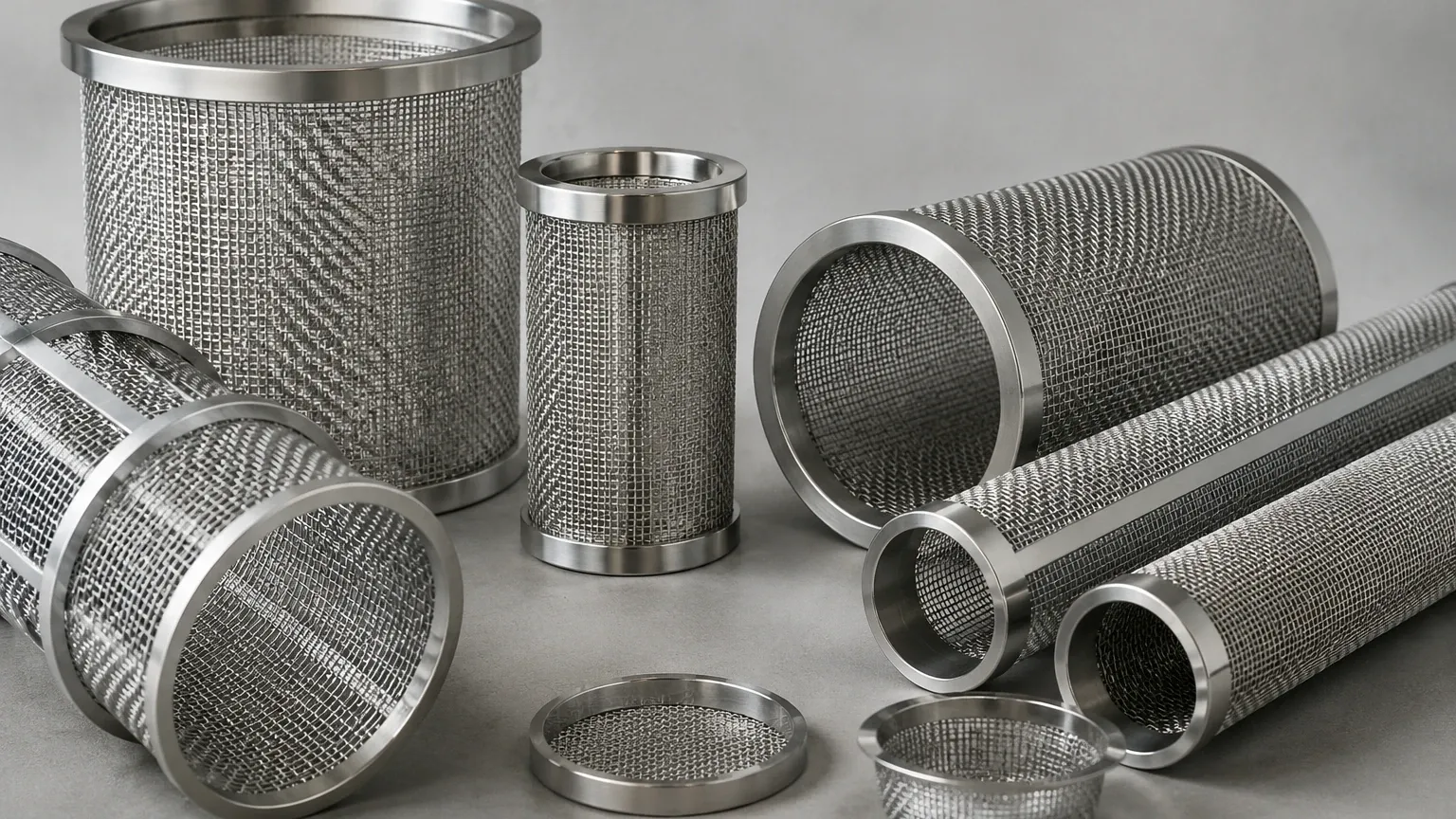
While flat panel filters are the most common form factor for kitchen hoods, many industrial filtration systems utilize Wire Mesh Filter Cylinders & Tubes to maximize surface area within a compact footprint. Cylindrical designs allow for radial airflow, which can significantly reduce the pressure drop compared to a flat panel of the same face area.
In high-pressure hydraulic systems or specialized industrial exhaust units, these tubes are engineered with reinforced inner cores to prevent collapse. The use of multi-layered stainless steel mesh in a cylindrical configuration allows for precise filtration ratings—ranging from coarse grease capture to fine particulate filtration—depending on the weave pattern and wire gauge selected during the manufacturing process.
Key Performance Indicators for Engineers
When evaluating a grease filter for an OEM project or a facility upgrade, engineers must look beyond brand names like Neff and focus on quantifiable performance metrics:
Grease Removal Efficiency (GRE)
GRE is a measure of the percentage of grease (by weight) that the filter captures from the airstream. This is typically tested using standardized synthetic grease aerosols. High-performance metal mesh filters can achieve GRE ratings of 60% to 90% for particles larger than 5 microns. For particles smaller than 2 microns, efficiency drops significantly, often requiring secondary filtration stages.
Pressure Drop (Static Resistance)
Every filter introduces resistance to the ventilation system. A high pressure drop requires the exhaust fan to work harder, increasing energy consumption and noise levels. Engineers must balance the need for high GRE with the allowable pressure drop of the HVAC system. A clean metal mesh filter typically exhibits a pressure drop between 10 and 40 Pascals at standard face velocities.
Flame Barrier Capability
In the event of a cooktop fire, the grease filter must act as a flame barrier to prevent the fire from spreading into the grease-laden ductwork. Stainless steel mesh is an excellent heat sink, cooling the flames and preventing ignition of the residues behind the filter. This is a critical safety specification that distinguishes industrial-grade filters from consumer-grade alternatives.
Maintenance and Replacement Cycles
The effective lifespan of a metal mesh grease filter neff or an industrial stainless steel cartridge is largely dependent on the maintenance regime. Unlike disposable synthetic filters, metal mesh filters are designed to be cleaned and reused.
* Cleaning Protocols: In high-volume environments, filters should be cleaned daily or weekly. Industrial methods include ultrasonic cleaning, which uses high-frequency sound waves to create cavitation bubbles that strip grease from the innermost layers of the mesh. For standard commercial applications, high-temperature pressure washing with degreasing agents is common.
* Inspection for Damage: During cleaning, technicians should inspect the filter for "blind spots"—areas where grease has carbonized and become impossible to remove. Additionally, any gaps between the mesh and the frame can allow "bypass," where unfiltered air enters the ductwork, negating the filter's purpose.
* Replacement Indicators: A filter should be replaced if the mesh is torn, the frame is warped, or if the pressure drop remains high even after a thorough cleaning. For stainless steel components, a service life of 5 to 10 years is achievable with proper care.
Customization and OEM Solutions
For manufacturers of industrial equipment, off-the-shelf filters may not meet specific spatial or performance requirements. Customization allows for the optimization of wire diameter, mesh count, and overall dimensions.
Kaifil specializes in the production of custom stainless steel filtration components, including Wire Mesh Filter Cylinders & Tubes tailored to specific industrial needs. By selecting the appropriate weave—such as plain weave for high flow or Dutch weave for fine particle retention—engineers can fine-tune the performance of their extraction systems.
When ordering custom filters, it is essential to provide the following specifications:
* Dimensions: Height, width, and depth (or diameter and length for tubes).
* Material Grade: Typically 304 or 316 stainless steel.
* Mesh Configuration: Number of layers and the micron rating required.
* Frame Requirements: Presence of handles, drain holes, or specialized locking mechanisms.
Conclusion
Whether maintaining a high-end commercial kitchen with a metal mesh grease filter neff or designing a heavy-duty industrial exhaust system, the focus must remain on the technical integrity of the filtration media. Stainless steel wire mesh provides the durability, thermal resistance, and cleaning flexibility required for demanding B2B applications. By understanding the principles of impingement and the trade-offs between efficiency and pressure drop, engineering professionals can ensure their systems remain safe, compliant, and cost-effective over the long term. For specialized applications requiring high structural strength and maximum surface area, Wire Mesh Filter Cylinders & Tubes represent the pinnacle of industrial grease and particulate management.
