


Filter Reset Packets in Wireshark
In both digital communication and industrial process engineering, the ability to isolate specific data or particles from a larger stream is fundamental to system health. For network engineers, this often involves analyzing transmission control protocol (TCP) flags to troubleshoot connectivity issues. One of the most critical tasks in this domain is to filter reset packets in Wireshark to identify why a connection was abruptly terminated. Similarly, in the physical world of industrial manufacturing, process engineers must utilize precision components like Filter Discs & Packs to ensure that contaminants do not disrupt the flow of high-value fluids or gases.
Understanding how to filter reset packets in Wireshark provides a window into the logical failures of a system. When a TCP connection receives a packet with the "RST" (Reset) flag set to 1, it indicates that the sender has encountered an unrecoverable error or a security violation and is forcing the connection to close. This article explores the technical nuances of identifying these packets and bridges the gap between digital diagnostic filtering and the physical filtration solutions required to maintain industrial uptime.
Understanding TCP Reset Packets in Network Analysis
The TCP protocol is designed for reliability, using a three-way handshake to establish connections and a four-way handshake to terminate them gracefully. However, not all terminations are graceful. A TCP Reset (RST) packet is a mechanism used to inform a host that the connection it is trying to use is invalid or that the receiver has no record of the connection.
From an engineering perspective, seeing an influx of reset packets is a diagnostic red flag. It can indicate several underlying issues:
1. Port Unreachability: The client is attempting to connect to a port that is not open or listening on the server.
2. Security Intervention: A firewall or Intrusion Prevention System (IPS) has detected a policy violation and injected an RST packet to kill the session.
3. Application Crashes: The software on one end of the connection has failed, causing the operating system to send an RST for any subsequent packets arriving for that defunct process.
4. Half-Open Connections: One side of the connection has timed out or rebooted without notifying the other side.
How to Filter Reset Packets in Wireshark
Wireshark is the industry-standard tool for packet-level diagnostics. To effectively troubleshoot connection drops, engineers must master display filters. The primary method to isolate these events is through the use of Boolean logic within the Wireshark filter bar.
The Basic Reset Filter
To see every packet where the reset flag is active, use the following syntax:
`tcp.flags.reset == 1`
This filter tells Wireshark to display only the packets where the RST bit in the TCP header is set. However, in a high-traffic environment, this might still yield too much data. To refine the search, engineers often combine the reset filter with other parameters.
Advanced Troubleshooting Filters
If an engineer is investigating a specific server or client, they can combine the reset filter with an IP address filter:
`(tcp.flags.reset == 1) && (ip.addr == 192.168.1.100)`
Furthermore, distinguishing between a reset that occurs during the initial handshake versus one that occurs during data transfer is vital. A reset during a handshake often points to a configuration error (e.g., the service isn't running), whereas a reset during data transfer suggests a mid-stream failure or a timeout. To find resets that occur specifically during the handshake, one might look for resets paired with the ACK flag being 0:
`tcp.flags.reset == 1 && tcp.flags.ack == 0`
Identifying System Failures: From Network Resets to Industrial Clogging
The logic used to filter reset packets in Wireshark—isolating the "bad" or "interfering" elements from a stream—is identical to the logic applied in industrial filtration. In a chemical processing plant or a hydraulic system, a "reset" doesn't come in the form of a digital flag; it comes in the form of a pressure spike, a pump failure, or a contaminated batch.
Just as an RST packet signals that a digital flow cannot continue, a clogged filter or a bypassed contaminant signals that a physical process has failed. In both scenarios, the goal of the engineer is to implement a "filter" that ensures only the desired elements pass through while the disruptive elements are identified and removed. For physical processes, this requires high-performance Filter Discs & Packs designed to withstand specific pressures, temperatures, and chemical environments.
The Role of Filter Discs & Packs in Industrial Process Stability
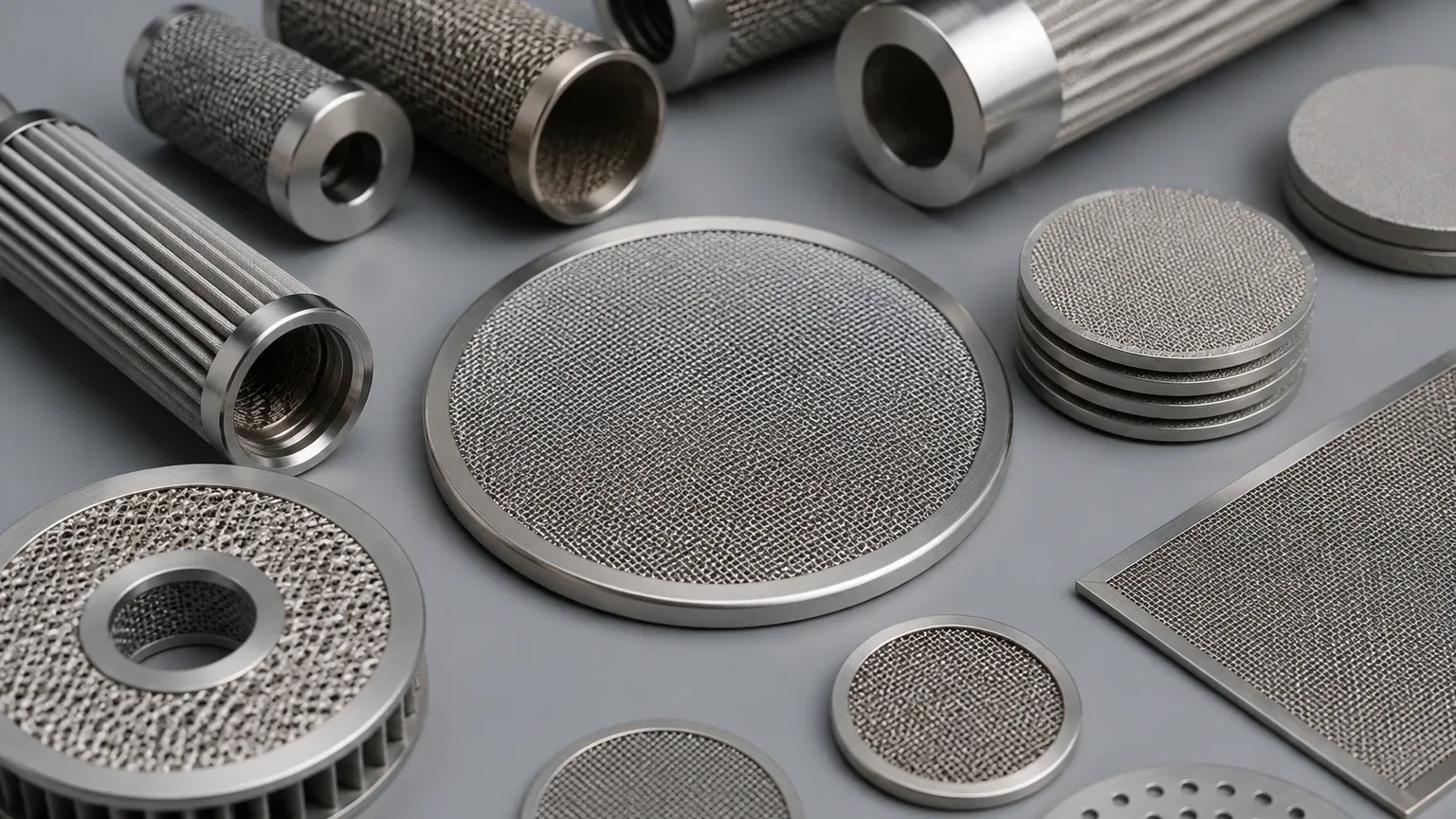
In industrial applications, filtration is not merely a safety measure; it is a critical component of machine longevity and product purity. Filter discs and packs are often used in polymer filtration, oil refining, pharmaceutical production, and food processing. These components are typically constructed from multiple layers of stainless steel wire mesh, which are then bound together to create a robust filtration medium.
Multi-Layer Sintered Structures
Unlike simple screens, industrial filter packs often utilize sintered wire mesh. Sintering is a process where multiple layers of woven wire cloth are bonded together using heat and pressure without the use of adhesives. This creates a structure that is:
* Structurally Stable: The layers do not shift under high pressure.
* Accurate: The pore size remains consistent throughout the life of the filter.
* Cleanable: Sintered mesh can often be backwashed or ultrasonically cleaned, reducing the total cost of ownership compared to disposable filters.
Customization for Specific Applications
Just as a Wireshark filter must be customized to the specific protocol being analyzed, physical filter packs must be tailored to the medium they are filtering. Factors such as the viscosity of the fluid, the shape of the particles, and the required micron rating dictate the design. Kaifil specializes in providing OEM solutions where the mesh count, wire diameter, and disc shape are customized to fit specific housing units and performance requirements.
Engineering Considerations for Selecting Filter Discs & Packs
When engineers specify filter components, they must look beyond simple dimensions. The performance of a filter pack is defined by its ability to maintain flow rates while capturing specific particle sizes. Key evaluation criteria include:
1. Material Compatibility
Stainless steel 304 and 316L are the standards for industrial filtration due to their corrosion resistance. However, for highly acidic or high-temperature environments, specialty alloys like Hastelloy or Monel may be required. Selecting the wrong material can lead to premature failure, much like a misconfigured network filter can lead to false positives in diagnostic data.
2. Micron Rating and Filtration Efficiency
Engineers must distinguish between nominal and absolute micron ratings. A nominal rating indicates the filter can trap most particles of a certain size, whereas an absolute rating guarantees that 99.9% of particles above that size will be captured. In precision industries like pharmaceuticals, absolute ratings are non-negotiable.
3. Pressure Drop (Delta P)
The resistance to flow created by the filter is known as the pressure drop. A high initial pressure drop indicates that the filter may be too restrictive for the pump's capacity, leading to energy inefficiency and potential system damage. Engineers must balance filtration fineness with the need for throughput.
4. Edge Treatment and Binding
For multi-layer packs, the way the edges are finished is critical. Spot welding, aluminum or stainless steel binding, or simple compression edges are used depending on how the disc is seated in the machinery. Improper edge finishing can lead to "leakage" where unfiltered fluid bypasses the media entirely.
Maintenance and Performance Monitoring in Filtration Systems
In network engineering, monitoring tools alert administrators when the frequency of reset packets exceeds a threshold. In industrial filtration, the equivalent monitoring involves differential pressure gauges.
The Replacement Cycle
As Filter Discs & Packs capture contaminants, the effective open area of the mesh decreases, causing the differential pressure to rise. When this pressure reaches a predetermined limit, the filter must be cleaned or replaced. Failure to do so can result in a "blow-through" event, where the pressure forces contaminants through the mesh, or a mechanical failure of the filter media itself.
Total Cost Considerations
While the initial purchase price of a filter disc is a factor, engineers must consider the total cost of ownership (TCO). This includes the cost of downtime for replacement, the energy required to push fluid through a partially clogged filter, and the potential cost of downstream equipment damage if the filter fails. High-quality stainless steel filters from manufacturers like Kaifil offer a lower TCO by providing longer service intervals and the ability to be refurbished through specialized cleaning processes.
Conclusion: Precision Filtering in a Complex World
Whether an engineer is using a tool to filter reset packets in Wireshark or installing a stainless steel filter pack in a chemical reactor, the objective remains the same: ensuring system integrity by isolating and managing disruptive elements. Digital filters provide the data necessary to keep communications flowing, while physical filter discs and packs provide the mechanical barrier necessary to keep production lines running.
For procurement teams and design engineers, selecting a filtration partner involves more than just finding a supplier; it requires finding a manufacturer with the technical expertise to understand the demands of the application. By focusing on material quality, precise micron ratings, and durable construction, Kaifil ensures that industrial systems remain as stable and reliable as a well-optimized network.
