


Filter Out vs Filter in
In the field of industrial filtration, the distinction between "filtering out" and "filtering in" represents more than a linguistic nuance; it defines the fundamental objective of a separation process. For engineers and procurement teams, understanding the specific requirements of the application—whether the goal is to remove unwanted contaminants or to harvest valuable particulate matter—is the first step in selecting the correct filtration hardware.
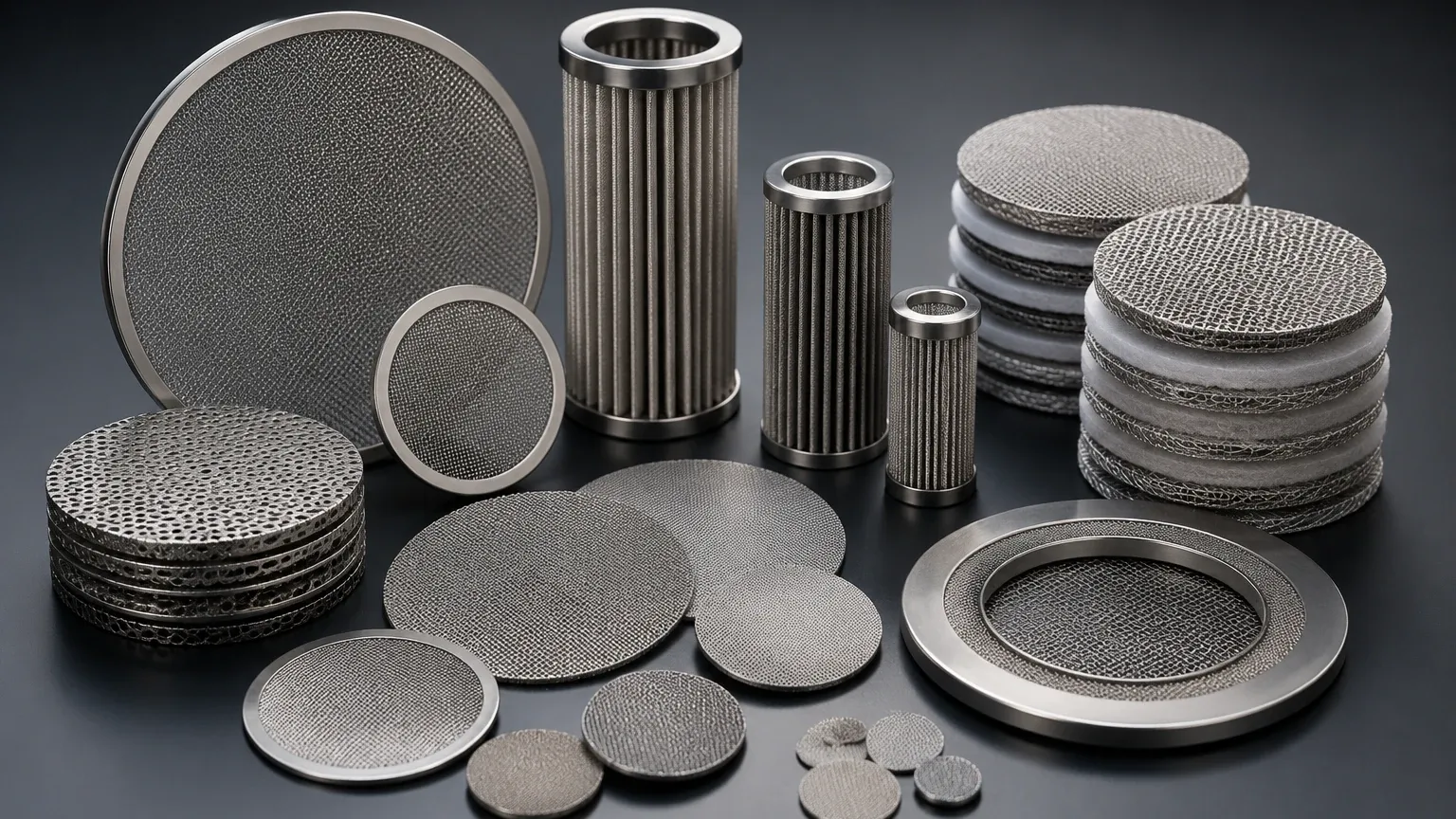
When evaluating Filter Discs & Packs, technical professionals must align the mechanical properties of the filter media with the intended outcome of the process. This guide explores the technical considerations of filter out vs filter in logic, the engineering specifications of stainless steel filter components, and the selection criteria necessary for optimizing industrial performance.
The Fundamental Logic: Filter Out vs Filter In
At its core, all filtration involves the separation of solids from fluids (liquids or gases). However, the priority of the operation dictates the design of the system.
Filtering Out: Contaminant Removal
In most industrial applications, the primary goal is to "filter out." This involves the removal of impurities, debris, or oversized particles from a process stream to protect downstream equipment or ensure the purity of the final fluid. Examples include:
* Hydraulic Systems: Removing metallic wear particles to prevent pump failure.
* Water Treatment: Eliminating suspended solids before chemical processing.
* Polymer Extrusion: Removing gels or carbonized particles to ensure the structural integrity of the plastic.
In these scenarios, the filter is a defensive component. The efficiency of the process is measured by the cleanliness of the filtrate (the fluid that passes through).
Filtering In: Product Recovery
Conversely, "filtering in" refers to processes where the solid material being captured is the valuable product. This is common in the pharmaceutical and chemical industries where a crystallized product or a catalyst must be recovered from a solvent. Examples include:
* Catalyst Recovery: Capturing expensive precious metal catalysts for reuse.
* Pharmaceutical Synthesis: Harvesting active pharmaceutical ingredients (APIs) from a slurry.
* Food Processing: Collecting specific protein isolates or powders.
When filtering in, the design of the Filter Discs & Packs must facilitate the easy removal of the "cake" (the accumulated solids) without damaging the particles or the filter media itself.
Engineering Considerations for Filter Discs & Packs
Whether the objective is to filter out or filter in, the physical construction of the filter disc is paramount. Stainless steel wire mesh is the preferred material for high-demand industrial environments due to its thermal stability and chemical resistance.
Material Selection
The choice of alloy—typically Grade 304, 316, or 316L stainless steel—depends on the corrosivity of the medium.
* Grade 304: Suitable for general industrial use where high-strength and basic corrosion resistance are required.
* Grade 316/316L: Contains molybdenum, providing superior resistance to chlorides and acids, making it essential for pharmaceutical and marine applications. 316L (low carbon) is preferred for welded assemblies to prevent intergranular corrosion.
Weave Types and Pore Geometry
The geometry of the mesh determines the filtration accuracy and the flow characteristics.
1. Plain Weave: Offers a simple, straight-through path, ideal for high-flow applications with lower pressure drops.
2. Dutch Weave: Utilizes a higher density of wires in one direction, creating a tortuous path. This is ideal for fine filtration where high-pressure stability is required.
3. Twill Weave: Allows for thicker wires in a given mesh count, providing increased durability for heavy-duty "filter out" tasks.
Multilayer Packs and Structural Integrity
In many high-pressure environments, such as polymer melt filtration, a single layer of wire mesh is insufficient. Engineers utilize multilayered packs to balance filtration fineness with mechanical strength.
The Layering Strategy
A typical filter pack consists of several functional layers:
* Filtration Layer: The middle layer with the specific micron rating required for the process.
* Support Layers: Coarser mesh layers on either side that provide rigidity and prevent the fine filtration layer from deforming under pressure.
* Drainage Layers: Ensure that the fluid is distributed evenly across the entire surface area of the disc.
These layers can be provided as loose inserts or joined together via spot welding or aluminum/stainless steel rims. For applications involving "filtering in," a smooth surface on the upstream side is critical to ensure that the recovered solids can be harvested efficiently without becoming trapped in the weave intersections.
Performance Metrics: Micron Ratings and Pressure Drop
Selecting between filter out vs filter in strategies requires a deep dive into performance metrics. Engineers must evaluate how the filter will behave over its operational lifecycle.
Absolute vs. Nominal Filtration
* Nominal Rating: Indicates the ability of the filter to retain a majority of particles at a specific size (e.g., 90% of 20-micron particles). This is often sufficient for general "filter out" tasks.
* Absolute Rating: Refers to the diameter of the largest hard spherical particle that will pass through the filter under specified test conditions. For critical pharmaceutical or aerospace applications, absolute ratings are mandatory to ensure process consistency.
Delta P (Pressure Drop)
The pressure drop across the filter media is a critical indicator of efficiency. A high initial pressure drop suggests that the filter is undersized or the mesh is too dense for the required flow rate. In "filter out" applications, the pressure drop will increase as contaminants build up. In "filtering in" applications, the growth of the filter cake will also increase resistance, and the system must be designed to handle this increasing Delta P until the harvesting cycle begins.
Customization and OEM Solutions in Filtration
Industrial processes rarely fit a one-size-fits-all model. Customization is often necessary to meet the specific spatial and performance constraints of a machine.
Geometric Customization
Filter discs can be manufactured in various shapes, including circular, annular (donut-shaped), rectangular, or oval. The precision of the outer diameter is vital for ensuring a leak-free seal within the filter housing. For OEM manufacturers, providing exact tolerances ensures that the replacement cycle is seamless and does not require equipment modification.
Sintered vs. Non-Sintered Media
For extreme environments, sintered wire mesh—where multiple layers are fused together through heat and pressure without the use of binders—offers the highest level of structural integrity. Sintered discs are virtually immune to media migration (the shedding of wires) and can withstand repeated cleaning cycles, making them a cost-effective choice for long-term "filter out" operations in chemical reactors.
Total Cost of Ownership and Maintenance
When deciding on a filtration strategy, the initial purchase price of the Filter Discs & Packs is only one component of the total cost of ownership (TCO). Engineers must also consider:
1. Cleaning and Reusability: Stainless steel filters can often be cleaned via ultrasonic baths, back-flushing, or chemical cleaning. This reduces the frequency of replacement compared to disposable plastic or paper filters.
2. Operational Downtime: The ease of replacing a filter pack directly impacts the productivity of the line. Rimmed packs are generally faster to seat and seal than loose mesh discs.
3. Energy Consumption: A filter that operates with a consistently lower pressure drop requires less pump energy, leading to significant savings over the course of a year.
4. Product Loss: In "filtering in" scenarios, any product that remains trapped in the filter media represents a direct financial loss. Selecting a mesh with high release characteristics is essential here.
Conclusion: Making the Informed Choice
Deciding between a filter out vs filter in approach dictates the technical specifications of the filtration hardware. Whether you are protecting a high-pressure pump from particulate damage or recovering a high-value chemical catalyst, the choice of filter media, weave type, and pack construction will determine the success of the operation.
By focusing on high-quality stainless steel components and precise engineering, industrial facilities can achieve a balance between filtration accuracy and mechanical durability. For those requiring specialized designs, working with a manufacturer that understands the nuances of material science and fluid dynamics is essential for optimizing process efficiency and reducing long-term operational costs.
