


Engineering Guide to Metal Mesh Hood Filters in Industrial Ventilation
In industrial and commercial environments, the management of airborne contaminants—ranging from grease and oil mist to particulate matter—is a critical factor for operational safety, equipment longevity, and regulatory compliance. The metal mesh hood filter serves as the primary line of defense in exhaust systems, designed to capture heavy particulates before they enter the ductwork. Unlike disposable synthetic filters, these metal-based components are engineered for durability, high-temperature resistance, and multi-cycle utility.
For engineers and procurement specialists, selecting the correct filtration media involves more than just matching dimensions. It requires an understanding of fluid dynamics, material science, and the specific structural requirements of the application. Whether the system is a high-volume commercial kitchen, a chemical processing lab, or an industrial machining center, the performance of the filtration system hinges on the precision of the mesh construction.
Engineering Principles: The Physics of Impingement Filtration
The primary operating principle of a metal mesh hood filter is mechanical impingement. As contaminated air is drawn through the filter, it is forced to change direction rapidly and repeatedly as it navigates the layers of woven or knitted wire mesh. Because the contaminants (such as grease droplets or oil mist) have greater mass and momentum than the air molecules, they cannot make these rapid turns. Consequently, they strike the wire surfaces and adhere to them.
Over time, these captured droplets coalesce and drain into a collection trough or remain trapped within the mesh structure until cleaned. The efficiency of this process is governed by several variables:
1. Wire Diameter: Thinner wires increase the surface area but may reduce structural rigidity.
2. Mesh Density: A tighter weave captures smaller particles but increases the initial pressure drop.
3. Layering: Most industrial filters utilize multiple layers of mesh (often 3 to 5 layers) to create a tortuous path for the airflow, maximizing the probability of impingement.
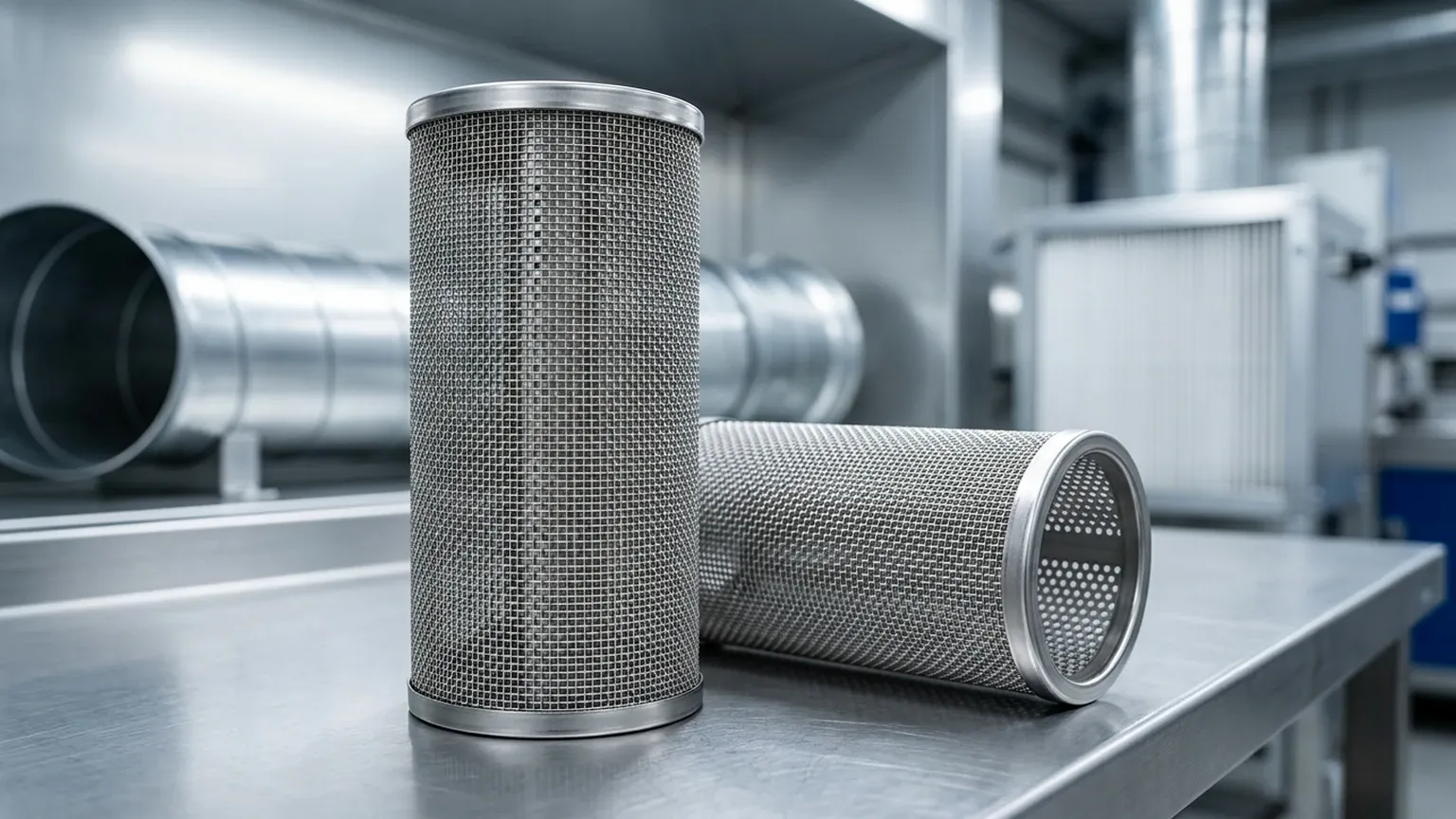
In complex industrial exhaust systems where secondary filtration is required to protect high-efficiency blowers, engineers often specify Wire Mesh Filter Cylinders & Tubes as downstream components to capture any bypass or finer aerosols that penetrate the primary hood filter.
Material Selection: Why Stainless Steel Outperforms in Demanding Environments
While aluminum is a common material for light-duty commercial applications due to its low cost and weight, industrial environments typically demand the superior properties of stainless steel. Kaifil specializes in manufacturing filtration components using high-grade alloys to ensure performance in harsh conditions.
Stainless Steel 304
This is the standard grade for most industrial hood filters. It offers excellent resistance to corrosion from water and common cleaning chemicals. It maintains structural integrity at higher temperatures than aluminum, which is vital in applications involving high-heat cooking or industrial processes where flash fires are a risk.
Stainless Steel 316
For environments involving high salinity (such as offshore platforms or coastal facilities) or exposure to aggressive chemicals (such as in pharmaceutical or chemical processing), SS316 is the preferred choice. The addition of molybdenum provides enhanced resistance to pitting and crevice corrosion.
Comparison with Aluminum
Aluminum filters are prone to oxidation and can be easily damaged by the caustic degreasers often used in industrial cleaning. Furthermore, aluminum has a lower melting point, which can be a liability in fire-rated exhaust systems. Stainless steel’s durability ensures a lower total cost of ownership (TCO) by extending the replacement cycle significantly.
Design Parameters: From Mesh Density to Structural Integrity
The effectiveness of a metal mesh hood filter is not solely dependent on the mesh itself but also on the frame and internal support structure. In heavy-duty industrial applications, the filter must withstand high face velocities without vibrating or deforming.
Frame Construction
Frames are typically roll-formed or U-channel stainless steel, securely fastened at the corners. For filters used in high-vibration environments, welded corners are often specified to prevent the frame from racking. The frame must also include drainage holes to allow captured oils and cleaning fluids to escape, preventing internal pooling that could lead to bacterial growth or fire hazards.
Media Configuration
Industrial filters can utilize flat mesh layers or corrugated (pleated) layers. Corrugation increases the total surface area of the filter media without increasing the overall face dimensions. This design allows for a higher dust-holding capacity and a lower initial pressure drop, which reduces the energy consumption of the exhaust fan.
In some specialized industrial mist collectors, the flat panel hood filter is only the first stage. The air may then pass through Wire Mesh Filter Cylinders & Tubes which provide a radial filtration path, often used in centrifugal separation stages to further refine the air quality before it is exhausted or recirculated.
Performance Evaluation: Pressure Drop and Face Velocity
Engineers must balance filtration efficiency with system energy consumption. The most critical metric in this balance is the pressure drop (measured in inches of water gauge or Pascals). A filter with a high pressure drop requires a more powerful fan, leading to higher utility costs and potential noise issues.
Face Velocity
Face velocity is the speed of the air as it enters the filter surface, typically measured in feet per minute (FPM) or meters per second (m/s). Most metal mesh hood filters are designed to operate efficiently between 250 and 500 FPM. If the velocity is too low, the impingement effect is weakened; if it is too high, the captured grease may be "re-entrained" or pulled through the filter into the ductwork.
Filtration Efficiency
Unlike HEPA filters, which are rated by MERV or H-classes, metal mesh filters are often evaluated based on their weight-arrestance of specific contaminants (like grease). For industrial applications, it is common to request data on the percentage of 10-micron and 5-micron particles captured at specific velocities.
Maintenance Protocols and Service Life Optimization
One of the primary advantages of a metal mesh hood filter is its cleanability. However, the longevity of the component depends on a rigorous maintenance schedule. If grease is allowed to bake onto the stainless steel mesh, it can become carbonized, making it nearly impossible to remove without damaging the wire structure.
Cleaning Methods
1. High-Pressure Washing: Effective for removing surface particulates but must be done carefully to avoid deforming the mesh layers.
2. Caustic Soaking: Common in commercial food service, but the chemical compatibility of the filter material (specifically if any non-stainless components are used) must be verified.
3. Ultrasonic Cleaning: The most effective method for industrial filters, as ultrasonic waves can penetrate deep into the multi-layered mesh to dislodge trapped contaminants.
Replacement Indicators
While stainless steel filters can last for years, they should be inspected for:
* Mesh Separation: Gaps between the mesh and the frame allow unfiltered air to bypass the system.
* Physical Deformation: Dents or warping that affect the seal within the hood track.
* Permanent Clogging: An irreversible increase in baseline pressure drop even after professional cleaning.
Procurement Considerations for International Buyers
When sourcing metal mesh hood filters or related components like Wire Mesh Filter Cylinders & Tubes, technical buyers should provide manufacturers with a comprehensive specification sheet to ensure the product meets the application's demands. Essential data points include:
* Exact Dimensions: Width, height, and depth (thickness). Industrial standards often vary by region, so metric and imperial measurements should be clarified.
* Material Grade: Specify SS304, SS316, or other alloys based on the chemical environment.
* Layer Count: Define the number of mesh layers required for the target filtration efficiency.
* Environmental Constraints: Maximum operating temperature and exposure to specific corrosive agents.
* Compliance Requirements: Specify if the filters need to meet UL 1046 (Standard for Grease Filters for Exhaust Ducts) or other international fire and safety standards.
By focusing on these technical parameters, engineering teams can ensure that their ventilation systems operate at peak efficiency with minimal downtime. As a manufacturer, Kaifil provides the customization capabilities required to produce filters that fit non-standard housings while maintaining the rigorous performance standards required by the chemical, pharmaceutical, and industrial sectors.
