


Maxwell Filter Packs
In the high-pressure environment of polymer extrusion and synthetic fiber production, the integrity of the filtration system determines both the quality of the final product and the operational lifespan of the machinery. Maxwell filter packs represent a specialized category of multi-layer filtration components designed to withstand extreme thermal and mechanical stresses while maintaining precise micron-level separation. As industrial processes evolve toward higher purity standards and faster throughput, understanding the engineering nuances of these filter packs is essential for procurement teams and plant engineers.
These components are not merely consumables; they are precision-engineered barriers that protect spinnerets, prevent downtime, and ensure the homogeneity of melt streams. This guide examines the technical specifications, material considerations, and selection criteria for Maxwell filter packs within the broader context of industrial Filter Discs & Packs.
Understanding the Construction of Maxwell Filter Packs
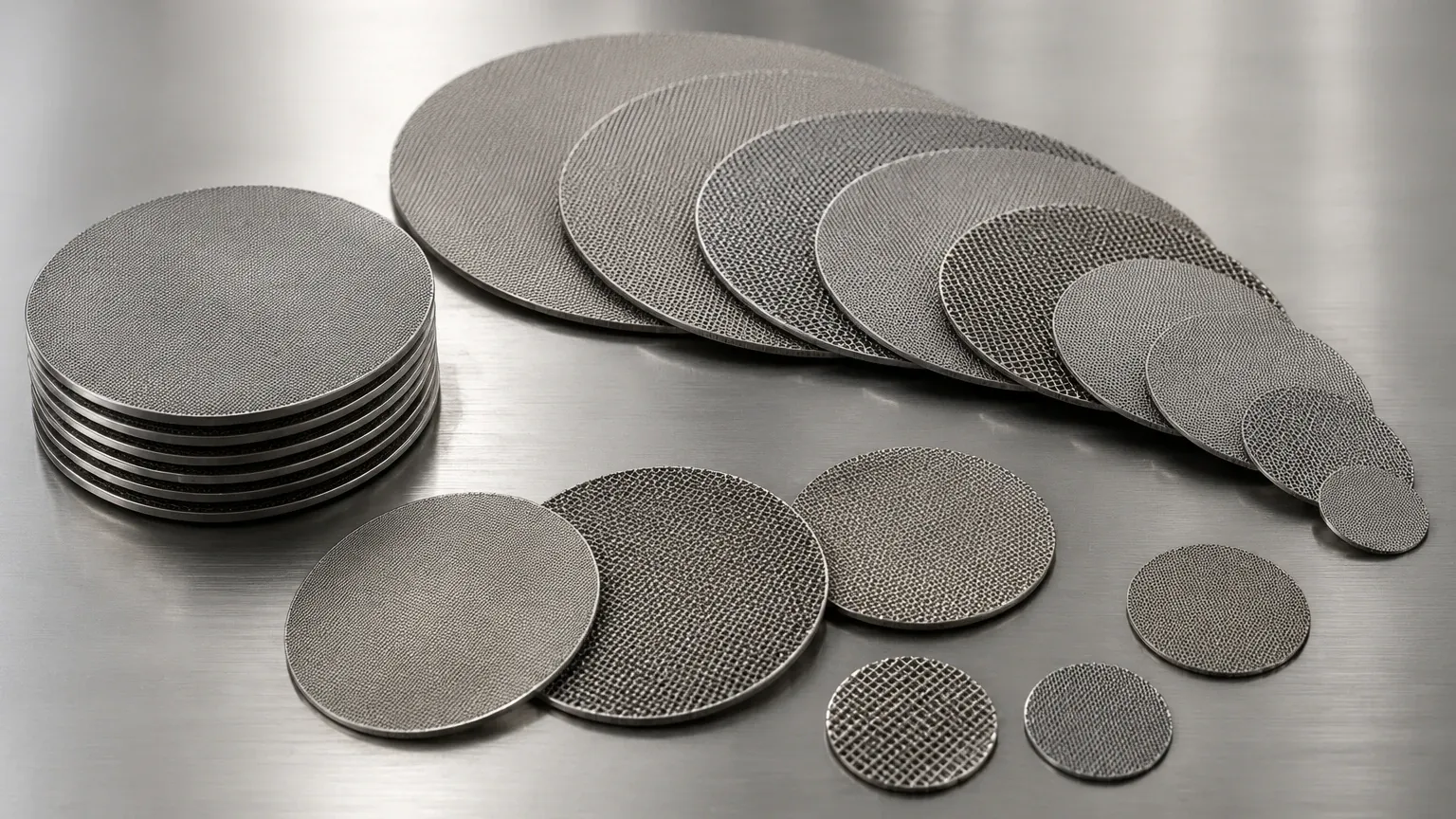
Maxwell filter packs are typically composed of multiple layers of stainless steel wire mesh, arranged in a specific sequence to achieve graduated filtration. Unlike single-layer discs, these packs are designed to handle high-viscosity fluids under significant pressure. The construction usually follows a "sandwich" structure where different mesh counts serve distinct functional roles.
Layer Sequencing and Functionality
A standard Maxwell filter pack configuration often includes the following layers:
1. Support Mesh: Heavy-duty, coarse mesh layers (such as 20 or 40 mesh) located on the outer surfaces. These provide structural rigidity and prevent the finer internal layers from deforming under the force of the melt flow.
2. Drainage/Distributor Layers: Intermediate mesh counts that help distribute the fluid evenly across the surface of the fine filtration media, reducing localized pressure points.
3. Fine Filtration Media: The core layer, often utilizing Dutch weave or fine square mesh, which defines the absolute micron rating of the pack. This layer captures the targeted contaminants and gels.
Assembly Methods
The method used to join these layers is critical to preventing bypass—a common failure mode where unfiltered fluid escapes around the edges of the media. Common assembly techniques include:
* Spot Welding: Strategically placed welds hold the layers together, ensuring they remain aligned during installation and operation. This is the most common method for standard applications.
* Aluminum or Stainless Steel Rimming: The layers are compressed and bound by a metal rim (often aluminum, copper, or stainless steel). This provides a superior seal against the housing wall and prevents individual wires from fraying and entering the process stream.
* Sintering: For the most demanding applications, layers are diffusion-bonded (sintered) to create a monolithic structure that cannot delaminate, even under extreme back-pressure.
Material Selection and Performance Boundaries
Material compatibility is the first line of defense against premature filter failure. In industrial filtration, the choice of alloy affects not only corrosion resistance but also the mechanical stability of the mesh at elevated temperatures.
Stainless Steel Grades
* AISI 304: Suitable for general-purpose applications where moderate corrosion resistance is required. It is cost-effective but may not be ideal for processes involving highly acidic or alkaline cleaning agents.
* AISI 316/316L: The industry standard for Maxwell filter packs. The addition of molybdenum provides enhanced resistance to pitting and crevice corrosion, particularly in chemical processing and pharmaceutical applications. The "L" (low carbon) variant is preferred when welding is involved to prevent carbide precipitation.
* Specialty Alloys: For extreme environments, alloys like Hastelloy or Inconel may be used, though these are typically reserved for highly specialized chemical reactors.
Thermal Stability
Polymer melt filtration often occurs at temperatures exceeding 300°C. Engineers must confirm that the expansion coefficients of the filter pack materials and the housing are compatible to maintain a tight seal. Furthermore, the tensile strength of the wire mesh decreases as temperature rises; therefore, the support layers must be over-engineered to compensate for this loss of structural integrity.
Key Evaluation Criteria for Engineers
When selecting Maxwell filter packs, technical professionals must look beyond the nominal micron rating. Several performance metrics dictate the total cost of ownership and process efficiency.
Pressure Drop (ΔP) and Flux Rates
A high initial pressure drop indicates that the filter is either too restrictive or that the mesh geometry is inefficient. Engineers should seek packs that offer a high "open area" percentage while maintaining the required filtration accuracy. A lower initial ΔP allows for a longer operational cycle before the terminal pressure is reached, necessitating a filter change.
Dirt Holding Capacity
Depth filtration characteristics are often superior to surface filtration in Maxwell-style applications. By utilizing multiple layers of varying fineness, the pack can trap particles throughout its thickness rather than just on the surface. This increases the volume of contaminants the pack can hold before clogging, directly extending the interval between maintenance shutdowns.
Filtration Accuracy: Nominal vs. Absolute
It is vital to distinguish between nominal and absolute ratings. A nominal rating indicates the ability to retain a majority of particles of a certain size, while an absolute rating refers to the diameter of the largest spherical particle that can pass through the mesh. For high-precision synthetic fiber spinning, absolute ratings are generally required to protect the delicate spinneret capillaries.
Common Risks and Failure Modes
Inadequate filter selection or poor manufacturing quality can lead to several industrial risks. Understanding these failure modes helps in establishing better quality control protocols.
1. Media Migration: If the mesh is not properly cleaned or if the wires are brittle, small fragments of metal can break off and contaminate the product. Quality manufacturers utilize ultrasonic cleaning to ensure packs are free of residual oils and loose fragments.
2. Layer Shifting: In non-rimmed packs, high-viscosity flows can cause the internal layers to shift or bunch, creating gaps that allow larger particles to pass through.
3. Compressive Collapse: If the support layers are insufficient, the entire pack may collapse into the downstream support plate, potentially damaging the equipment and causing a total loss of filtration.
4. Bypass Leakage: If the outer diameter (OD) of the pack is not manufactured to tight tolerances, the fluid will follow the path of least resistance around the edges of the filter rather than through the media.
Procurement and Customization Considerations
For purchasing teams, the goal is to balance performance with cost-effectiveness. Maxwell filter packs are rarely "off-the-shelf" components; they usually require customization to fit specific machinery and process parameters.
Information to Confirm Before Ordering
Before initiating a quote for Filter Discs & Packs, engineers should have the following data points ready:
* Exact Dimensions: Diameter (OD) and total thickness of the pack.
* Fluid Characteristics: Viscosity, operating temperature, and chemical composition.
* Layer Specification: The specific mesh counts required (e.g., 60/100/200/100/60).
* Edge Treatment: Whether the pack requires spot welding, an aluminum rim, or a specific binding material.
* Pressure Requirements: Normal operating pressure and the maximum allowable pressure drop before replacement.
Total Cost of Ownership (TCO)
While a lower unit price may be attractive, the TCO of a filter pack is heavily influenced by its lifespan. A pack that costs 20% more but lasts 50% longer—or prevents a single hour of unplanned downtime—provides significantly better value. Furthermore, high-quality stainless steel packs can sometimes be cleaned and reused, depending on the nature of the contaminant, which further reduces the long-term cost.
Conclusion
Maxwell filter packs are a critical component in the chain of industrial polymer and chemical processing. Their multi-layer design provides the necessary balance of filtration precision and structural strength required for high-pressure environments. By focusing on material integrity, precise layer sequencing, and robust assembly methods, engineers can optimize their filtration processes, protect downstream equipment, and ensure consistent product quality.
When evaluating suppliers, it is essential to partner with manufacturers who understand the technical demands of these applications and can provide the necessary engineering support for custom designs. Reliable filtration is not just about the mesh; it is about the expertise that goes into every layer and every weld.
