


Filter Syn Packets
In the high-precision world of synthetic fiber production and polymer extrusion, the term "filter syn packets" refers to specialized filtration assemblies designed to handle molten polymers under extreme pressure and temperature. These components are critical to the manufacturing of nylon, polyester, and other synthetic filaments. Without effective filtration at the point of extrusion, impurities such as degraded polymer gels, metal particles, or carbonized residues can cause filament breakage, spinneret clogging, and significant downtime.
For engineers and procurement specialists, selecting the correct Filter Discs & Packs is not merely a matter of finding a consumable part; it is a strategic decision that impacts the consistency of the final product and the operational efficiency of the extrusion line. This guide examines the technical specifications, material considerations, and engineering variables involved in specifying filter syn packets for industrial applications.
The Function of Filter Syn Packets in Polymer Processing
Synthetic fiber production, often abbreviated as "syn" production in industrial contexts, involves forcing molten polymer through microscopic holes in a spinneret. The presence of even minute contaminants can lead to "spinning breaks," where the continuous filament snaps, halting production.
Filter syn packets serve three primary functions in this environment:
1. Contaminant Removal: They capture solid particulates and high-viscosity gels that have formed during the heating process.
2. Pressure Stabilization: By providing a consistent resistance to flow, these packets help maintain uniform pressure across the spinneret face, which is essential for consistent filament denier (thickness).
3. Shear Improvement: The passage of polymer through multiple layers of wire mesh provides a shearing effect that can help homogenize the melt, breaking up small aggregates and improving the molecular distribution of additives or colorants.
Construction and Layering Strategies
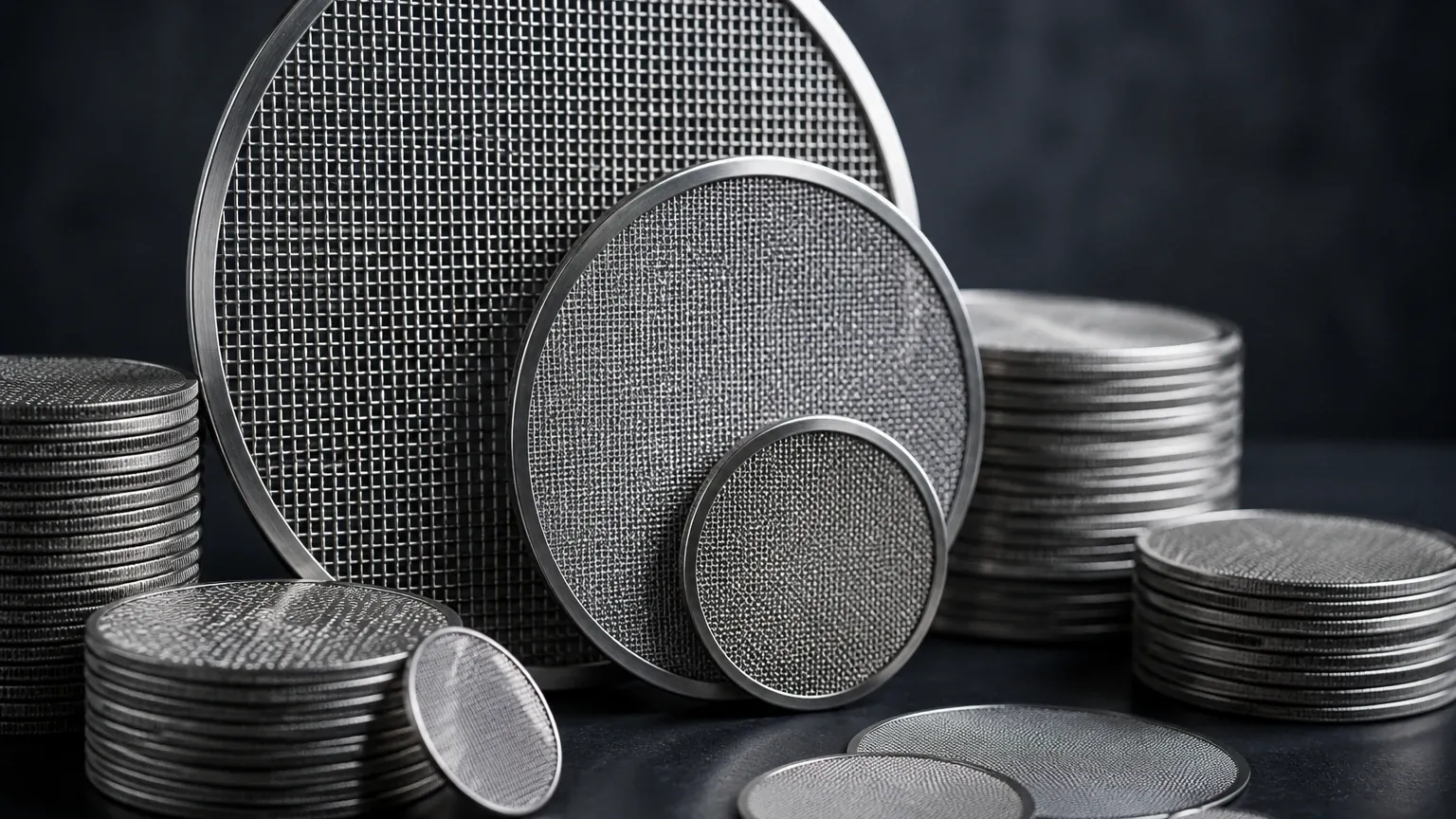
Unlike a simple single-layer screen, filter syn packets are typically multi-layered assemblies. The complexity of the layer stack is determined by the viscosity of the polymer and the required purity of the final fiber.
The Multi-Layer Architecture
A standard packet usually consists of the following components:
* Filtration Layer: This is the core of the packet, often made of fine stainless steel wire mesh or metal fiber felt. The micron rating of this layer defines the filtration accuracy. In synthetic fiber production, this can range from 5 microns to 60 microns depending on the application.
* Support Layers: Because the filtration layer is often made of very fine wire, it cannot withstand the high differential pressures (often exceeding 200 bar) on its own. Coarser mesh layers are placed on both sides to provide mechanical stability and prevent the fine mesh from deforming or migrating into the spinneret holes.
* Drainage Layers: These outermost layers facilitate the even distribution of the polymer melt across the entire surface area of the filter, preventing localized high-velocity zones that could lead to premature clogging.
Bonding and Rimming
To ensure that the individual layers do not shift during installation or operation, filter syn packets are often spot-welded or bound with a metal rim. Rimming is particularly important in high-pressure applications. An aluminum or stainless steel rim provides a clean, compressed edge that acts as a gasket, preventing the polymer from bypassing the filter media at the edges. This "edge-leakage" is a common failure point in poorly manufactured filters, leading to contaminated product even if the mesh itself is intact.
Material Selection for Demanding Environments
The choice of material for filter syn packets is dictated by the chemical nature of the polymer and the operating temperature of the extrusion line. Most industrial applications utilize stainless steel due to its balance of mechanical strength and corrosion resistance.
Stainless Steel 304 vs. 316L
* SS 304: Suitable for standard applications where corrosion is not a primary concern. It offers excellent heat resistance and structural integrity.
* SS 316L: The "L" stands for low carbon, which provides superior resistance to intergranular corrosion. This is the preferred material for polymers that may release acidic byproducts during processing, such as certain types of polyesters or specialty resins. SS 316L also maintains its mechanical properties better at the elevated temperatures (280°C to 320°C) common in syn fiber production.
Specialty Alloys
In niche applications involving highly corrosive fluoropolymers or extreme temperatures, alloys like Hastelloy or Inconel may be required. However, for the vast majority of B2B synthetic fiber operations, precision-engineered stainless steel Filter Discs & Packs provide the most cost-effective performance.
Engineering Considerations: Micron Rating and Mesh Type
When specifying filter syn packets, engineers must balance filtration efficiency with the pressure drop across the filter. A filter that is too fine will clog rapidly, necessitating frequent changes and reducing the "on-stream" time of the production line. Conversely, a filter that is too coarse will allow contaminants through, compromising product quality.
Square Weave vs. Dutch Weave
* Plain Square Weave: Characterized by equal wire diameters and simple over-under patterns. These offer high flow rates and are easy to clean, making them ideal for support layers.
* Dutch Weave (Plain and Twilled): These weaves use different wire diameters for the warp and weft, resulting in a much denser structure. Dutch weaves provide superior filtration accuracy and are the standard choice for the primary filtration layer in a syn packet. Twilled Dutch weaves, in particular, allow for the finest micron ratings while maintaining high mechanical strength.
Sintered vs. Non-Sintered Media
For the most demanding applications, the mesh layers can be sintered together. Sintering is a process of diffusion bonding where the mesh is heated in a vacuum furnace until the contact points of the wires fuse. This creates a monolithic structure that cannot shift or fray. Sintered filter syn packets are preferred when absolute pore size stability is required and when the filters are intended to be cleaned and reused multiple times.
Performance Evaluation and Replacement Cycles
The performance of a filter packet is typically monitored via the differential pressure ($ΔP$) across the filter assembly. As the filter captures contaminants, the $ΔP$ increases.
Determining the End-of-Life
Every extrusion system has a maximum allowable pressure. Once the $ΔP$ reaches a predetermined threshold, the filter packet must be replaced. Factors influencing the replacement cycle include:
* Polymer Purity: Lower grade raw materials contain more gels and particulates, shortening filter life.
* Throughput Rate: Higher production speeds increase the volume of material passing through the filter, leading to faster contaminant accumulation.
* Effective Filtration Area (EFA): Increasing the diameter of the disc or using pleated designs can increase the EFA, thereby extending the time between filter changes.
Total Cost of Ownership (TCO)
In a B2B procurement context, the price of the individual filter packet is only one component of the TCO. Engineers must also consider:
* Downtime Costs: The labor and lost production time associated with changing a filter pack.
* Yield Loss: The amount of polymer wasted during the startup and stabilization phase after a filter change.
* Cleanability: Whether the filters can be ultrasonically cleaned or burned off in a pyrolysis furnace for reuse, or if they are strictly disposable.
Customization and OEM Integration
Because extrusion hardware varies significantly between manufacturers (such as Barmag, Neumag, or Rieter), filter syn packets are rarely "off-the-shelf" items. Customization is usually required to match the specific dimensions and flow characteristics of the pack body.
When partnering with a manufacturer like Kaifil, technical teams should be prepared to confirm the following specifications:
1. Exact Dimensions: Diameter (for discs) or length/width (for rectangular packs), including tolerances.
2. Layer Sequence: The specific mesh counts and weave types for each layer in the stack.
3. Rimming Requirements: Material and thickness of the outer rim.
4. Operating Parameters: Maximum operating temperature and expected differential pressure.
5. Media Type: Whether standard wire mesh or sintered metal fiber felt is required for the application.
Conclusion
Filter syn packets are a small but vital component in the synthetic fiber supply chain. By understanding the interplay between mesh geometry, material science, and mechanical support, engineering teams can optimize their filtration processes to achieve higher product quality and lower operational costs. Whether the goal is to reduce filament breakage in fine-denier yarns or to extend the service life of a high-volume extrusion line, the selection of high-quality Filter Discs & Packs is the foundation of a stable and profitable production environment.
