


Filter Tip Pack
In precision industrial filtration, the performance of a system often depends on the integrity of its smallest components. Among these, the filter tip pack and broader assemblies of Filter Discs & Packs play a critical role in ensuring fluid purity, protecting downstream equipment, and maintaining process stability. For engineers and procurement specialists, selecting the correct filtration media involves a deep understanding of material science, fluid dynamics, and mechanical constraints.
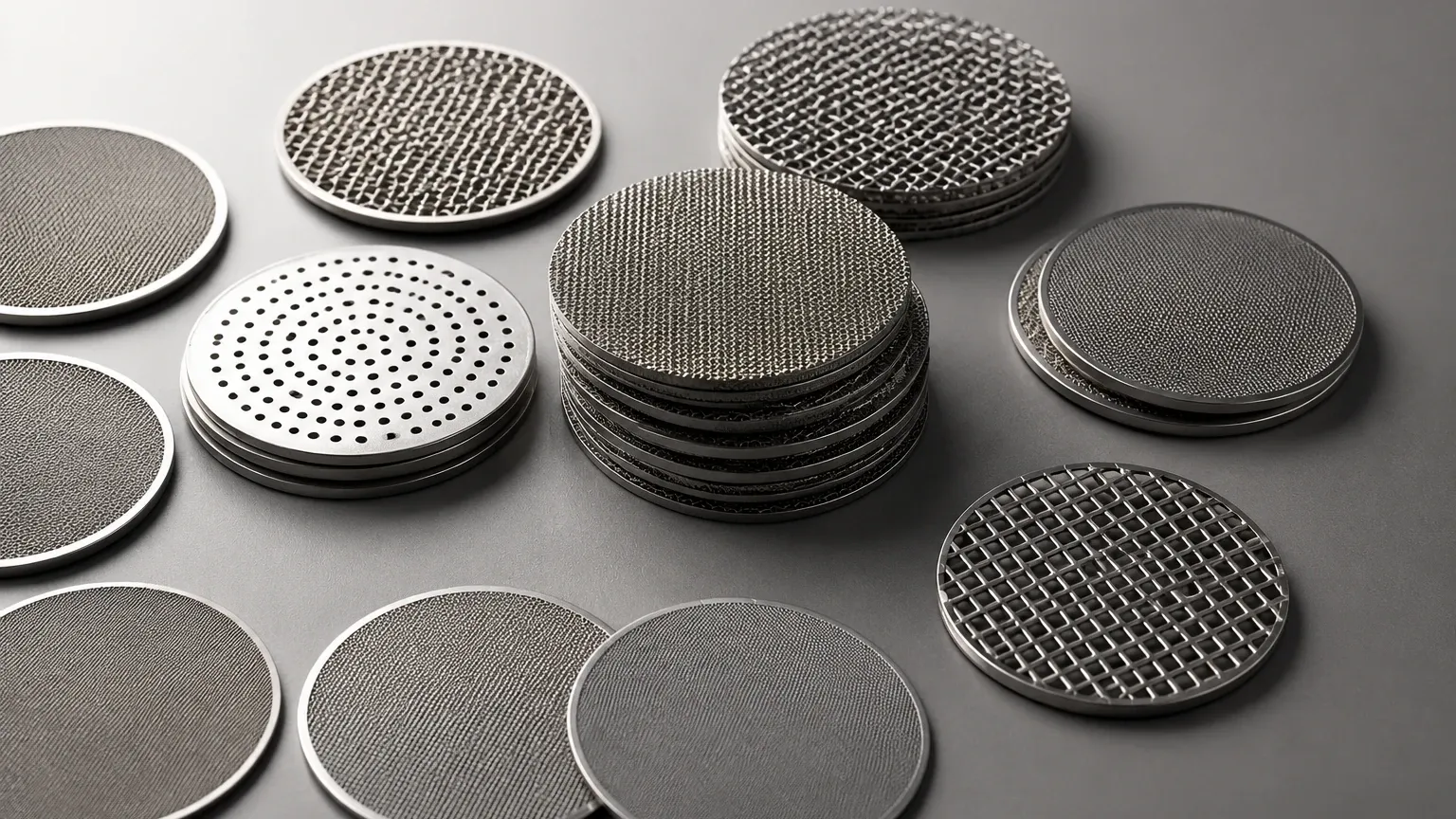
Industrial filter packs are typically composed of multiple layers of stainless steel wire mesh, often rimmed with metal or spot-welded together to form a robust filtration element. While the term "filter tip" is frequently associated with laboratory consumables, in heavy industrial and precision engineering contexts, a filter tip pack refers to specialized, small-diameter mesh assemblies used in extrusion tips, high-pressure nozzles, and sensitive analytical instrumentation. This guide explores the technical specifications, engineering considerations, and selection criteria for these essential components.
Technical Fundamentals of Filter Discs & Packs
The efficiency of any filter pack is determined by the configuration of its layers. Unlike single-layer screens, which may lack the mechanical strength to withstand high differential pressures, a multi-layer pack combines different mesh counts to achieve a balance between fine filtration and structural rigidity.
Layer Configuration and Function
In a standard multi-layer pack, layers are arranged strategically:
1. Filtration Layer: The central layer or layers that define the micron rating. This is usually a fine Dutch weave or a high-count square mesh.
2. Support Layer: Coarser mesh layers placed on either side of the filtration layer to prevent it from deforming under pressure.
3. Drainage Layer: Outermost layers that facilitate the even distribution of fluid across the entire surface area of the pack, reducing localized blinding.
Material Selection: Stainless Steel Alloys
Stainless steel is the industry standard for these components due to its corrosion resistance and thermal stability.
* Grade 304: Suitable for general industrial applications where moderate corrosion resistance is required.
* Grade 316L: The preferred choice for pharmaceutical, food and beverage, and chemical processing. The lower carbon content and addition of molybdenum enhance resistance to pitting and chloride-induced corrosion.
* Specialty Alloys: For extreme environments, materials like Inconel or Monel may be used, though 316L remains the most common for standard industrial filter tip pack applications.
Engineering Considerations for the Filter Tip Pack
When integrating a filter tip pack into a precision nozzle or extrusion system, engineers must account for several variables that impact the total cost of ownership and system uptime.
Pressure Drop and Flow Resistance
A primary concern in filtration design is the pressure drop ($ΔP$) across the media. As the micron rating becomes finer, the resistance to flow increases. For high-viscosity fluids, such as molten polymers or heavy oils, the pressure drop can be significant. Engineers must calculate the effective filtration area (EFA) to ensure that the flow velocity does not exceed the structural limits of the mesh, which could lead to media migration or "breakthrough."
Mechanical Integrity and Rim Design
To ensure a leak-free seal within a housing, filter packs are often finished with a peripheral rim. This rim can be made from aluminum, copper, or stainless steel. The choice of rim material depends on the operating temperature and the sealing surface of the machine. For instance, aluminum rims are often used in polymer extrusion because they are soft enough to provide a secondary seal when compressed within the breaker plate assembly.
Micron Rating and Filtration Efficiency
It is important to distinguish between "absolute" and "nominal" micron ratings. An absolute rating indicates the diameter of the largest hard spherical particle that will pass through the filter under specified test conditions. For a filter tip pack used in sensitive analytical equipment, an absolute rating is often required to prevent any possibility of downstream contamination.
Applications in High-Precision Industries
The versatility of Filter Discs & Packs allows them to be utilized across a wide spectrum of demanding sectors.
Polymer and Fiber Extrusion
In the production of synthetic fibers and plastic films, even microscopic impurities can cause "spin breaks" or defects in the final product. Filter packs are placed before the spinneret or die to remove gel particles and carbonized material. In these applications, the packs must withstand temperatures exceeding 300°C and pressures up to 5,000 PSI.
Pharmaceutical and Biotechnology
Filter tip packs are used in laboratory-scale and industrial-scale chromatography and fluid handling systems. Here, the focus is on cleanliness and chemical compatibility. The use of 316L stainless steel ensures that the filtration media does not leach metal ions into the process stream, maintaining the biological integrity of the product.
Chemical Processing and Petrochemicals
In chemical dosing and catalyst protection, these packs serve as the final barrier against particulate matter. Their ability to be cleaned and reused makes them a cost-effective alternative to disposable synthetic filters in aggressive solvent environments.
Customization and OEM Manufacturing Capabilities
Because industrial systems vary widely in their design, off-the-shelf filtration solutions are rarely sufficient. Customization is a standard requirement for most engineering teams.
Geometric Variations
While circular discs are the most common, filter packs can be manufactured in various shapes, including:
* Rectangular and Oval: Used in specialized manifold systems.
* Annular (Donut-shaped): Designed for coaxial flow systems.
* Conical or Cylindrical: For applications requiring a larger surface area within a constrained diameter.
Welding and Assembly Techniques
For packs that do not require a metal rim, spot welding is used to keep the layers aligned. Precision spot welding ensures that the mesh layers remain bonded without obstructing the flow path or introducing thermal stress that could weaken the alloy. In high-purity applications, ultrasonic welding or plasma welding may be employed to avoid the use of filler metals.
Mesh Weave Types
The choice of weave significantly affects performance:
* Plain Weave: Simple over-under pattern, ideal for high-flow, low-pressure applications.
* Dutch Weave: Features a higher density of wires in one direction, providing superior strength and finer filtration levels (down to 5-10 microns).
* Twill Weave: Allows for heavier wires in a given mesh count, increasing the durability of the pack.
Performance Evaluation and Quality Control
To ensure reliable performance in the field, industrial filter packs must undergo rigorous quality control measures. For engineers, confirming these standards with the manufacturer is a vital step in the procurement process.
1. Bubble Point Test: Used to verify the pore size and integrity of the filtration layer. It measures the pressure required to force air bubbles through a liquid-saturated filter.
2. Flatness and Dimensional Accuracy: In precision nozzles, a pack that is not perfectly flat can lead to bypass or uneven flow. Laser cutting is often used to ensure tolerances within microns.
3. Material Certification: Providing Mill Test Reports (MTRs) to confirm the chemical composition of the stainless steel, ensuring it meets the specified grade (e.g., ASTM standards).
Maintenance, Cleaning, and Replacement Cycles
One of the primary advantages of stainless steel Filter Discs & Packs is their cleanability. Unlike polymer-based media, metal mesh can be restored to near-original performance levels through several methods:
* Ultrasonic Cleaning: High-frequency sound waves create cavitation bubbles that dislodge particles trapped deep within the mesh layers.
* Chemical Cleaning: Soaking the packs in solvents or acids (compatible with the metal) to dissolve organic or inorganic buildup.
* Pyrolysis: For polymer extrusion applications, heating the packs in a controlled vacuum furnace can burn off residual plastic without damaging the mesh structure.
When to Replace
Despite their durability, filter packs eventually reach the end of their service life. Indicators for replacement include:
* Permanent Pressure Drop: When the "clean" pressure drop after maintenance is significantly higher than the original specification.
* Mechanical Deformation: Visible bowing or "dishing" of the pack, which suggests the support layers have been compromised.
* Mesh Fraying: Any signs of wire breakage at the edges or center, which poses a risk of media migration into the process stream.
Conclusion: Selecting the Right Partner for Filtration Solutions
Choosing a filter tip pack involves more than just matching a micron rating. It requires a holistic view of the operating environment, including chemical exposure, thermal cycles, and mechanical loads. For B2B buyers and engineers, the focus should remain on technical transparency and manufacturing precision.
By prioritizing high-quality materials like 316L stainless steel and demanding rigorous testing protocols, organizations can significantly reduce the risk of equipment failure and product contamination. Whether for a standard hydraulic system or a specialized chemical reactor, the right combination of mesh weave, layer structure, and rim design ensures that the filtration system operates at peak efficiency. For those seeking tailored solutions, reviewing technical options and application support for Filter Discs & Packs is the first step toward optimizing industrial filtration performance.
