


Filter Pack Water Well
In the field of groundwater extraction and industrial well management, the integrity of the borehole is dependent on the precise engineering of the filtration interface. A filter pack water well system serves as the primary defense against sediment infiltration, ensuring that the water produced is free of suspended solids while maintaining the structural stability of the surrounding geological formation. For engineers and technical procurement teams, understanding the transition from traditional gravel-based packs to high-precision stainless steel filtration components is essential for optimizing well longevity and hydraulic efficiency.
Industrial wells, particularly those used in chemical processing, food and beverage production, and pharmaceutical manufacturing, require filtration standards that exceed domestic or agricultural requirements. This article examines the technical considerations of filter pack design, the integration of advanced Filter Discs & Packs in well construction, and the engineering criteria necessary for selecting the appropriate filtration media.
The Mechanics of the Filter Pack in Water Well Systems
A filter pack, often referred to as an artificial gravel pack, is a granular material placed in the annular space between the well screen and the borehole wall. Its primary function is twofold: to stabilize the aquifer formation and to act as a secondary filter that prevents fine-grained sands from entering the well screen.
The effectiveness of a filter pack water well depends heavily on the grain size distribution of the aquifer. In a "naturally developed" well, the finer materials are removed from the formation during the development phase, leaving the coarser native materials to act as the filter. However, in formations where the native material is too fine or uniform, an artificial filter pack must be engineered.
From a hydraulic perspective, the filter pack must be more permeable than the formation itself to minimize drawdown and energy costs. If the filter pack is too dense, it creates a skin effect that increases well loss. Conversely, if the pore spaces are too large, the pack fails to retain the formation sands, leading to "sand pumping," which can destroy downstream pumps and valves. Engineering the correct balance requires a detailed sieve analysis of the formation samples to determine the optimal uniformity coefficient and grain size.
Evolution from Granular Media to Precision Metal Filtration
While traditional gravel packs are effective for standard water wells, demanding industrial environments often require the integration of precision metal components to enhance performance. In many high-spec applications, the well screen itself is augmented or replaced by multi-layer stainless steel filter structures.
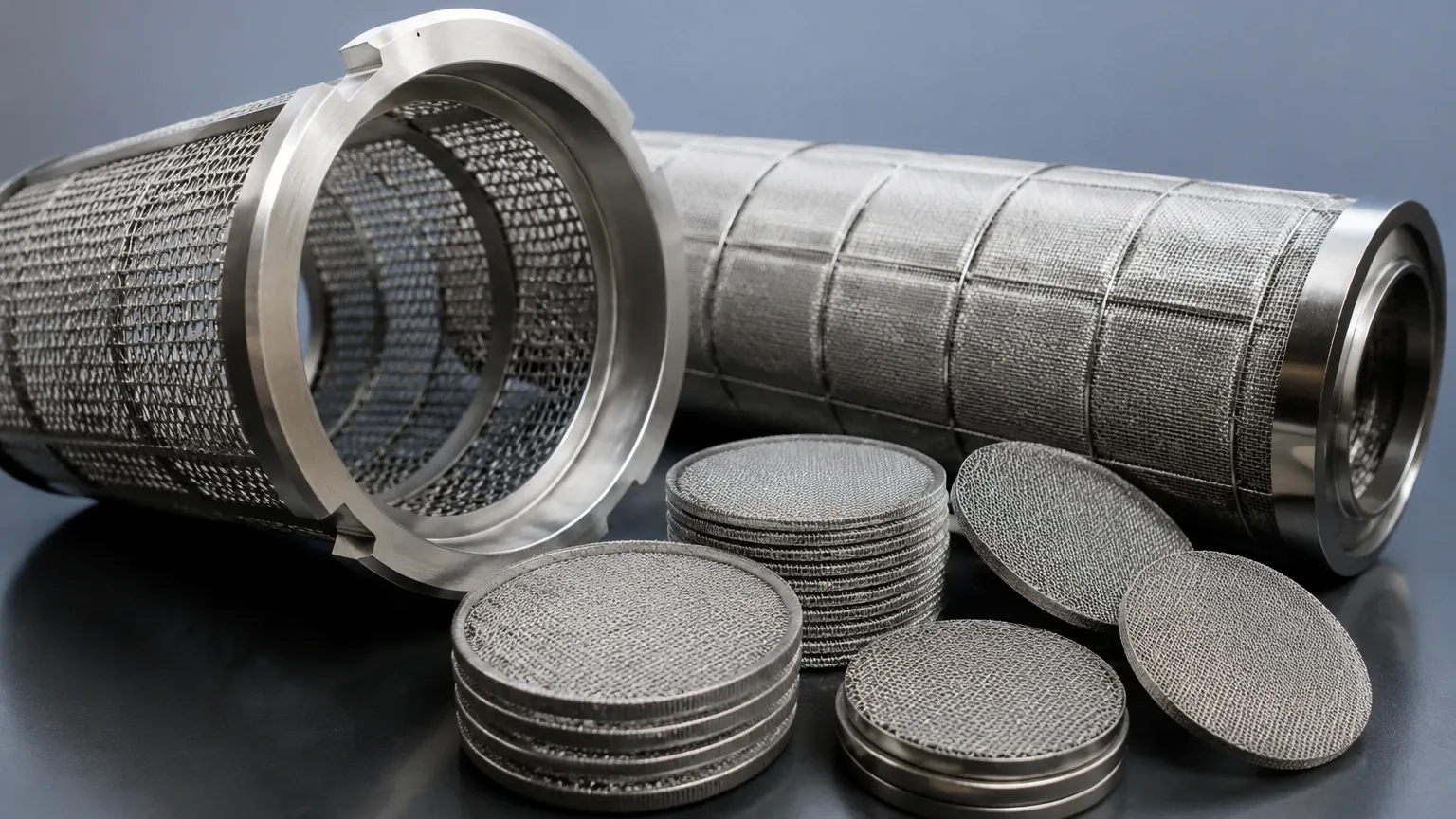
Stainless steel Filter Discs & Packs are increasingly utilized in specialized well applications, such as oil-water separation wells, geothermal extraction, and environmental remediation wells. Unlike loose gravel, these precision-engineered metal packs offer:
* Fixed Pore Geometry: Sintered wire mesh and multi-layer filter packs provide a consistent micron rating that does not shift under high pressure or turbulent flow.
* Structural Integrity: In deep wells or high-pressure injection wells, the mechanical strength of stainless steel prevents the collapse or migration of the filtration media.
* Chemical Resistance: In contaminated aquifers or industrial processing sites, standard gravel may react with chemicals or dissolve. Stainless steel (specifically 304 or 316L grades) provides the necessary inertness.
By incorporating these metal filtration elements, engineers can achieve a higher degree of control over the filtration process, moving from the empirical guesswork of gravel sizing to the deterministic performance of laboratory-validated mesh ratings.
Material Selection and Corrosion Resistance
The subsurface environment is often chemically aggressive. Factors such as pH levels, dissolved oxygen, and the presence of hydrogen sulfide (H2S) or chlorides can lead to rapid degradation of inferior materials. When designing a filter pack water well for long-term service, material selection is the most critical factor in determining the total cost of ownership.
Stainless Steel Grade 304 vs. 316L
For most freshwater applications, Grade 304 stainless steel provides sufficient corrosion resistance and mechanical strength. However, in brackish water or environments with high chloride concentrations, Grade 316L is the industry standard. The addition of molybdenum in 316L enhances resistance to pitting and crevice corrosion, which are common failure modes in submerged well components.
Mechanical Strength and Collapse Resistance
In deep-well applications, the filter pack and screen assembly must withstand significant hydrostatic and lithostatic pressures. Precision filter packs manufactured by specialists like Kaifil utilize advanced welding and sintering techniques to ensure that the mesh layers do not delaminate or deform. This structural rigidity is essential during the well-cleaning process, where high-pressure jetting or acidizing treatments are applied to remove encrustation.
Engineering Selection: Micron Rating and Permeability
Selecting the correct filtration accuracy for a filter pack water well requires a balance between particle retention and flow rate. In the filtration industry, this is defined by the micron rating. For industrial well applications, the choice of micron rating is usually dictated by the D10 and D60 values of the formation sand (the grain sizes at which 10% and 60% of the sample pass through a sieve).
1. Retention Efficiency: The filter pack must be fine enough to retain approximately 90% of the formation material. If the mesh is too coarse, the well will continue to produce sand throughout its lifecycle.
2. Permeability and Flow Velocity: High-capacity industrial wells require high flow velocities. If the pore size of the Filter Discs & Packs is too small, the pressure drop (delta P) across the filter will increase, leading to inefficient pump operation and potential cavitation.
3. Sintered Multi-Layer Design: To optimize both retention and flow, engineers often specify sintered multi-layer mesh. This design includes a fine filtration layer protected by coarser support layers. This configuration provides the necessary mechanical strength to resist the forces of well development while maintaining a high open-area ratio for fluid flow.
Operational Longevity and Maintenance Considerations
A well-designed filter pack water well should have an operational lifespan of 20 to 50 years. However, performance can degrade due to three primary factors: silting, biofouling, and encrustation.
* Silting: Over time, extremely fine particles (silts and clays) can migrate into the filter pack. Using precision stainless steel mesh allows for more effective backwashing compared to traditional gravel packs, as the uniform pore structure facilitates the release of trapped particles.
* Biofouling: Iron-reducing bacteria and other microbes can create biofilms that clog the filter interface. Stainless steel components are compatible with aggressive chemical shock treatments, such as high-concentration chlorine or specialized biocides, which might degrade synthetic or lower-grade metal filters.
* Encrustation: Mineral deposits, such as calcium carbonate, can precipitate out of the water and bridge the openings in the filter. The mechanical durability of stainless steel Filter Discs & Packs allows for physical cleaning methods, including wire brushing or high-pressure water jetting, to restore flow capacity without damaging the filter media.
Customization for Industrial Well Applications
Every geological formation is unique, and off-the-shelf filtration solutions often fall short in specialized industrial contexts. Customization is a key requirement for technical professionals managing complex groundwater projects.
OEM manufacturers like Kaifil provide bespoke filtration solutions tailored to specific well geometries and flow requirements. Customization options include:
* Variable Layering: Adjusting the number of mesh layers and their sequence to handle specific particle size distributions.
* Bespoke Geometries: Manufacturing filter packs in cylindrical, disc, or conical shapes to fit specialized well screen designs or intake valves.
* Alloy Selection: Beyond standard stainless steel, utilizing exotic alloys for highly acidic or high-temperature geothermal wells.
When specifying a filter pack for a water well, engineers should confirm the manufacturer's capabilities in precision weaving and sintering. The quality of the bond between mesh layers directly impacts the filter's ability to withstand the stresses of installation and long-term operation.
Conclusion: Selecting the Right Partner for Well Filtration
The success of a filter pack water well project depends on the synergy between geological assessment and filtration engineering. While the gravel pack provides the bulk stabilization, the precision components—such as the screens and the Filter Discs & Packs—determine the ultimate purity of the water and the efficiency of the system.
For engineers and purchasing teams, the focus should remain on technical validation. This includes reviewing material certifications, pressure drop calculations, and particle retention data. By choosing high-quality stainless steel filtration solutions, industrial operators can reduce maintenance frequency, prevent pump damage, and ensure a reliable supply of water for their critical processes.
As industrial demands for water quality continue to rise, the transition toward precision-engineered metal filter packs represents a necessary evolution in well construction technology. Whether for chemical processing, pharmaceutical grade water, or large-scale municipal supply, the right filtration infrastructure is the foundation of a sustainable and high-performing water well.
