


Pack 4 Filter
In high-pressure industrial filtration, the structural integrity and precision of the media are paramount. A "pack 4 filter"—often referring to a four-layer multi-layer filter pack—represents a specific engineering configuration designed to balance filtration fineness with mechanical support. These assemblies are critical components in industries ranging from polymer extrusion and chemical processing to hydraulic systems and pharmaceutical manufacturing. Understanding the technical nuances of these Filter Discs & Packs is essential for engineers tasked with optimizing throughput and protecting downstream equipment.
Industrial filtration is rarely a single-stage process. When dealing with high-viscosity fluids or high-velocity gas streams, a single layer of wire mesh often lacks the rigidity to withstand differential pressure or the depth to provide adequate dirt-holding capacity. This is where multi-layer configurations, such as the pack 4 filter, provide a robust solution. By layering different mesh counts and weave patterns, manufacturers can create a composite filter media that outperforms single-layer alternatives in both durability and efficiency.
The Architecture of a 4-Layer Filter Pack
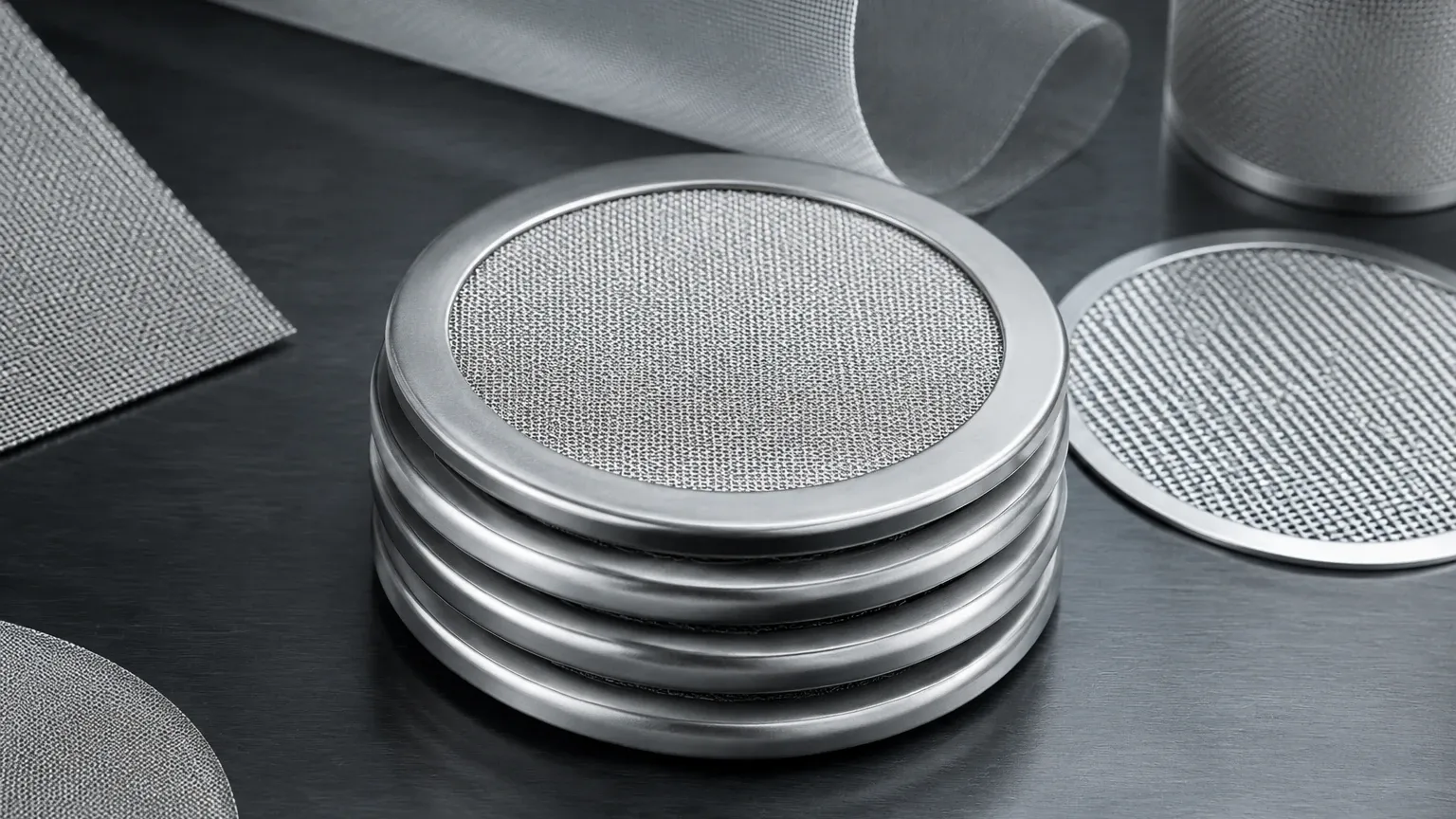
The performance of a pack 4 filter is determined by its internal architecture. Each layer in a four-layer assembly serves a distinct functional purpose, working in tandem to ensure the fluid stream is cleaned without causing excessive pressure drops.
1. The Filtration Layer
This is the core of the pack, usually consisting of a fine stainless steel wire mesh or metal fiber felt. The micron rating of this layer defines the filtration accuracy of the entire assembly. In a 4-layer setup, this is typically the second or third layer, protected by coarser meshes on either side.
2. The Support Layer
High-pressure environments can easily deform fine mesh. The support layer consists of a heavy-duty, coarse mesh that provides the necessary structural backbone. It prevents the fine filtration layer from collapsing or migrating under the force of the fluid flow.
3. The Drainage/Protective Layer
Positioned on the outermost sides of the pack, these layers facilitate even fluid distribution across the filtration surface. They also act as a primary shield against large particulate matter that could prematurely blind the finer internal mesh. In a pack 4 filter, having symmetrical drainage layers can also make the filter bi-directional, reducing installation errors.
Material Selection and Engineering Considerations
For industrial applications, material compatibility is non-negotiable. Most professional-grade filter packs are manufactured from stainless steel, specifically AISI 304, 316, or 316L.
* SS 304: Suitable for general industrial use where basic corrosion resistance is required.
* SS 316/316L: Preferred for chemical processing, pharmaceutical, and marine environments due to superior resistance to pitting and crevice corrosion, especially in the presence of chlorides.
* Special Alloys: In extreme environments involving high temperatures or highly acidic/alkaline fluids, alloys like Hastelloy, Monel, or Inconel may be utilized in the filter pack construction.
Beyond material choice, the weave pattern of the mesh layers significantly impacts performance. Plain weave is common for support layers, while Twilled Dutch Weave or Plain Dutch Weave is often selected for the filtration layer to achieve high-density pore structures and precise micron ratings.
Manufacturing Methods: Sintered vs. Bound Packs
How the layers of a pack 4 filter are held together is a critical factor for engineers to consider. There are two primary methods used in industrial manufacturing:
Sintered Filter Packs
Sintering involves placing the multi-layer mesh in a high-temperature vacuum furnace. Through molecular diffusion, the contact points of the wires are fused together without the use of binders or filler metals. This results in a monolithic structure that is incredibly rigid and permanent. Sintered packs are ideal for high-pressure applications where mesh migration (the movement of individual wires) cannot be tolerated.
Spot-Welded or Framed Packs
For less demanding applications, layers may be held together by spot welding at the perimeter or by an aluminum or stainless steel rim (frame). These are often more cost-effective and are frequently used in plastic extrusion where the filter is considered a semi-consumable item. The choice between a sintered or framed pack 4 filter depends on the operating pressure and the required lifespan of the component.
Technical Performance Metrics
When evaluating a pack 4 filter for a specific system, engineers must look beyond the physical dimensions. Several technical metrics dictate the efficiency of the filtration process:
1. Filtration Rating (Micron): This defines the size of the smallest particle the filter is designed to intercept. Multi-layer packs allow for "graded" filtration, where larger particles are trapped by the outer layers, extending the life of the inner fine layer.
2. Pressure Drop (ΔP): Every filter introduces resistance. A well-designed 4-layer pack optimizes the open area of the support layers to minimize the initial pressure drop, ensuring the system pump operates within its efficient range.
3. Dirt Holding Capacity: This refers to the amount of contaminant the filter can retain before the pressure drop reaches a critical limit. The multi-layer nature of these packs inherently provides more volume for particle entrapment compared to single-layer discs.
4. Mechanical Strength: The ability of the pack to resist bursting or buckling under the maximum expected differential pressure of the system.
Applications in Modern Industry
The versatility of the pack 4 filter makes it a staple in several high-stakes manufacturing sectors:
Polymer and Plastic Extrusion
In the production of films, fibers, and resins, even microscopic impurities can cause "slugs" or breaks in the material. Filter packs are placed in the breaker plate of the extruder to remove carbonized particles and un-melted resin, ensuring a smooth, high-quality output.
Chemical and Petrochemical Processing
Corrosive fluids and high temperatures require filters that maintain their integrity. Multi-layer stainless steel packs are used to protect sensitive valves and instrumentation from debris in the process stream.
Hydraulic and Lubrication Systems
In aerospace and heavy machinery, hydraulic fluid must remain ultra-clean to prevent wear on precision-machined components. A 4-layer filter pack provides the necessary filtration fineness while handling the high-frequency pressure pulsations common in hydraulic circuits.
Food and Beverage
Stainless steel mesh is inherently non-toxic and easy to clean. Filter packs are used in the filtration of oils, syrups, and beverages where hygiene and the absence of fiber shedding are critical requirements.
Selection Guide: Confirming Specifications Before Purchase
To ensure the optimal performance of a pack 4 filter, purchasing teams and engineers should provide manufacturers with a comprehensive set of specifications. Relying on generic descriptions can lead to premature filter failure or system inefficiency. Key data points include:
* Exact Dimensions: Diameter (for discs), length/width (for rectangular packs), and total thickness.
* Layer Configuration: Specify the mesh count or micron rating for each of the four layers. For example: 20 mesh / 100 mesh / 325 mesh / 20 mesh.
* Edge Treatment: Does the application require a spot-welded edge, a bound rim (aluminum, copper, or stainless steel), or a sintered edge?
* Operating Conditions: Maximum operating temperature, normal and peak operating pressure, and the chemical composition of the fluid being filtered.
* Quantity and Packaging: Industrial filters are often ordered in bulk; ensure the packaging prevents contamination during shipping and storage.
Total Cost of Ownership (TCO) in Filtration
While the initial purchase price of a high-quality pack 4 filter is a factor, the total cost of ownership is a more accurate measure of value. Low-quality filters may suffer from mesh migration, inaccurate micron ratings, or structural failure, leading to frequent downtime and potential damage to expensive downstream equipment.
By investing in precision-engineered Filter Discs & Packs, facilities can achieve longer service intervals, higher product quality, and reduced maintenance costs. The durability of stainless steel also allows many of these packs to be cleaned and reused (especially in the case of sintered packs), further reducing the long-term environmental and financial impact.
In conclusion, the pack 4 filter is a sophisticated tool in the industrial filtration arsenal. Its multi-layer design provides a unique combination of precision and strength that single-layer filters cannot match. By understanding the material science, manufacturing techniques, and performance metrics associated with these components, engineering professionals can make informed decisions that enhance the reliability and efficiency of their industrial processes.
