


Filter Pack
In the landscape of industrial filtration, the filter pack represents a critical component for ensuring the purity of fluids, gases, and molten polymers. These components are engineered to withstand extreme pressures and temperatures while maintaining precise filtration accuracy. For engineers and procurement professionals, selecting the appropriate filter pack involves a deep understanding of material science, fluid dynamics, and mechanical design. As a specialized manufacturer, Kaifil provides high-performance Filter Discs & Packs designed to meet the rigorous demands of modern industrial processes.
This guide explores the technical nuances of filter packs, their construction, material considerations, and the engineering criteria essential for optimizing filtration performance in B2B environments.
Understanding the Engineering of a Filter Pack
A filter pack is rarely a single piece of wire mesh; rather, it is often a sophisticated assembly of multiple layers designed to perform specific functions within a filtration system. The primary objective of a multi-layer pack is to provide a gradient filtration effect, where larger particles are trapped by outer layers, and finer particles are captured by internal layers. This design prevents the premature blinding of the finest mesh, thereby extending the service life of the component.
Layer Configuration and Functionality
Typical industrial packs consist of three to five layers, though specialized applications may require more. The configuration usually follows a logical progression:
1. Support Layer: A coarse, heavy-duty mesh that provides structural integrity. It prevents the finer filtration layers from deforming under high pressure.
2. Drainage Layer: Positioned between the support and filtration layers, this mesh facilitates the even distribution of the medium across the entire surface area of the pack.
3. Filtration Layer: This is the "working" layer, often made of fine stainless steel wire cloth or sintered metal fiber, which determines the micron rating of the assembly.
4. Protective Layer: In some designs, a final coarse mesh is added to protect the fine filtration layer from mechanical damage during installation or backwashing.
Assembly Methods: Spot Welding vs. Rimmed Edges
The method of securing these layers is vital for the pack's performance. Spot welding is a common technique where the layers are fused at specific points. This is cost-effective and suitable for many standard applications. However, for high-pressure environments—such as polymer extrusion—a rimmed or bordered filter pack is often required. These packs feature a metal binding (typically aluminum, copper, or stainless steel) compressed around the edges. The rim ensures that the layers remain perfectly aligned and provides a superior seal against the housing, preventing "bypass," where unfiltered material escapes around the edges of the filter.
Material Selection for Industrial Durability
The choice of material is perhaps the most significant factor in determining the longevity and effectiveness of a filter pack. Since these components are frequently exposed to corrosive chemicals, high temperatures, and abrasive particles, stainless steel is the industry standard.
Stainless Steel 304 vs. 316L
* SS 304: This is the most common grade used for general industrial applications. It offers excellent mechanical strength and good corrosion resistance. It is suitable for water treatment, food processing, and basic hydraulic systems.
* SS 316L: For more demanding environments, SS 316L is preferred. The addition of molybdenum enhances its resistance to pitting and crevice corrosion, particularly in chloride-rich environments. The "L" denotes low carbon content, which improves weldability and reduces the risk of intergranular corrosion. This grade is essential for pharmaceutical, chemical processing, and marine applications.
Specialized Alloys and Sintered Media
In extreme cases where standard stainless steel may fail, alloys like Inconel, Monel, or Hastelloy may be utilized. Furthermore, for applications requiring absolute filtration ratings and high dirt-holding capacity, sintered metal fiber or sintered wire mesh may be integrated into the pack. Sintering fuses the wires at their contact points through a thermal process, creating a rigid structure that cannot shift under pressure, ensuring consistent pore size throughout the filter's lifecycle.
Key Technical Specifications for Engineers
When specifying a filter pack for a new project or replacement cycle, engineers must look beyond basic dimensions. Several technical parameters dictate the efficiency of the filtration process.
Micron Rating: Nominal vs. Absolute
Understanding the difference between nominal and absolute micron ratings is crucial. A nominal rating indicates the ability of the filter to retain a majority of particles of a certain size (e.g., 90% of 20-micron particles). An absolute rating, however, signifies the diameter of the largest hard spherical particle that will pass through the filter under specified test conditions. For critical pharmaceutical or aerospace applications, absolute ratings are non-negotiable.
Pressure Drop and Flow Rate
The "clean pressure drop" is the initial resistance the filter pack offers to the fluid flow. A high initial pressure drop reduces the available operating window before the filter reaches its terminal pressure (the point at which it must be cleaned or replaced). Engineers must balance the need for fine filtration with the requirement for high flow rates. Increasing the number of layers or using a finer mesh will inevitably increase the pressure drop; therefore, the total effective filtration area (EFA) must be calculated to ensure the system remains within its design parameters.
Mechanical Strength and Burst Pressure
In high-viscosity applications like plastic extrusion, the filter pack is subjected to immense differential pressure. The pack must be engineered to resist deformation or "cupping." If the support layers are insufficient, the mesh can tear, leading to catastrophic system failure and downstream contamination. Testing for burst pressure is a standard part of the quality assurance process for heavy-duty packs.
Primary Applications of Filter Packs
The versatility of the filter pack allows it to be used across a vast array of industries, each with its own set of challenges.
Polymer and Fiber Extrusion
In the production of plastics, resins, and synthetic fibers, molten polymer is forced through a breaker plate. A filter pack is placed against this plate to remove gels, carbonized particles, and contaminants that would otherwise clog the spinnerets or create defects in the final product. These packs must handle temperatures exceeding 300°C and pressures up to 500 bar.
Chemical and Petrochemical Processing
Filter packs are used to protect sensitive catalysts and high-speed pumps from particulate damage. In these environments, chemical compatibility is the primary concern. The use of 316L or higher alloys ensures that the filter does not degrade or leach metallic ions into the process stream.
Pharmaceutical and Biotechnology
In the pharmaceutical industry, filtration components must meet stringent sanitary standards. Filter packs used here are often made of high-grade stainless steel with polished surfaces to prevent bacterial growth and facilitate easy cleaning. They are used in the production of active pharmaceutical ingredients (APIs) and the filtration of solvents.
Food and Beverage
From edible oil refining to syrup filtration, filter packs ensure that food products meet safety and clarity standards. These components must be manufactured using FDA-compliant materials and must be capable of withstanding frequent Clean-in-Place (CIP) cycles involving caustic detergents and hot water.
Customization and OEM Solutions
One of the most significant advantages of working with a specialized manufacturer like Kaifil is the ability to customize the filter pack to exact application requirements. Off-the-shelf solutions often involve compromises in either filtration efficiency or mechanical fit.
Tailored Geometry and Dimensions
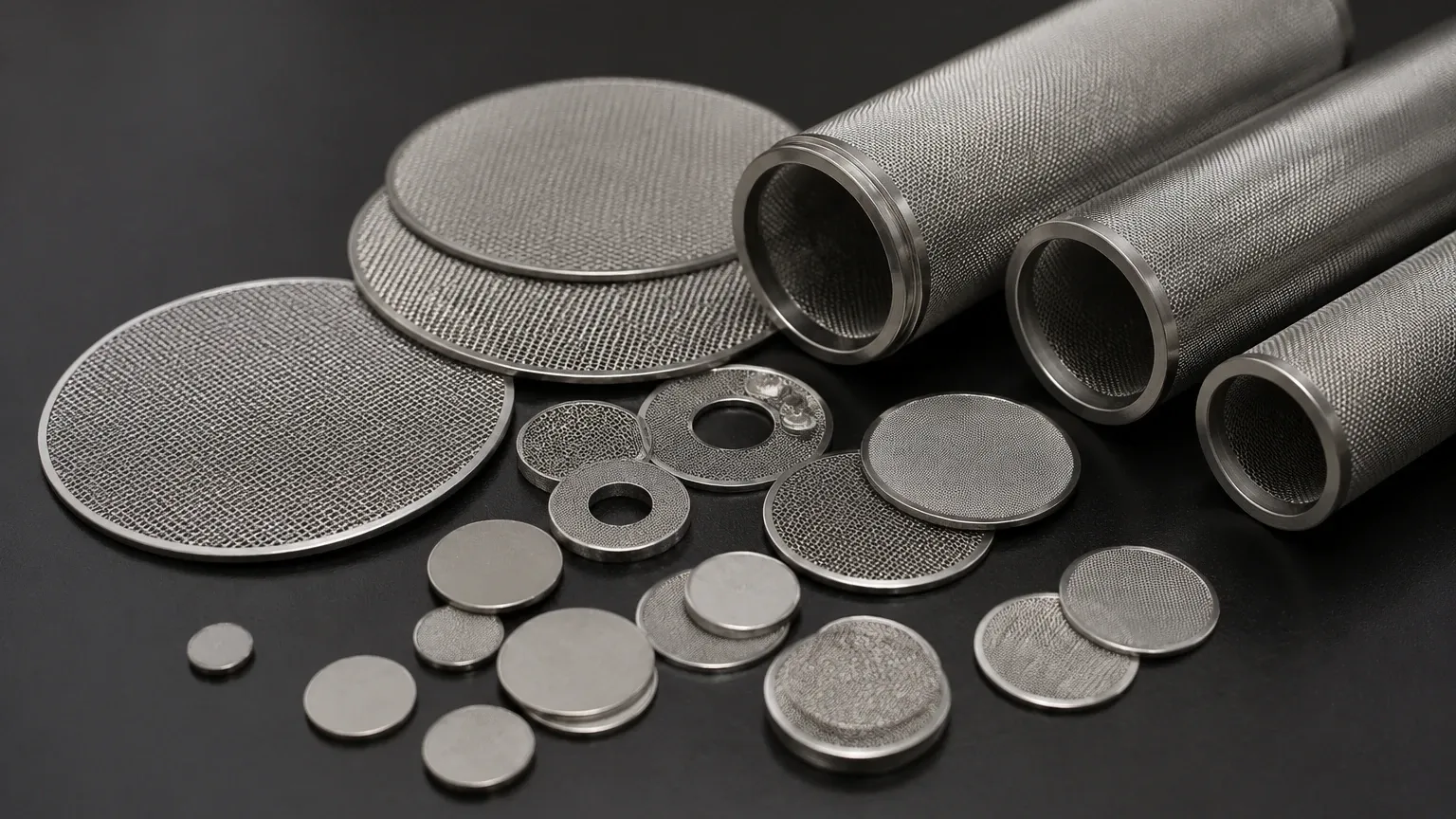
While circular discs are the most common, industrial systems often require unique shapes, including ovals, rectangles, kidney shapes, or complex ring designs. Precision laser cutting and CNC stamping allow for the production of these shapes with tight tolerances, ensuring a perfect fit within the filter housing.
Gradient Density Layering
By customizing the sequence of mesh counts within a pack, manufacturers can create a "gradient density" effect. This allows the filter to capture particles of varying sizes throughout its depth, significantly increasing the dirt-holding capacity compared to a single-layer filter. This customization is particularly valuable in processes with high contaminant loads, as it reduces the frequency of downtime for filter changes.
Engineering Collaboration
For OEM projects, the design process often begins with a technical consultation. Engineers provide data on the fluid type, viscosity, operating temperature, and target micron rating. Kaifil then develops a prototype pack, which can be tested in-situ to verify performance before moving to high-volume production. This collaborative approach minimizes risk and ensures that the final filtration solution is optimized for the specific machinery it will serve.
Maintenance, Cleaning, and Replacement Cycles
Understanding when to replace or clean a filter pack is essential for maintaining process efficiency and preventing equipment damage. The total cost of ownership (TCO) of a filtration system is heavily influenced by the durability of the filter components.
Monitoring Differential Pressure
The most reliable indicator of a filter's condition is the differential pressure (ΔP) across the pack. As the mesh becomes loaded with contaminants, the ΔP will rise. Most industrial systems are equipped with sensors that trigger an alarm when a pre-set limit is reached. Operating beyond this limit can cause the pack to collapse or allow particles to be forced through the mesh (particle shedding).
Cleaning vs. Disposal
Many stainless steel filter packs are designed to be reusable. Cleaning methods include ultrasonic cleaning, chemical bath immersion, or controlled burnout (for polymer applications). However, the effectiveness of cleaning decreases over time as sub-micron particles become deeply embedded in the mesh. Eventually, the "residual pressure drop" after cleaning will become too high, indicating that the pack has reached the end of its functional life. For highly sensitive applications, single-use packs are often preferred to eliminate the risk of cross-contamination.
Evaluating Supplier Quality
When sourcing filter packs, it is vital to evaluate the manufacturer's quality control processes. This includes material traceability (ensuring the stainless steel is the grade specified), mesh count verification, and integrity testing. A high-quality filter pack should have consistent pore distribution and robust edge sealing to ensure reliable performance throughout its service life.
Conclusion
The industrial filter pack is a precision-engineered tool that plays a vital role in protecting equipment and ensuring product quality. From the selection of SS316L for its corrosion resistance to the strategic layering of mesh for optimized dirt-holding capacity, every design choice impacts the efficiency of the filtration process. By focusing on technical specifications such as micron ratings, pressure drop, and mechanical strength, engineers can select filtration solutions that offer the best balance of performance and cost-effectiveness.
Kaifil remains committed to providing the technical expertise and manufacturing precision required to solve complex filtration challenges. Whether you require standard components or bespoke OEM designs, our Filter Discs & Packs are engineered to deliver dependable results in the most demanding industrial environments. Understanding the nuances of your specific application is the first step toward achieving optimized filtration performance and long-term operational success.
