


Engineering Guide to Industrial Wire Mesh Filter Cylinders & Tubes
In the landscape of industrial process engineering, the efficiency of liquid and gas separation systems often dictates the overall productivity and lifespan of downstream equipment. Among the most versatile and durable components used for these tasks are stainless steel filtration elements. For engineers and procurement specialists evaluating suppliers, understanding the technical nuances of manufacturing—from the precision seen in specialized hubs like a wire cloth filter manufacturing co maywood to the global OEM capabilities of modern facilities—is essential for optimizing system performance.
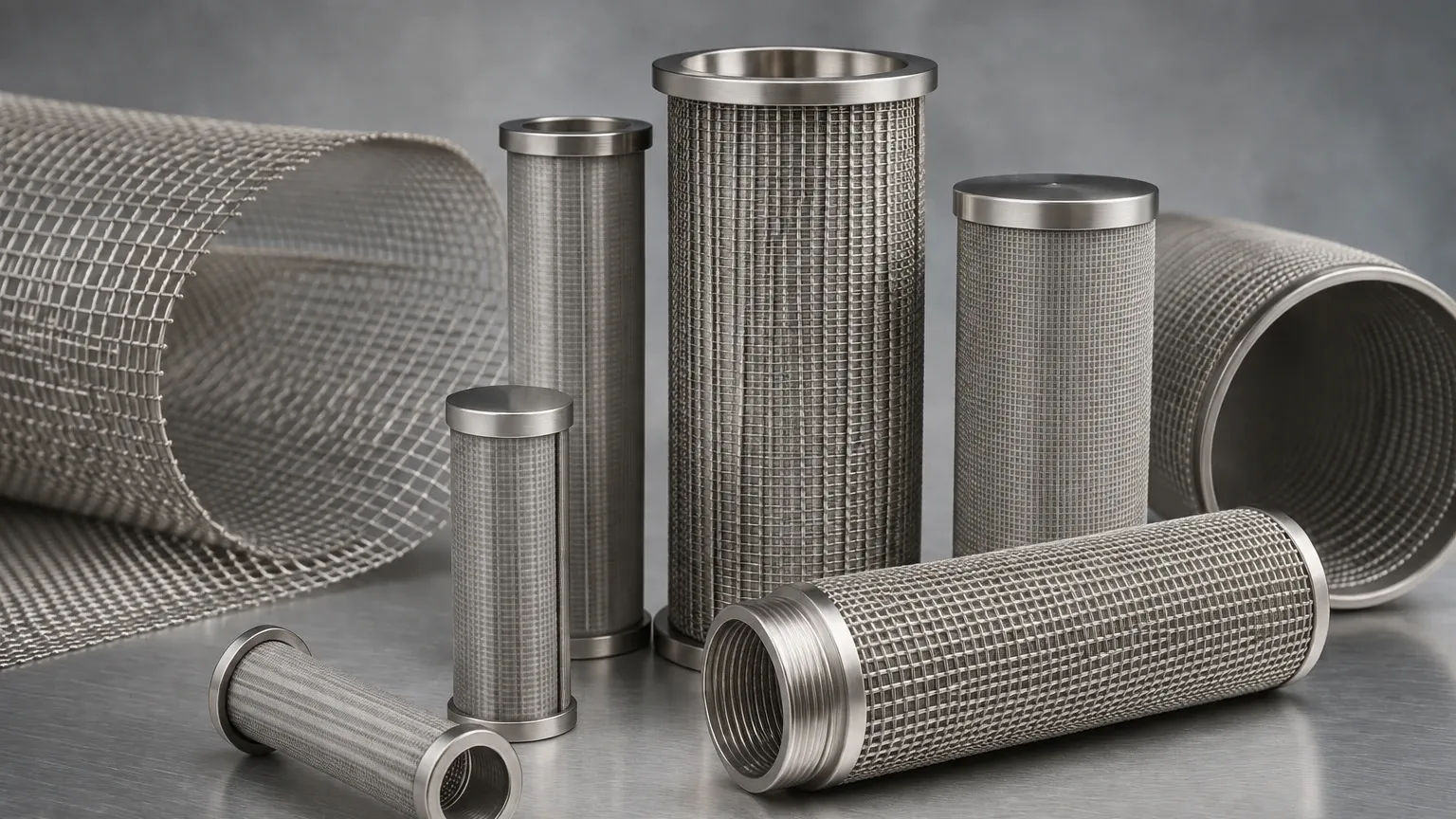
Wire Mesh Filter Cylinders & Tubes serve as the backbone for various filtration stages, offering a unique combination of mechanical strength, heat resistance, and precise pore distribution. This article examines the engineering considerations, material science, and manufacturing standards required to produce high-performance filtration components for demanding B2B applications.
1. Material Selection and Metallurgical Considerations
The performance of a wire mesh filter begins with its metallurgy. In industrial environments, the filter is often exposed to corrosive fluids, high pressures, and extreme temperatures. Selecting the correct alloy is the first step in ensuring long-term reliability.
Stainless Steel Grades
* Type 304: The standard grade for general industrial use. It offers good corrosion resistance and is suitable for most water treatment and food-grade applications where chemical exposure is moderate.
* Type 316/316L: Containing molybdenum, these grades provide superior resistance to chlorides and acids. 316L (low carbon) is preferred for welded structures like filter cylinders to prevent carbide precipitation during the welding process, which can lead to intergranular corrosion.
* Specialty Alloys: For highly aggressive environments, materials such as Monel, Inconel, or Hastelloy may be utilized, though stainless steel remains the industry standard for the majority of B2B filtration needs.
Wire Cloth Specifications
Beyond the alloy, the physical properties of the wire cloth determine the filtration accuracy. Engineers must specify the wire diameter, mesh count (the number of openings per linear inch), and the weave pattern. Common patterns include:
* Plain Weave: The simplest and most common, where wires cross over and under each other. It provides high flow rates and is easy to clean.
* Twill Weave: Allows for heavier wires in a given mesh count, increasing the mechanical strength of the cylinder.
* Dutch Weave: Uses different diameters for warp and weft wires to create a dense, tortuous path. This is ideal for high-pressure applications requiring fine micron ratings.
2. Manufacturing Processes for Filter Cylinders and Tubes
Transforming flat wire cloth into a functional cylindrical filter requires precision engineering to maintain the integrity of the mesh and the accuracy of the filtration rating. Sourcing from experienced manufacturers, such as those associated with the standards of a wire cloth filter manufacturing co maywood, ensures that the structural components meet rigorous industrial tolerances.
Forming and Longitudinal Seaming
The wire cloth is precision-cut and rolled into a cylindrical shape. The longitudinal seam is the most critical point of potential failure. High-quality manufacturers utilize advanced welding techniques:
* Plasma Welding: Provides a clean, narrow weld bead with deep penetration, ensuring the seam is as strong as the parent material.
* TIG (Tungsten Inert Gas) Welding: Offers excellent control for thinner meshes, preventing burn-through while maintaining a sanitary finish.
* Resistance Spot Welding: Often used for multi-layer filters or to secure support structures.
Structural Support and Reinforcement
For high-differential pressure applications, a single layer of wire mesh may lack the necessary hoop strength. In these cases, Wire Mesh Filter Cylinders & Tubes are designed with internal or external support cores. These cores are typically made from perforated metal or heavier expanded metal, providing the rigidity needed to prevent collapsing or bursting during pressure surges.
3. Engineering Performance Metrics
When specifying a filter for a new project or replacing an existing component, engineers must evaluate several key performance indicators (KPIs) to ensure the component is fit for purpose.
Micron Rating: Absolute vs. Nominal
* Nominal Rating: Indicates the ability of the filter to retain the majority of particles of a specific size (e.g., 90% of 20-micron particles). This is suitable for non-critical applications.
* Absolute Rating: Refers to the diameter of the largest hard spherical particle that will pass through the filter under specified test conditions. For pharmaceutical or high-precision hydraulic systems, absolute ratings are mandatory.
Pressure Drop (Delta P)
The initial pressure drop across a clean filter is a function of the open area of the mesh and the viscosity of the fluid. A higher mesh count (finer filtration) generally results in a higher pressure drop. Engineers must balance the need for fine filtration with the energy costs associated with pumping fluids through a restrictive media.
Dirt Holding Capacity
This metric defines how much contaminant a filter can retain before the pressure drop reaches a terminal level, necessitating cleaning or replacement. Multi-layer sintered mesh cylinders often provide superior dirt-holding capacity compared to single-layer designs by incorporating a depth-filtration effect.
4. Customization and OEM Integration
Industrial applications rarely follow a "one size fits all" approach. Customization is often required to integrate filtration elements into existing housings or specialized machinery. Manufacturers specializing in custom solutions provide several modification options:
* End Cap Configurations: Filters can be fitted with various end caps, including NPT threaded fittings, flanges, DOE (Double Open End), or SOE (Single Open End) with O-ring seals (e.g., 222 or 226 connectors).
* Sintering Technology: For extreme durability, multiple layers of wire cloth can be sintered together. This process uses heat and pressure to bond the wires at every contact point, creating a porous metal plate that is incredibly robust and cannot migrate or shed fibers.
* Dimensional Tailoring: Custom lengths and diameters are essential for OEM equipment manufacturers who need to fit filtration stages into compact footprints.
Working with a provider that understands the legacy of precision, such as a wire cloth filter manufacturing co maywood, allows engineers to receive components that meet exact specifications for concentricity and length tolerances, which are vital for leak-free sealing.
5. Maintenance, Cleaning, and Total Cost of Ownership
One of the primary advantages of stainless steel Wire Mesh Filter Cylinders & Tubes over disposable polymer filters is their cleanability. In a B2B context, this significantly reduces the Total Cost of Ownership (TCO) by eliminating the recurring cost of replacement cartridges and the environmental impact of waste disposal.
Cleaning Methods
* Backwashing: Reversing the flow of the fluid to dislodge particles from the surface of the mesh. This is often automated in continuous process systems.
* Ultrasonic Cleaning: Using high-frequency sound waves in a cleaning solution to remove fine particles trapped deep within the mesh pores. This is highly effective for Dutch weave and sintered filters.
* Chemical Cleaning: Using surfactants or acids to dissolve organic or mineral deposits. It is vital to ensure the cleaning agent is compatible with the stainless steel grade (e.g., avoiding concentrated hydrochloric acid on Type 304).
Evaluating Replacement Cycles
While stainless steel filters are durable, they are not infinite. Fatigue from pressure cycling, erosion from abrasive particles, or damage from improper cleaning can eventually compromise the mesh. Engineers should monitor the "recovery pressure"—the pressure drop after a cleaning cycle. If the pressure drop remains high after thorough cleaning, the filter may be blinded by sub-micron particles or internal scaling, signaling the need for a replacement.
6. Industry-Specific Applications
The versatility of wire mesh cylinders allows them to be deployed across a wide spectrum of industries, each with its own regulatory and functional requirements.
* Chemical Processing: Used for catalyst recovery and the filtration of aggressive solvents. The chemical compatibility of 316L stainless steel is a primary driver here.
* Food and Beverage: Requires sanitary designs with smooth welds and no crevices where bacteria can grow. Wire mesh filters are used for straining juices, oils, and syrups.
* Hydraulic Systems: High-pressure tubes protect sensitive valves and actuators from particulate contamination, which is the leading cause of hydraulic system failure.
* Water Treatment: From pre-filtration in desalination plants to protecting spray nozzles in industrial cooling towers, wire mesh provides a reliable first line of defense.
Conclusion
Selecting the right filtration component involves a deep dive into material science, fluid dynamics, and manufacturing precision. Whether an engineer is looking for the regional expertise associated with a wire cloth filter manufacturing co maywood or seeking a global OEM partner for high-volume production, the focus must remain on the technical integrity of the product.
By prioritizing high-quality Wire Mesh Filter Cylinders & Tubes, industrial operations can achieve higher purity standards, protect expensive downstream equipment, and realize significant cost savings through the use of cleanable, durable stainless steel media. When performance is non-negotiable, the details of the weave, the quality of the weld, and the precision of the fit make all the difference.
Download Wire Cloth Filter Manufacturing Co Maywood as a PDF
