


Engineering Guide to Selecting a Steel Mesh Filter Manufacturer for Industrial Applications
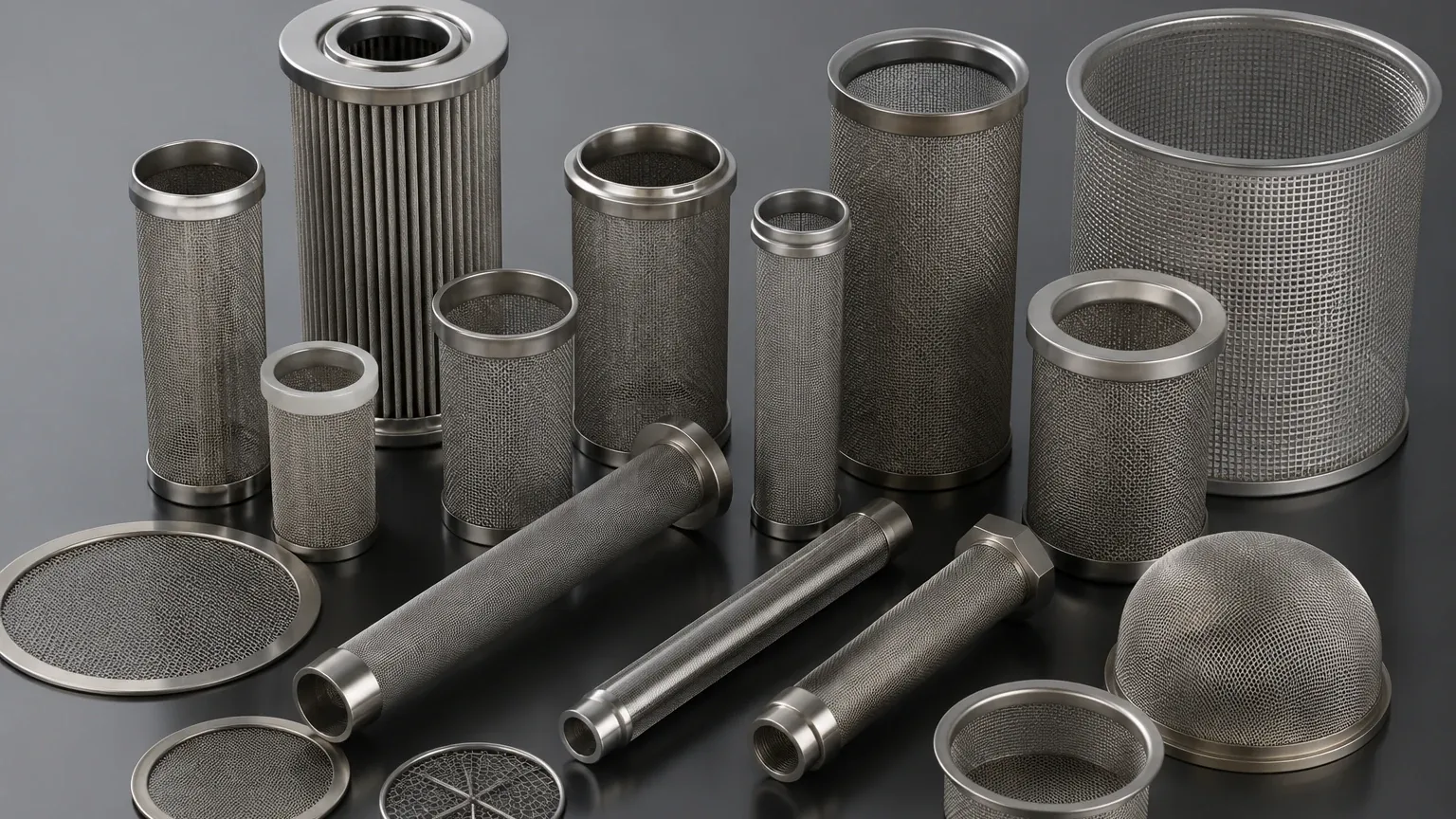
In industrial engineering, the efficiency of a fluid system is often dictated by the precision of its filtration components. For sectors ranging from chemical processing and pharmaceuticals to food and beverage production, the reliability of filtration media is a non-negotiable requirement. Stainless steel wire mesh remains the material of choice for these demanding environments due to its thermal stability, chemical resistance, and mechanical strength. When sourcing Wire Mesh Filter Cylinders & Tubes, engineers must look beyond basic dimensions and consider the metallurgical and structural nuances that define long-term performance.
Selecting a qualified steel mesh filter manufacturer involves evaluating their ability to balance filtration accuracy with structural integrity. This guide provides a technical overview of the operating principles, material considerations, and engineering criteria necessary for selecting high-performance filtration components.
Technical Fundamentals of Wire Mesh Filter Cylinders & Tubes
Wire mesh filter cylinders and tubes are specialized components designed to remove solid contaminants from liquid or gas streams. Unlike disposable synthetic filters, these stainless steel components operate primarily through surface filtration. Particles larger than the mesh openings are trapped on the upstream side of the media, forming a "filter cake" that can, in some instances, further refine the filtration process before cleaning is required.
Structural Composition
The geometry of a filter cylinder is engineered to maximize surface area while maintaining the ability to withstand high differential pressures ($ΔP$). A standard industrial filter tube typically consists of three primary layers:
1. The Filter Layer: This is the functional wire mesh, often woven in plain, twill, or Dutch weave patterns to achieve a specific micron rating.
2. The Support Layer: In high-pressure applications, the fine filter mesh is bonded to a coarser mesh or a perforated metal core. This prevents the mesh from collapsing or deforming under the force of the flow.
3. The End Fittings: Precision-machined flanges, threaded connectors, or caps are welded to the ends of the cylinder to ensure a leak-proof seal within the filter housing.
As a specialized steel mesh filter manufacturer, Kaifil emphasizes the importance of the welding interface. Inconsistent welding can lead to bypass—where unfiltered fluid escapes through gaps—or structural failure at the seam under thermal expansion.
Material Engineering: Stainless Steel Grades and Durability
The choice of alloy is the first critical decision in the procurement process. While many materials are available, two grades dominate the industrial landscape due to their versatility and cost-effectiveness.
AISI 304 Stainless Steel
Grade 304 is the standard "18/8" stainless steel. It offers excellent corrosion resistance in most atmospheric conditions and is widely used in food processing and general industrial water filtration. However, it is susceptible to chloride corrosion, which can lead to pitting in marine or high-salt environments.
AISI 316L Stainless Steel
For more aggressive environments, such as chemical processing or pharmaceutical manufacturing, 316L is the preferred specification. The addition of molybdenum enhances its resistance to pitting and crevice corrosion in chloride-rich environments. The "L" denotes low carbon content, which is vital for components requiring extensive welding, as it minimizes carbide precipitation that can lead to intergranular corrosion.
Advanced Alloys
In extreme cases involving highly acidic or alkaline fluids, a steel mesh filter manufacturer may recommend exotic alloys like Monel, Inconel, or Hastelloy. These materials maintain their mechanical properties at temperatures exceeding 500°C and offer superior resistance to oxidative and reductive chemicals.
Weave Patterns and Filtration Precision
The performance of Wire Mesh Filter Cylinders & Tubes is largely determined by the weave pattern of the wire mesh. Each pattern offers a different balance of flow rate, strength, and particle retention.
* Plain Weave: The simplest pattern, where each warp wire crosses over and under each weft wire. It provides high flow rates and is easy to clean, making it ideal for coarse filtration (above 50 microns).
* Twill Weave: Each weft wire passes over and under two warp wires. This allows for the use of heavier wires in a given mesh count, increasing the strength of the filter media for high-pressure applications.
* Plain Dutch Weave: This pattern uses a coarse warp wire and a relatively small weft wire driven closely together. It creates a dense, strong mesh with very small triangular openings, suitable for fine filtration and high-pressure loads.
* Dutch Twill Weave: Combining the twill and Dutch techniques, this weave allows for the highest density of wires and the finest filtration ratings, often reaching down to 5-10 microns in a single layer.
Engineering Selection Criteria for Industrial Buyers
When collaborating with a steel mesh filter manufacturer, engineers must provide a detailed set of operating parameters to ensure the component is fit for purpose. Relying on "standard" sizes often leads to premature failure or inefficient processing.
1. Micron Rating (Absolute vs. Nominal)
It is essential to distinguish between nominal and absolute micron ratings. A nominal rating refers to the ability of the filter to retain a certain percentage (usually 60-90%) of particles of a specific size. An absolute rating indicates the pore size where no particle larger than that dimension can pass through. For critical pharmaceutical or hydraulic applications, absolute ratings are mandatory.
2. Differential Pressure ($ΔP$) and Collapse Strength
As a filter accumulates debris, the pressure drop across the media increases. The manufacturer must calculate the collapse pressure of the cylinder to ensure that the internal support core can handle the maximum expected $ΔP$ before the system is shut down for cleaning.
3. Flow Velocity and Viscosity
The viscosity of the fluid significantly impacts the required surface area. High-viscosity fluids (like heavy oils or polymers) require larger surface areas to maintain acceptable flow rates without exceeding the pressure limits of the system.
4. Cleaning and Regeneration
One of the primary B2B advantages of stainless steel filters is their reusability. Engineers should confirm the compatibility of the filter with various cleaning methods, such as backwashing, ultrasonic cleaning, or chemical solvent soaking. A high-quality steel mesh filter manufacturer will provide guidance on how many cleaning cycles the mesh can withstand before the pore structure begins to degrade.
Quality Control and Manufacturing Standards
The reliability of industrial filtration components depends on the manufacturer's quality management system. When evaluating a supplier, technical teams should verify the following:
* Material Traceability: Ensure the manufacturer provides Mill Test Reports (MTRs) for the stainless steel used. This confirms the chemical composition and mechanical properties of the wire.
* Welding Integrity: For cylinders and tubes, the longitudinal seam is the most common point of failure. Advanced welding techniques, such as TIG (Tungsten Inert Gas) or Plasma welding, provide a cleaner, stronger bond than traditional methods, reducing the risk of contamination from weld slag.
* Bubble Point Testing: This is a non-destructive test used to verify the pore size and integrity of the filter. By submerging the filter in a liquid and increasing air pressure until bubbles appear, the manufacturer can confirm that there are no oversized pores or defects in the mesh.
* Dimensional Accuracy: In OEM applications, tolerances are often tight. Precision in the diameter and length of Wire Mesh Filter Cylinders & Tubes is critical for ensuring a proper fit within existing housings and preventing bypass.
Application Risks and Mitigation
Implementing stainless steel filtration is not without risks. Engineers must be aware of potential failure modes and work with their manufacturer to mitigate them.
Fatigue Failure
In systems with pulsating flows (such as those powered by reciprocating pumps), the filter mesh can experience fatigue. Over time, the constant flexing of the wires can lead to work hardening and eventual breakage. This risk is mitigated by using pleated designs or reinforced support structures that limit the movement of the mesh.
Galvanic Corrosion
If a stainless steel filter is installed in a housing made of a different metal (like carbon steel) in the presence of an electrolyte, galvanic corrosion can occur. This can lead to the rapid degradation of the filter's end fittings. Using insulating gaskets or ensuring the housing and filter are made of compatible materials is essential.
Media Migration
In poorly manufactured filters, fragments of the wire mesh can break off and enter the downstream flow. This is known as media migration. A reputable steel mesh filter manufacturer prevents this through rigorous ultrasonic cleaning post-production and by using high-tensile, annealed wire that is less prone to brittleness.
The Total Cost of Ownership (TCO) Perspective
While the initial purchase price of a custom stainless steel filter cylinder is higher than that of a disposable plastic or paper cartridge, the Total Cost of Ownership is significantly lower in the long term. The durability of Wire Mesh Filter Cylinders & Tubes reduces the frequency of replacements, lowers waste disposal costs, and minimizes system downtime.
Furthermore, the ability to operate at higher temperatures and pressures allows for more aggressive process conditions, which can improve overall plant throughput. When selecting a manufacturer like Kaifil, engineers gain access to technical expertise that helps optimize the filter design for the specific lifecycle of their equipment, rather than just fulfilling a part number.
Conclusion
Industrial filtration is a precise science that requires a deep understanding of fluid dynamics, metallurgy, and manufacturing technology. Whether the application involves protecting sensitive hydraulic valves or ensuring the purity of a chemical catalyst, the quality of the filter cylinder is paramount. By focusing on material grade, weave precision, and structural support, and by partnering with an experienced steel mesh filter manufacturer, procurement and engineering teams can ensure their systems operate with maximum efficiency and minimal risk.
For those seeking to optimize their filtration processes, reviewing the available technical specifications for Wire Mesh Filter Cylinders & Tubes is the first step toward achieving reliable, long-term performance in demanding industrial environments.
