


20×4 5 Filter Cartridges
In the landscape of industrial filtration, the 20×4.5-inch format—commonly referred to in the industry as the "Big Blue" or "Jumbo" size—represents a critical standard for high-flow applications. For engineers and procurement specialists, selecting the right 20×4 5 filter cartridges involves more than simply matching dimensions. It requires a deep understanding of fluid dynamics, material compatibility, and the specific mechanical demands of the process environment.
While this size is ubiquitous in commercial water treatment, its application in industrial sectors such as chemical processing, food and beverage production, and hydraulic systems demands a higher level of technical scrutiny. This guide examines the engineering considerations, performance metrics, and material choices that define high-performance filtration in this specific form factor.
The Engineering Logic of the 20×4.5 Format
The physical dimensions of 20×4 5 filter cartridges are designed to bridge the gap between standard 2.5-inch diameter cartridges and large-scale multi-cartridge housing systems. By doubling the diameter, the surface area of the filter media is significantly increased, which directly impacts several key performance variables:
1. Flow Rate Capacity: A larger diameter allows for a lower face velocity across the media for a given flow rate. This reduces the initial pressure drop and allows the system to handle higher volumes without requiring a massive footprint.
2. Dirt Holding Capacity (DHC): With more surface area or depth (depending on the media type), these cartridges can retain a higher mass of contaminants before reaching the terminal pressure drop. This extends the service interval, reducing downtime and labor costs.
3. Structural Integrity: The wider geometry allows for more robust internal support cores, which is essential in high-viscosity applications or systems prone to pressure surges.
For industrial facilities, transitioning from multiple standard cartridges to a single 20×4.5 unit can simplify maintenance and reduce the number of potential leak points (seals) within a housing.
Material Selection: Beyond Polymers
Most off-the-shelf 20×4 5 filter cartridges are constructed from polypropylene (melt-blown or pleated) or carbon blocks. However, in demanding B2B environments, these materials often fall short due to temperature limitations, chemical sensitivity, or the inability to be cleaned and reused. This is where stainless steel filtration solutions become essential.
Stainless Steel Wire Mesh
Kaifil specializes in manufacturing stainless steel Filter Cartridges that utilize precision-woven wire mesh. Unlike disposable polymer filters, stainless steel cartridges offer:
* Thermal Stability: Capability to operate in environments exceeding 250°C (482°F), where polymers would lose structural integrity or melt.
* Chemical Resistance: 304 and 316L stainless steel provide excellent resistance to a wide range of solvents, acids, and caustic cleaning agents.
* Fixed Pore Structure: Wire mesh maintains a consistent pore size even under high differential pressure, preventing "unloading" of contaminants—a common failure mode in depth filters.
Sintered Metal Media
For applications requiring finer filtration (sub-10 micron) combined with high pressure, sintered metal 20×4.5 cartridges provide a porous structure that is metallurgically bonded. This eliminates the risk of media migration, making them ideal for pharmaceutical and high-purity chemical applications.
Performance Evaluation Criteria
When specifying 20×4 5 filter cartridges for an industrial process, engineers must evaluate several technical parameters to ensure the component meets the application's lifecycle requirements.
Micron Rating: Absolute vs. Nominal
It is vital to distinguish between nominal and absolute ratings. A nominal rating is an industrial average, often indicating that the filter will stop 60% to 80% of particles at that size. In contrast, an absolute rating (often defined as Beta 5000 or 99.9% efficiency) is required for critical processes where downstream equipment protection or product purity is paramount. Stainless steel mesh filters are typically preferred for absolute filtration due to their rigid, measurable geometry.
Differential Pressure (ΔP)
The "clean" pressure drop is the resistance the filter offers when first installed. However, engineers must also consider the "terminal" pressure drop—the point at which the filter must be cleaned or replaced. In high-pressure hydraulic or process loops, the cartridge must be able to withstand high differential pressures (often up to 50-100 PSI or more) without collapsing.
Seal and End Cap Configuration
The 20×4.5 standard usually employs a Double Open End (DOE) configuration with flat gaskets. However, for industrial high-purity applications, Single Open End (SOE) designs with O-ring seals (such as 222 or 226 configurations) may be required to ensure a bypass-free seal. Choosing the correct elastomer—EPDM, Viton, or PTFE—is just as critical as the filter media itself to ensure chemical compatibility.
Total Cost of Ownership (TCO) Analysis
In a B2B procurement context, the initial purchase price of 20×4 5 filter cartridges is only one component of the total cost. For high-volume industrial lines, the economics of reusable stainless steel versus disposable polymer filters often favor the former.
| Feature | Disposable Polymer | Reusable Stainless Steel |
| :— | :— | :— |
| Initial Cost | Low | High |
| Service Life | Single-use | Years (with cleaning) |
| Disposal Cost | High (Hazardous waste potential) | Zero |
| Downtime | Frequent change-outs | Minimal (Clean-in-Place) |
| Chemical Compatibility | Limited | Broad |
For processes involving expensive fluids or hazardous materials, the ability to clean a stainless steel cartridge via backwashing or ultrasonic baths significantly reduces the environmental impact and the long-term operational expenditure (OPEX).
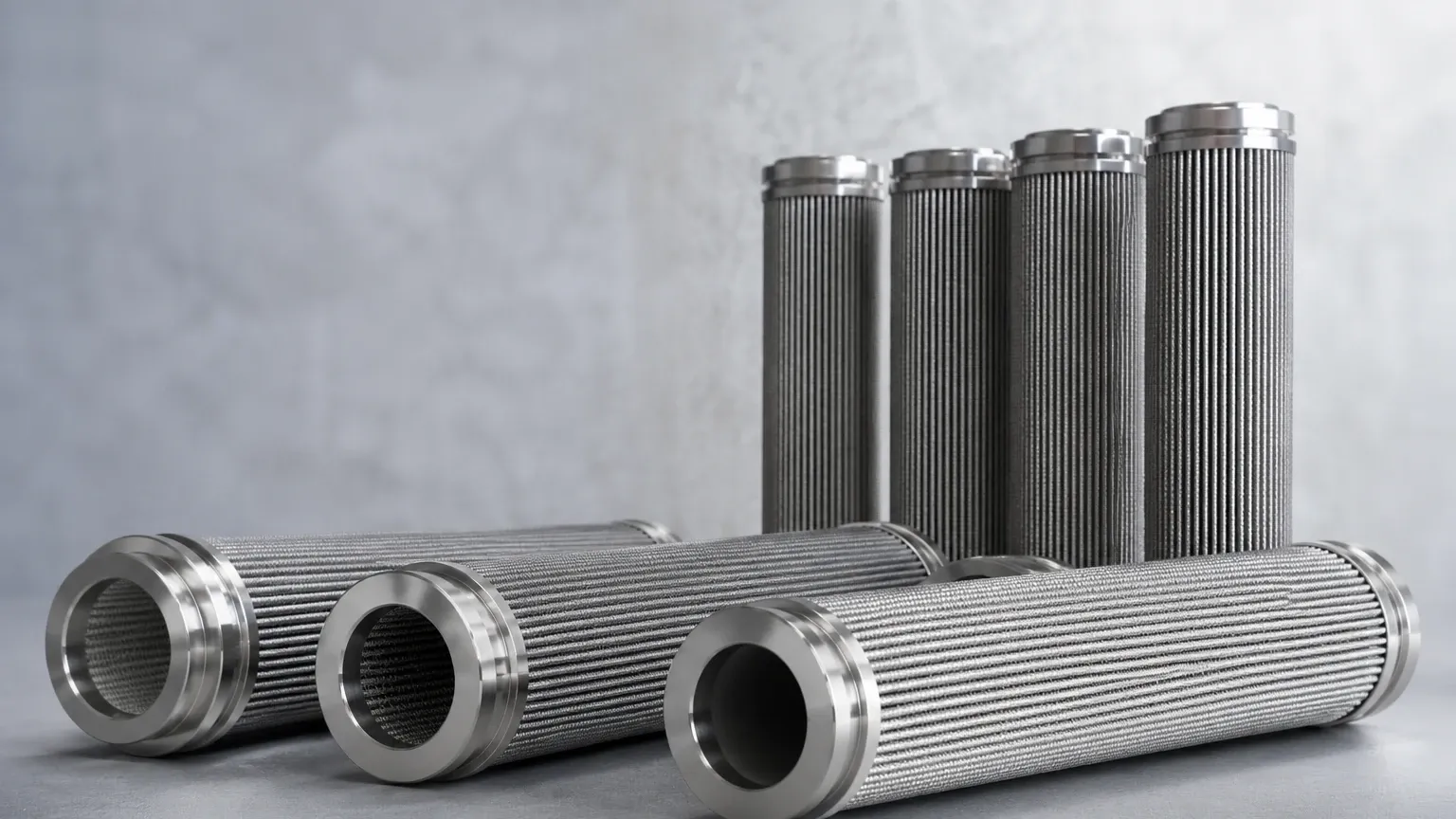
Industrial Applications for 20×4.5 Cartridges
Chemical and Petrochemical Processing
In these environments, 20×4 5 filter cartridges are used to remove catalysts, scale, and particulate matter from aggressive solvents. The 4.5-inch diameter allows for the high flow rates required in bulk transfer operations while maintaining a compact housing size.
Food and Beverage Production
Filtration in the food industry requires compliance with FDA standards. Stainless steel 20×4.5 cartridges are frequently used for steam filtration, culinary water pre-filtration, and the removal of carbon fines after de-colorization processes. Their ability to withstand Clean-in-Place (CIP) cycles with caustic soda or hot water is a major advantage.
Hydraulic and Lube Oil Systems
High-viscosity fluids require the increased surface area of the 20×4.5 format to maintain acceptable flow rates without excessive pressure drop. Stainless steel pleated media is often used here to handle the mechanical stresses of cold starts and pressure pulsations.
Water Treatment and Desalination
As a pre-filter for Reverse Osmosis (RO) membranes, 20×4 5 filter cartridges protect expensive membranes from silt, sand, and biological fouling. In large-scale industrial water plants, these cartridges serve as the final safety barrier.
Customization and OEM Considerations
Standardized sizes do not always meet specialized engineering needs. As a professional manufacturer, Kaifil provides customized 20×4 5 filter cartridges tailored to specific operational challenges. Customization options include:
* Reinforced Cores: For high-viscosity or high-pressure applications where standard cores might buckle.
* Custom Mesh Weaves: Selecting specific weave types (e.g., Dutch weave, twill weave) to optimize for particle retention versus flow permeability.
* Bespoke End Caps: Machined components to fit non-standard or proprietary housing designs.
* Material Upgrades: Utilizing exotic alloys like Hastelloy or Monel for extreme corrosive environments where even 316L stainless steel may fail.
Maintenance and Cleaning Protocols
One of the primary advantages of industrial-grade stainless steel 20×4 5 filter cartridges is their cleanability. To maintain optimal performance, facilities should implement a structured maintenance schedule based on differential pressure monitoring.
1. Backwashing: Reversing the flow of the fluid to dislodge particles from the surface of the mesh. This is most effective for surface-loading mesh filters.
2. Ultrasonic Cleaning: Using high-frequency sound waves in a cleaning solution to remove deeply embedded particulates from sintered or multi-layered media.
3. Chemical Cleaning: Utilizing specific solvents or acids to dissolve organic fouling or mineral scale. Because the cartridges are stainless steel, they can withstand aggressive chemicals that would destroy polymer filters.
Conclusion: Making an Informed Selection
Selecting 20×4 5 filter cartridges for industrial use requires a shift from viewing the filter as a commodity to viewing it as a precision-engineered component. By focusing on material integrity, absolute filtration ratings, and the long-term economic benefits of cleanable media, engineers can significantly improve process reliability and reduce waste.
Whether the application involves protecting downstream RO membranes, filtering high-temperature resins, or ensuring the purity of food-grade oils, the 20×4.5 format provides a versatile and powerful solution. Partnering with a manufacturer that understands the nuances of custom stainless steel fabrication ensures that the filtration system performs predictably under the most demanding industrial conditions.
