


3 Stage Water Filter Cartridges
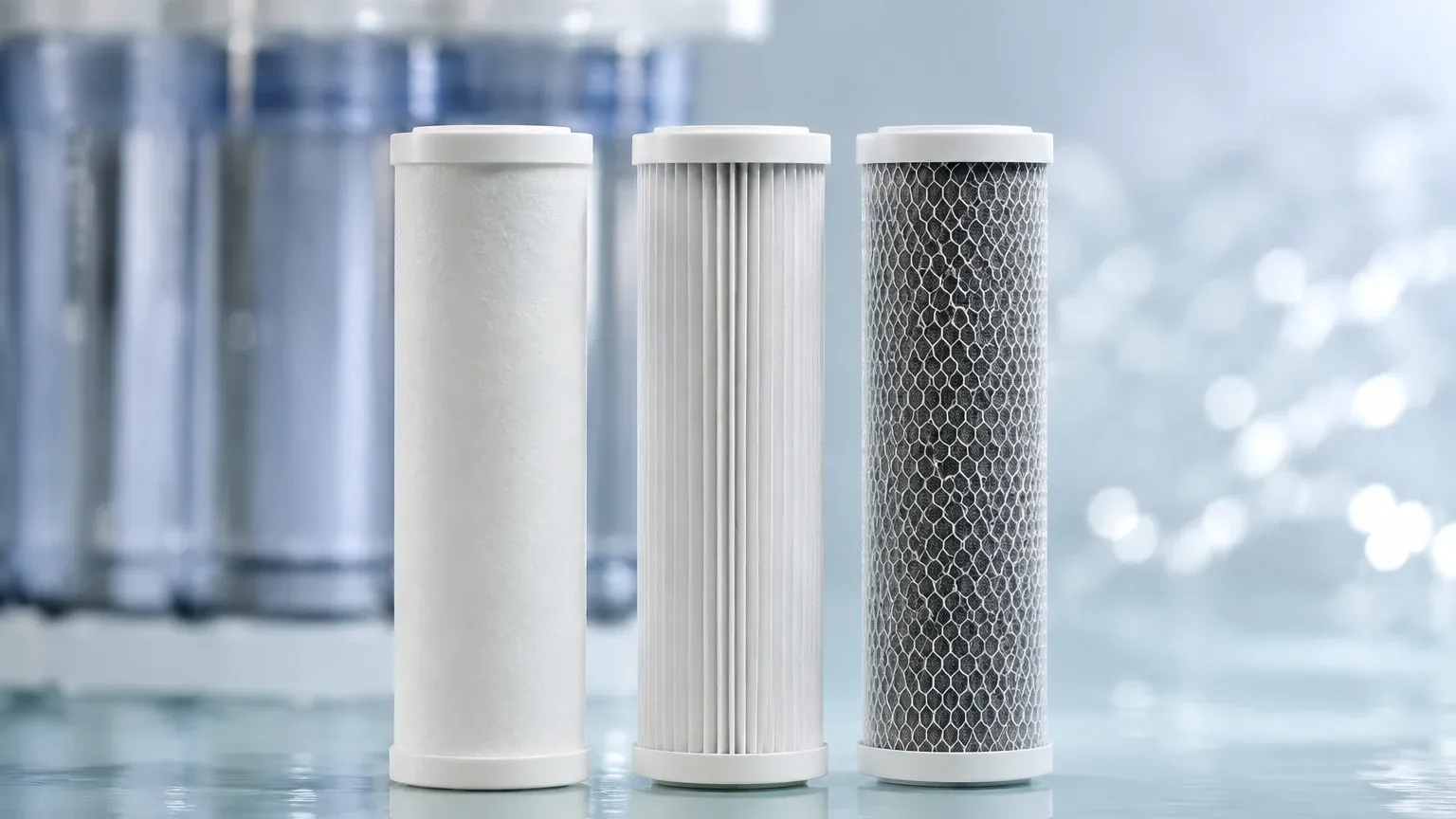
In industrial water treatment and process fluid management, the efficiency of a filtration system is rarely determined by a single component. Instead, it is the strategic sequencing of media that ensures both the purity of the effluent and the longevity of the equipment. 3 stage water filter cartridges represent a standardized yet highly customizable approach to multi-stage filtration, designed to address varying particulate sizes and chemical compositions in a single pass. For engineers and facility managers, understanding the technical nuances of these stages—from material selection to pressure drop management—is essential for optimizing operational uptime and reducing total cost of ownership.
Industrial filtration demands a level of durability and precision that exceeds standard commercial requirements. While residential systems often focus on taste and odor, industrial-grade Filter Cartridges are engineered to handle high flow rates, aggressive chemical environments, and extreme temperature fluctuations. By utilizing a three-stage configuration, systems can effectively distribute the particulate load, preventing the premature blinding of high-precision final filters and ensuring a consistent flow of treated water.
The Engineering Logic of Multi-Stage Filtration
The fundamental principle behind 3 stage water filter cartridges is the "staircase" approach to particle removal. In a single-stage system, a fine filter must capture everything from large debris to microscopic contaminants. This leads to rapid clogging, frequent maintenance intervals, and significant pressure drops. A three-stage system solves this by delegating specific tasks to different media layers.
Stage 1: Primary Pre-Filtration and Debris Removal
The first stage serves as the defensive line for the entire system. Its primary role is to remove "macro" contaminants—sand, scale, rust, and large suspended solids. In industrial applications, this stage often utilizes coarse stainless steel wire mesh or pleated metal elements. By capturing larger particles early, this stage protects the more delicate and expensive media in the subsequent stages. For high-load environments, a washable or backlink-capable stainless steel filter is often preferred here to minimize consumable waste.
Stage 2: Intermediate Clarification
The second stage targets mid-range particulates, typically in the 10 to 50-micron range. This stage acts as a bridge, refining the water quality and reducing the turbidity that could overwhelm the final polishing stage. Depending on the application, this might involve high-density pleated cartridges or specialized depth filtration media. The goal here is to achieve a significant reduction in the total suspended solids (TSS) count without creating an excessive bottleneck in the flow path.
Stage 3: Precision Polishing and Final Filtration
The final stage is where the specific purity requirements of the process are met. Whether it is achieving a specific sub-micron rating for pharmaceutical rinse water or ensuring the removal of fine carbon fines in chemical processing, this stage uses high-precision media. Because the previous two stages have removed the bulk of the contaminant load, the third-stage filter can operate at peak efficiency for an extended period, providing the "absolute" filtration rating required for the end product.
Material Science in Industrial Filter Cartridges
When specifying 3 stage water filter cartridges for industrial use, material compatibility is the most critical factor. While polymer-based filters are common in light-duty applications, heavy industrial processes often require the robustness of stainless steel.
Stainless Steel (304 and 316L)
Stainless steel is the gold standard for demanding environments. It offers exceptional resistance to corrosion, high temperatures, and mechanical stress. 316L stainless steel, in particular, is favored in the chemical and food and beverage industries due to its superior resistance to pitting and chloride-induced stress corrosion. Unlike disposable plastic cartridges, stainless steel elements can be cleaned and reused, making them a more sustainable and cost-effective choice for long-term operations.
Sintered Metal Media
For the third stage of a 3-stage system, sintered metal mesh or sintered metal fiber felt provides unparalleled precision. Through a process of heat and pressure, layers of wire mesh are fused together to create a rigid, porous structure with fixed pore sizes. This ensures that the filtration rating remains constant even under high-pressure surges, a common failure point for soft, non-rigid filter media.
Performance Metrics and Selection Criteria
Selecting the right 3 stage water filter cartridges requires a deep dive into the technical specifications of the process. Engineers must balance the need for purity with the physical constraints of the pumping system.
Micron Rating: Absolute vs. Nominal
It is vital to distinguish between nominal and absolute micron ratings. A nominal rating is an indicative value, suggesting the filter will trap a high percentage of particles at that size. An absolute rating, common in the third stage of industrial systems, guarantees that 99.9% or more of particles above a specific size will be retained. For critical applications like boiler feed water or pharmaceutical processing, absolute ratings are non-negotiable.
Differential Pressure (ΔP)
Differential pressure is the difference between the inlet and outlet pressure of the filter housing. As 3 stage water filter cartridges accumulate contaminants, the ΔP will rise. Engineers must specify cartridges that offer a low initial ΔP to maximize the available "dirt-holding capacity" before the system reaches its terminal pressure drop and requires a filter change or cleaning cycle.
Flow Rate and Velocity
The total surface area of the filter media dictates the maximum allowable flow rate. Pleated designs are often used in industrial cartridges to increase the surface area within a compact footprint. High-velocity flow can sometimes cause "particle bypass" or media migration in lower-quality filters; therefore, selecting cartridges with rigid internal supports is essential for maintaining integrity at high volumes.
Applications Across Key Industries
The versatility of 3 stage water filter cartridges makes them a staple in various sectors where water quality directly impacts product quality and equipment lifespan.
* Chemical Processing: In the production of specialty chemicals, water is often used as a solvent or for cooling. Multi-stage filtration ensures that no metallic particles or environmental contaminants interfere with sensitive chemical reactions.
* Food and Beverage: 3-stage systems are used to treat ingredient water, ensuring it is free of sediment and microorganisms. Stainless steel components are preferred here for their ability to withstand Clean-in-Place (CIP) sterilization cycles.
* Hydraulic and Lubrication Systems: While often associated with water, the 3-stage principle is also applied to industrial oils. Removing large wear particles in stage one and fine silts in stage three prevents component erosion in high-pressure hydraulic circuits.
* Water Treatment and Desalination: As a pre-treatment for Reverse Osmosis (RO) membranes, 3-stage filtration is critical. Removing suspended solids before they reach the RO membrane prevents fouling and significantly extends the life of the expensive membrane elements.
Maintenance and Total Cost of Ownership (TCO)
From a procurement perspective, the initial purchase price of 3 stage water filter cartridges is only one component of the TCO. A well-engineered system focuses on reducing operational costs over time.
Cleaning vs. Replacement
One of the primary advantages of utilizing stainless steel filter cartridges in a 3-stage setup is cleanability. Depending on the contaminant, these filters can be cleaned using ultrasonic baths, chemical solvents, or backwashing. This eliminates the recurring cost of purchasing, shipping, and disposing of single-use plastic or paper cartridges. While the upfront investment in metal filtration is higher, the ROI is typically realized within the first year of operation through reduced consumable spending.
Monitoring and Automation
Modern industrial filtration systems often incorporate pressure transducers to monitor the health of the 3 stage water filter cartridges in real-time. By tracking the rate of pressure increase, maintenance teams can move from reactive "fix-it-when-it-breaks" schedules to predictive maintenance. This ensures that filters are only cleaned or replaced when necessary, preventing unnecessary downtime.
Customization and OEM Solutions
No two industrial processes are identical. Factors such as fluid viscosity, temperature, and specific contaminant types require tailored filtration solutions. Working with a manufacturer that offers OEM capabilities allows for the development of custom 3 stage water filter cartridges that fit existing housings while optimizing performance for specific local conditions.
Customization options often include:
* End-Cap Configurations: Ensuring a perfect seal with DOE (Double Open End), SOE (Single Open End), or threaded connections.
* Reinforced Cores: Adding internal support for high-viscosity fluids or high-pressure applications.
* Layered Media Gradients: Combining different mesh weaves within a single cartridge to create a "built-in" multi-stage effect.
Conclusion: Selecting the Right Filtration Partner
Implementing 3 stage water filter cartridges is a strategic decision that affects the efficiency of an entire production line. For engineers, the focus must remain on technical reliability and material integrity. By choosing high-quality Filter Cartridges—particularly those constructed from durable stainless steel—facilities can achieve precise filtration results while minimizing environmental impact and operational costs.
When evaluating a filtration solution, it is essential to confirm the chemical compatibility of the media, the required micron precision for the final stage, and the expected flow dynamics of the system. A robust 3-stage approach, supported by expert engineering and quality manufacturing, provides the reliable foundation necessary for modern industrial water and fluid management.
