


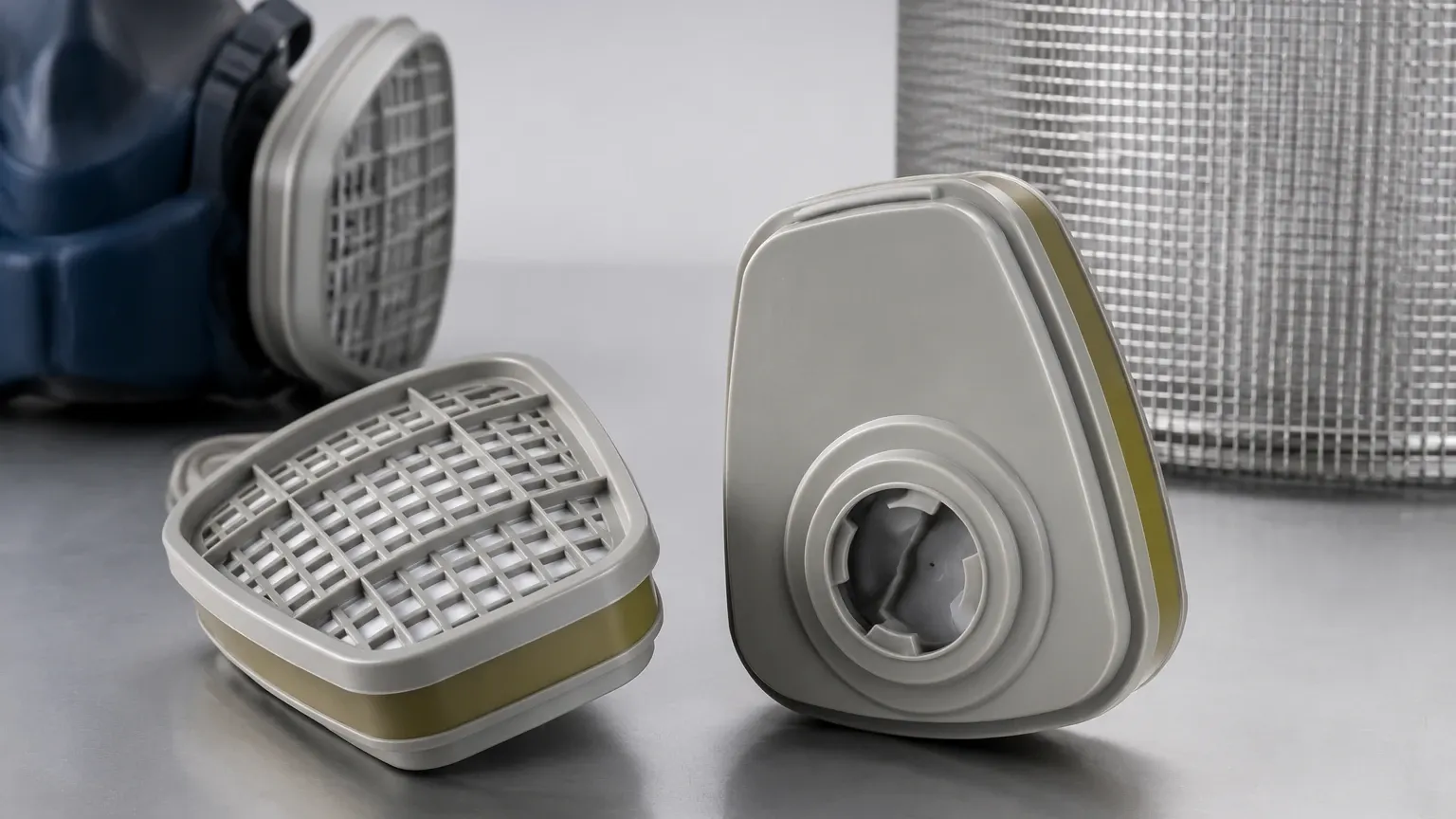
6001 Filter Cartridges for Respirator
In industrial environments where volatile organic compounds (VOCs) and hazardous vapors are a constant byproduct of manufacturing, the selection of respiratory protection is a critical engineering decision. Among the most widely recognized standards in respiratory safety is the 6001 designation. These cartridges are specifically engineered to provide protection against certain organic vapors, serving as a primary line of defense for personnel in chemical processing, pharmaceutical manufacturing, and industrial finishing.
Understanding the technical specifications, performance limitations, and integration of these components into broader industrial safety protocols is essential for procurement officers and safety engineers. This guide examines the engineering principles behind 6001 filter cartridges for respirator use and explores how they relate to the wider category of industrial Filter Cartridges used in process filtration.
Technical Standards and NIOSH Classifications
The "6001" designation typically refers to a specific National Institute for Occupational Safety and Health (NIOSH) rating. Under these standards, a 6001 cartridge is designed to filter organic vapors. The internal mechanism relies primarily on chemical adsorption rather than simple mechanical straining.
Chemical Adsorption Principles
Unlike particulate filters that use a physical mesh to trap solids, organic vapor cartridges contain specially treated activated carbon. This carbon is processed to have a massive surface area with millions of microscopic pores. When contaminated air passes through the cartridge, organic molecules are attracted to and held on the surface of the carbon through Van der Waals forces.
For an engineer, the effectiveness of this process depends on several variables:
* Contact Time: The duration the air remains within the carbon bed.
* Bed Depth: The physical thickness of the filtration medium.
* Pore Size Distribution: The range of molecular sizes the carbon can effectively trap.
Approved Contaminants
6001 filter cartridges for respirator applications are generally approved for use against vapors from materials such as benzene, turpentine, toluene, and various solvents common in industrial coatings. However, they are not universal. They are ineffective against acid gases, ammonia, or formaldehyde unless specifically combined with other filtration media. Engineers must conduct a thorough workplace characterization to ensure the 6001 rating matches the specific chemical profile of the environment.
Engineering Considerations for Industrial Selection
When specifying filtration components, whether for personal protective equipment (PPE) or for large-scale machinery, several engineering metrics must be evaluated to ensure both safety and cost-efficiency.
1. Airflow Resistance and Pressure Drop
One of the most critical factors in filter design is the pressure drop (ΔP). In a respirator, high resistance leads to user fatigue and potential non-compliance. In industrial machinery, high resistance increases energy consumption and strain on ventilation motors. A well-engineered cartridge balances high adsorption capacity with a structure that allows for optimal flow. This is where the quality of the internal pleating or carbon granules becomes paramount.
2. Service Life and Breakthrough Time
Breakthrough occurs when the adsorption sites on the activated carbon are fully saturated, allowing contaminants to pass through the filter. The service life is not a fixed number; it is a variable influenced by:
* Contaminant Concentration: Higher concentrations saturate the bed faster.
* Relative Humidity: Water molecules can compete with organic vapors for adsorption sites, significantly reducing the filter's capacity.
* Breathing/Flow Rate: Higher flow rates reduce contact time, potentially leading to earlier breakthrough.
3. Material Compatibility
The housing of the cartridge must be resistant to the very chemicals it is designed to filter. While many standard 6001 cartridges use high-impact polymers, specialized industrial applications may require stainless steel or other metallic housings to withstand high temperatures or corrosive atmospheres. This is a common intersection where standard PPE meets custom industrial Filter Cartridges designed for long-term durability.
Comparison: Standard Respirator Cartridges vs. Custom Industrial Filters
While 6001 filter cartridges for respirator use are often treated as disposable commodities, it is useful for engineers to compare these to the permanent or cleanable filtration solutions used in process engineering.
| Feature | Standard 6001 Respirator Cartridge | Custom Stainless Steel Filter Cartridges |
| :— | :— | :— |
| Primary Goal | Personal safety/Vapor adsorption | Process purity/Particulate & Vapor control |
| Housing Material | Typically Plastic (Polypropylene/ABS) | Stainless Steel (304/316L) |
| Reusability | Disposable (Non-regenerative) | Often cleanable and reusable |
| Temperature Limit | Low (Ambient workplace temps) | High (Up to 500°C+ depending on alloy) |
| Customization | Standardized NIOSH sizes | Fully customizable dimensions and micron ratings |
In many industrial settings, the vapors that a worker breathes are the same ones that must be filtered out of a chemical process stream. While the respirator protects the individual, custom-engineered metal filters protect the machinery and the environment. Manufacturers like Kaifil specialize in these high-durability solutions, providing the precision needed for demanding industrial cycles where standard disposable components would fail.
Common Risks and Mitigation Strategies
Implementing 6001 filter cartridges for respirator use without a technical strategy can lead to "false security" risks. Engineering teams should be aware of the following pitfalls:
Improper Fit and Seal
Even the highest quality 6001 cartridge is useless if the seal between the cartridge and the respirator body (or the mask and the face) is compromised. In industrial process filtration, this is analogous to "bypass," where fluid or gas flows around the filter media rather than through it. Ensuring precision-machined threads or high-quality gaskets is essential in both personal safety and industrial equipment.
Environmental Degradation
Storage conditions significantly impact the shelf life of activated carbon filters. Exposure to high humidity or ambient organic vapors in a storage locker can "pre-load" the cartridges, reducing their effective service life before they are even deployed. Engineers should specify airtight storage solutions and strictly monitor expiration dates.
Misidentification of Hazards
A common mistake is using a 6001 organic vapor cartridge for particulates (like silica dust or lead fumes). Unless the cartridge is a "combination" unit (e.g., OV/P100), it will provide zero protection against solid particles. For processes involving both vapors and dust, a multi-stage filtration approach is required.
Total Cost of Ownership (TCO) in Filtration
For procurement departments, the unit price of a 6001 filter cartridge for respirator use is only one part of the TCO equation. A comprehensive analysis includes:
1. Replacement Frequency: A cheaper cartridge that saturates 30% faster than a premium alternative actually costs more in the long run due to labor and disposal volume.
2. Inventory Management: Standardizing on specific cartridge types can reduce the complexity of the supply chain.
3. Integration with Process Filters: In some cases, improving the facility's overall ventilation and process-level Filter Cartridges can reduce the concentration of vapors at the source. This extends the life of individual respirators and improves the overall safety profile of the plant.
Customization and OEM Solutions in Filtration
While the 6001 standard is rigid for personal safety, industrial filtration often requires bespoke solutions. When standard off-the-shelf cartridges do not meet the pressure, temperature, or chemical resistance requirements of a specific machine or environment, custom engineering becomes necessary.
Custom manufacturers like Kaifil work with engineers to develop filtration components that bridge the gap between standard safety ratings and specialized industrial needs. This might include:
* Sintered Wire Mesh: For high-strength particulate filtration in extreme environments.
* Pleated Stainless Steel Cartridges: To maximize surface area in a compact footprint, similar to the goal of a respirator cartridge but with much higher durability.
* Custom Gasketing: Using Viton or PTFE to ensure seal integrity in the presence of aggressive solvents.
Conclusion: Making Informed Purchasing Decisions
Selecting the right 6001 filter cartridges for respirator applications requires more than just checking a box for NIOSH compliance. It requires a technical understanding of the chemical environment, an evaluation of airflow dynamics, and a strategic approach to replacement cycles.
For engineers managing complex industrial facilities, it is equally important to look at the broader filtration landscape. While PPE protects the worker, the integrity of the entire production line often depends on robust, high-performance Filter Cartridges designed for process-specific challenges. By partnering with manufacturers who understand both the science of adsorption and the rigors of industrial manufacturing, companies can ensure a safer, more efficient, and more cost-effective operation.
