


Anko Water Filter Cartridges
In the landscape of water treatment, understanding the specific capabilities and limitations of various filtration components is essential for maintaining water quality and system efficiency. Anko water filter cartridges are widely recognized in the consumer and light commercial sectors for providing accessible, entry-level filtration. However, for engineers and procurement professionals operating in industrial environments, evaluating these cartridges requires a deep dive into material science, filtration efficiency, and structural durability. This guide examines the technical aspects of these cartridges and provides a framework for determining when a standard solution suffices and when an application demands high-performance industrial Filter Cartridges.
Understanding the Technical Composition of Anko Water Filter Cartridges
Anko water filter cartridges are typically designed for point-of-use (POU) and small-scale water systems. Their primary function is the reduction of aesthetic impurities, such as chlorine, taste, and odor, as well as the removal of basic sediment. To achieve this, these cartridges utilize a combination of filtration media, each serving a specific mechanical or chemical purpose.
Activated Carbon Media
The core of most standard water filter cartridges is activated carbon. In Anko-style cartridges, this is often provided in granular form (GAC) or as a carbon block. Activated carbon works through adsorption, where organic molecules and chlorine adhere to the vast internal surface area of the carbon pores. For B2B applications where chlorine removal is critical for protecting downstream equipment like reverse osmosis (RO) membranes, the quality of the carbon and its contact time with the water are the primary engineering considerations.
Ion-Exchange Resins
Many cartridges in this category also incorporate ion-exchange resins. These resins are designed to reduce "temporary hardness" by swapping calcium and magnesium ions with hydrogen or sodium ions. This is particularly relevant in commercial kitchen applications or small-scale laboratory settings where scale buildup on heating elements must be minimized. However, the capacity of these resins is finite, and in high-volume industrial settings, the rapid exhaustion of these cartridges often necessitates a move toward more robust, regenerable systems.
Mechanical Sediment Filtration
The outer layers or internal stages of these cartridges often feature non-woven polypropylene or similar polymer fibers. These act as a mechanical barrier to trap suspended solids. While effective for basic sediment, polymer-based mechanical filters have limitations regarding pressure surges and temperature fluctuations, which are common in industrial process lines.
Engineering Evaluation Criteria for Filtration Systems
When selecting filtration components, engineers must look beyond the brand and focus on the quantitative performance metrics. Whether evaluating anko water filter cartridges or specialized metal filters, the following criteria are paramount:
Micron Rating: Absolute vs. Nominal
A critical distinction in filtration is the micron rating. Many consumer-grade cartridges carry a nominal rating, meaning they can filter out a certain percentage of particles of a specific size. In contrast, industrial applications often require an absolute rating, which guarantees that 99.9% of particles above a certain size are captured. Engineers must confirm which rating is applied to their chosen cartridge to ensure it meets the safety and purity standards of their specific process.
Flow Rate and Pressure Drop
Every filter cartridge introduces a degree of resistance to the fluid flow, known as pressure drop (delta P). As the filter accumulates debris, this pressure drop increases. Anko water filter cartridges are typically optimized for low-flow environments. If installed in a high-demand industrial line, the resulting pressure drop could lead to system inefficiency or even pump cavitation. It is essential to calculate the required Gallons Per Minute (GPM) and ensure the cartridge can handle the peak flow without exceeding the maximum allowable pressure drop.
Chemical Compatibility
The housing and media of standard cartridges are often made from plastics like ABS or polypropylene. While suitable for potable water, these materials may degrade when exposed to industrial chemicals, high concentrations of ozone, or extreme pH levels. For applications involving aggressive fluids, stainless steel alternatives are often the only viable solution to prevent structural failure and media migration.
Common Risks and Performance Limitations
Using light-duty cartridges in demanding environments introduces several risks that can impact the total cost of ownership (TCO) and process integrity.
1. Media Migration: In lower-quality cartridges, the filtration media (such as carbon fines) can sometimes bypass the internal retainers and enter the downstream flow. In a pharmaceutical or food processing environment, this type of contamination is unacceptable.
2. Structural Integrity: Polymer cartridges are susceptible to "bypass" if the seals or the cartridge body deforms under pressure. This allows unfiltered water to leak around the media, rendering the filtration process ineffective.
3. Temperature Sensitivity: Most standard water filter cartridges have a maximum operating temperature of approximately 35°C to 45°C (95°F to 113°F). Industrial processes involving hot water sanitization or high-temperature fluids will cause these cartridges to soften, lose their shape, and fail.
4. Bacterial Growth: While some cartridges include bacteriostatic agents (like silver-impregnated carbon), they are not designed to be primary microbiological barriers. In industrial water treatment, specialized stainless steel cartridges that can be steam-sterilized or autoclaved are preferred for maintaining sterile conditions.
When to Upgrade to Industrial Stainless Steel Filter Cartridges
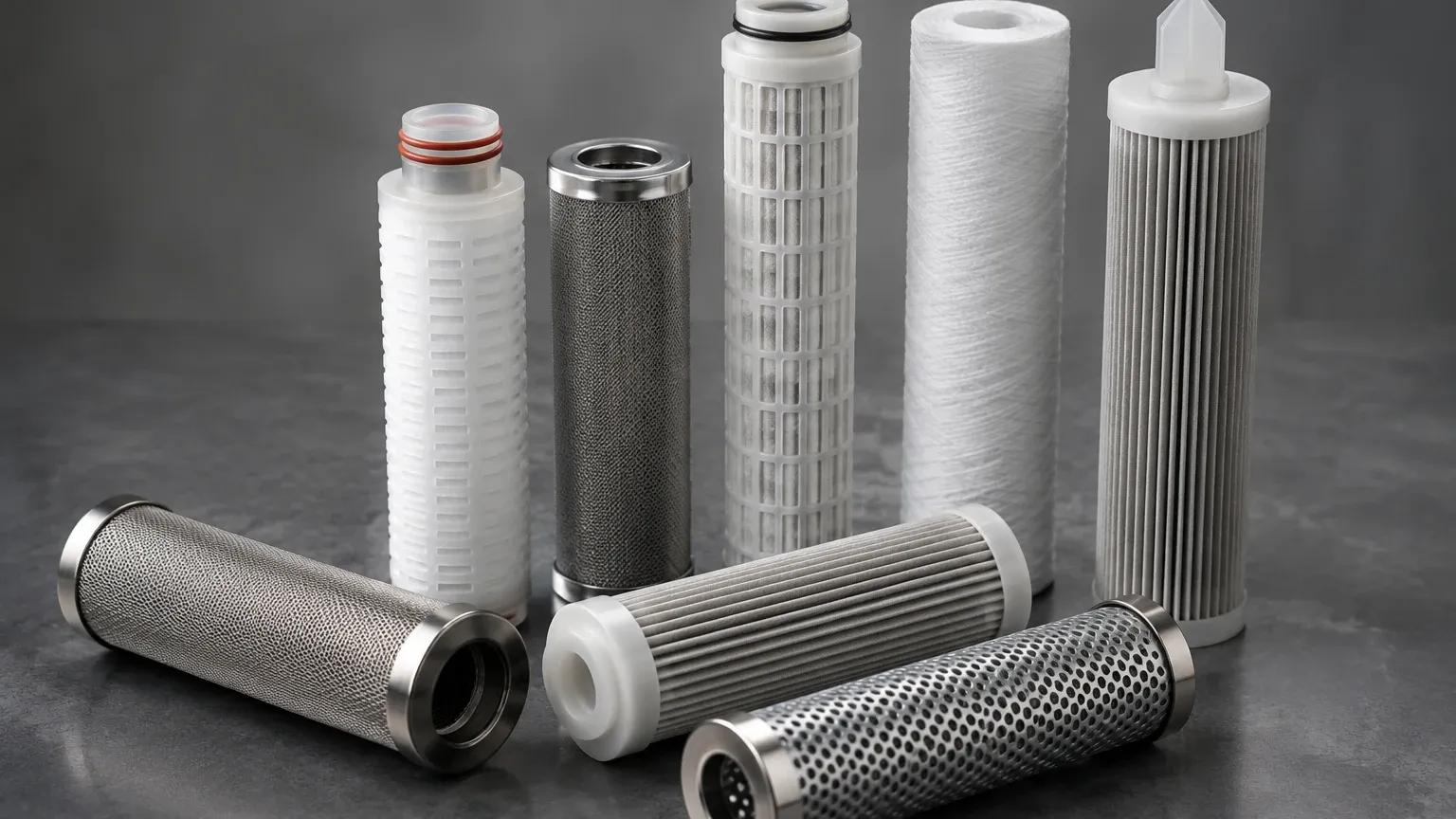
While anko water filter cartridges serve their purpose in domestic and light commercial contexts, industrial manufacturing often reaches a threshold where disposable polymer cartridges are no longer cost-effective or technically sufficient. This is where high-performance Filter Cartridges made from stainless steel wire mesh or sintered metal become necessary.
Durability and Reusability
The most significant advantage of stainless steel cartridges is that they are cleanable and reusable. In processes with high sediment loads, disposable cartridges must be replaced frequently, leading to high consumable costs and significant waste. Stainless steel filters can be backwashed or ultrasonically cleaned, providing a service life that spans years rather than weeks.
High-Pressure and High-Temperature Resistance
For hydraulic systems, steam filtration, or high-temperature chemical processing, the structural strength of 304 or 316L stainless steel is required. These materials maintain their pore geometry even under extreme differential pressures, ensuring consistent filtration performance where polymer cartridges would collapse.
Precision Filtration
Industrial-grade metal filters offer precise control over pore size. Through advanced manufacturing techniques like sintering, manufacturers can create filter media with highly uniform openings, providing the absolute filtration required for protecting sensitive equipment like high-pressure nozzles or precision valves.
Maintenance and Replacement Cycles: Calculating TCO
For a purchasing department, the initial price of anko water filter cartridges may seem attractive. However, a true technical evaluation must consider the Total Cost of Ownership (TCO). This includes:
* Purchase Price: The unit cost of the cartridge.
* Labor Costs: The time required for maintenance staff to change out filters.
* Disposal Costs: Fees associated with the disposal of spent cartridges, especially if they have captured hazardous materials.
* Downtime: The cost of stopping production to replace a clogged or failed filter.
In many B2B scenarios, the higher upfront investment in a custom stainless steel filtration solution from a manufacturer like Kaifil results in a much lower TCO over the long term. By reducing the frequency of replacements and ensuring higher system uptime, industrial-grade components provide a better return on investment.
Customization and OEM Filtration Solutions
One of the primary challenges with standard retail-grade cartridges is the "one size fits all" approach. Industrial applications often have unique spatial constraints or specific filtration requirements that standard cartridges cannot meet.
Professional manufacturers provide OEM and customized filtration designs, allowing engineers to specify:
* Custom Dimensions: Ensuring the filter fits perfectly into existing housing without the need for adapters that might leak.
* Specific Alloy Selection: Choosing between 304, 316, or even exotic alloys based on the chemical environment.
* Multi-Stage Filtration: Combining different mesh sizes within a single cartridge to provide both coarse and fine filtration in one unit.
Conclusion: Making an Informed Decision
Selecting the right filtration component requires a balance between performance requirements and budgetary constraints. Anko water filter cartridges provide a functional solution for basic water quality needs in low-demand environments. However, when the application involves industrial chemicals, high temperatures, or the need for absolute reliability, engineers must look toward professional-grade solutions.
By understanding the material limitations and performance metrics discussed in this guide, technical professionals can better evaluate their filtration needs. Whether you are maintaining a simple commercial water dispenser or managing a complex chemical processing plant, ensuring that your Filter Cartridges are matched to the rigors of your environment is the key to operational success and long-term cost efficiency.
