


Argos Water Filter Cartridges
In the realm of water treatment, the term "water filter cartridge" encompasses a vast spectrum of products ranging from simple domestic jug filters to complex, high-pressure industrial components. For many consumers and small-scale commercial operators, argos water filter cartridges represent a standard entry point into water purification. These cartridges are typically designed for point-of-use applications, such as improving the taste and odor of potable water by reducing chlorine and sediment. However, as applications scale in complexity, pressure, and temperature, the requirements for filtration hardware shift from disposable plastic units to engineered, high-performance Filter Cartridges.
Understanding the technical distinctions between consumer-grade filtration and industrial-grade solutions is essential for engineers and procurement professionals. While a domestic cartridge may suffice for a breakroom tap, industrial processes—such as chemical processing, food and beverage production, and hydraulic systems—demand a level of durability and precision that exceeds the capabilities of standard retail offerings.
Understanding the Application of Argos Water Filter Cartridges
Retail-level filtration products, such as those categorized under argos water filter cartridges, are primarily engineered for the domestic market. Their design philosophy focuses on ease of replacement, low initial cost, and the removal of common municipal water contaminants.
Composition and Media
Most domestic cartridges utilize a combination of activated carbon and ion-exchange resins. The activated carbon is effective at adsorbing organic compounds and chlorine, which are the primary culprits for unpleasant tastes and odors. The ion-exchange resin is typically included to reduce temporary hardness (limescale), protecting small appliances like kettles and coffee machines.
Structural Constraints
These cartridges are almost exclusively housed in food-grade plastics, such as polypropylene or ABS. While suitable for ambient temperature and low-pressure gravity-fed or mains-pressure systems, these materials have clear ceiling limits. They are not designed to withstand hydraulic shock (water hammer), high temperatures (above 35-40°C), or aggressive chemical environments. For an engineer, recognizing these limits is the first step in determining when a transition to industrial-grade stainless steel filtration is necessary.
Limitations of Consumer-Grade Filter Cartridges in Industrial Environments
When evaluating filtration for an industrial facility, the limitations of consumer-style cartridges become apparent across several critical engineering vectors:
1. Pressure Ratings: Standard domestic cartridges are often rated for pressures under 6 bar. In contrast, industrial processes frequently operate at 10 to 20 bar, with some hydraulic systems exceeding 200 bar. A plastic-housed cartridge would suffer catastrophic structural failure under such conditions.
2. Temperature Resistance: Industrial cleaning processes, such as Clean-in-Place (CIP), often involve steam or hot water exceeding 80°C. Consumer cartridges will deform or leach chemicals at these temperatures, whereas stainless steel Filter Cartridges maintain structural integrity up to 300°C or higher, depending on the alloy and gaskets used.
3. Chemical Compatibility: Industrial water may contain solvents, high concentrations of acids, or caustic cleaning agents. Plastic and carbon-based filters have limited chemical resistance compared to 304 or 316L stainless steel.
4. Flow Rates and Flux: Industrial applications require high throughput. The small surface area of a standard retail cartridge creates a significant pressure drop (ΔP) if forced to handle high flow rates, leading to inefficient energy consumption and frequent system downtime.
Technical Specifications of Industrial Stainless Steel Filter Cartridges
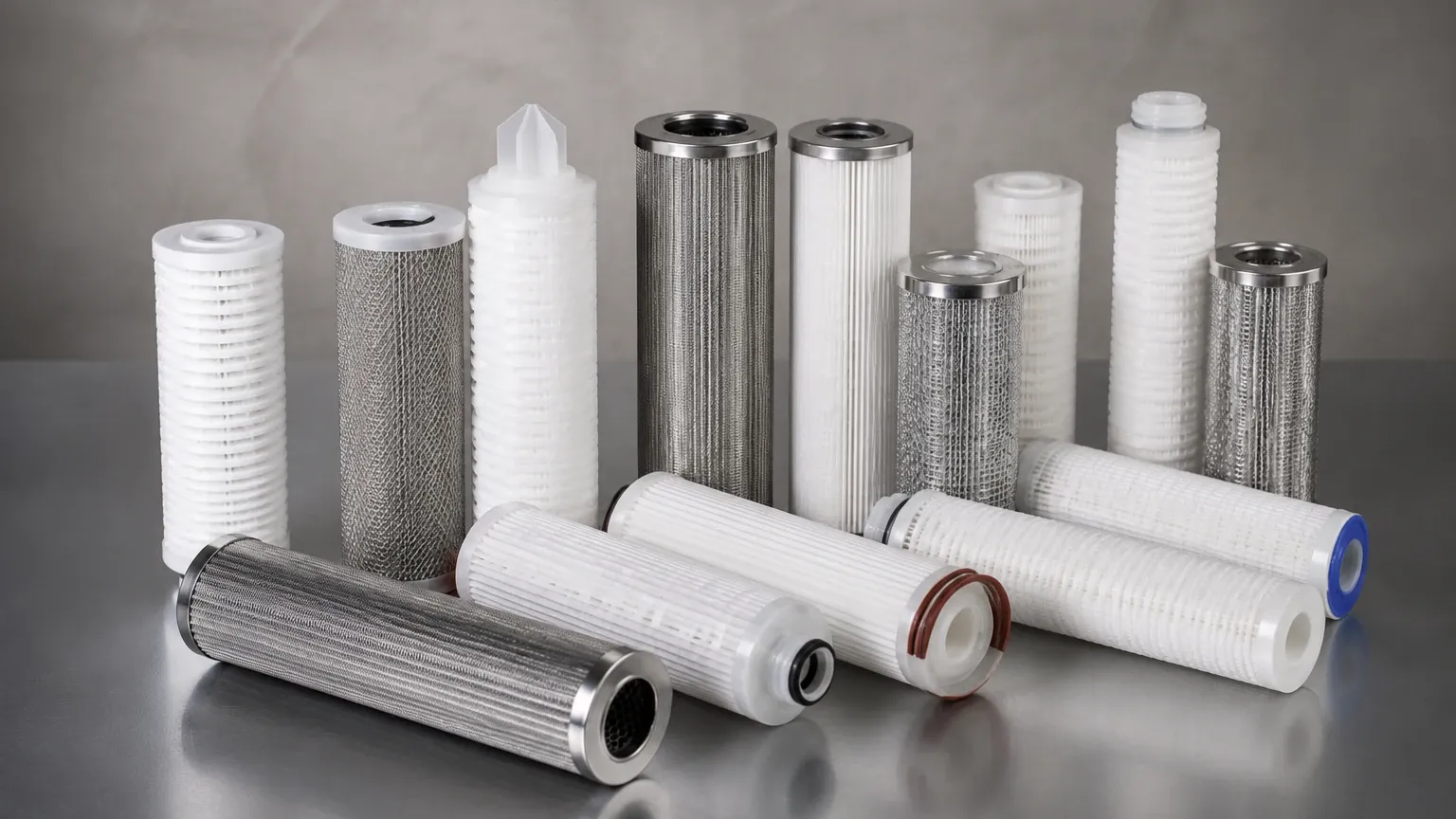
To meet the rigorous demands of the B2B sector, manufacturers like Kaifil produce filtration components that prioritize mechanical strength and precise filtration accuracy. Unlike the disposable nature of argos water filter cartridges, industrial metal filters are often designed for longevity and reusability.
Sintered Metal Mesh vs. Wire Mesh
Industrial cartridges often utilize multi-layer stainless steel wire mesh. This can be "sintered"—a process where multiple layers of mesh are bonded together through heat and pressure without the use of binders. This creates a robust, porous structure that offers:
* High Porosity: Ensuring low initial pressure drop.
* Fixed Pore Geometry: Preventing pore migration under high pressure, which ensures consistent filtration accuracy.
* Mechanical Stability: Allowing the filter to be cleaned via backpulsing or ultrasonic baths.
Pleated vs. Cylindrical Designs
For applications requiring high flow rates in a compact footprint, pleated stainless steel cartridges are used. Pleating increases the effective filtration surface area by 3 to 5 times compared to a standard cylindrical element. This design is particularly effective in protecting sensitive downstream equipment, such as RO membranes or high-pressure pumps, from particulate damage.
Material Selection and Chemical Compatibility
In industrial filtration, material selection is driven by the specific chemistry of the fluid being processed. While consumer filters are limited to a few plastic types, industrial Filter Cartridges offer a range of metallic and elastomeric options.
Stainless Steel Alloys
* Type 304: Suitable for general industrial water filtration, food and beverage applications, and environments with low corrosive potential.
* Type 316L: Contains molybdenum, providing superior resistance to chlorides and pitting. This is the standard for pharmaceutical, marine, and aggressive chemical processing.
Gasket and Seal Selection
The seal is often the weakest point in a filtration system. Engineers must specify the correct elastomer based on the operating temperature and fluid:
* EPDM: Excellent for hot water and steam.
* Viton (FKM): Preferred for oils, fuels, and many chemicals.
* PTFE (Teflon): Used for near-universal chemical resistance, though it lacks the elasticity of other materials.
Performance Metrics: Micron Rating and Flow Dynamics
When moving beyond the basic "sediment reduction" claims of argos water filter cartridges, engineers must look at absolute versus nominal micron ratings.
Absolute vs. Nominal Filtration
* Nominal Rating: This indicates the ability of the filter to retain a majority of particles of a certain size (e.g., 95% of 10-micron particles). Most consumer filters are nominally rated.
* Absolute Rating: This is a calculated value where 99.9% (Beta 1000) of particles of a specific size are retained. In critical industrial processes, such as sterile filtration in pharmaceuticals, an absolute rating is mandatory to ensure process safety.
Calculating Pressure Drop (ΔP)
The efficiency of a filtration system is measured by the pressure drop across the media. A high ΔP indicates that the filter is either clogged or undersized for the flow rate. Industrial systems are designed with gauges to monitor ΔP, allowing operators to schedule maintenance before the filter reaches its terminal pressure drop, which could lead to media rupture or bypass.
Total Cost of Ownership: Replacement vs. Reusable Filters
A primary consideration for purchasing teams is the Total Cost of Ownership (TCO). While the initial purchase price of argos water filter cartridges or similar plastic disposables is low, the cumulative cost in an industrial setting can be prohibitive.
The Cost of Disposables
Disposable cartridges incur ongoing costs for:
* Procurement and Inventory: Constant reordering and storage space.
* Labor: Frequent downtime required for manual cartridge replacement.
* Disposal: Spent plastic cartridges contribute to industrial waste streams and may require specialized disposal if contaminated with hazardous materials.
The Value of Reusable Stainless Steel
High-quality stainless steel Filter Cartridges represent a higher initial investment but offer a lower TCO over time. Because they can be cleaned and reused, the cost per liter of filtered fluid is significantly reduced. Methods such as ultrasonic cleaning can restore a metal filter to near-original performance levels, extending its service life to several years even in demanding environments.
Engineering the Transition to Industrial Filtration Solutions
For facilities looking to upgrade from light-duty filtration to professional-grade systems, several steps should be taken during the specification phase:
1. Fluid Analysis: Determine the particle size distribution (PSD) and the chemical composition of the water or fluid.
2. Operational Parameters: Define the maximum operating pressure, temperature, and required flow rate (GPM or m³/h).
3. Housing Compatibility: Ensure the cartridge end-cap configuration (e.g., Code 7, 222, 226, or Double Open End) matches the existing or planned filter housing.
4. Compliance Requirements: For food, beverage, or pharmaceutical applications, ensure the materials are FDA-compliant or meet specific industry certifications.
Conclusion
While argos water filter cartridges serve a vital role in providing clean drinking water for households, they are not designed for the rigors of industrial production. Engineers and technical buyers must evaluate their filtration needs based on mechanical stress, chemical exposure, and long-term operational efficiency. By selecting high-performance stainless steel Filter Cartridges, industrial operators can achieve precise filtration accuracy, ensure system reliability, and optimize their total cost of ownership. Whether for chemical processing or large-scale water treatment, the shift toward durable, cleanable metal filtration is a hallmark of a sophisticated industrial process.
