


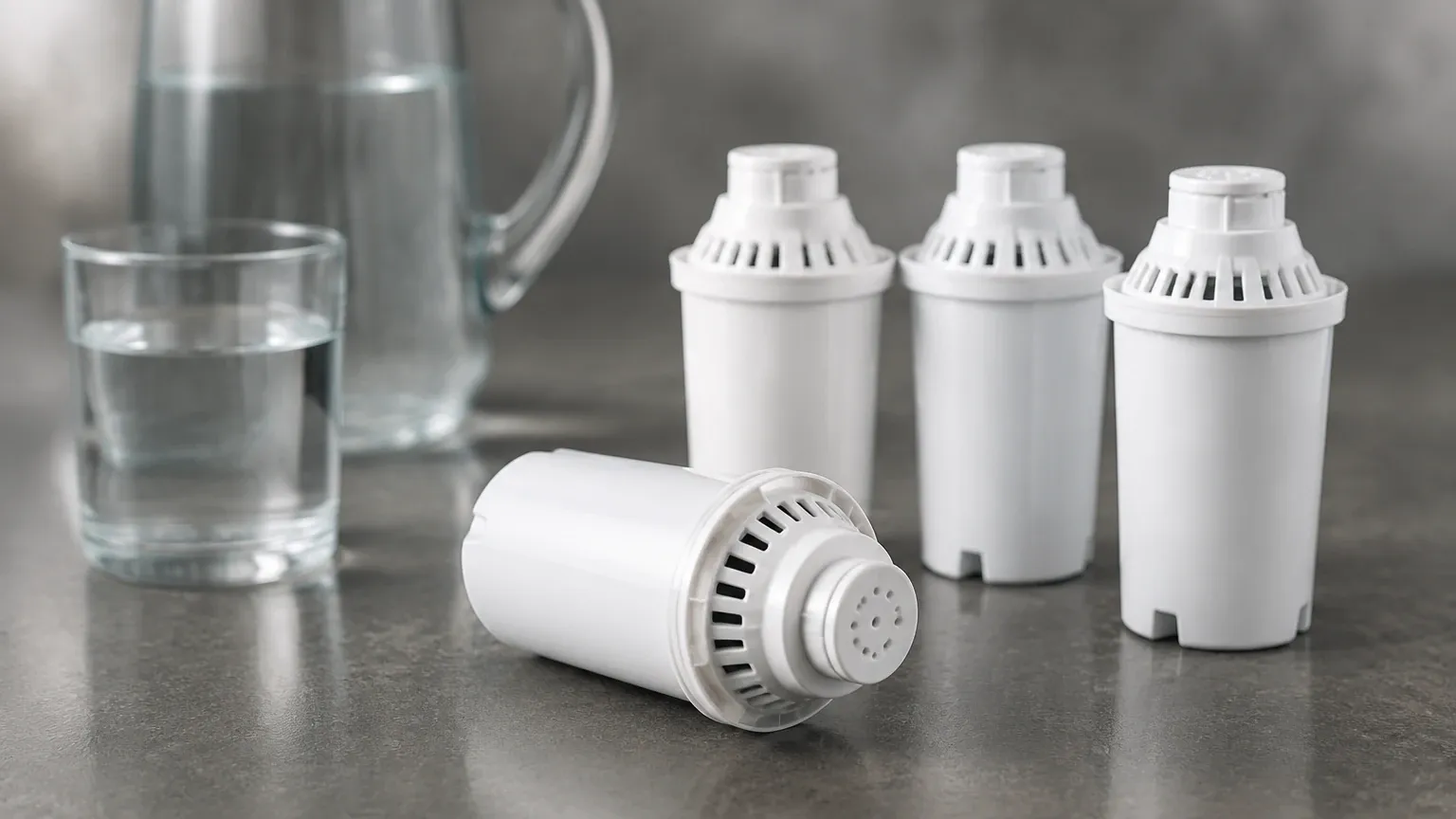
Brita Classic Water Filter Cartridges
In the landscape of point-of-use water treatment, the Brita Classic water filter cartridges represent one of the most established standards for gravity-fed filtration. While primarily recognized in residential and light commercial environments, the engineering principles behind these cartridges offer a foundational look at fluid purification that scales into complex industrial applications. For engineers and procurement professionals, understanding the mechanics, material limitations, and performance metrics of these components is essential when evaluating whether a consumer-grade solution or a more robust industrial filtration system is required for a specific process.
Industrial filtration often demands higher flow rates, greater chemical resistance, and more precise micron ratings than standard consumer products can provide. However, the Brita Classic remains a reference point for basic dechlorination and sediment reduction. This guide examines the technical aspects of these cartridges and explores the transition to high-performance Filter Cartridges designed for demanding industrial environments.
Engineering Principles of Gravity-Fed Cartridges
The Brita Classic water filter cartridges operate on a gravity-fed, multi-stage filtration principle. Unlike industrial pressure-driven systems, these cartridges rely on the weight of the water column to move fluid through the media. This design necessitates a specific balance between media density and flow velocity.
Media Composition and Functionality
The internal structure typically consists of a blend of activated carbon and ion-exchange resins. The activated carbon, usually derived from coconut shells, serves as the primary adsorbent for organic contaminants and chlorine, which significantly impacts taste and odor. The ion-exchange resin beads are engineered to reduce carbonate hardness (limescale) and heavy metals such as copper and lead through a cation exchange process.
Flow Dynamics
In a gravity system, the contact time between the water and the filter media is prolonged compared to high-pressure systems. This "residence time" is critical for the chemical adsorption process. From an engineering perspective, the Brita Classic is optimized for low-volume, intermittent use. In contrast, industrial applications requiring continuous flow or high-volume throughput must utilize pressure-vessel configurations to overcome the resistance of denser, more precise filter media.
Material Science: Adsorption vs. Mechanical Straining
Understanding the difference between the chemical adsorption used in Brita Classic water filter cartridges and the mechanical straining found in stainless steel industrial filters is key to selecting the right filtration strategy.
Adsorption Mechanisms
Activated carbon works through Van der Waals forces to trap molecules within its porous structure. This is highly effective for dissolved gases and organic compounds but has a finite capacity. Once the pores are saturated, the cartridge experiences "breakthrough," where contaminants pass through unfiltered. This is why strict adherence to replacement cycles is mandatory for carbon-based cartridges.
Mechanical Straining and Surface Filtration
Industrial-grade components, such as those manufactured from stainless steel wire mesh or sintered metal, primarily utilize mechanical straining. These systems are designed to remove particulate matter based on size exclusion. Unlike the disposable nature of the Brita Classic, stainless steel filters offer the advantage of being cleanable and reusable, making them more cost-effective for high-solids loading applications. Engineers must decide if their primary goal is chemical removal (adsorption) or particulate removal (straining) to determine the appropriate media type.
Evaluating Filtration Performance and Micron Ratings
When comparing Brita Classic water filter cartridges to industrial alternatives, the concept of the micron rating is central to performance evaluation. The Brita system is generally considered a "nominal" filter, meaning it can remove a high percentage of particles at a certain size but does not provide a 100% guarantee for every particle at that rating.
Nominal vs. Absolute Ratings
In industrial filtration, an "absolute" rating signifies that the filter will capture 99.9% of particles at the specified micron size under controlled conditions. Consumer cartridges rarely provide absolute ratings because the gravity-fed nature allows for potential bypass or channeling if the media settles unevenly. For pharmaceutical or chemical processing, where precise purity is non-negotiable, absolute-rated Filter Cartridges are the industry standard.
Turbidity and Sediment Loading
High turbidity (cloudiness) in the source water can quickly blind the fine mesh screens used in Brita-style cartridges. In industrial settings, a multi-stage approach is often used: a coarse stainless steel pre-filter to remove large debris, followed by a fine-mesh or carbon-block cartridge for polishing. This protects the more expensive downstream components and extends the overall system lifespan.
Operational Lifespan and Maintenance Considerations
The total cost of ownership (TCO) for any filtration system is heavily influenced by the replacement cycle and maintenance requirements. The Brita Classic water filter cartridges are designed for a specific gallon capacity or a time interval (typically four weeks), whichever comes first.
Indicators of Exhaustion
In consumer products, the primary indicator of a spent filter is a change in taste or a visible decrease in flow rate. In an industrial context, these indicators are insufficient. Engineers utilize differential pressure (ΔP) gauges to monitor the pressure drop across the filter. A significant increase in ΔP indicates that the filter is loaded with contaminants and requires cleaning or replacement.
Environmental and Economic Impact
The disposable nature of plastic-cased cartridges presents a waste management challenge in large-scale operations. For B2B applications, moving toward stainless steel or permanent housing systems with replaceable elements reduces the environmental footprint and long-term procurement costs. While the initial investment in a stainless steel filtration housing is higher, the durability and reduced waste offer a superior return on investment (ROI) over thousands of cycles.
Customization and Industrial Scaling
While the Brita Classic water filter cartridges are standardized for a specific pitcher or dispenser, industrial filtration demands a high degree of customization to meet specific process parameters. Factors such as temperature, pressure, and chemical compatibility dictate the material selection and housing design.
Temperature and Chemical Resistance
Standard consumer cartridges are restricted to cold water use, as high temperatures can damage the plastic housing and cause the ion-exchange resins to release captured contaminants. Industrial processes involving steam, hot oils, or aggressive solvents require filter cartridges made from 304 or 316L stainless steel. These materials maintain structural integrity at temperatures exceeding 200°C and are resistant to a wide range of pH levels.
Custom Micron Sizes and Configurations
Every industrial application has a unique particle size distribution. Manufacturers provide customized wire mesh filters that can be tailored to specific micron requirements, from coarse 500-micron strainers to ultra-fine 1-micron sintered elements. This level of precision ensures that the filtration system does not over-filter (which wastes energy and increases costs) or under-filter (which risks product contamination).
Common Risks and Quality Assurance in Filtration
Implementing a filtration solution, whether it involves Brita Classic water filter cartridges or custom industrial units, requires an understanding of potential failure points. Risk mitigation is a core responsibility for engineering teams.
Media Migration and Bypass
One risk in lower-end cartridges is media migration, where small particles of carbon or resin escape the filter housing and enter the effluent. In critical applications, such as food and beverage production, this is unacceptable. High-quality industrial filters utilize welded end caps and precision-woven mesh to ensure that no filter media enters the final product.
Seal Integrity
Bypass occurs when fluid takes the path of least resistance around the filter media rather than through it. This is often caused by poor seal integrity. Industrial Filter Cartridges often feature O-ring seals or gaskets made from Viton, EPDM, or PTFE to ensure a leak-proof fit within the housing, a level of security that consumer-grade friction-fit cartridges cannot match.
Conclusion: Selecting the Right Filtration Strategy
The Brita Classic water filter cartridges serve as an excellent entry point for understanding basic water purification, particularly for the removal of chlorine and common heavy metals in low-demand scenarios. However, for industrial professionals, these components serve more as a conceptual baseline than a practical solution for large-scale processing.
When the requirements shift toward high durability, precise micron control, and chemical compatibility, the transition to professional-grade filtration components becomes necessary. By evaluating the specific needs of a project—such as flow rate, temperature, and the nature of the contaminants—engineers can determine whether a standard solution suffices or if a custom-engineered stainless steel filtration system is required to optimize performance and reduce long-term operational costs. Confirming these technical parameters before procurement ensures that the chosen filtration system will perform reliably in its intended environment.
