


Brita Xl Water Filter Cartridges
In the realm of water treatment and fluid management, selecting the appropriate filtration media is critical for maintaining system integrity and output quality. While consumer-grade solutions like Brita XL water filter cartridges are widely recognized for domestic and light commercial applications, industrial engineers and procurement specialists must evaluate these products through a technical lens. Understanding the performance boundaries, material compositions, and operational limits of these cartridges—and how they compare to industrial-grade Filter Cartridges—is essential for making informed infrastructure decisions.
This guide examines the technical specifications of Brita XL cartridges, their typical use cases in professional environments, and the engineering considerations that dictate when a transition to heavy-duty stainless steel or custom-engineered filtration components is required.
Understanding the Specifications of Brita XL Water Filter Cartridges
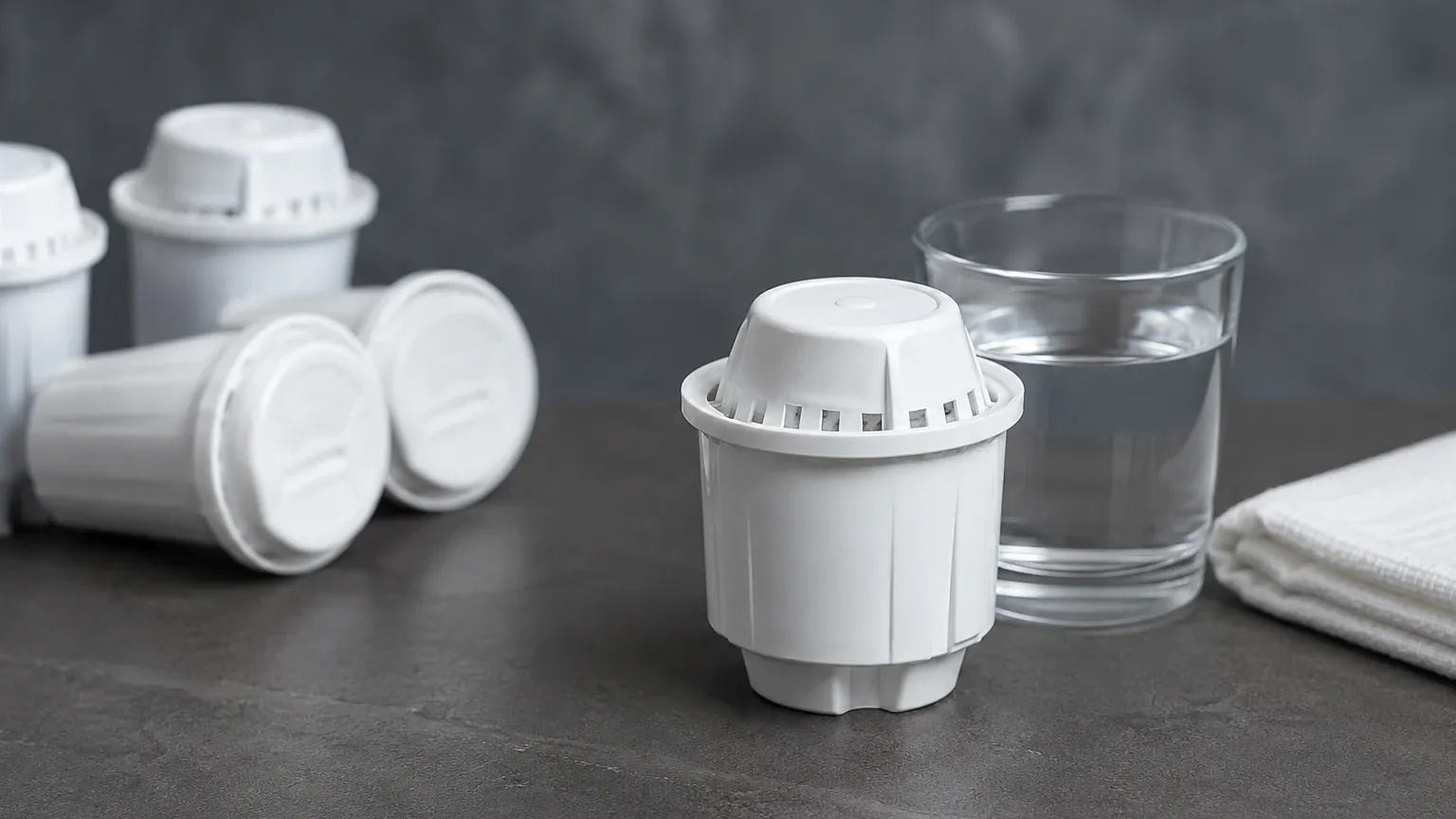
Brita XL water filter cartridges, often utilized in high-capacity dispensers and pitchers, are designed primarily for the reduction of aesthetic impurities and specific health-related contaminants. From a technical perspective, these cartridges typically employ a multi-stage filtration process housed within a food-grade plastic casing.
Filtration Media and Mechanism
Most Brita XL systems utilize a combination of activated carbon and ion-exchange resin. The activated carbon is derived from coconut shells and is processed to create a vast internal pore structure. This structure is highly effective at adsorbing chlorine, which improves taste and odor, as well as volatile organic compounds (VOCs). The ion-exchange resin serves to reduce carbonate hardness (limescale) and heavy metals such as copper and lead, which are common concerns in municipal water systems.
Flow Rates and Capacity
In a B2B context, such as a laboratory breakroom or a small-scale food service operation, the flow rate is a primary consideration. Brita XL cartridges are gravity-fed or low-pressure systems. Unlike industrial pressurized systems, these cartridges rely on contact time between the water and the media. A standard cartridge is typically rated for approximately 40 gallons (150 liters) or two months of use, depending on the local water hardness and sediment levels.
Engineering Limitations of Consumer-Grade Cartridges in Industrial Settings
While Brita XL water filter cartridges excel in providing potable water for staff hydration, they possess inherent limitations when integrated into industrial or high-demand commercial processes. Engineers must account for the following factors when evaluating these systems for professional use.
Pressure and Temperature Constraints
Consumer-grade cartridges are generally constructed from polypropylene or similar thermoplastics. These materials have low burst pressures and are susceptible to deformation under thermal stress. Most are rated only for cold water applications (typically below 30°C/86°F). In contrast, industrial environments often involve high-pressure lines or high-temperature CIP (Clean-in-Place) cycles that would immediately compromise a plastic cartridge.
Material Compatibility and Chemical Resistance
The housing and seals of domestic cartridges are optimized for municipal water. They are not designed to withstand exposure to aggressive chemicals, solvents, or extreme pH levels. In chemical processing or pharmaceutical manufacturing, the risk of material leaching from a plastic housing into the process stream is a significant concern. This is why many engineers specify stainless steel Filter Cartridges which offer superior chemical compatibility and structural rigidity.
Filtration Accuracy (Micron Ratings)
Brita XL cartridges do not typically provide a certified "absolute" micron rating. Their performance is measured by the reduction of specific contaminants rather than the exclusion of particles based on size. For industrial applications requiring precise particulate control—such as protecting sensitive hydraulic valves or ensuring the purity of a beverage bottling line—a nominal filtration approach is insufficient. Industrial filters provide verified ratings ranging from 0.5 to 200 microns or more, depending on the mesh or sintered metal configuration.
Comparing Brita XL with Industrial Stainless Steel Filter Cartridges
When scaling up from a breakroom dispenser to a production line, the differences between consumer and industrial filtration become stark. The following table highlights the key technical distinctions that engineers must consider.
| Feature | Brita XL Cartridges | Industrial Stainless Steel Cartridges |
| :— | :— | :— |
| Housing Material | Food-grade Plastic (PP) | 304 / 316L Stainless Steel |
| Filtration Media | Carbon / Ion-Exchange Resin | Wire Mesh / Sintered Metal / Fiber Felt |
| Operating Pressure | Gravity / Low Pressure | High Pressure (Up to several hundred PSI) |
| Temperature Limit | Cold water only | Up to 500°F+ (depending on seals) |
| Reusability | Disposable | Cleanable and Reusable |
| Customization | Standardized Sizes | Fully Customizable Dimensions and Fittings |
Durability and Lifecycle
A major point of divergence is the lifecycle of the component. Brita XL water filter cartridges are consumables that must be discarded after their media is exhausted. In a high-volume industrial setting, the cost of frequent replacements and the associated downtime can be prohibitive. Stainless steel cartridges, such as those manufactured by Kaifil, are designed to be cleaned via backwashing or ultrasonic baths, offering a much lower total cost of ownership (TCO) over the long term.
Selection Criteria for High-Performance Industrial Filtration
For technical professionals moving beyond the capabilities of Brita XL water filter cartridges, the selection process for industrial Filter Cartridges involves several critical engineering evaluations.
1. Fluid Characteristics: Determine the viscosity, temperature, and chemical composition of the fluid. This dictates whether 304 or 316L stainless steel is required and which gasket materials (EPDM, Viton, PTFE) are appropriate.
2. Flow Velocity and Pressure Drop: Engineers must calculate the "Delta P" (pressure drop) across the filter. A high initial pressure drop indicates that the filter surface area may be insufficient for the required flow rate, leading to premature clogging.
3. Contaminant Loading: Understanding the type and volume of particulate matter is essential. For high-load environments, pleated wire mesh cartridges are often preferred because they provide a significantly larger surface area within the same footprint compared to cylindrical designs.
4. Regulatory Compliance: In the food, beverage, and pharmaceutical industries, filtration components must meet stringent standards (such as FDA or 3-A Sanitary Standards). While Brita products are certified for home use, industrial components require documentation that supports their use in regulated manufacturing environments.
Cost Analysis: Disposable vs. Cleanable Filtration Systems
From a purchasing perspective, the initial price point of Brita XL water filter cartridges is low, which is attractive for small-scale applications. However, in a B2B environment, the calculation must shift toward the total cost of operation.
Disposable Systems:
* Low initial capital expenditure (CAPEX).
* High recurring operational expenditure (OPEX) due to frequent cartridge changes.
* Labor costs associated with maintenance cycles.
* Waste management costs for disposing of used plastic cartridges.
Cleanable Stainless Steel Systems:
* Higher initial CAPEX for the filter housing and stainless steel media.
* Significantly lower OPEX as the cartridges can last for years with proper maintenance.
* Reduced downtime through the use of duplex filter systems (allowing one filter to be cleaned while the other remains in operation).
* Sustainability benefits by eliminating single-use plastic waste.
Customization and OEM Solutions for Demanding Applications
One of the primary advantages of industrial filtration providers like Kaifil is the ability to move beyond off-the-shelf products. While Brita XL water filter cartridges come in a fixed form factor, industrial Filter Cartridges can be custom-engineered to fit existing machinery or to meet unique process requirements.
Custom End Caps and Fittings
Industrial filters can be manufactured with a variety of end-cap configurations, including DOE (Double Open End), SOE (Single Open End) with 222 or 226 O-rings, or threaded connections (NPT/BSP). This ensures a leak-proof seal and easy integration into complex piping manifolds.
Specialized Mesh Weaves
Depending on the application, engineers can choose from plain weave, twilled weave, or Dutch weave wire mesh. Each offers different characteristics in terms of flow resistance and mechanical strength. For example, a reverse Dutch weave is often used in high-pressure vertical leaf filters where high mechanical strength is paramount.
Conclusion: Making the Right Choice for Your Facility
Brita XL water filter cartridges serve a vital role in ensuring the quality of drinking water in office and light commercial environments. Their ease of use and effectiveness at removing common municipal contaminants make them a standard choice for hydration stations.
However, for engineers and plant managers responsible for industrial processes, hydraulic systems, or large-scale food and beverage production, the limitations of consumer-grade filtration are clear. When the application demands high-pressure tolerance, chemical resistance, precise micron ratings, and long-term durability, professional stainless steel Filter Cartridges are the necessary solution. By evaluating the specific technical requirements of the fluid stream and considering the long-term operational costs, organizations can select the filtration technology that best supports their operational efficiency and product quality goals.
