


Can You Reuse Aquarium Filter Cartridges
In the field of aquatic life support systems and industrial water treatment, the efficiency of filtration components directly dictates the health of the environment and the longevity of the equipment. A common question among system operators and facility managers is: can you reuse aquarium filter cartridges? While the immediate answer involves a trade-off between cost-saving and system stability, a technical analysis of filter media behavior, structural integrity, and filtration mechanics reveals a more complex reality.
Understanding whether a filter cartridge can be cleaned and returned to service requires an engineering perspective on how different media types—mechanical, chemical, and biological—interact with contaminants over time. For professionals managing high-load systems, the distinction between disposable consumer-grade media and industrial-strength Filter Cartridges is critical for maintaining optimal flow rates and water chemistry.
The Engineering Behind Filter Cartridge Design
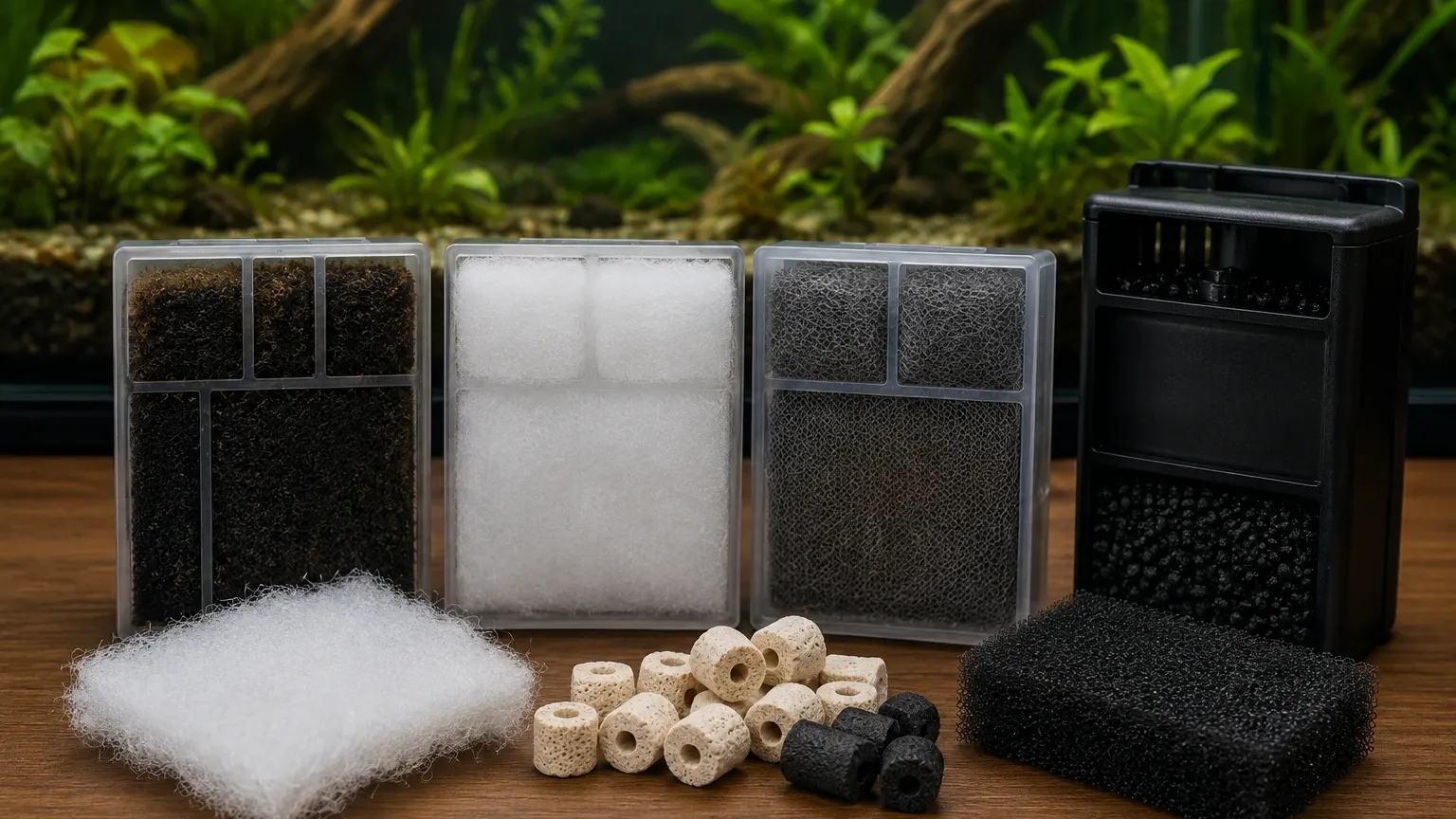
To determine if a cartridge is reusable, one must first understand its construction. Most standard aquarium cartridges are composite units, combining a rigid plastic frame with a non-woven fiber sleeve (mechanical filtration) and an internal chamber filled with activated carbon (chemical filtration).
From a manufacturing standpoint, these components are designed for specific lifecycle stages:
1. Mechanical Media: Usually made of bonded polyester or poly-fiber, these layers trap particulate matter through mechanical straining. Over time, the interstices of the fibers become impregnated with organic solids.
2. Chemical Media: Activated carbon relies on adsorption, where molecules adhere to the internal pore structure of the carbon granules. Once these sites are occupied, the media is chemically exhausted.
3. Biological Media: The surface area of the cartridge provides a substrate for nitrifying bacteria. Unlike mechanical media, biological media performance improves as the colony establishes, provided oxygenated water continues to flow through it.
When considering if you can reuse aquarium filter cartridges, the primary technical challenge is that cleaning the mechanical layer often compromises its pore structure, leading to "media migration" or bypass, where contaminants pass through the enlarged gaps in the fibers.
The Mechanics of Clogging and Media Fatigue
As a filter cartridge operates, it undergoes a process known as depth loading. Particulates are not just trapped on the surface but are driven deep into the fiber matrix. When an operator attempts to wash a disposable cartridge, they typically use pressurized water to dislodge these solids.
While this may restore some flow, it often results in media fatigue. The high-pressure rinsing can tear the delicate synthetic bonds of the non-woven fabric. In industrial filtration, this is a known failure mode where the filtration efficiency (the ability to trap particles of a specific micron size) drops significantly. If the structural integrity of the fiber is lost, the cartridge no longer provides the nominal filtration rating it was designed for, potentially allowing debris to reach sensitive downstream components or pumps.
Furthermore, organic biofilms produced by bacteria are extremely adhesive. Simple rinsing rarely removes the deep-seated proteins and lipids trapped within the fibers. This residual loading means the "cleaned" cartridge will reach its terminal differential pressure (the point where it is considered fully clogged) much faster than a new unit.
Biological vs. Mechanical Integrity: The Reuse Dilemma
One of the strongest arguments for reusing cartridges is the preservation of the biological filter. In many aquatic systems, the filter cartridge serves as a primary host for the bacteria responsible for the nitrogen cycle. Replacing the cartridge entirely can cause a "cycle crash," leading to dangerous spikes in ammonia and nitrite levels.
However, from a technical maintenance perspective, relying on a disposable cartridge for biological filtration is an engineering compromise. Professional systems often separate these functions. If you must reuse a cartridge to save bacteria, it should be rinsed gently in dechlorinated water to prevent killing the microbes.
Yet, the technical reality remains: if the mechanical portion of the cartridge is so clogged that it restricts flow, the bacteria on the surface will eventually die due to a lack of oxygen. Therefore, while you *can* reuse the biological aspect of a cartridge, the mechanical failure of the media usually necessitates a replacement to maintain system hydraulics.
Chemical Media: Why Reuse is Technically Impossible
If a cartridge contains activated carbon or ion-exchange resins, the question of reuse becomes a matter of chemistry rather than mechanics. Activated carbon works via Van der Waals forces to pull dissolved organics out of the water.
Once the carbon’s internal surface area is saturated, it cannot be "washed" clean. Reactivating carbon requires specialized industrial kilns that heat the material to over 800°C in a controlled atmosphere to burn off the adsorbed contaminants without destroying the carbon itself. Rinsing a cartridge under a tap does nothing to restore the chemical adsorption capacity. Consequently, any cartridge that relies on integrated chemical media loses a significant portion of its functional value once that media is spent, regardless of how clean the outer fiber sleeve appears.
Evaluation Criteria for Filter Reuse
For those managing larger facilities or multiple systems, establishing a protocol for filter evaluation is essential. Before deciding to reuse a filter component, engineers should confirm the following criteria:
* Differential Pressure (ΔP): Is the flow rate significantly lower even after cleaning? A high ΔP indicates that the internal depth of the media is permanently fouled.
* Structural Deformation: Are there visible gaps between the media and the frame? Any bypass renders the filter ineffective.
* Media Thinning: Does the fiber sleeve look "fuzzy" or thin? This indicates fiber breakdown and a loss of filtration accuracy.
* Odor and Discoloration: Persistent odors after rinsing suggest that organic decomposition is occurring within the media matrix, which can degrade water quality.
In many professional and industrial applications, the risks associated with media failure far outweigh the cost of replacement. This is why many sectors are moving toward more robust, cleanable Filter Cartridges made from materials like stainless steel mesh, which are engineered specifically for repeated regeneration without loss of performance.
Industrial Perspectives: When Reuse is an Engineering Goal
In industrial water treatment and chemical processing, the concept of "disposable" is often replaced by "regenerable." While consumer aquarium cartridges are designed for single-use cycles, industrial filtration solutions focus on durability and total cost of ownership.
Stainless steel wire mesh filters and sintered metal cartridges are the professional answer to the reuse dilemma. Unlike polyester fibers, these metal components can withstand ultrasonic cleaning, chemical backwashing, and high-pressure steam sterilization. They provide a fixed pore size that does not change under pressure, ensuring consistent filtration performance over hundreds of cleaning cycles.
For engineers transitioning from basic aquatic setups to more demanding industrial or commercial water systems, selecting the right filter media is a balance of initial capital expenditure versus long-term operational costs. While a high-quality metal filter cartridge has a higher upfront cost, its ability to be truly reused—without the risks of media migration or chemical exhaustion—makes it the superior choice for critical applications.
Best Practices for Filter Maintenance and Replacement
To optimize the lifespan of any filtration system, whether using disposable or permanent cartridges, follow these technical guidelines:
1. Staged Filtration: Use a coarse pre-filter to capture large debris before it reaches the fine-micron cartridge. This significantly extends the life of the primary filter.
2. Regular Monitoring: Do not wait for the flow to stop before inspecting the filter. Establish a preventive maintenance schedule based on the solids loading of your specific system.
3. Dechlorinated Rinsing: If reusing a cartridge for biological reasons, always use water from the system itself for rinsing. Chlorine in tap water will immediately neutralize the beneficial bacterial colonies.
4. Avoid Over-Cleaning: Excessive scrubbing of fiber cartridges accelerates material fatigue. If the media requires aggressive scrubbing to look clean, it is likely past its functional lifespan.
5. Transition to Dedicated Bio-Media: To avoid the "cycle crash" associated with cartridge replacement, consider adding dedicated biological media (such as ceramic rings or sintered glass) to the filter housing. This allows you to replace the mechanical Filter Cartridges as needed without disturbing the biological stability of the system.
Conclusion
While the answer to "can you reuse aquarium filter cartridges" is technically "yes, for a limited time," it comes with significant caveats regarding filtration efficiency and chemical capacity. For hobbyists, a gentle rinse may extend a cartridge's life by a few weeks, but for professional, industrial, or high-stakes aquatic environments, the degradation of the media poses an unacceptable risk to system performance.
For those seeking long-term reliability and true reusability, investing in precision-engineered filtration components is the most cost-effective strategy. By understanding the limitations of disposable media and the advantages of professional-grade filtration, operators can ensure their systems remain clean, stable, and efficient.
