


Can You Reuse Pool Filter Cartridges
In the field of industrial and commercial water management, the efficiency of filtration systems is a primary driver of operational costs and system longevity. One of the most frequent questions encountered by facility managers and maintenance engineers is: can you reuse pool filter cartridges? From a technical and engineering perspective, the answer is yes, but the feasibility of reuse is governed by material science, the nature of the contaminants, and the physical degradation of the filter media over time.
While pool filter cartridges are designed for a degree of reusability, their lifespan is not indefinite. Understanding the mechanics of how these Filter Cartridges capture debris and how cleaning processes affect their structural integrity is essential for maintaining water quality and protecting downstream equipment.
The Engineering Behind Cartridge Filtration
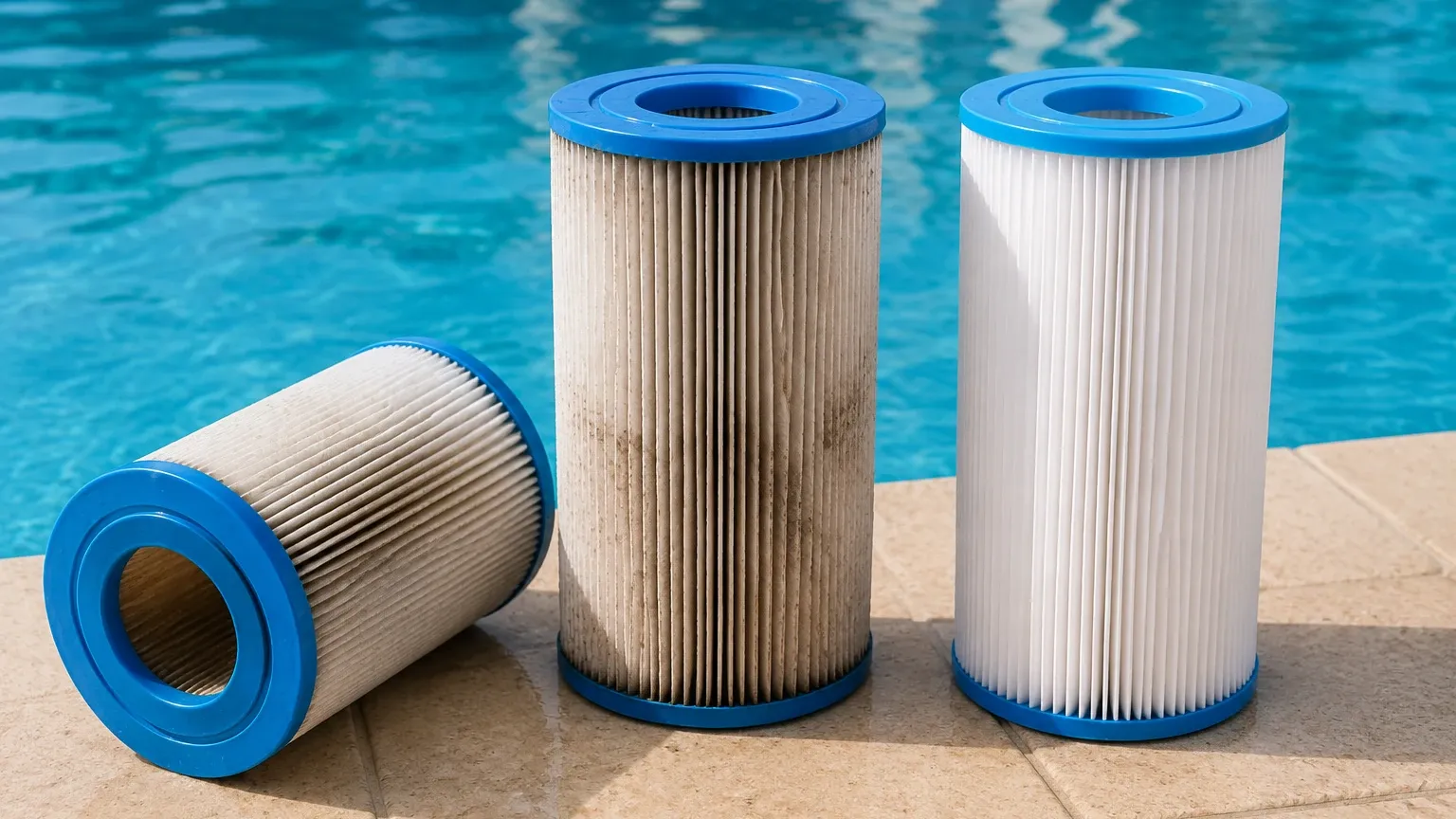
To understand the limits of reusability, one must first examine the construction of a standard pool filter cartridge. Most are manufactured using a non-woven pleated polyester fabric wrapped around a central core, typically made of PVC or a similar high-strength polymer. The pleats are designed to maximize surface area, allowing for high flow rates while capturing particles ranging from 10 to 50 microns.
Filtration in these cartridges occurs through two primary mechanisms: surface filtration and depth filtration. Surface filtration happens when particles larger than the pores of the media are trapped on the outer layer. Depth filtration occurs as smaller particles become entangled within the fibrous matrix of the polyester. Over time, these particles become deeply embedded, a phenomenon known as "blinding" or "plugging." While surface-level debris can be rinsed away, the particles trapped deep within the fibers are much harder to remove, eventually leading to a permanent increase in the baseline pressure drop across the filter.
Indicators for Cleaning and Reuse Cycles
In professional water treatment environments, the decision to clean and reuse a cartridge should be based on empirical data rather than visual inspection alone. The most reliable metric is the differential pressure (ΔP).
1. Baseline Pressure: When a new cartridge is installed, the initial pressure reading on the gauge should be recorded.
2. Cleaning Threshold: As the filter accumulates debris, the resistance to flow increases, causing the pressure to rise. Industry standards generally dictate that a cartridge should be cleaned when the pressure increases by 8 to 10 PSI (pounds per square inch) above the baseline.
3. Flow Rate Diminishment: In systems equipped with flow meters, a noticeable drop in Gallons Per Minute (GPM) despite consistent pump output indicates that the media is becoming saturated.
When these thresholds are met, the cartridge can be removed and cleaned. However, each cleaning cycle involves mechanical and chemical stresses that gradually wear down the polyester fibers.
Technical Procedures for Reusing Cartridges
If the goal is to maximize the number of times you can reuse pool filter cartridges, the cleaning protocol must be rigorous and technically sound. Improper cleaning is a leading cause of premature cartridge failure.
Mechanical Rinsing
The first step is a thorough rinse with a high-volume, low-pressure water stream. Using a high-pressure power washer is often discouraged by engineers because the concentrated force can tear the delicate fibers or widen the pore structure, effectively destroying the filter's micron rating. The goal is to flush debris out of the pleats from the top down.
Degreasing and Chemical Soaking
Pool water often contains body oils, suntan lotions, and organic surfactants that create a film on the filter media. This film cannot be removed by water alone. A specialized filter degreaser or a solution of trisodium phosphate (TSP) is required to break down these lipids. If the cartridge is scaled with calcium or mineral deposits, an acid bath (typically a diluted muriatic acid solution) may be necessary. However, acid should only be used *after* degreasing, as acid can bake oils into the fabric, creating a permanent blockage.
Drying and Inspection
After chemical treatment, the cartridge must be rinsed again and allowed to dry completely. Drying allows the polyester fibers to "reset" and makes it easier to shake off any remaining fine dust. Before reinstallation, the cartridge should be inspected for structural defects, such as cracked end caps or frayed pleats.
The Risks of Excessive Reuse: Fiber Fatigue and Bypass
There is a point of diminishing returns when attempting to reuse synthetic filter cartridges. Engineers refer to this as "fiber fatigue." As the polyester is repeatedly saturated, chemically treated, and dried, the fibers lose their elasticity and structural memory.
One of the primary risks of over-reusing a cartridge is bypass. This occurs when the media becomes so thin or the pores so enlarged that contaminants pass through the filter and return to the pool or process stream. This can lead to increased turbidity and the accumulation of debris in heat exchangers or sensitive chemical dosing equipment. Furthermore, if the internal core of the cartridge collapses due to high differential pressure, the entire filtration system can be compromised, leading to costly repairs.
Total Cost of Ownership (TCO) in Filtration
From a B2B and procurement perspective, the decision of how often to reuse a cartridge should be viewed through the lens of Total Cost of Ownership (TCO). While cleaning a cartridge saves on the direct cost of a replacement unit, it incurs other costs:
* Labor Costs: The time required for a technician to properly clean, soak, and inspect a cartridge.
* Water and Chemical Costs: The volume of water used for rinsing and the cost of degreasing agents.
* System Downtime: The period the filtration system is offline during the cleaning cycle.
* Energy Consumption: As a cartridge nears the end of its life, the pump must work harder to push water through the clogged media, leading to higher electrical costs.
In many commercial applications, it is more cost-effective to replace the cartridge after a set number of cleaning cycles (typically 12 to 18 months of use) rather than attempting to extend its life indefinitely.
Moving Toward Industrial-Grade Solutions
For industrial applications where high temperatures, aggressive chemicals, or extreme pressure conditions are present, standard pool-style polyester cartridges may be insufficient. This is where specialized Filter Cartridges made from stainless steel or high-performance polymers become necessary.
Stainless steel wire mesh filters, for example, offer a much higher degree of reusability. Unlike polyester, stainless steel can withstand ultrasonic cleaning, backwashing, and high-temperature sterilization without losing its micron rating. For engineers managing large-scale water features, cooling towers, or industrial process water, transitioning from disposable or limited-reuse synthetic cartridges to permanent metal filtration components can significantly reduce long-term waste and maintenance overhead.
When to Retire a Filter Cartridge
Knowing when a cartridge has reached the end of its functional life is critical for maintaining system integrity. You should stop attempting to reuse a cartridge and opt for a replacement if any of the following conditions are met:
1. Permanent High Pressure: If the baseline pressure remains 5-8 PSI higher than the original "new" pressure even after a deep chemical cleaning.
2. Visible Media Damage: Any signs of tearing, "fuzzing" of the fabric, or separation of the pleats from the end caps.
3. End Cap Failure: Cracks in the polyurethane or plastic end caps can allow unfiltered water to bypass the media entirely.
4. Odor and Staining: Persistent mold or algae growth within the fibers that cannot be eradicated by chemical soaking.
Conclusion: Balancing Reuse and Performance
In summary, while you can reuse pool filter cartridges through diligent cleaning and maintenance, the process is governed by the physical limits of the filter media. For residential and light commercial pools, a well-maintained cartridge can last several seasons. However, in demanding industrial environments, the risks associated with fiber fatigue and bypass often outweigh the savings of prolonged reuse.
For facilities looking to optimize their filtration performance, selecting the right material and configuration is the first step. Whether you require standard pleated elements or custom-engineered stainless steel Filter Cartridges, understanding the technical requirements of your specific application will ensure the highest water quality and the lowest operational cost. By monitoring differential pressure and adhering to professional cleaning protocols, you can maximize the value of your filtration investment while ensuring the safety and clarity of your water system.
