


Filter Cartridges Zero Water
In the landscape of industrial fluid management, the pursuit of high-purity water—often referred to in technical circles as "zero water" or water with zero Total Dissolved Solids (TDS)—is a critical requirement for sectors ranging from semiconductor manufacturing to pharmaceutical compounding. Achieving this level of purity requires a sophisticated, multi-stage filtration strategy. While the term is frequently associated with consumer-grade ion-exchange pitchers, industrial professionals recognize that reaching a zero-TDS state in a high-volume production environment necessitates robust, precision-engineered components. Central to these systems are high-performance Filter Cartridges designed to handle specific contaminant loads and protect sensitive downstream purification technologies.
Industrial "zero water" does not merely imply the absence of visible debris; it signifies the removal of dissolved ions, organic compounds, and microbial life to a degree where the water’s conductivity is at its theoretical minimum. For engineers and procurement teams, selecting the right filtration media is the first step in ensuring the longevity and efficiency of the entire purification train.
Understanding the Technical Requirements for High-Purity Water
To achieve a state where water quality registers near zero on a TDS meter, a system must address three primary categories of contaminants: suspended solids, dissolved solids (ions), and biological/organic matter. In an industrial context, the process usually begins with pre-filtration. Without effective pre-filtration, the more expensive components of a zero-water system, such as Reverse Osmosis (RO) membranes or Deionization (DI) resin beds, would quickly become fouled or exhausted.
Filter cartridges used in these initial stages must provide a high dirt-holding capacity and precise micron ratings. In many high-purity applications, the goal is to reduce the Silt Density Index (SDI) of the feed water. An SDI of less than 3.0 is typically required before water enters an RO system. Stainless steel filter cartridges, particularly those utilizing pleated or sintered mesh designs, are often employed here because they offer consistent pore sizes and can withstand the high pressures and temperatures that might be present in industrial feed lines.
Furthermore, the "zero water" standard in a laboratory or cleanroom setting often follows ASTM D1193 or ISO 3696 standards. These standards define Type I, II, and III water based on resistivity, conductivity, and TOC (Total Organic Carbon). Achieving Type I water (18.2 MΩ·cm at 25°C) requires a final stage of filtration that eliminates even the smallest traces of ionic leakage, making the reliability of the preceding filter stages paramount.
The Role of Stainless Steel Filter Cartridges in Water Purification
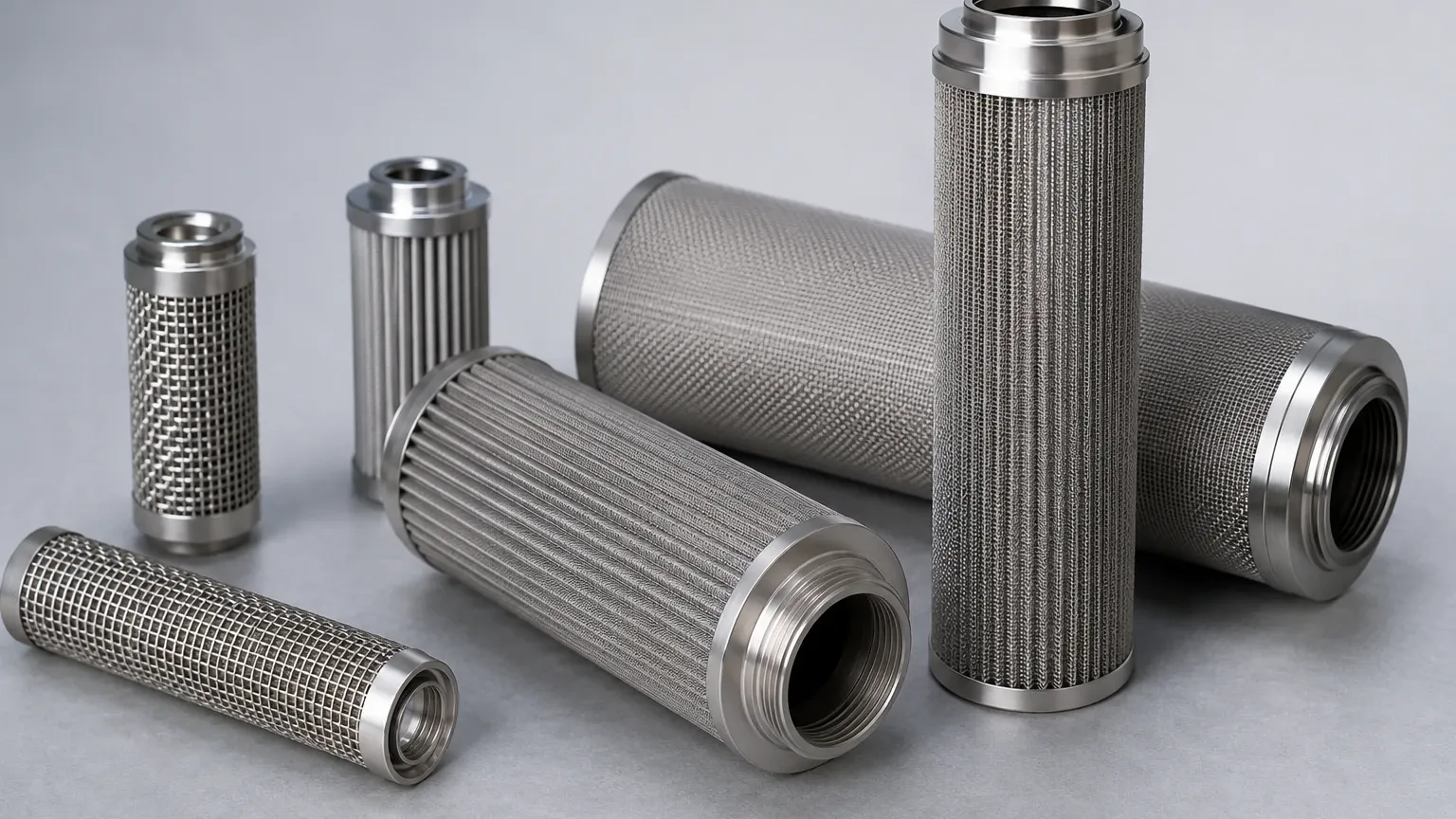
While polymer-based filters are common in many applications, stainless steel filter cartridges provide distinct engineering advantages in the journey toward zero-TDS water. Kaifil specializes in manufacturing these components from 304 and 316L stainless steel, materials chosen for their exceptional corrosion resistance and structural integrity.
Durability and Pressure Resistance
In high-purity systems, pressure fluctuations can occur during pump cycles or valve operations. Synthetic fiber filters may bypass or unload captured contaminants under pressure spikes. In contrast, a stainless steel cartridge maintains its geometric stability. This ensures that the filtration efficiency remains constant, preventing "breakthrough" events that could contaminate the downstream DI resins or RO membranes.
Chemical and Thermal Compatibility
Many industrial water systems require periodic sanitization, often involving high-temperature steam (SIP) or aggressive chemical cleaning (CIP). Stainless steel cartridges can be sterilized repeatedly without degrading the filter media. This is a critical factor for facilities aiming for zero water purity while maintaining strict microbial control. The ability to clean and reuse these cartridges also contributes to a lower total cost of ownership compared to disposable plastic alternatives.
Precision Filtration
Through advanced sintering and pleating techniques, stainless steel media can achieve absolute micron ratings. This precision is vital when the goal is to remove specific particulates that could interfere with the ion-exchange process. By utilizing filter cartridges zero water systems can remain operational for longer intervals between resin regenerations, as the physical load on the chemical stages is significantly reduced.
Comparing Filtration Technologies for Zero-TDS Outcomes
Achieving zero TDS is rarely the result of a single filter. Instead, it is the result of a coordinated technology stack. Understanding where different filter cartridges fit into this stack is essential for system design.
1. Sediment Pre-filtration: This is the first line of defense. Using 5-micron to 20-micron stainless steel or depth cartridges, the system removes sand, rust, and scale. This protects the subsequent finer stages.
2. Activated Carbon Filtration: While not always in cartridge form, carbon blocks or granulated carbon cartridges are used to remove chlorine and organic chemicals. Chlorine is particularly hazardous to RO membranes, as it can cause irreversible oxidative damage.
3. Reverse Osmosis (RO): The RO stage removes approximately 95% to 99% of dissolved salts. However, RO alone rarely reaches "zero." The permeate from an RO system usually still contains some residual ions.
4. Deionization (DI) and Mixed Bed Resins: This is where the final transition to zero TDS occurs. Ion-exchange resins swap remaining H+ and OH- ions for dissolved minerals.
5. Post-Filtration: After the DI stage, high-purity water is susceptible to re-contamination from the piping or the resin itself (resin fines). A final 0.22-micron or 0.1-micron absolute-rated filter cartridge is often installed at the point of use to ensure that no particulates reach the final process.
By integrating high-quality Filter Cartridges at the pre-filtration and post-polishing stages, engineers can ensure that the zero-water output remains consistent even under varying feed water conditions.
Engineering Considerations for Industrial Filter Selection
When specifying filter cartridges for a high-purity water system, engineers must look beyond the micron rating. Several technical parameters dictate the success of the installation:
Flow Rate and Pressure Drop (Delta P)
Every filter introduces a pressure drop. In zero-water systems, maintaining a consistent flow is necessary for the proper operation of RO membranes. If the pre-filter has an excessively high Delta P, it can starve the high-pressure pump, leading to cavitation and system failure. Sintered metal filters often provide a higher porosity-to-strength ratio, allowing for high flow rates with minimal resistance.
Material Outgassing and Leaching
In the quest for zero water, the filter itself must not contribute any contaminants. Some plastic filters can leach plasticizers or surfactants into the water stream, which would increase the TOC levels. 316L stainless steel is an inert material that does not outgas or leach chemicals, making it the gold standard for ultra-pure water (UPW) systems where chemical purity is as important as ionic purity.
End-Cap Configurations
To ensure a leak-proof seal within the housing, the selection of end-caps (such as 222, 226, or DOE) and O-ring materials (EPDM, Viton, or Silicone) is critical. A bypass of even 1% of the water around the filter media can prevent the system from reaching its zero-TDS target. Precision-machined end-caps on stainless steel cartridges provide a superior seal compared to molded plastic variants.
Maintenance and Longevity: Ensuring Consistent Water Quality
A common pitfall in industrial filtration is the "install and forget" mentality. In systems utilizing filter cartridges zero water quality can degrade rapidly if maintenance schedules are ignored. Monitoring the differential pressure across the filter housing is the most reliable method for determining when a cartridge needs cleaning or replacement.
For stainless steel cartridges, the maintenance cycle often includes ultrasonic cleaning or chemical backwashing. This restores the permeability of the media without the need for frequent disposal. In contrast, if a system relies on disposable melt-blown cartridges, the procurement team must manage a constant inventory of replacements, and the facility must handle the environmental impact of the waste stream.
Furthermore, the replacement cycle of the final polishing filters is usually determined by time or total throughput (gallons processed) rather than pressure drop, as these filters are protecting against microscopic resin fines and bacteria that may not significantly impact pressure until the system is already compromised.
Customization and OEM Solutions for Specialized Filtration
No two industrial water sources are identical. A facility drawing water from a municipal grid faces different challenges than one using well water or recycled process water. Consequently, off-the-shelf filtration solutions may not always provide the optimal balance of performance and cost.
Customization options for filter cartridges include:
* Variable Lengths: Matching the cartridge to existing housing dimensions (e.g., 10", 20", 30", or 40").
* Layered Media: Combining different mesh sizes within a single sintered element to provide graduated filtration (depth filtration in a metallic format).
* Reinforced Cores: For applications involving high-viscosity fluids or extreme pressure differentials.
Kaifil’s engineering team works closely with global customers to develop these customized solutions. By analyzing the specific particulate profile of the feed water, a bespoke stainless steel filter can be designed to maximize the lifespan of the downstream zero-water components.
Conclusion: Achieving Reliable Zero-Water Standards
The production of zero-TDS water is an exacting process that demands high-quality components at every stage. While the ion-exchange and membrane stages perform the "heavy lifting" of mineral removal, the overall reliability of the system hinges on the performance of the Filter Cartridges used for protection and polishing.
By selecting stainless steel filtration media, industrial operators gain the benefits of thermal stability, chemical inertness, and mechanical strength. These attributes are essential for maintaining the integrity of a high-purity water loop. Whether you are designing a new ultra-pure water system or optimizing an existing one, focusing on the technical specifications of your filter cartridges is the most effective way to ensure that "zero water" remains a consistent reality rather than a fluctuating goal. Through proper engineering, material selection, and maintenance, the challenges of industrial water purification can be met with durable and cost-effective solutions.
