


Can You Wash Aquarium Filter Cartridges
Maintaining water quality in any aquatic or industrial system requires a deep understanding of the filtration components in use. A frequent question among both hobbyists and technical operators is: can you wash aquarium filter cartridges? From an engineering perspective, the answer depends heavily on the material composition of the filter media, the nature of the contaminants, and the structural integrity of the cartridge housing.
While disposable cartridges are common in consumer-grade aquarium setups, industrial applications often demand more robust, cleanable solutions. Understanding the mechanics of filtration and the limitations of different media types is essential for optimizing system performance and managing long-term operational costs.
The Engineering Principles of Filter Cartridge Maintenance
Filtration is the process of removing suspended solids from a fluid stream by passing it through a porous medium. Over time, these solids accumulate on the surface or within the depth of the media, leading to a phenomenon known as "blinding" or "clogging." This accumulation increases the differential pressure (ΔP) across the filter. When the pressure drop reaches a critical threshold, the flow rate decreases, and the risk of structural failure or "bypass"—where unfiltered fluid leaks around the cartridge—increases significantly.
In the context of Filter Cartridges, maintenance strategies generally fall into two categories: replacement or regeneration (cleaning). Disposable cartridges are typically made from non-woven polyester, pleated paper, or activated carbon blocks. These materials are designed for high initial efficiency but have limited structural resilience. Conversely, industrial-grade metal filters are engineered for repeated cleaning cycles, offering a sustainable alternative for demanding environments.
Mechanical vs. Biological Filtration: What Can Be Cleaned?
To determine if a filter cartridge can be washed, one must distinguish between the types of filtration it provides. Most aquarium and industrial liquid filters perform at least two of the following functions:
1. Mechanical Filtration
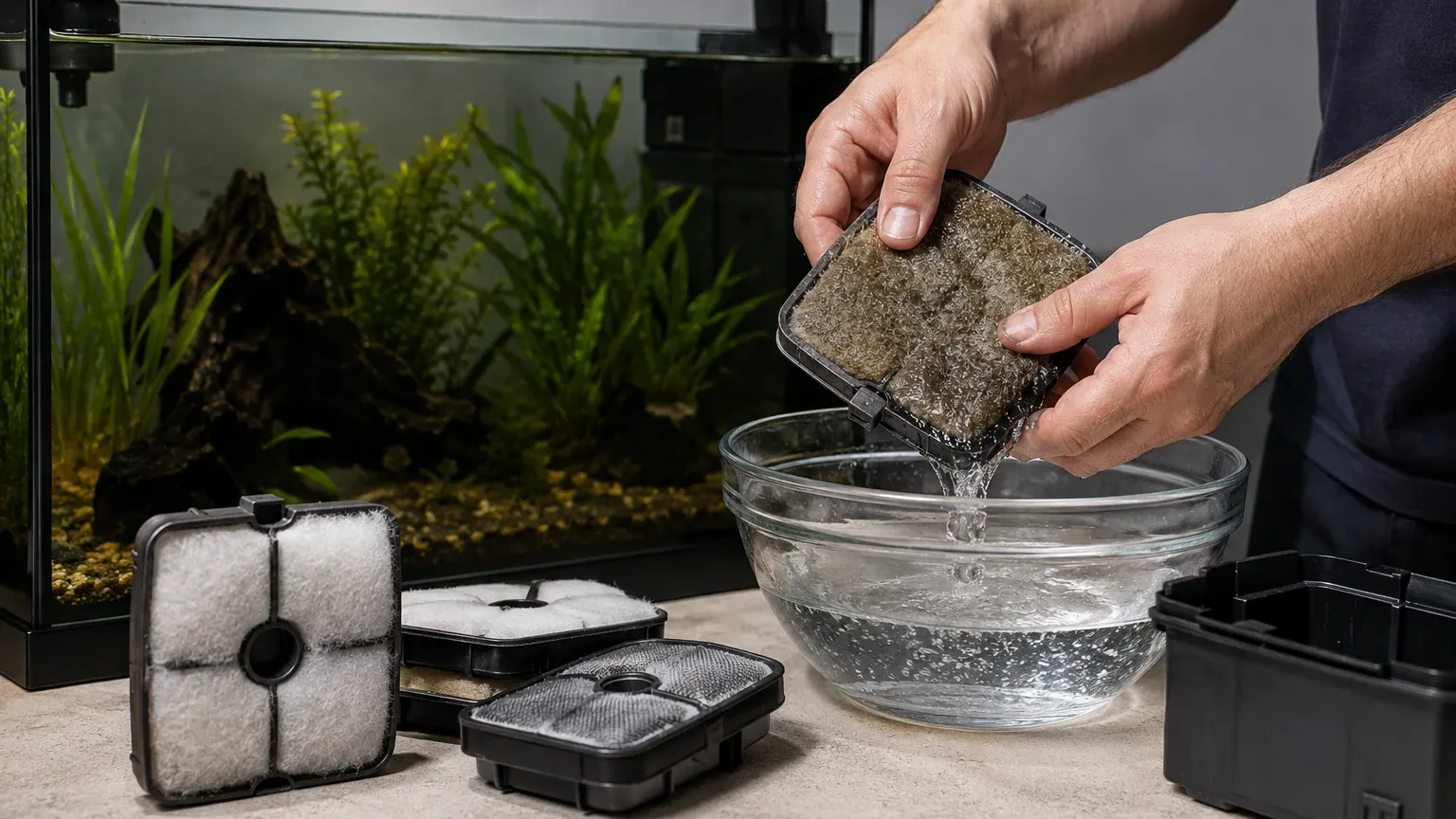
Mechanical filtration involves the physical trapping of particles. Whether using a synthetic fiber or a stainless steel wire mesh, the goal is to intercept solids based on their size (micron rating). Mechanical media is generally the most "washable" component. By removing the accumulated debris through rinsing or backwashing, the interstitial spaces in the media are cleared, restoring flow capacity.
2. Biological Filtration
In aquarium systems, filter cartridges often serve as a substrate for nitrifying bacteria. These microorganisms are responsible for the nitrogen cycle, converting toxic ammonia into less harmful nitrates. Washing these cartridges with chlorinated tap water can be catastrophic, as the chlorine kills the beneficial bacterial colonies. If biological filtration is the primary goal, "washing" should be limited to a gentle rinse in dechlorinated water to remove heavy sludge without stripping the biofilm.
3. Chemical Filtration
Cartridges containing activated carbon or ion-exchange resins provide chemical filtration by adsorbing dissolved impurities. Once the adsorption sites on the carbon are saturated, the media is exhausted. Washing cannot "reactivate" chemical media; it requires high-heat thermal processing to release the trapped molecular contaminants. Therefore, cartridges with a chemical component must be replaced rather than washed.
Technical Risks of Washing Disposable Cartridges
While it is physically possible to rinse a standard disposable aquarium filter, several technical risks must be considered by anyone looking to extend the life of their filtration components:
* Media Fatigue: Disposable pleated paper or polyester fibers are not designed for the mechanical stress of high-pressure rinsing. Washing can cause the fibers to fray or the pleats to collapse, which alters the effective micron rating and allows larger particles to pass through.
* Pore Enlargement: Repeated washing can stretch the pores of the fabric. While the filter may look clean, its ability to capture fine particulates is compromised, leading to poor water clarity and potential damage to downstream components.
* Incomplete Debris Removal: Organic matter trapped deep within the depth of a fiber media is difficult to remove entirely. This residual waste can rot, leading to localized bacterial blooms or chemical imbalances within the system.
* Structural Integrity: The plastic frames of many consumer cartridges are thin and prone to cracking after repeated handling. A cracked frame allows fluid to bypass the media entirely, rendering the filtration system ineffective.
Industrial Alternatives: The Shift to Reusable Stainless Steel Filter Cartridges
For engineers and purchasing teams managing critical systems, the limitations of disposable cartridges often lead to a search for more reliable solutions. This is where industrial-grade stainless steel filter cartridges offer a significant advantage. Unlike disposable media, stainless steel wire mesh is engineered specifically for durability and cleanability.
Advantages of Stainless Steel Mesh
Stainless steel cartridges, often utilized in chemical processing, food and beverage, and high-end water treatment, are constructed from 304 or 316L stainless steel. These materials offer:
* High Temperature and Chemical Resistance: They can withstand aggressive cleaning agents and high-temperature sterilization (SIP/CIP) that would destroy synthetic cartridges.
* Precision Micron Ratings: The weaving process for stainless steel wire mesh ensures a consistent pore size that does not change after washing.
* Mechanical Strength: These cartridges can handle significantly higher differential pressures without collapsing, making them ideal for high-viscosity fluids or high-flow applications.
When considering the question of whether you can wash a filter, moving to a professional-grade stainless steel solution changes the conversation from "can I save a few dollars by rinsing this?" to "how can I optimize my maintenance schedule with a cleanable, long-term asset?"
Selection Criteria for High-Performance Filtration
When selecting between disposable and cleanable filter cartridges, engineers must evaluate several key performance indicators (KPIs):
1. Filtration Accuracy: What is the required micron rating? For fine filtration (under 5 microns), disposable depth filters are often used, but for precise mechanical separation, pleated stainless steel mesh is superior.
2. Flow Rate and Pressure Drop: A filter that is difficult to clean will quickly lead to a high pressure drop. Cleanable cartridges often feature pleated designs to maximize surface area, ensuring a lower initial ΔP and longer run times between cleanings.
3. Compatibility: Ensure the cartridge material is compatible with the fluid's pH, temperature, and chemical composition. Stainless steel is the gold standard for compatibility in most industrial and aquatic environments.
4. Customization Requirements: Many industrial systems require non-standard dimensions or specialized end-cap configurations (e.g., 222, 226, or DOE). Manufacturers like Kaifil specialize in providing customized stainless steel filtration solutions that fit existing housings while providing the benefits of a reusable medium.
Maintenance Protocols and Cleaning Methods
For those utilizing cleanable stainless steel cartridges, the "washing" process is a standardized engineering procedure. Depending on the application, several methods may be employed:
* Ultrasonic Cleaning: This is the most effective method for removing fine particulates trapped in the mesh. High-frequency sound waves create cavitation bubbles that dislodge debris from the deepest parts of the filter.
* Backwashing: By reversing the flow of the fluid, particles are pushed off the surface of the media. This is often an automated process in large-scale industrial systems.
* Chemical Soaking: For organic fouling or mineral scaling, soaking the cartridge in a compatible solvent or mild acid can dissolve the contaminants without damaging the stainless steel structure.
* High-Pressure Rinsing: For coarse mesh filters, a directed spray can be used to remove surface cake and debris.
Total Cost of Ownership: Disposable vs. Cleanable Systems
While the initial purchase price of a high-quality stainless steel filter cartridge is higher than that of a disposable aquarium-style cartridge, the Total Cost of Ownership (TCO) is often much lower.
Consider the following factors in the TCO calculation:
* Replacement Frequency: Disposable cartridges may need to be replaced every 2–4 weeks. A stainless steel cartridge can last for years with proper maintenance.
* Disposal Costs: Reducing the volume of spent filter media contributes to sustainability goals and reduces waste disposal fees.
* Downtime: Systems designed for cleanable cartridges often allow for faster maintenance cycles, especially if a "clean and rotate" strategy is used with a spare set of cartridges.
* Risk Mitigation: The structural reliability of metal cartridges reduces the risk of catastrophic failure and downstream contamination, which can be incredibly costly in industrial settings.
In conclusion, while the answer to "can you wash aquarium filter cartridges" is technically yes for some mechanical components, it is rarely the most efficient or reliable long-term strategy for critical applications. For engineers and technical professionals, transitioning to robust, cleanable Filter Cartridges made from stainless steel provides a more predictable, cost-effective, and high-performance filtration solution. By understanding the material limits and maintenance requirements of your filtration system, you can ensure optimal water quality and operational efficiency.
