


How Do You Recycle Water Filter Cartridges
In the modern industrial landscape, sustainability is no longer a secondary consideration; it is a core engineering requirement. As manufacturing facilities, chemical plants, and pharmaceutical laboratories strive to reduce their environmental footprint, the question of waste management becomes paramount. One of the most frequently asked questions by procurement managers and environmental health and safety (EHS) officers is: how do you recycle water filter cartridges?
The answer is complex and depends heavily on the material composition of the filter, the nature of the contaminants it has captured, and the local infrastructure for industrial waste processing. This guide examines the technical aspects of recycling various types of filter cartridges, the engineering considerations for selecting sustainable filtration media, and the practical steps for managing end-of-life filtration components.
Understanding the Composition of Industrial Filter Cartridges
To determine the recyclability of a filter, one must first understand its construction. Industrial filtration systems utilize a wide range of materials, each selected for specific chemical compatibility, temperature resistance, and micron ratings.
Polymer-Based Cartridges
Most disposable water filters are constructed from polymers such as polypropylene (PP), polyethersulfone (PES), nylon, or polytetrafluoroethylene (PTFE). These are often "depth filters" or "pleated membrane filters." While these polymers are technically recyclable in their raw state, as part of a filter cartridge, they are often thermally bonded or glued to end caps, gaskets, and internal support cores made of different plastics. This multi-material construction makes mechanical separation difficult.
Carbon and Composite Filters
Many water treatment applications use activated carbon blocks or granulated activated carbon (GAC) encased in plastic housings. These are particularly challenging because the carbon media is often impregnated with binders or chemical additives to enhance performance, complicating the reclamation of either the plastic or the carbon.
Stainless Steel and Metal Filters
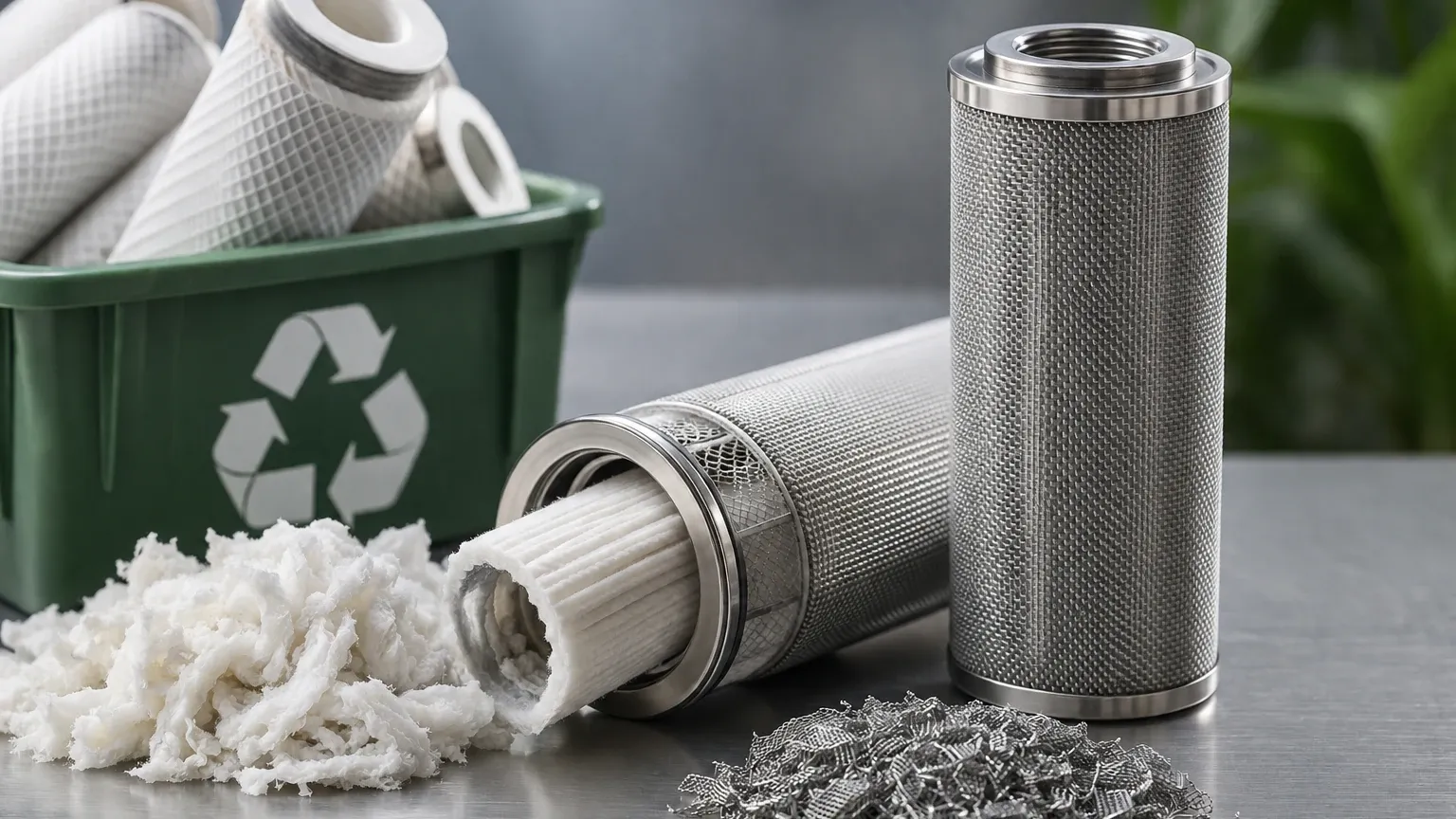
High-performance industrial Filter Cartridges are frequently made from stainless steel (typically 304 or 316L) or other metal alloys. These may consist of sintered metal powder, wedge wire, or multi-layered wire mesh. From a sustainability perspective, metal filters represent the gold standard because they are both cleanable (extending their service life) and 100% recyclable at the end of their functional existence.
The Technical Challenges of Recycling Polymer-Based Filters
When engineers ask "how do you recycle water filter cartridges" made of plastic, they often encounter significant hurdles. The primary challenge is contamination. A filter's job is to trap impurities—sediment, heavy metals, organic compounds, or biological agents. Once these contaminants are embedded in the filter matrix, the entire unit may be classified as hazardous waste, depending on the application.
1. Material Separation: Most recycling facilities require pure streams of plastic. A standard pleated cartridge may have a PP cage, a PES membrane, and Viton O-rings. Separating these components is labor-intensive and often economically unviable for standard municipal recycling streams.
2. Contaminant Loading: If a filter has been used in chemical processing or heavy metal removal, the plastic fibers become a carrier for those toxins. Melting down this plastic for reuse can release hazardous fumes or result in a recycled product that is chemically unstable.
3. Low Residual Value: The market value of recycled polypropylene or nylon is relatively low compared to the cost of cleaning and processing used industrial filters. Consequently, many polymer cartridges end up in landfills or waste-to-energy (incineration) facilities.
How Do You Recycle Water Filter Cartridges Made of Stainless Steel?
For industries looking to minimize waste, stainless steel filtration solutions offer a clear path forward. The recycling process for metal filter cartridges is significantly more straightforward and efficient than for their plastic counterparts.
The Lifecycle of a Metal Filter
Unlike disposable filters, stainless steel cartridges are designed for longevity. They can be cleaned through backwashing, ultrasonic cleaning, or chemical sanitization. This allows a single cartridge to remain in service for years, whereas a plastic equivalent might be replaced monthly.
The Scrap Metal Recovery Process
When a stainless steel filter finally reaches the end of its mechanical life (perhaps due to physical damage or irreversible blinding of the mesh), it is treated as high-grade scrap metal.
* Collection: The filters are collected and stripped of any non-metal gaskets or seals.
* Decontamination: The units undergo a high-temperature burn-off or chemical bath to remove any residual organic or inorganic process fluids.
* Smelting: The clean stainless steel is sent to a foundry where it is melted down. Because stainless steel does not lose its inherent properties during the recycling process, it can be repurposed into new industrial components, including new filtration media.
This circularity is a key reason why engineering teams in the food and beverage, pharmaceutical, and oil and gas sectors are increasingly specifying stainless steel Filter Cartridges for their critical processes.
Evaluating the Environmental Impact: Disposable vs. Cleanable Systems
When determining how do you recycle water filter cartridges, it is helpful to perform a Life Cycle Assessment (LCA). An LCA compares the total environmental impact of a filtration system from raw material extraction to final disposal.
| Feature | Disposable Polymer Filters | Cleanable Stainless Steel Filters |
| :— | :— | :— |
| Initial Carbon Footprint | Low (Plastic production is energy-efficient) | High (Metal mining and fabrication is energy-intensive) |
| Operational Waste | High (Frequent replacement and disposal) | Low (Periodic cleaning, minimal waste) |
| Recyclability | Difficult/Rarely achieved | High (Standard scrap metal protocols) |
| Chemical Resistance | Variable (Limited by polymer type) | Excellent (Compatible with most solvents/acids) |
| Total Cost of Ownership | High (Cumulative cost of replacements) | Low (Higher upfront, lower long-term) |
Engineers must weigh the lower initial cost of disposable cartridges against the long-term environmental and logistical costs of waste management. In many high-volume water treatment applications, the transition to a cleanable and recyclable metal system pays for itself within 18 to 24 months through reduced procurement and disposal fees.
Waste Management Protocols for Contaminated Filtration Media
Regardless of the material, if a filter has been used to process hazardous materials, the recycling process must follow strict regulatory guidelines (such as RCRA in the United States or the Waste Framework Directive in the EU).
Identifying Hazardous Waste
Before attempting to recycle, the EHS team must determine if the spent cartridge is "characteristic" hazardous waste (ignitable, corrosive, reactive, or toxic). For example, a filter used to remove lead from industrial wastewater cannot simply be thrown in a recycling bin. It must be handled by a licensed hazardous waste contractor.
Manufacturer Take-Back Programs
Some manufacturers of specialized polymer filters offer take-back programs. In these scenarios, the manufacturer collects the spent cartridges, uses proprietary methods to decontaminate them, and then grinds the plastic for use in non-critical applications like plastic lumber or industrial pallets. When purchasing Filter Cartridges, it is advisable to ask the supplier if they offer an end-of-life reclamation service.
Selection Criteria for Sustainable Industrial Filtration
For technical professionals tasked with optimizing filtration systems, the goal is to balance performance with sustainability. To address the question of "how do you recycle water filter cartridges" at the procurement stage, consider the following selection criteria:
1. Material Uniformity: If choosing plastic, look for cartridges made entirely of a single polymer (e.g., all-polypropylene construction). These are significantly easier for specialized recyclers to process than multi-material units.
2. Cleanability: Prioritize filters that can be cleaned and reused. Even if the filter is eventually recycled, extending its life from 1,000 gallons to 100,000 gallons drastically reduces the total volume of waste generated.
3. Micron Rating and Efficiency: Ensure the filter is correctly sized for the application. An undersized filter will blind prematurely, leading to unnecessary waste. Conversely, an oversized filter may not provide the required clarity, leading to downstream contamination and even greater waste in other parts of the system.
4. Hardware Durability: Invest in high-quality housings and internal components. If the filter housing itself is durable and made of recyclable materials like 316L stainless steel, only the internal media needs to be managed at the end of its life.
Practical Steps for Engineering Teams
If you are currently managing a facility and need to implement a recycling strategy for your water filter cartridges, follow these steps:
* Audit Your Waste Stream: Document the types of filters used, the volume of waste generated monthly, and the specific chemicals they encounter.
* Consult with Scrap Metal Recyclers: If you use metal filters, establish a relationship with a local scrap yard that handles stainless steel. Confirm their requirements for decontamination before they will accept the material.
* Inquire with Suppliers: Contact your filter cartridge provider. Ask for the Material Safety Data Sheet (MSDS) for the filter itself and inquire about any existing recycling partnerships they may have.
* Evaluate the Switch to Metal: If you are currently using large volumes of disposable plastic cartridges, perform a cost-benefit analysis on switching to stainless steel Filter Cartridges. Focus on the reduction in disposal costs and the improvement in your facility’s sustainability metrics.
Conclusion
How do you recycle water filter cartridges? The process varies from the complex and often impossible task of recycling multi-material polymers to the highly efficient and established circular economy of stainless steel. For industrial applications, the move toward metal filtration not only provides superior durability and performance in demanding environments but also offers the most reliable path to a zero-waste filtration process. By selecting the right materials and understanding the waste stream, engineers can ensure that their filtration solutions are as efficient for the environment as they are for the production line.
Download How Do You Recycle Water Filter Cartridges as a PDF
