


Cartridge Filter 7 Inch
In industrial filtration, the efficiency of a system often depends on the precise sizing and material composition of its components. The cartridge filter 7 inch is a widely utilized specification in various liquid and gas processing environments. While the length provides a compact footprint, the performance of these Filter Cartridges is determined by the engineering behind the media, the structural integrity of the core, and the compatibility of the end-cap configurations. For engineers and procurement specialists, selecting a 7-inch filter requires a deep understanding of flow dynamics, pressure constraints, and the specific chemical environment of the application.
Industrial filtration demands more than just a physical barrier; it requires a solution that can withstand high temperatures, corrosive fluids, and fluctuating pressures. This article examines the technical specifications, material considerations, and engineering selection criteria for 7-inch cartridge filters, focusing on the high-performance stainless steel solutions that define modern industrial standards.
Technical Specifications of the 7-Inch Cartridge Filter
The "7-inch" designation typically refers to the nominal length of the filter element. However, in precision engineering, the actual dimensions must be verified against the housing requirements. Standard industrial cartridges often come in lengths that are multiples of 10 inches, but the 7-inch variant is a critical size for specialized housings, hydraulic systems, and compact chemical processing units.
Dimensional Accuracy and End-Cap Styles
Effective filtration is impossible without a perfect seal. A cartridge filter 7 inch must interface seamlessly with the filter housing to prevent bypass—a condition where unfiltered fluid escapes around the edges of the element. Common end-cap configurations include:
* Double Open End (DOE): Features gaskets at both ends, requiring a tie-rod or spring mechanism within the housing to compress the seals.
* Single Open End (SOE) with Code 7 (226 O-rings): Utilizes a locking tab and double O-rings to ensure a high-pressure seal, common in pharmaceutical and high-purity applications.
* SOE with Code 3 (222 O-rings): Features double O-rings but without the locking tabs, suitable for standard liquid filtration.
* Threaded Connections: In some hydraulic or high-pressure gas applications, 7-inch filters may feature NPT or BSP threaded ends for a rigid, leak-proof connection.
Micron Ratings and Filtration Efficiency
The filtration rating of a 7-inch cartridge can range from sub-micron levels to over 500 microns. For industrial metal filters, this is typically achieved through varying the density of the stainless steel wire mesh or the porosity of sintered metal fibers.
* Absolute Rating: Represents the pore size at which 99.9% of particles are retained. This is critical for protecting sensitive downstream equipment like spray nozzles or high-pressure pumps.
* Nominal Rating: An approximate value indicating that the filter will retain the majority of particles at that size, though some bypass may occur. This is often sufficient for pre-filtration stages.
Material Selection: The Case for Stainless Steel
When selecting a cartridge filter 7 inch, material compatibility is the most significant factor in determining the total cost of ownership (TCO). While polymer-based filters (such as polypropylene or PTFE) are common for single-use applications, stainless steel is the preferred choice for demanding industrial environments.
304 vs. 316L Stainless Steel
Kaifil specializes in manufacturing stainless steel filtration solutions that utilize 304 or 316L grades.
* Type 304 Stainless Steel: Offers excellent strength and general corrosion resistance. It is suitable for water treatment, hydraulic oils, and mild chemical applications.
* Type 316L Stainless Steel: Contains molybdenum, which provides superior resistance to chlorides and pitting. This is the standard for pharmaceutical, food and beverage, and aggressive chemical processing where sanitation and corrosion resistance are paramount.
Structural Configurations
The internal structure of a 7-inch filter significantly impacts its surface area and dirt-holding capacity.
1. Cylindrical (Plain) Mesh: A single or multi-layer wrap of wire mesh. These are easy to clean and provide a direct flow path, making them ideal for high-viscosity fluids.
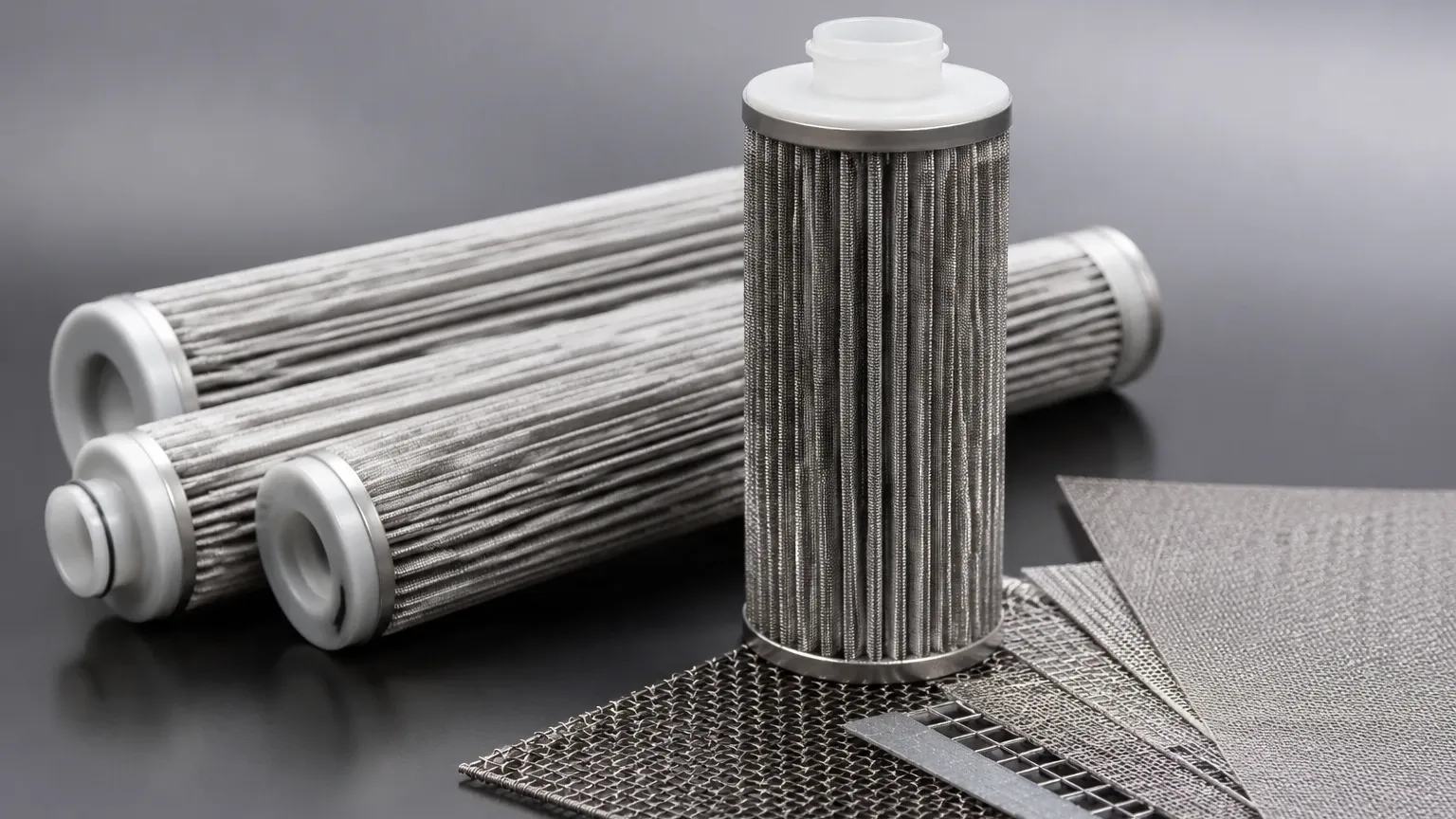
2. Pleated Metal Mesh: By pleating the stainless steel mesh, the surface area of a 7-inch cartridge can be increased by 3 to 5 times compared to a cylindrical design. This leads to lower initial pressure drops and longer intervals between cleaning cycles.
3. Sintered Metal Fiber: Produced by vacuum sintering stainless steel fibers into a porous felt. This media provides high porosity and excellent permeability, making it suitable for high-temperature gas filtration and polymer melt applications.
Engineering Considerations for System Integration
Integrating a cartridge filter 7 inch into an industrial system requires more than just matching the length. Engineers must calculate the performance parameters to ensure the filter does not become a bottleneck or a point of failure.
Pressure Drop ($ΔP$) and Flow Rate
The pressure drop is the difference in pressure between the inlet and the outlet of the filter. For a 7-inch cartridge, a high initial pressure drop usually indicates that the filter media is too restrictive for the desired flow rate.
* Clean Pressure Drop: The $ΔP$ when the filter is new. Ideally, this should be kept low (typically below 2-5 psi) to allow for maximum dirt loading before the terminal pressure drop is reached.
* Terminal Pressure Drop: The point at which the filter must be cleaned or replaced. For stainless steel cartridges, this limit is often determined by the structural strength of the core, though most systems are set to trigger an alarm at 20-30 psi.
Temperature and Chemical Compatibility
One of the primary advantages of stainless steel 7-inch filters is their ability to operate in extreme temperatures. While polymer filters may soften or degrade above 60°C (140°F), stainless steel cartridges can maintain structural integrity at temperatures exceeding 300°C (572°F), depending on the seal material (Viton, Silicone, or PTFE).
Chemical compatibility must also be verified. In the chemical processing industry, the presence of specific acids or bases can lead to stress corrosion cracking if the wrong alloy is selected. Consulting with a manufacturer like Kaifil ensures that the metallurgy matches the process fluid requirements.
Applications of 7-Inch Cartridge Filters
Because of their compact size and high durability, 7-inch metal filter cartridges are found in several critical industrial sectors.
1. Hydraulic and Lubrication Systems
In hydraulic machinery, contaminants as small as 5 microns can cause catastrophic wear on valves and actuators. A 7-inch pleated stainless steel filter is often used in return line filters or off-line "kidney loop" systems to maintain oil cleanliness. The metal construction prevents media migration, ensuring that no fibers from the filter itself enter the high-pressure system.
2. Food and Beverage Processing
For steam filtration (culinary steam) or the filtration of viscous ingredients like syrups and oils, the cartridge filter 7 inch provides a robust solution. Stainless steel is inherently non-leaching and can be sterilized using Autoclave or Steam-in-Place (SIP) methods, meeting stringent food safety standards.
3. Chemical and Petrochemical Industry
In the filtration of aggressive solvents, catalysts, or high-temperature polymers, the durability of a 7-inch metal cartridge is essential. These filters are often used as "police filters" or guard filters to protect expensive downstream catalysts or to ensure the final purity of a chemical product.
4. Water Treatment and Desalination
While large-scale water treatment uses longer cartridges, 7-inch elements are frequently used in specialized desalination equipment, RO (Reverse Osmosis) pre-filtration for small-scale industrial plants, and the removal of suspended solids in cooling water loops.
Maintenance, Cleaning, and Total Cost of Ownership
For many purchasing teams, the initial price of a stainless steel cartridge filter 7 inch is higher than that of a disposable plastic filter. However, the Total Cost of Ownership (TCO) is often significantly lower when considering the lifespan and reusability of metal media.
Cleanability of Stainless Steel Cartridges
Unlike disposable filters that must be sent to a landfill once clogged, stainless steel Filter Cartridges can be cleaned and returned to service. Common cleaning methods include:
* Backwashing: Reversing the flow of fluid to dislodge particles from the surface of the mesh.
* Ultrasonic Cleaning: Using high-frequency sound waves in a cleaning solution to remove fine particles trapped deep within the mesh or sintered fibers.
* Chemical Cleaning: Using specialized solvents or caustic burns to dissolve organic contaminants or scale.
Replacement Cycles
While a polymer filter might last weeks, a well-maintained stainless steel 7-inch filter can last for years. The replacement cycle is typically dictated by physical wear or the gradual buildup of permanent fouling that can no longer be removed by cleaning. For engineers, this means fewer system shutdowns and reduced hazardous waste disposal costs.
Selecting the Right 7-Inch Filter: A Buyer's Checklist
Before finalizing a purchase or OEM order, technical professionals should confirm the following details with their supplier:
1. Fluid Characteristics: What is the viscosity, temperature, and pH level of the fluid?
2. Contaminant Type: Are the particles hard, deformable, or organic? This determines whether a surface filter (mesh) or a depth filter (sintered fiber) is more effective.
3. Flow Requirements: What is the maximum and normal flow rate (GPM or L/min)? This ensures the 7-inch length provides enough surface area to avoid excessive pressure drop.
4. Housing Interface: Does the housing require a specific O-ring material or a particular end-cap style (DOE vs. SOE)?
5. Certification Needs: Does the application require FDA compliance, PED (Pressure Equipment Directive) certification, or specific material traceability (MTRs)?
Conclusion
The cartridge filter 7 inch is a vital component in the industrial toolkit, offering a balance of compact size and high-performance filtration. By opting for stainless steel constructions, industrial operators gain the advantages of high temperature resistance, chemical durability, and the economic benefits of reusability.
As a professional manufacturer, Kaifil provides the engineering expertise required to customize these filtration solutions to meet the most demanding specifications. Whether for hydraulic oil, chemical processing, or food production, selecting the correct 7-inch filter involves a careful evaluation of materials, micron ratings, and structural design. For those looking to optimize their filtration processes, exploring the full range of Filter Cartridges is the first step toward achieving reliable, long-term performance and reduced operational costs.
