


Cartridge Filter Emaux
In the landscape of water treatment and industrial fluid management, selecting the appropriate filtration system is a critical engineering decision that impacts operational efficiency, maintenance costs, and the longevity of downstream equipment. Among the various brands utilized in commercial and recreational water applications, the cartridge filter Emaux series is frequently specified for its balance of performance and accessibility. However, for engineers and procurement professionals operating in more demanding industrial environments—such as chemical processing, food and beverage production, or high-pressure hydraulic systems—understanding the technical nuances of these filters and knowing when to transition to industrial-grade stainless steel solutions is essential.
This guide examines the technical specifications of cartridge filtration, evaluates the performance characteristics of standard commercial units like those from Emaux, and provides a framework for selecting the right Filter Cartridges based on specific industrial requirements.
Understanding Cartridge Filtration in Commercial and Industrial Water Systems
Cartridge filtration operates on the principle of mechanical separation, where fluid is forced through a porous medium that traps contaminants. In the context of a cartridge filter Emaux system, the focus is typically on high-clarity water for pools, spas, and light commercial water treatment. These systems are designed to remove fine particles, often down to 10–20 microns, providing a high level of water transparency.
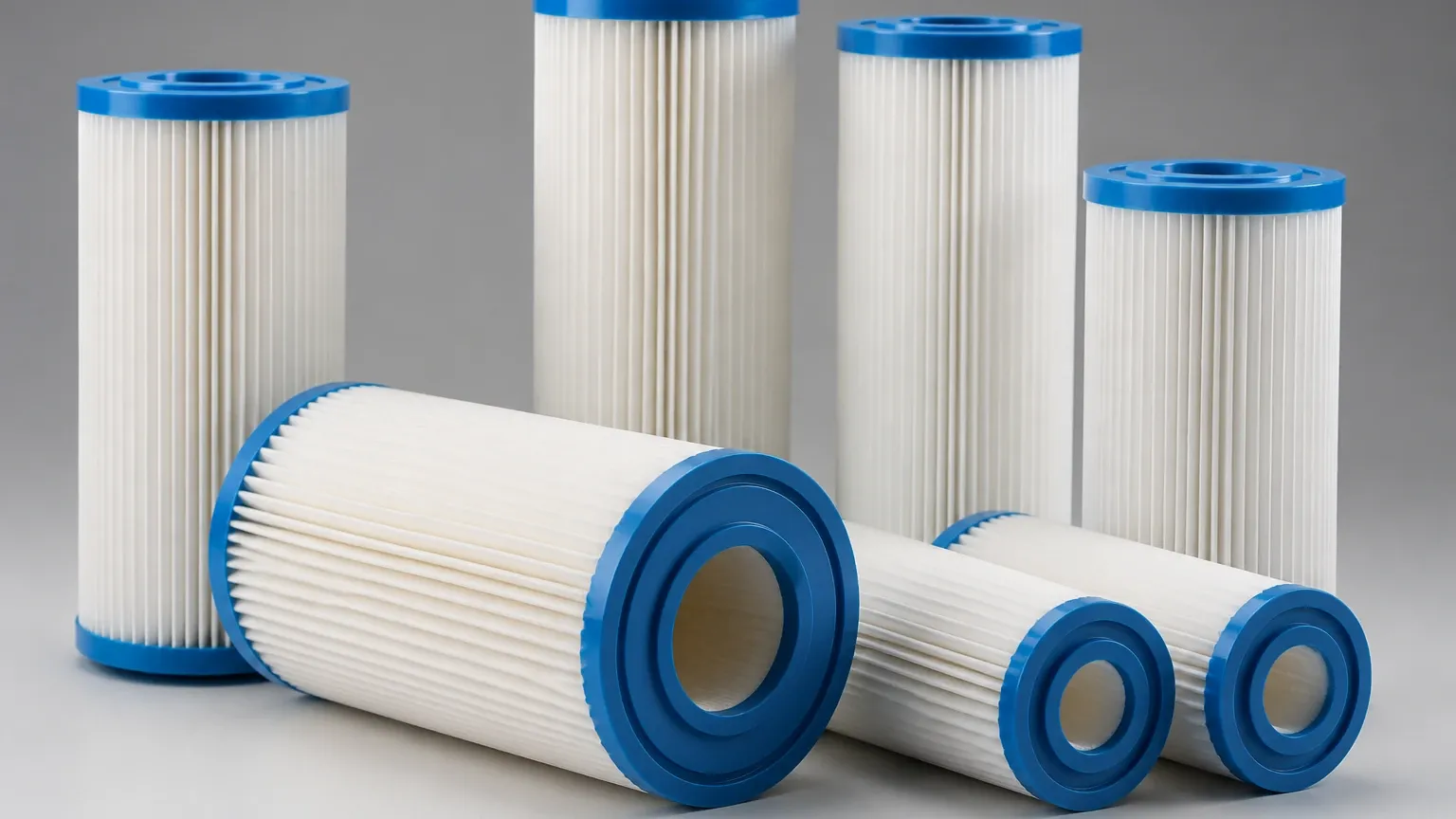
From an engineering perspective, the cartridge filter serves as a surface or depth filtration barrier. Unlike sand filters, which utilize a deep bed of media, cartridge filters utilize a pleated fabric or polymer membrane. This pleating significantly increases the available surface area within a compact housing, allowing for higher flow rates with a lower initial pressure drop. For industrial users, the primary consideration is the "dirt-holding capacity"—the amount of particulate matter the cartridge can retain before the pressure differential reaches a critical limit requiring cleaning or replacement.
Technical Comparison: Standard vs. Industrial-Grade Filter Cartridges
When evaluating a cartridge filter Emaux unit against industrial alternatives, several technical parameters must be analyzed to ensure the system can withstand the intended operating conditions.
Micron Ratings and Filtration Efficiency
Micron ratings are categorized as either nominal or absolute. Most commercial cartridges used in pool and spa applications provide nominal filtration, meaning they trap a high percentage of particles of a specific size but may allow some through. In contrast, industrial-grade filter cartridges, particularly those manufactured from stainless steel wire mesh or sintered metal, often offer absolute ratings. This is vital in pharmaceutical or chemical applications where even trace amounts of oversized particulates can compromise product quality.
Structural Integrity and Pressure Resistance
Commercial cartridges are often constructed with plastic cores and end caps. While sufficient for standard water circulation, these materials may fail under the hydraulic shocks or high-pressure differentials found in industrial circuits. Industrial-grade cartridges utilize reinforced stainless steel cores and precision-welded end caps to prevent bypass and structural collapse. This ensures that the filtration media remains intact even when the filter is heavily loaded with contaminants.
Material Compatibility and Environmental Factors
One of the most significant distinctions between a standard cartridge filter Emaux and a specialized industrial filter is material compatibility. Emaux filters typically utilize polyester or similar synthetic fabrics. These materials are excellent for chlorinated water but may degrade rapidly when exposed to:
1. Extreme Temperatures: Standard polymers lose structural rigidity as temperatures rise, whereas stainless steel cartridges can operate effectively in environments exceeding 250°C.
2. Corrosive Chemicals: In chemical processing, the fluid may be acidic or alkaline. While some plastics are resistant, high-grade 316L stainless steel provides a broader range of chemical compatibility and prevents leaching of plasticizers into the process stream.
3. High Viscosity Fluids: Industrial oils and resins require robust media that can withstand the high shear forces and pressure drops associated with moving viscous fluids through small pores.
For facilities transitioning from light commercial water treatment to heavy-duty processing, upgrading to stainless steel Filter Cartridges is often a prerequisite for system reliability.
Evaluating Performance: Flow Rate and Pressure Differential
The performance of any filtration system is governed by the relationship between flow rate and pressure drop ($ΔP$). Engineers must calculate the "Clean Pressure Drop" to ensure the pump system is sized correctly. A cartridge filter Emaux is designed for specific flow velocities, typically measured in gallons per minute (GPM) per square foot of media.
The Importance of Surface Area
The primary advantage of the pleated design in these cartridges is the maximization of surface area. By increasing the surface area, the face velocity (the speed at which fluid passes through the media) is reduced. Lower face velocity leads to:
* Higher Filtration Efficiency: Particles have a higher probability of being trapped by the media fibers.
* Longer Service Life: It takes longer for the accumulated "filter cake" to reach a thickness that obstructs flow.
* Reduced Energy Consumption: Lower resistance to flow means the circulation pumps work less hard to maintain the required flow rate.
In industrial settings, if a standard cartridge is clogging too frequently, the engineering solution is often to move to a high-area stainless steel pleated cartridge that fits within the existing housing but offers superior durability and cleanability.
Maintenance Cycles and Operational Longevity
Maintenance is a major component of the Total Cost of Ownership (TCO). A cartridge filter Emaux requires periodic manual cleaning. This involves removing the cartridge and rinsing the pleats to dislodge accumulated debris. Over time, the fibers in synthetic cartridges become embedded with fine oils and minerals that cannot be removed, eventually requiring the disposal of the cartridge.
In industrial OEM applications, the trend is moving toward "clean-in-place" (CIP) or backwashable metal filters. Stainless steel cartridges can be cleaned via ultrasonic baths, chemical cleaning, or high-pressure backpulsing. This allows the filter to be reused hundreds of times, significantly reducing the waste stream and the long-term cost of replacement parts. When specifying filters for a new project, engineers should weigh the lower upfront cost of synthetic cartridges against the long-term operational savings of permanent metal filtration media.
Common Risks in Filtration Selection
Selecting an inadequate filter for a specific application carries several risks that can lead to system-wide failures:
* Bypass: If the seals or end caps of a cartridge are not precision-engineered, fluid will take the path of least resistance, bypassing the filter media entirely. This results in contaminated fluid reaching sensitive downstream components like spray nozzles or heat exchangers.
* Media Migration: In low-quality cartridges, the fibers of the filter media itself can break off and enter the fluid stream, becoming a source of contamination rather than a solution.
* Pressure Spikes: If a filter is not rated for the maximum surge pressure of a system, it may rupture, causing an immediate and total loss of filtration and potentially damaging pumps.
To mitigate these risks, it is essential to confirm that the selected Filter Cartridges are rated for the specific peak pressures and flow conditions of the industrial environment.
Customization and OEM Solutions for Industrial Filtration
While the cartridge filter Emaux serves a vital role in the commercial water sector, many industrial applications require bespoke solutions that standard off-the-shelf products cannot satisfy. This is where custom manufacturing becomes necessary.
Customization options for industrial filters include:
* Variable Micron Ratings: Engineering specific pore sizes to target exact particle distributions.
* Custom Dimensions: Manufacturing cartridges to fit legacy housings or unique equipment footprints.
* Material Upgrades: Utilizing Monel, Inconel, or various grades of stainless steel for specialized chemical resistance.
* Reinforcement: Adding external shrouds or internal supports to handle high-viscosity fluids or extreme pressure differentials.
By working with a specialized manufacturer like Kaifil, engineering teams can develop filtration components that are precisely tuned to their application, ensuring maximum protection for their equipment and consistency in their processes.
Conclusion: Selecting the Right Path
Whether you are maintaining a commercial water facility using a cartridge filter Emaux or designing a new industrial process line, the principles of effective filtration remain the same: balance the required micron rating with the necessary flow rate and ensure the materials are compatible with the operating environment. For standard water applications, commercial cartridges offer a cost-effective solution. However, when durability, chemical resistance, and long-term reusability are paramount, industrial stainless steel Filter Cartridges provide the technical performance required to support demanding industrial operations.
Before finalizing a purchase, engineers should confirm the maximum operating pressure, the chemical composition of the fluid, and the expected contaminant load to ensure the chosen filtration system will perform reliably throughout its service life.
