


Cartridge Filter Gopani
In the landscape of industrial liquid and gas processing, the selection of filtration media is a critical engineering decision that directly impacts product purity, equipment longevity, and operational overhead. Among the various brands and configurations available, the cartridge filter gopani range represents a significant segment of the market, particularly in sectors requiring diverse media types from polypropylene to specialized high-flow designs. For engineers and procurement specialists, understanding the technical nuances of these components—and how they compare to custom-engineered stainless steel alternatives—is essential for optimizing process flow.
Industrial filtration is rarely a one-size-fits-all endeavor. Whether a facility is managing high-viscosity chemicals, sterile pharmaceutical ingredients, or high-temperature steam, the physical and chemical properties of the filter cartridge must align with the specific demands of the application. This guide examines the technical parameters of cartridge filter gopani products and provides a framework for evaluating these against the rigorous standards of modern industrial filtration.
Technical Overview of Cartridge Filter Gopani Configurations
The cartridge filter gopani portfolio typically spans several categories of filtration media, each designed for specific particle retention mechanisms. Understanding these categories is the first step in technical selection.
Depth Filtration: Spun and Wound Cartridges
Depth filters, including melt-blown (spun) and string-wound cartridges, are designed to capture particles throughout the entire thickness of the filter wall. These are often used as pre-filters to protect more expensive downstream equipment. The winding pattern or the density gradient of the melt-blown fibers determines the dirt-holding capacity. In many industrial settings, these are valued for their ability to handle a broad range of particle sizes without immediate surface blinding.
Surface Filtration: Pleated Cartridges
Pleated designs, whether in polymer or metal, provide a significantly higher effective filtration area (EFA) compared to depth filters. This increased surface area allows for higher flow rates at lower differential pressures. When evaluating a cartridge filter gopani pleated option, engineers must consider the pleat density and the support layers, as these factors determine the structural integrity of the cartridge under high-pressure pulses.
Specialty High-Flow Systems
For large-scale water treatment or chemical processing, high-flow cartridges are often employed. These units feature large diameters (typically 6 inches) and inside-to-outside flow paths, which trap contaminants within the cartridge, making replacement cleaner and reducing the footprint of the filter housing.
Critical Engineering Factors: Micron Ratings and Efficiency
When specifying Filter Cartridges, the micron rating is the most cited—yet often most misunderstood—specification. It is vital to distinguish between nominal and absolute ratings.
1. Nominal Rating: This indicates the filter's ability to retain a majority percentage (often 60% to 90%) of particles of a specific size. Nominal filters are suitable for non-critical applications where complete removal is not required.
2. Absolute Rating: This refers to the pore size where a filter will retain 99.9% (Beta 5000) or more of particles. In pharmaceutical or precision chemical applications, absolute-rated cartridges are mandatory to ensure process consistency.
In the context of cartridge filter gopani selections, the Beta Ratio is a more reliable metric than a simple micron number. The Beta Ratio ($β_x$) is calculated by dividing the number of particles of size $x$ upstream by the number of particles of size $x$ downstream. A higher Beta Ratio indicates higher filtration efficiency. Engineers should request laboratory validation data to confirm that the cartridge performs according to its theoretical rating under actual flow conditions.
Material Compatibility and Chemical Resistance
The chemical environment is the primary determinant of filter lifespan. While many cartridge filter gopani products utilize polypropylene (PP) due to its broad chemical compatibility and low cost, PP has limitations regarding temperature and structural rigidity.
* Polypropylene: Excellent for acids, bases, and many aqueous solutions at temperatures below 60°C. However, it is susceptible to degradation in the presence of certain organic solvents and high-temperature oxidizing agents.
* Polyester (PES) and Nylon: Often used in pleated formats for better thermal stability and specific chemical resistances, such as for hydrocarbons or alkaline solutions.
* Stainless Steel (304/316L): When applications involve extreme temperatures (above 100°C), high pressure, or aggressive solvents that dissolve polymers, stainless steel is the professional standard. Stainless steel cartridges offer the advantage of being cleanable and reusable, which significantly alters the total cost of ownership (TCO) compared to disposable polymer cartridges.
Comparing Polymer and Stainless Steel Filter Cartridges
For many facilities currently using polymer-based cartridge filter gopani units, there comes a point where the frequency of replacement or the risk of cartridge bypass necessitates a move toward metal filtration.
Thermal and Mechanical Strength
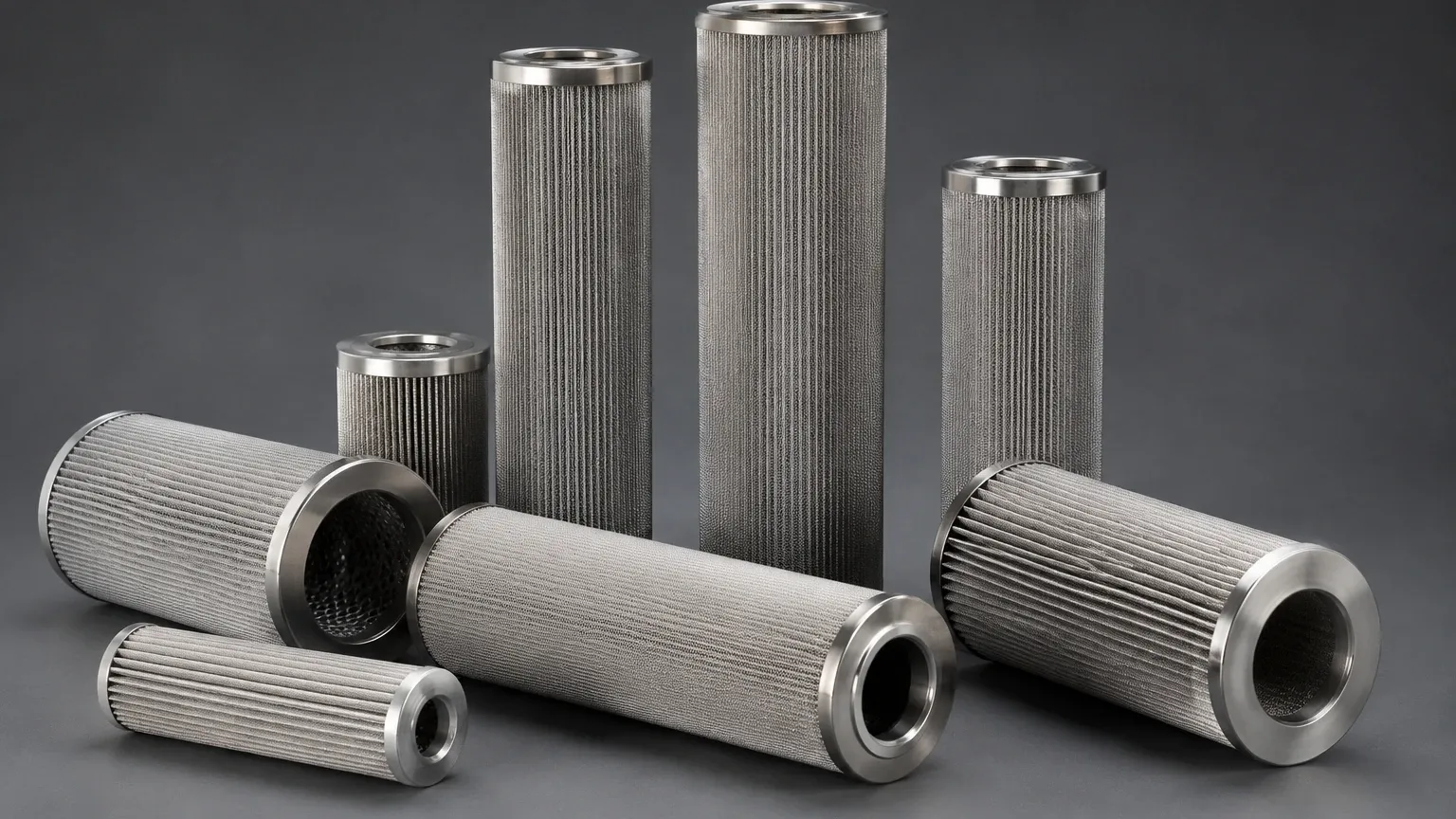
Polymer cartridges can compress or deform under high differential pressure (ΔP), leading to "unloading," where captured particles are pushed through the media and back into the filtrate. Stainless steel cartridges, such as those manufactured by Kaifil, maintain their pore structure even at high ΔP. This structural stability is crucial in hydraulic systems or high-viscosity resin filtration where pressure spikes are common.
Sterilization and Cleaning
In the food, beverage, and pharmaceutical industries, filters must undergo Clean-in-Place (CIP) or Steam-in-Place (SIP) cycles. While some high-grade polymer cartridges can withstand a limited number of steam cycles, they eventually embrittle. Stainless steel cartridges can be sterilized indefinitely and are compatible with ultrasonic cleaning, backwashing, and chemical stripping, making them a permanent asset rather than a consumable.
Selection Criteria for Demanding Industrial Environments
To select the correct cartridge, whether it is a standard cartridge filter gopani model or a custom Kaifil solution, the following engineering checklist should be applied:
* Fluid Viscosity: Higher viscosity fluids require larger surface areas to maintain acceptable flow rates. If the fluid is non-Newtonian, the shear forces within the filter media must also be considered.
* Contaminant Loading: Is the contaminant deformable (like gels) or hard (like sand)? Gels tend to blind surface filters quickly, making depth filters or pleated metal mesh with specific weave patterns more effective.
* Operating Pressure and Temperature: Always specify the maximum possible temperature and pressure, including potential surge conditions. This determines the O-ring material (Viton, EPDM, Silicone, or PTFE) and the cartridge's structural reinforcement.
* Regulatory Compliance: For food and beverage applications, ensure the materials are FDA-compliant and meet EC 1935/2004 standards for food contact.
Total Cost of Ownership (TCO) Analysis
The purchase price of a cartridge filter gopani unit is only one component of the total cost. Procurement teams must also factor in:
* Replacement Frequency: How many hours of operation are achieved before ΔP reaches the change-out point?
* Disposal Costs: Spent polymer cartridges often constitute hazardous waste, incurring significant disposal fees.
* Labor Costs: The time required for maintenance personnel to open housings and replace cartridges.
* Product Loss: Fluid retained in the discarded cartridge during change-out.
In many high-volume or high-value processes, transitioning to a cleanable stainless steel cartridge provides a return on investment (ROI) within 6 to 18 months by eliminating the recurring cost of disposables and reducing waste streams.
Installation and Maintenance Best Practices
To ensure the performance of any cartridge filter, proper installation is paramount. For cartridge filter gopani systems, the sealing mechanism—whether it is a Double Open End (DOE) with flat gaskets or a Single Open End (SOE) with code 7 or code 3 bayonet fittings—must be inspected for bypass.
1. Venting: Always vent the filter housing during startup. Air trapped in the housing reduces the effective filtration area and can cause pressure surges that damage the media.
2. Monitoring ΔP: Install pressure gauges upstream and downstream. The differential pressure is the most accurate indicator of filter health. Most manufacturers recommend a change-out at 1.5 to 2.5 bar (22-36 psi), depending on the housing's design.
3. O-ring Lubrication: Use a compatible lubricant on O-rings to ensure a proper seal and prevent tearing during installation. In high-purity applications, the fluid itself can often be used as a lubricant.
Conclusion
Selecting between a standard cartridge filter gopani and a customized filtration solution requires a deep understanding of the process variables. While polymer cartridges offer low initial costs and ease of use for general applications, demanding industrial environments often require the precision and durability of stainless steel components. By focusing on micron efficiency, chemical compatibility, and structural integrity, engineers can ensure their filtration systems provide consistent protection for their downstream processes and final products. For those seeking to optimize their filtration performance through custom engineering, exploring advanced material options remains the most effective path to long-term operational efficiency.
