


Cartridge Filter Inground Pool
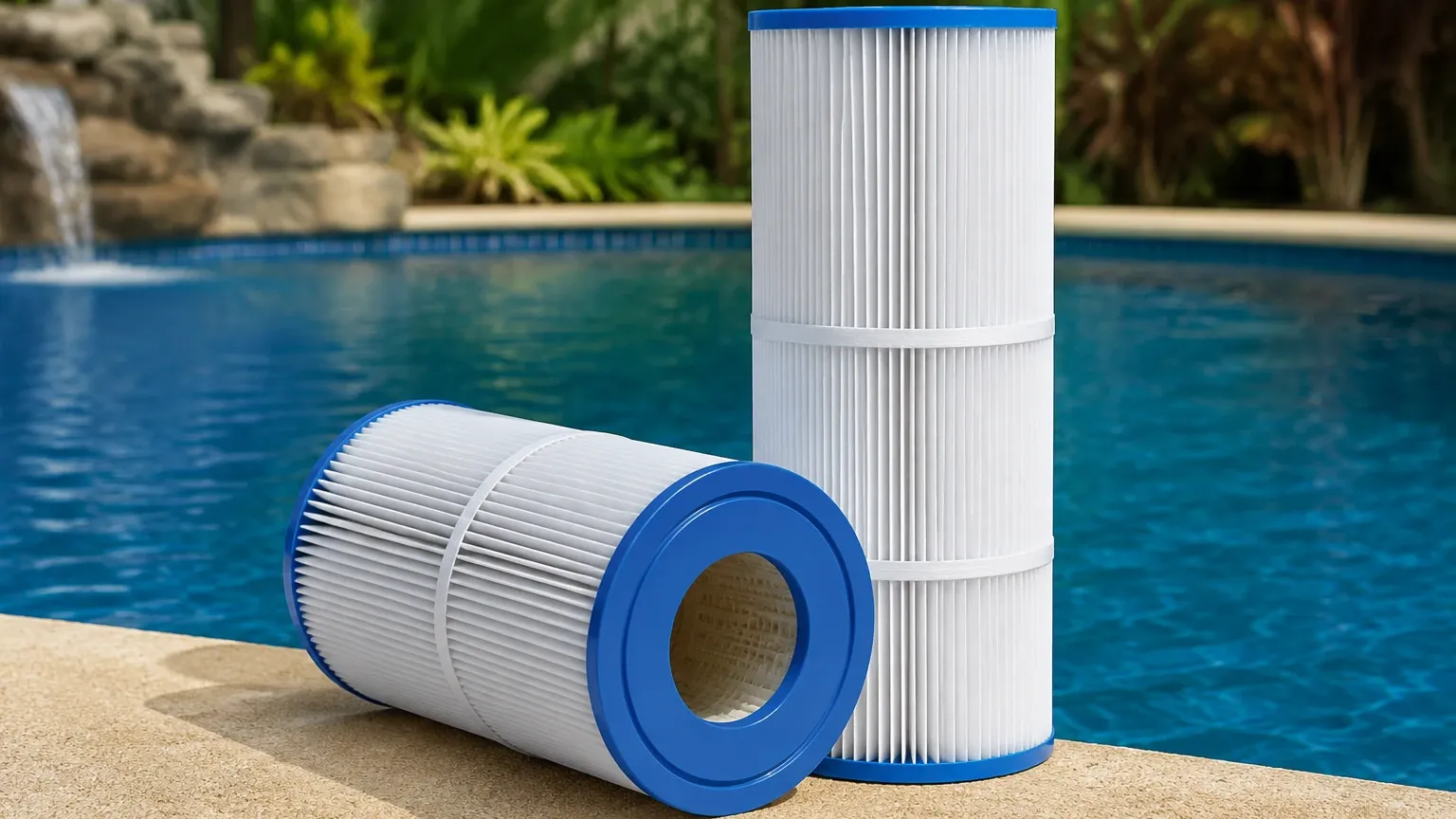
In the realm of commercial and industrial water management, the selection of a filtration system is a critical engineering decision that impacts water clarity, operational costs, and system longevity. For large-scale aquatic facilities, the cartridge filter inground pool configuration has emerged as a preferred standard due to its high surface area, low water waste, and superior particulate retention. Unlike traditional sand filters that rely on depth filtration through a granular bed, cartridge systems utilize pleated media to provide a physical barrier against contaminants.
For engineers and facility managers, understanding the technical nuances of Filter Cartridges is essential for optimizing hydraulic performance and ensuring compliance with water quality standards. This guide examines the engineering principles, material considerations, and selection criteria for cartridge filtration in demanding inground pool applications.
Engineering Principles of Cartridge Filtration
The fundamental advantage of a cartridge filter inground pool system lies in its mechanical design. The filter media is typically pleated around a central core, a design choice that exponentially increases the available surface area within a compact footprint. This high surface-area-to-volume ratio allows for lower flux rates (the volume of water passing through a specific area of media), which in turn enhances the capture of fine particulates.
Surface vs. Depth Filtration
While sand filters act as depth filters—where particles are trapped throughout the bed—cartridge filters primarily function as surface filters. As water is forced through the pleated media, particles larger than the pore size are trapped on the outer surface. Over time, these trapped particles form a "filter cake," which can actually improve the filtration fineness until the pressure drop ($ΔP$) becomes too high, necessitating cleaning or replacement.
Micron Ratings and Efficiency
Standard commercial cartridge filters for inground pools are generally rated to capture particles between 10 and 20 microns. In comparison, sand filters typically capture particles in the 20 to 40-micron range. For high-specification environments, such as pharmaceutical-grade water features or high-load public aquatic centers, industrial-grade metal mesh cartridges can be engineered to even tighter tolerances, providing absolute rather than nominal filtration ratings.
Material Selection for Aquatic Environments
The durability of a cartridge filter inground pool system is heavily dependent on the materials used in the construction of the filter elements. In aquatic environments, the media must withstand constant exposure to sanitizers (such as chlorine or bromine), varying pH levels, and potential mineral scaling.
Synthetic Media vs. Metal Mesh
Most residential and light commercial applications use spun-bond polyester or similar synthetic fabrics. While cost-effective, these materials can degrade over time when exposed to high concentrations of oxidizing agents or extreme temperatures.
In industrial or heavy-duty commercial applications, stainless steel wire mesh or sintered metal cartridges offer a robust alternative. These components, often manufactured by specialists like Kaifil, provide exceptional chemical resistance and structural integrity. Stainless steel cartridges are particularly valuable in systems where high-pressure surges are common or where the filter must be cleaned using aggressive chemical washes that would destroy synthetic fibers.
Structural Components
The end caps and center cores of the filter cartridges must also be engineered for stability. High-impact ABS or reinforced polymers are common, but for high-temperature or high-pressure industrial water treatment, 304 or 316L stainless steel components are preferred to prevent core collapse and bypass leakage.
Sizing and Hydraulic Performance
One of the most common points of failure in a cartridge filter inground pool installation is improper sizing. Engineers must balance the flow requirements of the pump with the maximum flow rate capacity of the filter media. Over-speeding water through a cartridge leads to "bridge-over," where contaminants are forced through the media, and can cause permanent deformation of the pleats.
Calculating Filtration Area
To determine the required filtration area, one must consider the turnover rate required by local health codes (often 4 to 6 hours for public pools) and the maximum flow velocity permitted for the specific media type. A general rule for cartridge filters is to maintain a flow rate of 0.25 to 0.50 gallons per minute (GPM) per square foot of filter area.
For a large-scale cartridge filter inground pool, this often necessitates a multi-cartridge housing. These housings can contain anywhere from four to eight large-capacity cartridges, providing a total filtration area of 400 to 700 square feet. This massive surface area ensures that the system can operate for extended periods between cleaning cycles, even under heavy bather loads.
Pressure Drop Monitoring
The clean pressure drop of a cartridge system is typically low (around 1-3 PSI). As the media loads with debris, the backpressure increases. It is an industry standard to clean or replace cartridges when the pressure rises 8-10 PSI above the clean starting pressure. Monitoring this $ΔP$ is critical for protecting the pump motor and maintaining the design flow rate.
Maintenance and Lifecycle Management
Unlike sand filters, which are cleaned via backwashing (reversing the water flow to flush debris to waste), a cartridge filter inground pool system requires manual cleaning. This process involves removing the cartridges and rinsing them with a high-pressure hose. While this requires more labor, it saves thousands of gallons of chemically treated water that would otherwise be lost during a backwash cycle.
Cleaning Protocols
In commercial settings, simple rinsing may not be sufficient to remove oils, lotions, and calcium deposits. A two-stage cleaning protocol is often recommended:
1. Degreasing: Soaking the cartridges in a specialized detergent solution to break down organic oils.
2. Acid Bath: If calcium scaling is present, a mild acid soak (muriatic acid or similar) can dissolve mineral deposits. Note that this should only be done after degreasing, as acid can set oils into the fabric.
Replacement Cycles
The lifespan of a filter cartridge in an inground pool depends on the water chemistry and the frequency of cleaning. Synthetic cartridges typically last 1 to 3 years in a commercial environment. Signs that a cartridge has reached its end-of-life include:
* Frayed or "fuzzy" media surface.
* Broken end caps or cracked center cores.
* A baseline pressure that remains high even after thorough cleaning (indicating deep-seated pore clogging).
Customization and Industrial Applications
For unique architectural water features, industrial cooling towers, or specialized aquatic research facilities, off-the-shelf cartridge filters may not meet the specific engineering requirements. This is where OEM and customized filtration solutions become vital.
Customized Filter Cartridges can be designed with specific alloy types, custom pleat densities, and specialized gaskets (such as Viton or EPDM) to handle unique chemical profiles. For instance, in a salt-water cartridge filter inground pool, using high-grade stainless steel components ensures that the filter housing and internal supports do not succumb to galvanic corrosion.
Integration with Automation
Modern industrial filtration systems often integrate sensors for turbidity and differential pressure. This data can be fed into a Building Management System (BMS) to alert maintenance staff exactly when a cartridge needs attention. This predictive maintenance approach reduces the risk of unexpected downtime and ensures that water quality remains within strict parameters.
Conclusion: Selecting the Right Solution
When specifying a cartridge filter inground pool system, engineers must look beyond the initial purchase price and evaluate the Total Cost of Ownership (TCO). While cartridge systems may have higher upfront costs for replacement elements compared to sand, the savings in water, chemicals, and heating energy often result in a faster return on investment.
Key considerations for procurement include:
* Filtration Accuracy: Does the micron rating meet the specific needs of the application?
* Material Compatibility: Are the media and structural components resistant to the facility’s chemical regimen?
* Scalability: Does the housing design allow for future expansion or the use of high-performance OEM cartridges?
By focusing on these technical benchmarks, facility managers can ensure that their filtration system provides crystal-clear water and reliable performance for years to come. For those requiring specialized or high-durability components, partnering with a professional manufacturer like Kaifil provides access to the engineering expertise needed to develop custom filtration solutions that exceed standard commercial expectations.
