


Instructions for Keurig Water Filter Cartridges
In both commercial beverage production and high-volume office environments, water quality is the primary determinant of both equipment longevity and the sensory profile of the final product. While many professional environments utilize small-scale brewing systems like Keurig, the principles of filtration remain consistent with industrial liquid processing. Understanding the specific instructions for Keurig water filter cartridges provides a baseline for broader filtration management, highlighting the importance of media saturation, mechanical straining, and routine maintenance cycles.
For engineers and facility managers, these small-scale components represent the "Point of Use" (POU) filtration stage. Whether managing a single unit or a fleet of commercial dispensers, adhering to technical protocols ensures that chlorine, calcium deposits, and suspended solids do not compromise internal heating elements or valve assemblies.
Step-by-Step Installation Instructions
The effective deployment of a water filter cartridge requires more than simple insertion. To ensure the charcoal media is activated and that no fine particulates enter the machine's internal plumbing, the following technical steps must be followed:
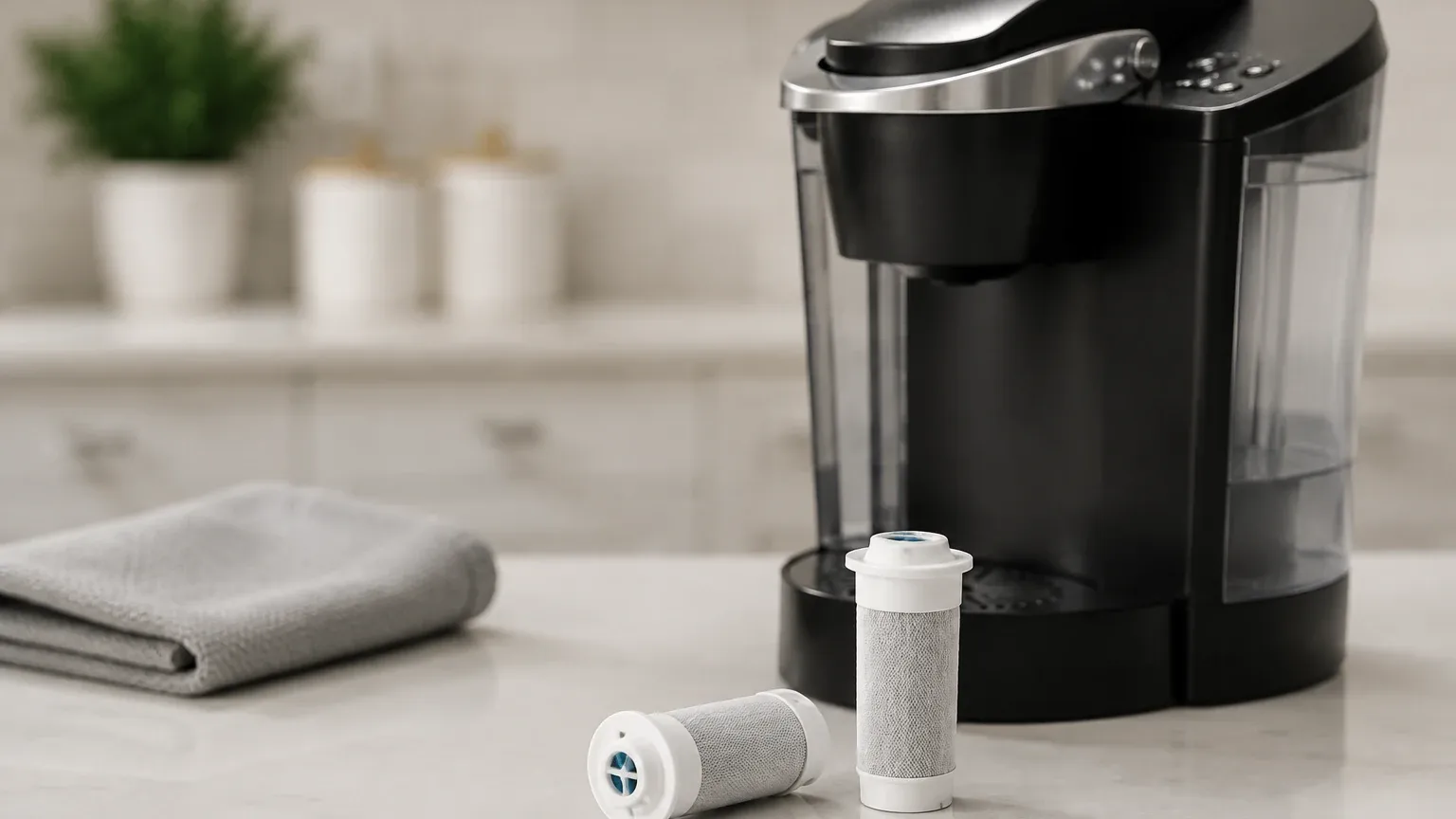
1. Media Preparation (Soaking): Submerge the new filter cartridge in a container of clean, cold water. Allow the cartridge to soak for a minimum of 5 to 10 minutes. This period is critical for the activation of the granulated activated carbon (GAC) inside the housing, allowing the pores to open and ensuring maximum adsorption capacity.
2. Rinsing and Flushing: After the soak, rinse the cartridge under a stream of cold running water for approximately 60 seconds. This step removes any "carbon fines"—tiny particles of charcoal that may have shifted during shipping. In industrial applications, this is analogous to the initial flush required for high-purity Filter Cartridges to prevent downstream contamination.
3. Housing Integration: Open the filter holder assembly. Most Keurig systems utilize a clear or opaque plastic handle with a snap-bottom. Place the cartridge into the lower portion of the holder, ensuring the flat side faces downward. Snap the top of the holder back into place.
4. Setting the Maintenance Tracker: Most handles feature a dial or date slider. Set the reminder to two months from the current date. In a B2B or high-volume setting, this manual tracker should be supplemented by a centralized maintenance log to ensure compliance across multiple units.
5. System Placement: Insert the assembled filter handle into the water reservoir. Ensure it is seated firmly on the intake valve at the bottom of the tank. If the handle is not properly aligned, water may bypass the filter entirely, leading to accelerated scale buildup.
The Engineering Behind the Cartridge
To understand why these instructions for keurig water filter cartridges are necessary, one must examine the internal architecture of the filter. These cartridges typically employ a dual-stage filtration mechanism:
* Mechanical Straining: The outer fabric or mesh layer acts as a barrier against macro-particulates, such as sand, rust, or pipe scale. This protects the sensitive solenoid valves and pumps within the brewer.
* Chemical Adsorption: The internal charcoal core is designed specifically for the removal of chlorine and organic compounds that affect taste and odor. Chlorine is a powerful oxidant; if left in the water, it can degrade internal seals over time and react with coffee oils to produce bitter flavors.
In industrial settings, Kaifil provides similar solutions but often utilizes stainless steel wire mesh or sintered metal media. While the Keurig cartridge is a disposable plastic component, industrial Filter Cartridges are often designed for backwashing or ultrasonic cleaning, offering a higher degree of durability and chemical resistance in demanding processing environments.
Why Routine Replacement is Non-Negotiable
A common error in facility management is extending the life of a filter cartridge beyond its rated capacity. For Keurig systems, the standard recommendation is replacement every two months or every 60 tank refills. From a technical perspective, several risks emerge when these intervals are ignored:
1. Media Saturation
Activated carbon has a finite surface area. Once every bonding site on the carbon granules is occupied by a chlorine molecule or organic contaminant, the filter reaches its saturation point. At this stage, "breakthrough" occurs, and contaminants pass through the filter as if it were not there. In industrial fluid dynamics, this is a critical failure point that can ruin entire batches of product.
2. Biofilm and Bacterial Growth
Because these filters sit in a stagnant, room-temperature water reservoir, they can become breeding grounds for biofilm. Without the residual chlorine (which the filter itself has removed) to inhibit growth, bacteria can colonize the carbon media. Regular replacement is the only way to ensure the biological safety of the POU system.
3. Scaling and Mineral Accumulation
While charcoal filters are excellent at removing chemicals, they are less effective at removing dissolved minerals like calcium and magnesium. Over time, these minerals precipitate out of the water, especially when heated, forming hard scale. If the filter's mechanical straining layer becomes clogged with scale, the pump must work harder, leading to premature motor failure. This mirrors the "differential pressure" ($\Delta P$) issues encountered in industrial filtration, where a high pressure drop indicates a blinded filter element.
Comparative Analysis: Consumer vs. Industrial Filtration
For engineers transitioning from maintaining office equipment to managing industrial process water, it is helpful to compare these consumer-grade instructions with industrial standards.
| Feature | Keurig Water Filter | Industrial Stainless Steel Filter |
| :— | :— | :— |
| Housing Material | Polypropylene (Plastic) | 304/316L Stainless Steel |
| Filter Media | Activated Carbon / Fiber | Sintered Mesh / Wedge Wire |
| Cleaning | Disposable | Cleanable / Reusable |
| Pressure Rating | Atmospheric (Gravity) | High Pressure (up to 300+ PSI) |
| Temperature Limit | Cold Water Only | Up to 400°C+ |
| Monitoring | Date Dial | Pressure Gauges / Flow Meters |
While the Keurig system is sufficient for light-duty beverage service, industrial applications—such as chemical processing, pharmaceutical manufacturing, or large-scale food production—require the robustness of metal filtration. Kaifil specializes in these high-performance Filter Cartridges, providing the precision needed for rigorous industrial standards that plastic disposables cannot meet.
Troubleshooting Common Issues
Even when following the instructions for keurig water filter cartridges, technical issues can arise. Understanding the root causes allows for faster resolution:
* Slow Flow Rate: This is often caused by air trapped within the carbon media. If the initial soak was skipped, air pockets can block water passage. The solution is to remove the cartridge and repeat the 10-minute soak.
* Black Specks in Water: This indicates insufficient rinsing. While carbon fines are non-toxic, they suggest the cartridge was not flushed properly. A secondary 60-second rinse usually resolves this.
* Leaking at the Base: If water is bypassing the filter handle, the O-ring or gasket at the bottom of the reservoir may be misaligned or degraded. Inspect the interface between the filter holder and the tank intake.
Selecting the Right Filtration Strategy
For procurement officers and maintenance teams, selecting the right filtration components involves balancing cost, performance, and maintenance labor. While the instructions for keurig water filter cartridges are straightforward, the broader strategy for a facility may involve a multi-stage approach:
1. Pre-Filtration: A central sediment filter (often a stainless steel mesh) at the building's water entry point to remove large particulates.
2. Softening: Ion-exchange systems to reduce water hardness before it reaches individual brewing units.
3. Point of Use (POU): The final charcoal cartridge within the machine to polish the flavor and remove chlorine.
In industrial environments where precision is paramount, Kaifil’s expertise in custom filtration becomes essential. Whether it is designing a specific micron-rated wire mesh for a hydraulic system or a stainless steel cartridge for high-temperature steam filtration, the engineering principles remain focused on protecting equipment and ensuring output quality.
Conclusion for Technical Professionals
Following the proper instructions for keurig water filter cartridges is a small but vital part of facility maintenance. It ensures that the "last mile" of water treatment is effective. However, for those managing larger systems or more demanding industrial processes, the limitations of plastic, disposable filters become apparent.
When your application requires higher durability, precise micron ratings, or the ability to withstand corrosive environments, it is time to look toward professional-grade solutions. Explore the range of industrial-strength Filter Cartridges provided by Kaifil to see how precision engineering can optimize your filtration performance and reduce long-term operational costs.
Download Instructions for Keurig Water Filter Cartridges as a PDF
