


Cartridge Filter Natural Gas
In the midstream and downstream sectors of the oil and gas industry, the integrity of natural gas streams is paramount to the operational lifespan of high-value equipment. Natural gas, as it travels from the wellhead through gathering lines, processing plants, and transmission pipelines, carries a variety of contaminants. These include solid particulates like pipe scale, sand, and "black powder," as well as liquid aerosols such as water, hydrocarbons, and amine or glycol carryover. To mitigate the risk of erosion, corrosion, and equipment failure, the implementation of a robust cartridge filter natural gas solution is an engineering necessity.
Selecting the appropriate filtration technology requires a deep understanding of the gas composition, flow dynamics, and the specific sensitivities of downstream components like centrifugal compressors, gas turbines, and ultrasonic flow meters. High-performance Filter Cartridges serve as the primary line of defense, ensuring that the gas meets the stringent quality specifications required for transport and combustion.
The Role of Filtration in Natural Gas Processing
Filtration in natural gas applications is generally categorized into two functions: particulate removal and coalescing. While both are often housed in similar pressure vessels, the mechanics of the filter media differ significantly.
Particulate Filtration
Particulate filters are designed to capture solid contaminants. In natural gas pipelines, "black powder"—a mixture of iron sulfides, iron oxides, and other corrosion products—is a common challenge. These fine solids are highly abrasive and can quickly erode valve seats and damage compressor internals. A dedicated cartridge filter for natural gas must provide high dirt-holding capacity to extend service intervals while maintaining a low clean pressure drop.
Coalescing Filtration
Liquid contaminants present a different challenge. Aerosols and fine mists can bypass standard particulate filters, leading to liquid slugging in compressors or fouling of burner nozzles in turbines. Coalescing filter cartridges use multi-layered media to force small liquid droplets to collide and form larger droplets, which then drain away from the gas stream via gravity. For critical applications, a combination of particulate and coalescing stages is often employed to ensure maximum gas purity.
Engineering Specifications for Gas Filter Cartridges
When specifying a cartridge filter natural gas system, engineers must look beyond simple micron ratings. The performance of a filter in a high-pressure gas environment is influenced by several technical factors.
Micron Rating and Efficiency
It is essential to distinguish between nominal and absolute micron ratings. In natural gas processing, absolute ratings are preferred for protecting sensitive equipment. An absolute-rated cartridge ensures that 99.9% of particles at the specified size are captured. For turbine protection, a 1-micron to 5-micron absolute rating is common, whereas general pipeline protection might utilize 10-micron to 50-micron nominal filters.
Pressure Drop (ΔP)
The differential pressure across the filter media is a direct indicator of its condition. A high initial pressure drop reduces the overall efficiency of the pipeline and increases energy costs for compression. Engineers must balance the need for fine filtration with the requirement for high flow rates. Stainless steel wire mesh and pleated media are often favored because they offer a high surface area, which minimizes the velocity through the media and reduces the clean pressure drop.
Structural Integrity and Collapse Pressure
Natural gas systems operate under high pressures, often exceeding 1,000 PSI. Filter cartridges must be engineered to withstand significant differential pressures without collapsing. This is particularly critical during process upsets or when a filter becomes heavily loaded with contaminants. The use of internal support cores, typically made of perforated or expanded stainless steel, provides the necessary rigidity to prevent structural failure.
Material Selection for Demanding Environments
The chemical composition of natural gas can be highly corrosive, particularly in "sour gas" applications containing hydrogen sulfide (H2S) and carbon dioxide (CO2). Material selection for the filter media, end caps, and seals is a critical step in the procurement process.
* Stainless Steel (304 and 316L): Stainless steel is the industry standard for natural gas filtration. It offers excellent resistance to corrosion and can withstand the wide temperature fluctuations common in gas processing. 316L stainless steel is specifically recommended for sour gas environments due to its superior resistance to sulfide stress cracking.
* Sintered Metal Media: For extreme conditions involving high temperatures or highly abrasive solids, sintered metal fiber or powder media provide exceptional durability. These filters can be cleaned and reused, offering a lower total cost of ownership in specific industrial contexts.
* Seal Materials: The choice of O-rings and gaskets is equally important. Viton (FKM) and PTFE are commonly used for their chemical compatibility with hydrocarbons and their ability to maintain a seal under high-pressure cycling.
Design Considerations: Pleated vs. Cylindrical Media
The geometry of the filter media significantly impacts the performance of a cartridge filter natural gas application.
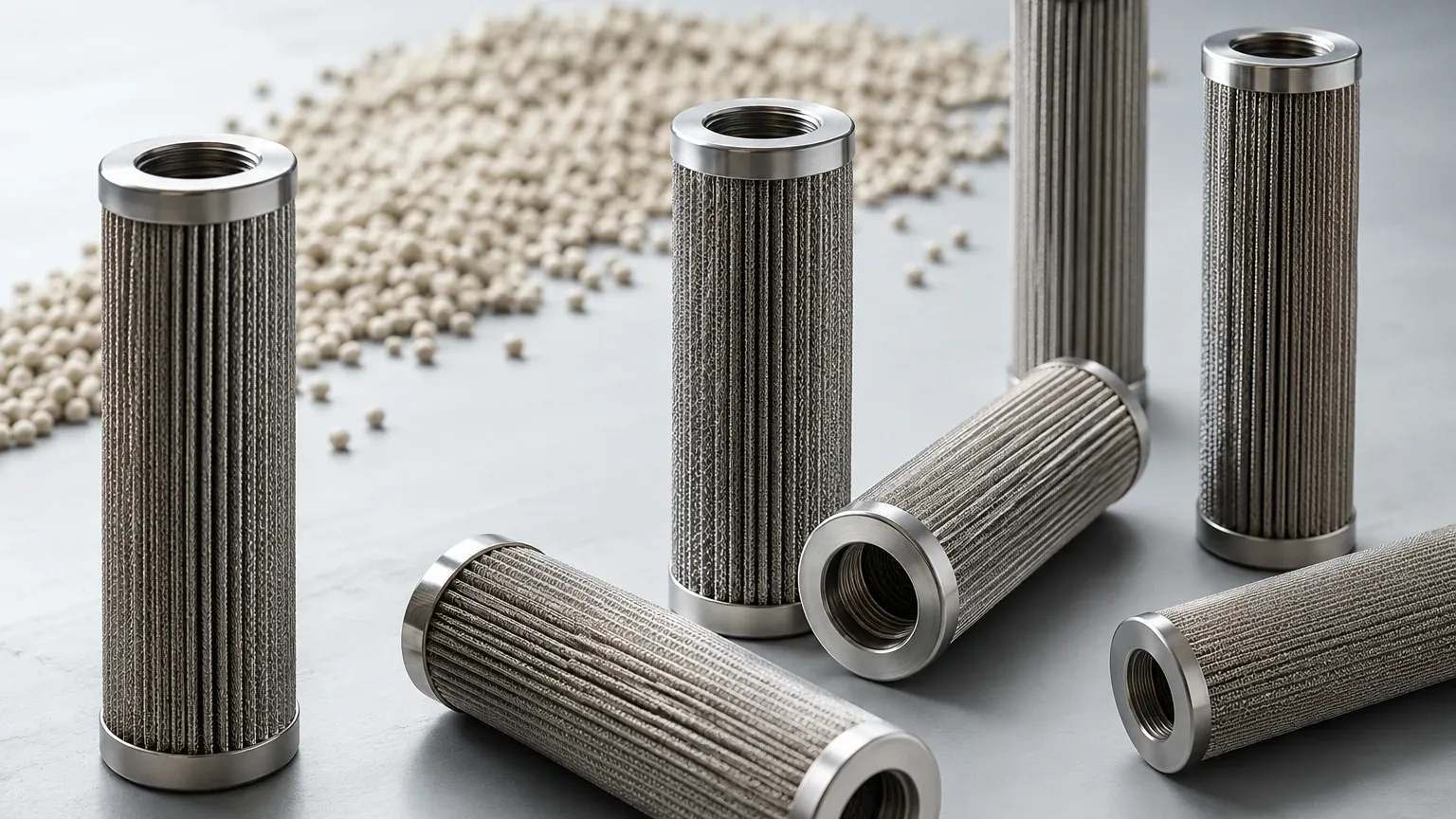
Pleated Filter Cartridges
Pleating the filter media exponentially increases the available surface area within the same footprint. For gas streams with high particulate loads, pleated Filter Cartridges are often the most efficient choice. The increased surface area allows for lower flux rates (velocity per unit of area), which improves filtration efficiency and significantly extends the time between filter changes.
Cylindrical (Plain) Media
Cylindrical or wrap-style filters are simpler in design and are often used for less demanding applications or as pre-filters. While they have lower dirt-holding capacity than pleated designs, they are robust and easier to manufacture for custom sizes. However, in modern natural gas infrastructure, the move toward pleated stainless steel mesh is driven by the need for higher reliability and reduced maintenance downtime.
Maintenance and Replacement Cycles
Proper maintenance of a cartridge filter natural gas system is vital for preventing bypass and ensuring continuous protection of downstream assets. Most industrial filtration systems are equipped with differential pressure gauges and transmitters.
1. Monitoring ΔP: A common practice is to replace or clean filter cartridges when the differential pressure reaches a predetermined set point, typically between 15 and 25 PSI, depending on the housing design and gas pressure.
2. Visual Inspection: During replacement, engineers should inspect the used cartridges for signs of media migration, corrosion, or unusual contaminant buildup. For example, the presence of oily sludge on a particulate filter may indicate a failure in an upstream coalescer.
3. Cleaning vs. Disposal: While polymer-based filters are disposable, stainless steel filter cartridges can often be cleaned using ultrasonic baths or back-pulsing techniques. This is a significant advantage for remote locations where logistics for replacement parts are challenging.
Customization and OEM Solutions
No two natural gas streams are identical. Variations in gas velocity, pressure, and contaminant type mean that off-the-shelf filtration solutions may not always provide optimal performance. Working with a manufacturer capable of providing customized filtration components allows engineers to tailor the filter to the specific needs of the site.
Customization options include:
* Variable End Cap Configurations: Matching existing housing hardware to ensure a leak-proof seal.
* Custom Micron Gradations: Layering different mesh sizes to create a depth-filtration effect within a pleated structure.
* Reinforced Construction: Adding external cages or heavy-duty inner cores for high-surge applications.
By focusing on these technical parameters, procurement teams can ensure they are selecting a cartridge filter natural gas solution that provides the best balance of performance, durability, and cost-effectiveness.
Conclusion
In the demanding environment of natural gas processing and transport, the choice of filtration is not merely a maintenance decision but a strategic engineering choice. High-quality stainless steel Filter Cartridges provide the necessary resilience to handle high pressures, corrosive gases, and heavy particulate loads. By understanding the nuances of micron ratings, material compatibility, and structural design, operators can significantly reduce the risk of equipment damage and unscheduled downtime, ensuring the efficient and safe delivery of natural gas to the market.
