


Water Filter Cartridges Near Me
In the industrial sector, the search for "water filter cartridges near me" often signifies a critical need for immediate maintenance components or a strategic shift toward localized supply chain management. For engineers and procurement professionals in industries such as chemical processing, food and beverage, pharmaceutical, and water treatment, the proximity of a supplier is only one variable in a complex equation of filtration efficiency, material compatibility, and long-term operational costs.
While local availability can reduce lead times for standard components, specialized industrial applications frequently require high-performance Filter Cartridges that meet specific engineering tolerances. Understanding the technical nuances of these components—ranging from material selection to filtration mechanisms—is essential for optimizing system performance and ensuring the longevity of downstream equipment.
Local Sourcing vs. Technical Manufacturing Expertise
When searching for water filter cartridges near me, it is important to distinguish between general-purpose distributors and specialized manufacturers. Local distributors typically stock standardized, disposable cartridges made from polypropylene or cellulose. While these are suitable for basic sediment removal, they often fail in demanding industrial environments characterized by high temperatures, aggressive chemicals, or high differential pressures.
Direct engagement with a manufacturer like Kaifil offers advantages that local off-the-shelf sourcing cannot match. Customization of end-cap configurations, precise micron ratings, and the use of advanced materials like 304 or 316L stainless steel allow for a tailored filtration solution. For critical processes, the technical support provided by a manufacturer—including guidance on flow rates and pressure drop calculations—often outweighs the convenience of a nearby general supplier.
Material Engineering: Why Stainless Steel is the Industrial Standard
For many industrial water treatment applications, the limitations of plastic or fabric filters necessitate a transition to metal media. Stainless steel filter cartridges provide structural integrity and chemical resistance that disposable options lack.
Corrosion and Chemical Resistance
The choice between 304 and 316L stainless steel is a primary engineering consideration. While 304 is suitable for many general water applications, 316L contains molybdenum, which significantly enhances resistance to chlorides and pitting. This is particularly relevant in desalination, marine environments, or processes involving brine. When searching for water filter cartridges near me for chemical processing, confirming the alloy grade is vital to prevent premature failure due to corrosion.
Thermal Stability
Industrial water systems often operate at elevated temperatures, either as part of the process or during sterilization cycles (such as SIP – Steam-In-Place). Synthetic cartridges may soften or lose their pore structure at temperatures exceeding 60°C (140°F). In contrast, stainless steel cartridges maintain their mechanical properties at much higher temperatures, ensuring consistent filtration accuracy during thermal fluctuations.
Technical Specifications and Selection Criteria
Selecting the correct filter cartridges requires a deep dive into the physics of the application. Engineers must look beyond the physical dimensions and consider the following technical parameters:
1. Micron Rating: Absolute vs. Nominal
A common point of confusion in procurement is the distinction between nominal and absolute micron ratings. A nominal rating refers to a filter's ability to retain a majority of particles of a specific size, but it does not guarantee 100% efficiency. An absolute rating, typically achieved through precision-engineered wire mesh or sintered metal, ensures that no particle larger than the specified micron size passes through the media. For pharmaceutical or fine chemical applications, absolute filtration is often non-negotiable.
2. Flow Rate and Pressure Drop (ΔP)
The relationship between flow rate and pressure drop is critical for pump sizing and energy efficiency. As a filter accumulates contaminants, the differential pressure increases. Stainless steel pleated cartridges are designed to maximize surface area, which lowers the initial pressure drop and extends the time between cleaning cycles. When evaluating water filter cartridges near me, engineers should request flow-versus-pressure-drop curves to ensure the cartridge matches the system's hydraulic capacity.
3. Structural Strength and Collapse Pressure
In high-viscosity applications or systems prone to pressure surges, the structural strength of the cartridge is paramount. Sintered metal cartridges and those with reinforced internal cores can withstand significantly higher differential pressures without collapsing or bypassing, protecting expensive downstream components like RO membranes or high-pressure pumps.
Applications in Demanding Industrial Sectors
The utility of high-quality filter cartridges spans across various sectors where water purity is a prerequisite for product quality or equipment protection.
Food and Beverage Processing
In this industry, filters must not only remove particulates but also comply with food safety standards. Stainless steel cartridges are preferred because they do not shed fibers (unlike some felt or depth filters) and can be rigorously cleaned and sanitized. They are used for ingredient water filtration, bottle washing, and steam filtration.
Pharmaceutical and Biotech
Precision is the hallmark of pharmaceutical filtration. Sintered wire mesh cartridges provide the exact pore size distribution required for pre-filtration and the removal of catalysts or active pharmaceutical ingredients (APIs). The ability to withstand repeated autoclaving makes them a cost-effective choice over the long term compared to single-use plastics.
Hydraulic and Industrial Cooling Systems
Water used in cooling towers or as a base for hydraulic fluids must be free of abrasive particles that can cause wear on seals and valves. Heavy-duty metal filter cartridges provide the durability needed to handle the high flow rates and potential debris found in these recirculating systems.
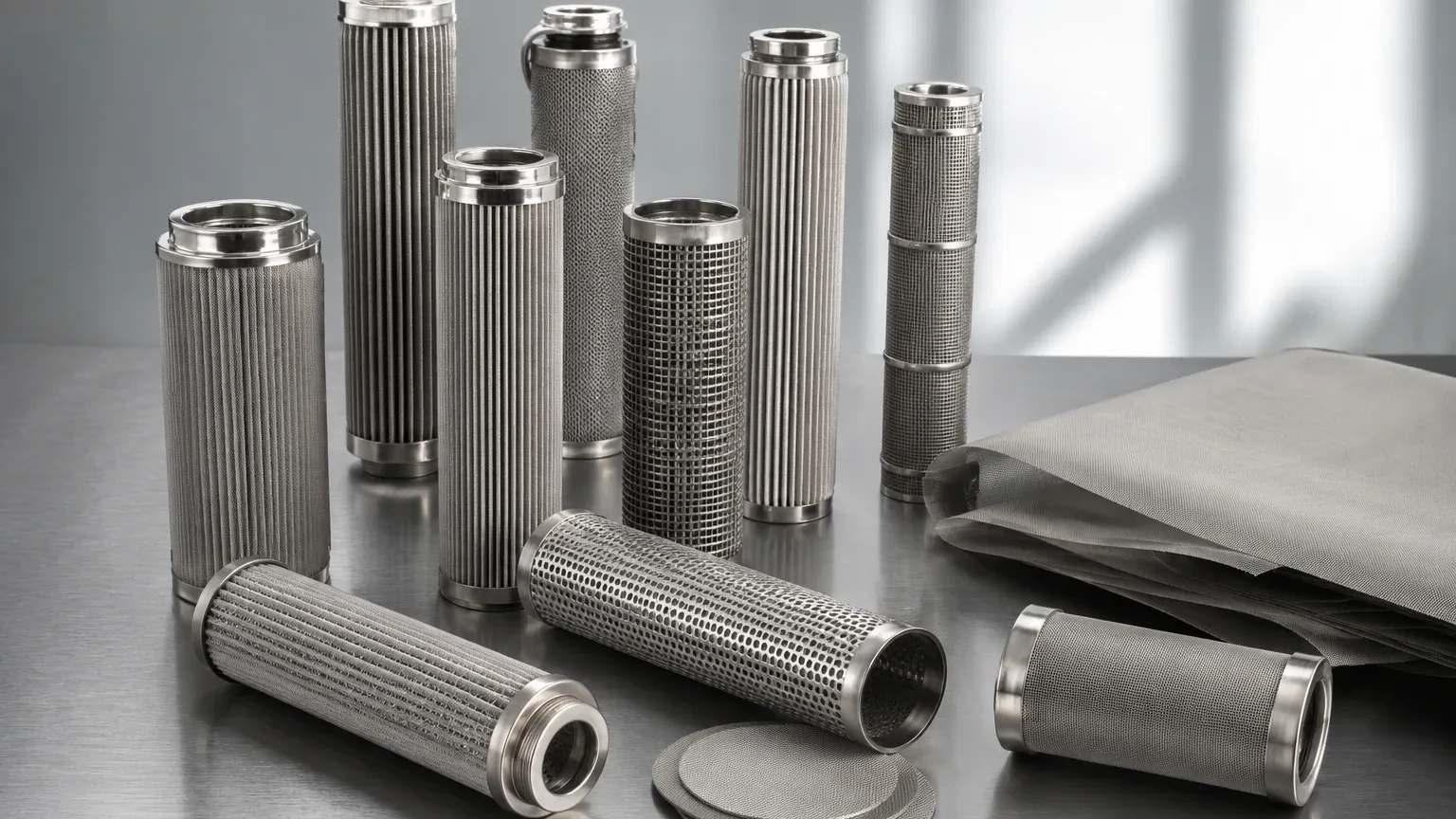
Customization and OEM Capabilities
One of the limitations of searching for water filter cartridges near me is the lack of specialized configurations in local inventories. Industrial systems often utilize proprietary housing designs that require specific end-cap styles, such as:
* Double Open End (DOE): Standard flat gaskets on both ends.
* Code 7 (226 O-ring/Bayonet): High-security locking mechanism for critical applications.
* Code 3 (222 O-ring/Flat): Common in many industrial housings to ensure a bypass-free seal.
* Threaded Connections: NPT or BSP threads for high-pressure or permanent installations.
Manufacturers like Kaifil specialize in OEM services, allowing for the production of cartridges that fit existing housings while upgrading the internal media to stainless steel for better performance. This level of customization ensures that the filtration system is optimized for the specific contaminants and flow conditions of the facility.
Total Cost of Ownership (TCO) and Sustainability
While the initial purchase price of a stainless steel filter cartridge is higher than that of a disposable polypropylene version, the Total Cost of Ownership (TCO) is often lower. This is due to several factors:
1. Longevity: A single stainless steel cartridge can last for years with proper maintenance, whereas disposable filters may need replacement every few weeks.
2. Reduced Downtime: High-capacity pleated designs extend the intervals between change-outs, keeping production lines running longer.
3. Cleaning and Reusability: Metal cartridges can be cleaned using backwashing, ultrasonic baths, or chemical cleaning. This eliminates the recurring cost of purchasing new filters and the logistical burden of managing replacement inventory.
4. Environmental Impact: By switching to reusable metal media, facilities significantly reduce their solid waste output, aligning with corporate sustainability goals and reducing disposal fees.
Maintenance and Cleaning Protocols
To maximize the life of industrial water filter cartridges, a structured maintenance program is necessary. Unlike disposable filters, which are discarded when the pressure drop reaches a certain limit, stainless steel cartridges are restored to their original performance levels through specific cleaning methods:
* Backwashing: Reversing the flow of water through the filter to dislodge surface-level contaminants.
* Chemical Cleaning: Using mild acids or bases to dissolve organic or mineral scaling, provided the chemicals are compatible with the 304 or 316L steel.
* Ultrasonic Cleaning: Using high-frequency sound waves in a cleaning solvent to remove fine particles trapped deep within the mesh or sintered structure.
Engineers should establish a baseline differential pressure for a clean filter and set a "dirty" limit at which cleaning must occur. Delaying the cleaning process can lead to particle embedding, which is harder to remove and may permanently reduce the cartridge's permeability.
Conclusion: Moving Beyond Proximity in Procurement
While the convenience of finding "water filter cartridges near me" is a valid consideration for emergency repairs, the long-term efficiency of an industrial water system depends on the technical integrity of the filtration media. By prioritizing material quality, precise micron ratings, and structural durability, engineers can ensure their systems operate with minimal interruption.
For those managing complex industrial processes, partnering with a manufacturer that understands the engineering requirements of stainless steel filtration is a strategic advantage. Whether you require standard sizes or customized OEM components, focusing on the technical specifications of Filter Cartridges will yield better results than simply choosing the nearest available supplier. Proper selection today leads to reduced maintenance, lower operational costs, and superior water quality for years to come.
