


Cartridge Filter Used in Pharmaceutical Industry
In the pharmaceutical industry, filtration is not merely a utility but a critical process step that directly impacts product safety, purity, and regulatory compliance. Whether it is the production of active pharmaceutical ingredients (APIs), the purification of sterile water, or the filtration of process gases, the choice of filtration technology is paramount. Among the various technologies available, the cartridge filter used in pharmaceutical industry applications serves as a versatile and reliable solution for removing contaminants across a wide range of fluid and gas streams.
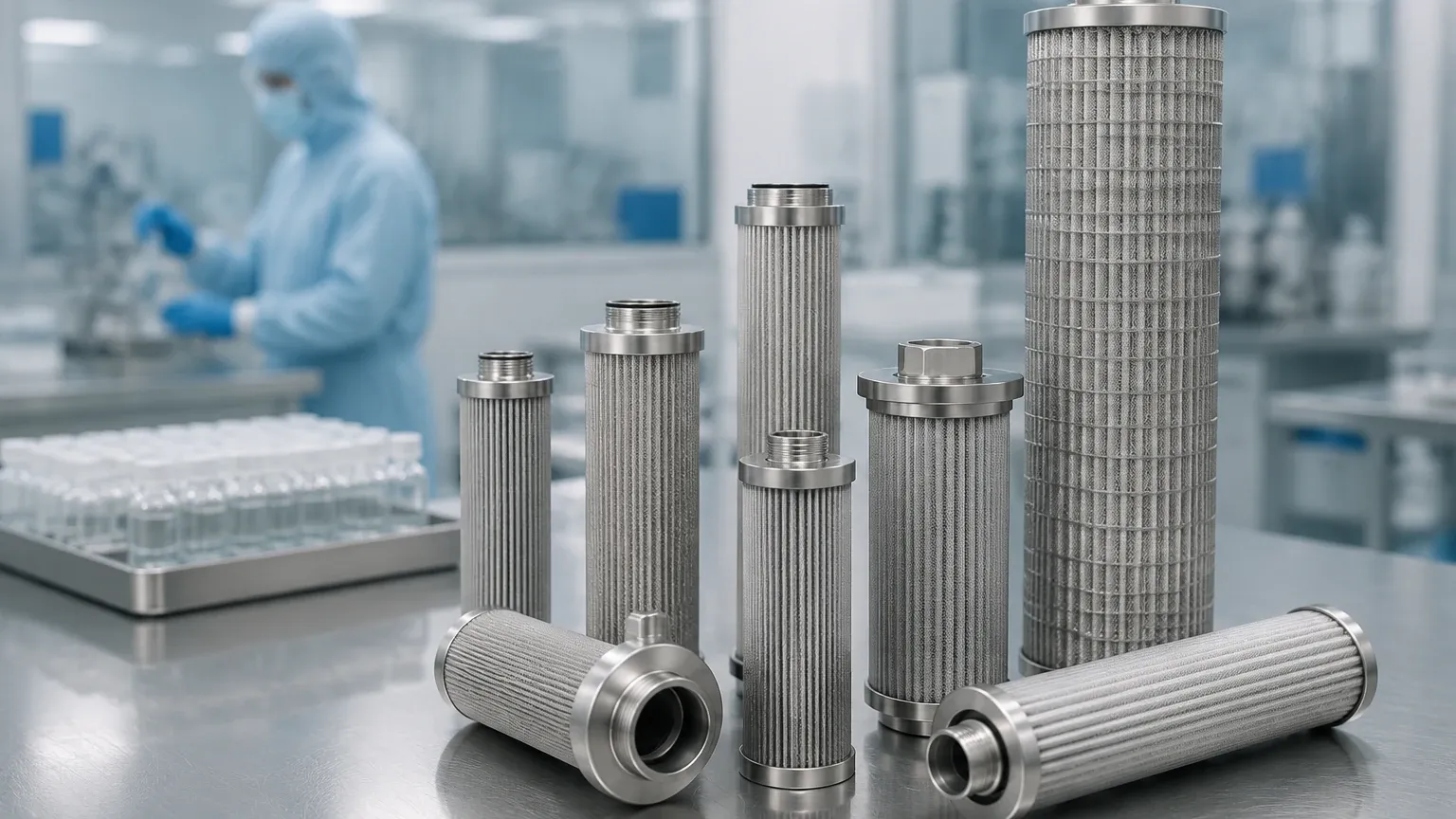
From an engineering perspective, selecting the right filtration component requires a deep understanding of material compatibility, filtration efficiency, and the mechanical stresses of the production environment. Stainless steel Filter Cartridges have become a standard in high-stakes pharmaceutical applications due to their durability, thermal resistance, and ability to withstand rigorous cleaning protocols.
The Critical Role of Filtration in Pharmaceutical Manufacturing
Pharmaceutical manufacturing operates under stringent Good Manufacturing Practice (GMP) standards. Every component that comes into contact with the product must be traceable, non-reactive, and capable of maintaining the required sterility or cleanliness levels. The cartridge filter used in pharmaceutical industry workflows is designed to address these specific needs by providing a high surface area for particulate capture within a compact, replaceable or cleanable format.
Filtration in this sector generally falls into three categories: clarification, pre-filtration, and sterile filtration. Clarification removes large particles and bulk contaminants. Pre-filtration protects more expensive downstream components, such as membrane filters or chromatography columns, by removing intermediate-sized particles. Finally, sterile filtration ensures the removal of microorganisms to achieve a sterile end-product. Stainless steel filter cartridges are particularly valued in pre-filtration and clarification stages, as well as in utility filtration for steam and compressed air.
Primary Applications of Filter Cartridges in Pharma
Understanding where a cartridge filter used in pharmaceutical industry settings is deployed helps engineers optimize process flow and prevent premature filter failure. Common applications include:
1. API Production and Chemical Processing
During the synthesis of APIs, harsh solvents and corrosive chemicals are frequently used. Polymeric filters may degrade or leach extractables into the product stream under these conditions. Stainless steel cartridges, particularly those made from 316L, offer superior chemical resistance, ensuring that the filter remains structurally sound while preventing product contamination.
2. Water for Injection (WFI) and Purified Water Systems
Water is a primary ingredient in most pharmaceutical formulations. Filtration systems must remove endotoxins, bacteria, and particulates without introducing new contaminants. Filter cartridges are used in the pre-treatment stages of reverse osmosis (RO) and deionization (DI) systems to protect membranes and ensure the longevity of the entire water system.
3. Steam Filtration (SIP)
Sterilization-in-Place (SIP) processes use high-temperature steam to sterilize production equipment. This steam must be "culinary grade" or better, meaning it must be free of pipe scale, rust, and other particulates. Sintered metal or pleated wire mesh cartridges are ideal for this application because they can handle the high temperatures and pressures of saturated steam without shedding fibers.
4. Tank Venting and Gas Filtration
Storage tanks for sterile liquids require vent filters to allow air to enter and exit as the liquid level changes, without allowing airborne contaminants or microbes to enter. These filters must be hydrophobic and capable of being sterilized repeatedly. Stainless steel cartridges provide the mechanical strength needed to withstand the pressure differentials often seen in venting applications.
Engineering Advantages of Stainless Steel Filter Cartridges
While disposable plastic filters are common in single-use systems, permanent or semi-permanent stainless steel Filter Cartridges offer distinct engineering advantages that make them indispensable for many pharmaceutical plants.
Thermal and Mechanical Stability
Pharmaceutical processes often involve high temperatures, either during the reaction phase or during cleaning cycles (autoclaving or SIP). Stainless steel filters maintain their pore structure and integrity at temperatures that would cause polymer filters to soften or deform. Furthermore, they can withstand high differential pressures, reducing the risk of a filter bypass or collapse during a pressure surge.
Cleanability and Reusability
One of the most significant benefits of metal filter cartridges is their ability to be cleaned and reused. Through methods such as ultrasonic cleaning, chemical backwashing, or high-temperature burnout, these filters can be restored to near-original performance. This not only reduces the volume of hazardous waste generated by the facility but also provides a more predictable total cost of ownership over the long term.
Zero Media Migration
In pharmaceutical filtration, the risk of the filter medium itself shedding fibers or particles into the filtrate is a major concern. Sintered wire mesh and sintered metal fiber cartridges are engineered to ensure that the filtration media is permanently bonded. This eliminates the risk of media migration, ensuring the purity of the final pharmaceutical product.
Key Performance Metrics: Micron Ratings and Flow Dynamics
When specifying a cartridge filter used in pharmaceutical industry applications, engineers must balance filtration efficiency with flow requirements. The two primary metrics are the micron rating and the pressure drop.
Absolute vs. Nominal Micron Ratings
* Nominal Rating: This indicates the ability of the filter to retain a majority of particles of a certain size (e.g., 90% or 95%). It is often used for clarification stages.
* Absolute Rating: This refers to the diameter of the largest hard spherical particle that will pass through the filter under specified test conditions. In pharmaceutical sterile filtration or critical pre-filtration, absolute-rated cartridges are typically required to ensure consistent results.
Differential Pressure (ΔP)
As a filter captures contaminants, the pressure drop across the cartridge increases. Engineers must design systems with sufficient pump head to accommodate the "terminal pressure drop"—the point at which the filter must be cleaned or replaced. Choosing a cartridge with a high dirt-holding capacity and low initial clean pressure drop is essential for maximizing the time between maintenance intervals.
Selection Criteria for Engineers and Purchasing Teams
Selecting the appropriate cartridge filter used in pharmaceutical industry equipment involves more than just picking a micron size. Several technical factors must be confirmed before procurement:
1. Material Grade: 316L stainless steel is the standard for pharmaceutical applications due to its excellent corrosion resistance and low carbon content, which prevents sensitization during welding.
2. End-Cap Configuration: Cartridges come in various styles, including Double Open End (DOE), Code 7 (226 O-ring with locking tabs), and Code 3 (222 O-ring). The Code 7 and Code 222 configurations are preferred in pharma because they provide a more secure, leak-proof seal.
3. Seal Materials: The O-rings or gaskets must be compatible with both the process fluid and the cleaning chemicals. Common choices include EPDM, Silicone, and PTFE-encapsulated Viton, all of which should meet USP Class VI standards for biocompatibility.
4. Surface Finish: For many pharmaceutical applications, the internal and external surfaces of the filter housing and the cartridge hardware must be electro-polished to a specific Ra (roughness average) to prevent bacterial adhesion and facilitate cleaning.
Maintenance and Longevity: Optimizing the Replacement Cycle
To ensure the continued performance of a cartridge filter used in pharmaceutical industry operations, a robust maintenance schedule is required. Unlike disposable filters, which are discarded based on a single-use protocol or a specific pressure drop, stainless steel cartridges require a defined cleaning validation process.
Engineers should monitor the differential pressure continuously. A sudden drop in pressure may indicate a breached filter, while a rapid increase suggests a change in the upstream contaminant load. Regular integrity testing, such as the bubble point test or pressure hold test, should be performed to verify that the filter still meets its original retention specifications.
By implementing proper Clean-in-Place (CIP) protocols, pharmaceutical facilities can extend the life of their Filter Cartridges significantly, often spanning several years of service. This longevity makes stainless steel an economically superior choice for high-volume or continuous manufacturing lines.
Customization and OEM Solutions for Specialized Equipment
Many pharmaceutical processes use proprietary equipment or unique vessel geometries that require non-standard filtration components. This is where custom manufacturing becomes essential. Whether it is a specific length, a unique mounting flange, or a multi-layered sintered mesh structure designed for a specific viscosity, customized filtration solutions ensure that the filter integrates perfectly with the existing system.
Kaifil specializes in these types of high-performance, customized filtration solutions. By working closely with engineering teams, manufacturers can develop filter cartridges that meet the exact micron requirements and mechanical tolerances of a specific pharmaceutical application, from pilot-scale R&D to full-scale commercial production.
Conclusion
The cartridge filter used in pharmaceutical industry settings is a vital component in the quest for product purity and process efficiency. By selecting high-quality stainless steel Filter Cartridges, pharmaceutical engineers can ensure their systems withstand the rigors of chemical exposure and thermal sterilization while maintaining precise filtration performance. When choosing a filtration partner, it is essential to focus on material traceability, engineering expertise, and the ability to provide customized designs that align with the specific demands of pharmaceutical manufacturing.
Download Cartridge Filter Used in Pharmaceutical Industry as a PDF
