


Cheapest Water Filter Cartridges
In industrial procurement and engineering, the search for the "cheapest water filter cartridges" often presents a complex paradox. While the initial purchase price is a critical metric for budget management, the true cost of a filtration system is measured over its entire operational lifecycle. For engineers and facility managers, selecting a filter based solely on the lowest unit price can lead to increased downtime, higher labor costs, and potential damage to downstream equipment.
Understanding the technical distinctions between low-cost disposable media and high-performance reusable components is essential for optimizing industrial water treatment processes. This guide examines the engineering considerations behind filter cartridge selection, focusing on how to achieve genuine cost-efficiency without compromising filtration integrity.
Total Cost of Ownership vs. Initial Unit Price
When evaluating the cheapest water filter cartridges, it is necessary to distinguish between the acquisition cost and the Total Cost of Ownership (TCO). In high-volume industrial applications, a filter that costs $5.00 but requires replacement every 48 hours is significantly more expensive than a durable Filter Cartridges solution that costs $500.00 but lasts for several years with regular cleaning.
The Recurring Cost Trap
Disposable cartridges, such as melt-blown polypropylene or string-wound filters, are frequently marketed as the most budget-friendly options. However, their cost profile includes several hidden variables:
* Replacement Frequency: Frequent saturation leads to rapid pressure drops, necessitating immediate change-outs.
* Labor Costs: The man-hours required to shut down a line, vent the housing, replace the media, and restart the system add up quickly.
* Disposal Fees: In many jurisdictions, used filter media—especially if contaminated with industrial byproducts—must be treated as hazardous waste, carrying significant disposal surcharges.
* Inventory Management: Maintaining a large stock of disposable filters requires warehouse space and complex supply chain monitoring.
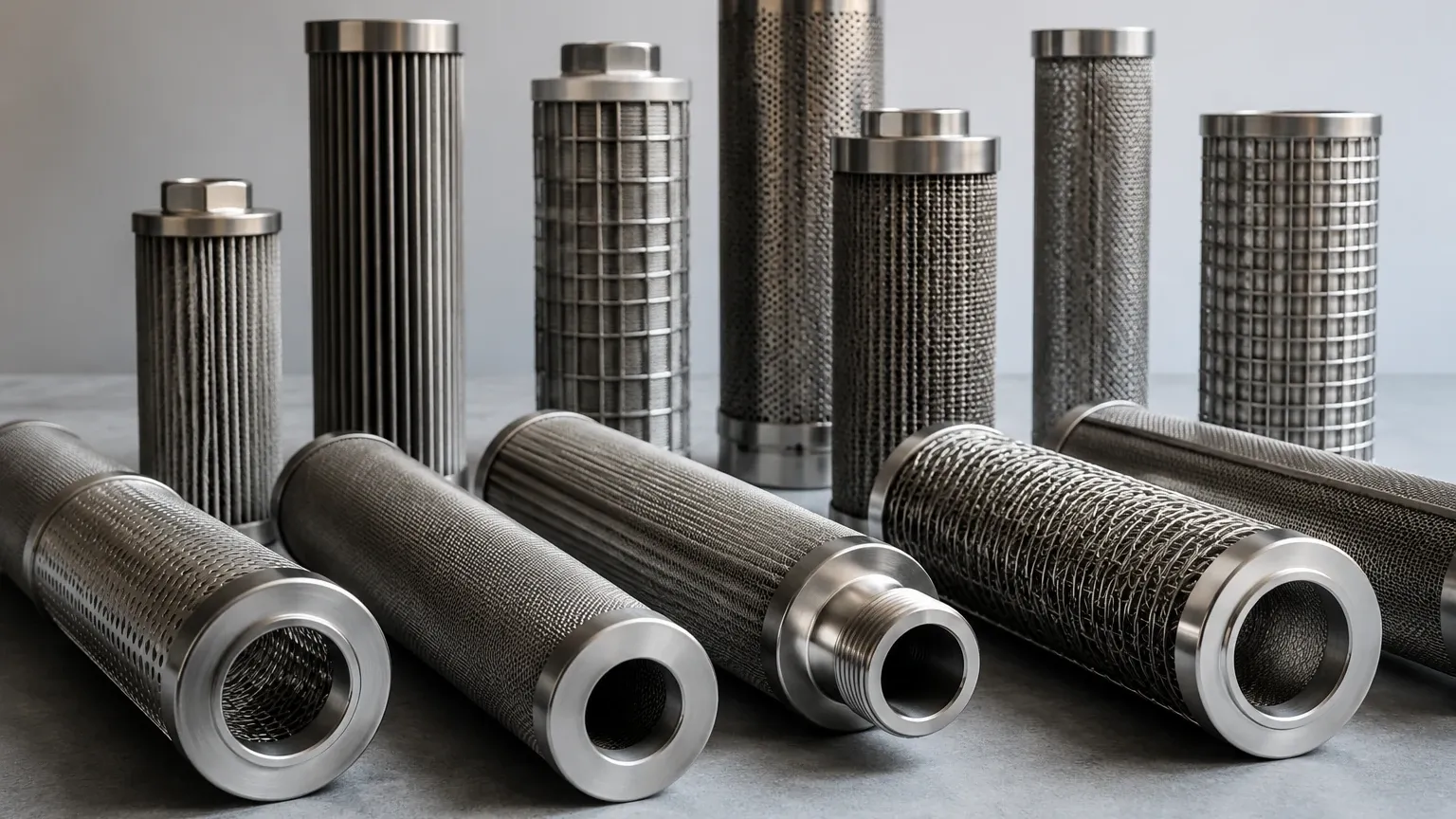
By contrast, stainless steel filter cartridges represent a capital investment that eliminates most recurring operational expenses. By focusing on cleanability and durability, industrial operations can shift from an OPEX-heavy model to a more stable CAPEX-focused filtration strategy.
Material Science and Filtration Efficiency
The materials used in the construction of filter cartridges directly impact both the purchase price and the performance limits. To find the most cost-effective solution, engineers must match the material properties to the specific chemistry and temperature of the process water.
Polymeric Media (Low Initial Cost)
Polypropylene and polyester are the standard for "cheap" filtration. They are effective for broad sediment removal and are chemically resistant to many acids and bases. However, they are limited by temperature (usually below 60°C) and are prone to "media migration," where fibers from the filter itself break off and contaminate the filtrate.
Metallic Media (High Long-Term Value)
Stainless steel (304 or 316L) wire mesh and sintered metal cartridges offer a different value proposition. While the upfront cost is higher, their technical advantages provide long-term savings:
* Thermal Stability: Capable of operating in extreme temperatures where polymers would melt or deform.
* Mechanical Strength: High collapse pressure ratings allow these filters to withstand significant differential pressure without failing.
* Precision Geometry: Unlike depth filters, which have a broad pore size distribution, stainless steel mesh provides a precise, absolute micron rating, ensuring consistent water quality.
Technical Factors Influencing Filter Cartridge Pricing
To accurately compare the cheapest water filter cartridges, one must look at the technical specifications that drive manufacturing costs and performance outcomes. Price is usually a function of material volume, manufacturing precision, and surface area.
Micron Rating and Pore Structure
There is a direct correlation between filtration fineness and cost. Achieving a 1-micron absolute rating requires more sophisticated manufacturing techniques than a 50-micron nominal rating. Engineers should avoid "over-filtering"—specifying a tighter micron rating than the application requires—as this leads to faster clogging and higher replacement costs.
Effective Filtration Area (EFA)
Pleated designs increase the surface area of a cartridge within the same footprint. While a pleated cartridge may be more expensive than a cylindrical one, the increased EFA results in lower flux (flow per unit area), which significantly extends the time between cleanings or replacements. In many cases, a single high-surface-area pleated cartridge can do the work of three standard depth cartridges, making it the cheaper option per gallon filtered.
End-Cap Configurations
Standard Double Open End (DOE) configurations are typically the least expensive. However, in critical applications where bypass must be zero, investing in specialized end-caps (such as 222 or 226 O-ring fittings) is necessary. A "cheap" filter that allows bypass can ruin downstream membranes or sensitive instrumentation, leading to costs that far exceed the savings on the filter itself.
Risks of Substandard "Cheap" Filtration
Opting for the absolute cheapest water filter cartridges on the market often involves trade-offs in quality control and material traceability. In an industrial B2B context, these risks can manifest as catastrophic system failures.
Bypass and Seal Failure
Inexpensive cartridges often use lower-grade gaskets (such as PVC or low-quality Buna-N) that may swell or degrade when exposed to certain water treatment chemicals. If the seal fails, the water bypasses the filter media entirely, rendering the filtration system useless.
Structural Integrity
Under high-pressure surges or water hammer conditions, low-cost cartridges may collapse or burst. If a filter cartridge disintegrates, its fragments can travel downstream, clogging valves, damaging pumps, and contaminating the final product. The cost of cleaning a fouled downstream system often dwarfs the annual budget for high-quality filtration components.
Lack of Documentation
For industries like food and beverage or pharmaceuticals, material traceability is mandatory. The cheapest cartridges often lack the necessary certifications (such as FDA compliance or ISO quality standards). Using non-certified components can lead to regulatory fines or product recalls.
How to Select Cost-Effective Industrial Filter Cartridges
Achieving the lowest cost in water filtration requires a strategic approach to selection. Rather than searching for the lowest price tag, engineers should follow a data-driven selection process.
1. Analyze the Particle Profile: Conduct a particle size analysis (PSA) of the source water. This prevents over-specifying the micron rating, which is a common cause of unnecessary filtration expenses.
2. Evaluate Cleanability: For many industrial processes, a cleanable stainless steel cartridge is the most economical choice. Consider the equipment needed for cleaning (ultrasonic baths or backwashing systems) versus the cost of constant disposal.
3. Consider Customization: Sometimes, a standard off-the-shelf cartridge is not the most efficient fit for a specific housing. Custom-engineered Filter Cartridges can be designed to maximize flow rates and dirt-holding capacity for a specific vessel, reducing the total number of filters required.
4. Monitor Differential Pressure: Install accurate gauges to monitor the pressure drop across the filter. Replacing or cleaning a filter exactly when it reaches its terminal pressure drop—rather than on a fixed schedule—ensures you get the maximum value out of every cartridge.
The Role of OEM and Custom Manufacturing
In many B2B scenarios, working directly with a manufacturer like Kaifil provides a path to the most cost-effective filtration. OEM (Original Equipment Manufacturer) solutions allow for the development of filter components tailored to the exact demands of a system. By eliminating unnecessary features and focusing on the specific durability requirements of the application, custom manufacturing can often deliver a lower TCO than generic, mass-produced alternatives.
Customization allows for the selection of specific weave patterns in wire mesh, the optimization of pleat density, and the choice of the most appropriate alloy for the environment. These engineering choices ensure that the filter performs reliably in demanding conditions, such as high-salinity water treatment or high-pressure hydraulic circuits, where standard "cheap" filters would fail prematurely.
Conclusion: Finding the True Value
The search for the cheapest water filter cartridges should be a search for the best value over time. In the industrial sector, value is found at the intersection of material science, precision engineering, and application-specific design. While disposable polymer filters have their place in low-demand or temporary setups, the long-term economic advantages of high-quality, reusable stainless steel cartridges are undeniable for most professional applications.
By focusing on technical parameters such as effective filtration area, material compatibility, and structural integrity, procurement teams can move beyond simple unit-price comparisons. Investing in robust filtration solutions not only protects downstream equipment but also provides a predictable, lower-cost operational environment. For engineers tasked with optimizing water treatment systems, the most "expensive" filter is often the one that fails, while the most cost-effective solution is the one that consistently meets performance specifications with minimal intervention.
