


Do Cartridge Filters Need De
In the world of industrial filtration, selecting the right media and auxiliary aids is critical to maintaining process efficiency and product purity. A common question that arises among maintenance engineers and procurement teams—particularly those transitioning from older systems or specific pool-related technologies—is: do cartridge filters need de?
To answer this concisely: No, standard industrial cartridge filters do not require Diatomaceous Earth (DE). In fact, adding DE to a system designed for cartridge filtration can lead to significant operational failures, including premature clogging, media damage, and increased maintenance costs. Understanding why these two technologies are distinct is essential for optimizing filtration performance in chemical processing, food and beverage production, and pharmaceutical manufacturing.
The Fundamental Difference Between DE and Cartridge Filtration
To understand why the question "do cartridge filters need de" arises, one must first distinguish between the two primary methods of filtration they represent: pre-coat filtration and barrier filtration.
DE (Diatomaceous Earth) Filtration
DE is a naturally occurring, soft, siliceous sedimentary rock that is easily crumbled into a fine white powder. In filtration, it acts as a "filter aid." It is used in specialized DE filters where the powder is mixed into a slurry and deposited onto a support structure (often called a septum or grid) to form a "cake." This cake becomes the actual filtering medium. DE is highly effective at removing microscopic particles, often down to 1–3 microns, but it requires a complex cycle of pre-coating, filtering, and backwashing to remove the spent cake.
Cartridge Filtration
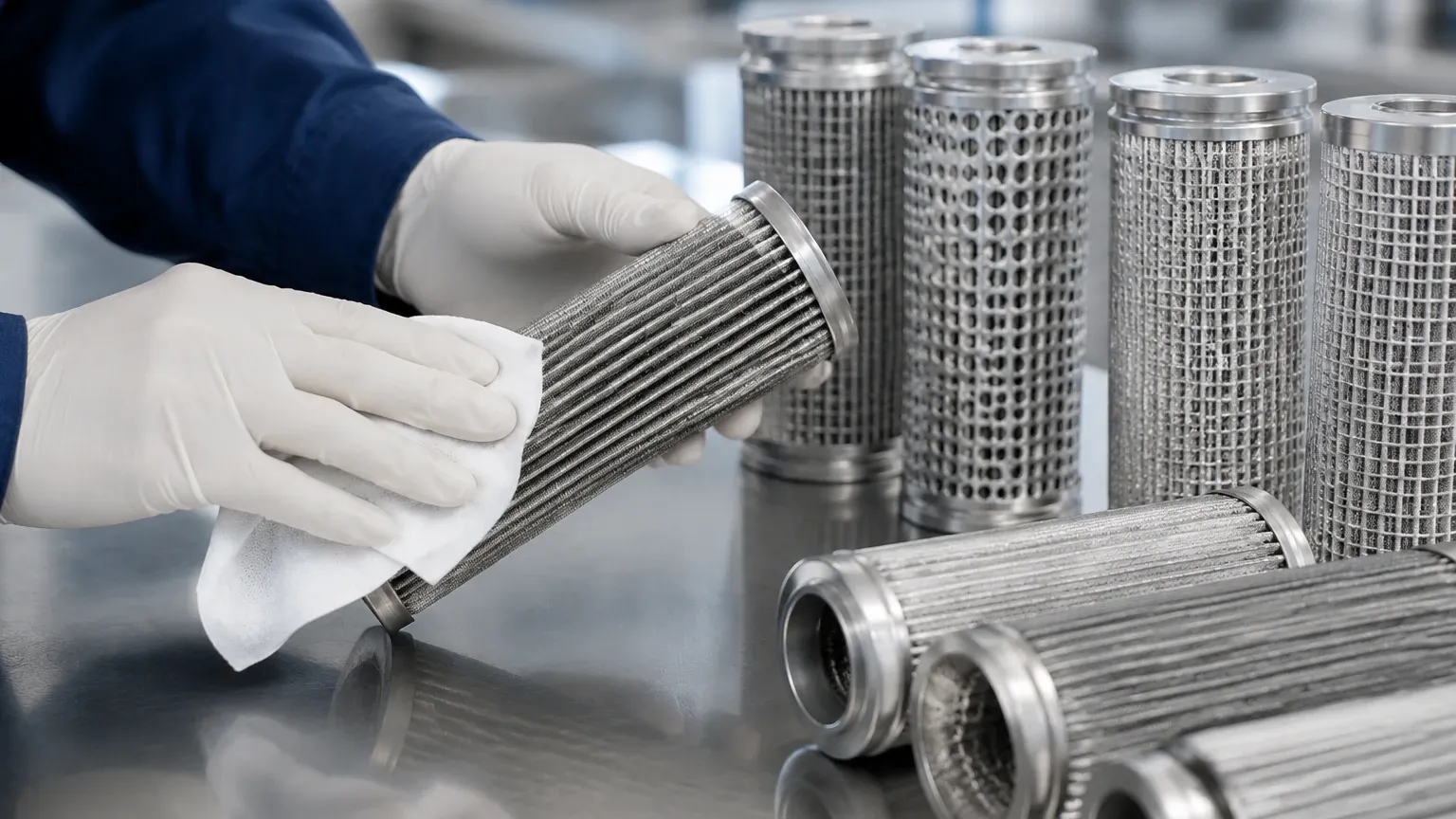
Filter Cartridges are self-contained, modular filtration units. They are designed as barrier filters, meaning the media itself—whether it is pleated polyester, sintered stainless steel, or depth-loading polypropylene—is engineered to a specific pore size. The filtration happens directly on the surface or within the depth of the cartridge media. Because these cartridges are manufactured with precise micron ratings, they do not require an external cake to achieve their specified level of clarity.
Why You Should Not Use DE with Cartridge Filters
While DE is a powerful filtration tool in the right equipment, applying it to a cartridge-based system is generally counterproductive. There are several technical reasons why engineers avoid this combination.
1. Rapid Clogging and Pressure Spikes
Cartridge filters, especially pleated varieties, are designed to maximize surface area within a small footprint. The narrow gaps between the pleats are engineered to trap specific particle loads. When DE is introduced into a cartridge housing, the fine powder quickly fills the valleys of the pleats. Unlike a DE-specific grid, which is designed to hold a thick cake, the tight geometry of a cartridge causes the DE to bridge across the pleats. This leads to an immediate and sharp increase in differential pressure (ΔP), forcing an early shutdown of the process.
2. Difficulty in Cleaning and Regeneration
For industrial applications using permanent media, such as stainless steel wire mesh cartridges, the ability to clean and reuse the filter is a primary benefit. DE particles are microscopic and often have sharp, irregular shapes. These particles can become deeply embedded in the pores of the metal mesh or the fibers of a synthetic felt. Once DE is wedged into the media, standard backpulsing or ultrasonic cleaning may fail to remove it, effectively ruining the cartridge or significantly reducing its service life.
3. Media Compatibility and Damage
In high-pressure industrial environments, the addition of a solid powder like DE can act as an abrasive. If the cartridge is made of delicate membranes or thin polymer fibers, the abrasive nature of DE under high flow rates can cause physical erosion or bypass. Furthermore, if the system is not designed to handle solids, the DE may settle in the bottom of the filter housing, leading to stagnant zones and potential bacterial growth in food or pharmaceutical applications.
Achieving High Clarity Without DE
If the initial reason for asking "do cartridge filters need de" was a requirement for higher fluid clarity, the solution lies in selecting the correct cartridge specification rather than adding filter aids. Modern Filter Cartridges are capable of matching or exceeding the performance of DE systems through several engineering approaches.
Absolute vs. Nominal Micron Ratings
When high precision is required, engineers should specify "absolute-rated" cartridges. While a nominal rating might catch 60% to 80% of particles at a certain size, an absolute rating ensures that 99.9% (Beta 5000) of particles above the specified micron size are retained. Stainless steel sintered mesh and high-density pleated polymers can provide absolute filtration down to sub-micron levels, providing the same "polished" look to liquids that DE once provided.
Multi-Stage Filtration Strategies
Instead of relying on a DE cake to handle a heavy dirt load, industrial systems often use a multi-stage approach.
* Pre-filtration: A coarse, high-capacity cartridge (e.g., 20–50 microns) removes the bulk of the solids.
* Final Filtration: A fine, absolute-rated cartridge (e.g., 1–5 microns) provides the final polish.
This strategy protects the expensive fine filters and extends the overall system runtime without the mess and complexity of DE handling.
Operational Considerations: Cartridges vs. DE Systems
For purchasing teams and plant managers, the choice between a DE-aided system and a standalone cartridge system often comes down to the Total Cost of Ownership (TCO) and operational safety.
| Feature | DE Filtration Systems | Cartridge Filtration Systems |
| :— | :— | :— |
| Labor Intensity | High (Mixing, coating, cleaning) | Low (Simple change-out) |
| Waste Generation | High (Spent DE cake disposal) | Low (Spent cartridges only) |
| Footprint | Large (Requires tanks and pumps) | Compact (Inline housings) |
| Consistency | Variable (Depends on cake quality) | High (Factory-tested media) |
| Cleanliness | Messy (Powder dust, wet sludge) | Clean (Dry or contained wet change) |
In industries such as pharmaceutical manufacturing or precision chemical processing, the dust generated by handling dry DE powder is a significant health and safety concern (silicosis risk). Transitioning to high-performance stainless steel or polymer cartridges eliminates this environmental hazard entirely.
When to Re-evaluate Your Filtration Setup
If you find that your current cartridge filters are clogging too quickly and you are tempted to use a filter aid like DE, it is usually a sign that the system is misconfigured. Before attempting to use DE, consider the following technical adjustments:
1. Increase Surface Area: Switch to a multi-round housing that can hold more cartridges, reducing the flux (flow per unit area) and extending the time between cleanings.
2. Evaluate Media Material: If you are filtering aggressive chemicals or high-temperature fluids, synthetic cartridges may be deforming. Switching to custom stainless steel Filter Cartridges can provide the structural integrity needed to maintain pore size under pressure.
3. Check Particle Distribution: Conduct a particle size analysis of your influent. If you have a wide range of particle sizes, a single-stage cartridge will struggle. A graduated density depth filter or a layered wire mesh structure can better handle varying particle loads.
The Role of Custom Engineering in Industrial Filtration
At Kaifil, we recognize that every industrial process has unique demands. Whether you are dealing with high-viscosity resins in a chemical plant or requiring sanitary-grade filtration for a beverage line, the "one size fits all" approach rarely works.
When engineers ask "do cartridge filters need de," they are often looking for a way to improve the efficiency of a struggling system. Our approach is to design custom stainless steel filtration solutions that provide the necessary durability and precision without the need for additives. Stainless steel wire mesh filters offer distinct advantages in this regard: they are thermally stable, chemically resistant, and can be manufactured with specific weave patterns (such as Dutch weave or twill weave) to provide high flow rates and excellent cake release properties if a natural cake forms from the process solids themselves.
Conclusion
In summary, cartridge filters do not need DE. The two technologies serve different operational philosophies. While DE is a legacy solution for high-solids loading and high-clarity needs, modern cartridge technology—particularly precision-engineered metal and polymer cartridges—offers a cleaner, more efficient, and more predictable alternative.
By selecting the appropriate Filter Cartridges based on absolute micron ratings and material compatibility, industrial facilities can achieve superior results with less maintenance and lower environmental impact. If you are currently facing challenges with filter life or fluid clarity, the solution is likely found in optimizing your cartridge selection and system design rather than introducing filter aids into a system not designed to handle them.
