


Do Water Filter Cartridges Expire
In industrial process engineering and water treatment, the question of whether filtration components have a definitive end-of-life is critical for maintaining system integrity and operational efficiency. When procurement teams and engineers ask, "do water filter cartridges expire?" the answer depends heavily on the distinction between shelf life and service life, as well as the materials used in construction. Unlike perishable goods, industrial filter cartridges do not "spoil" in a biological sense, but they are subject to material degradation, mechanical fatigue, and environmental factors that can render them ineffective or even hazardous to the process.
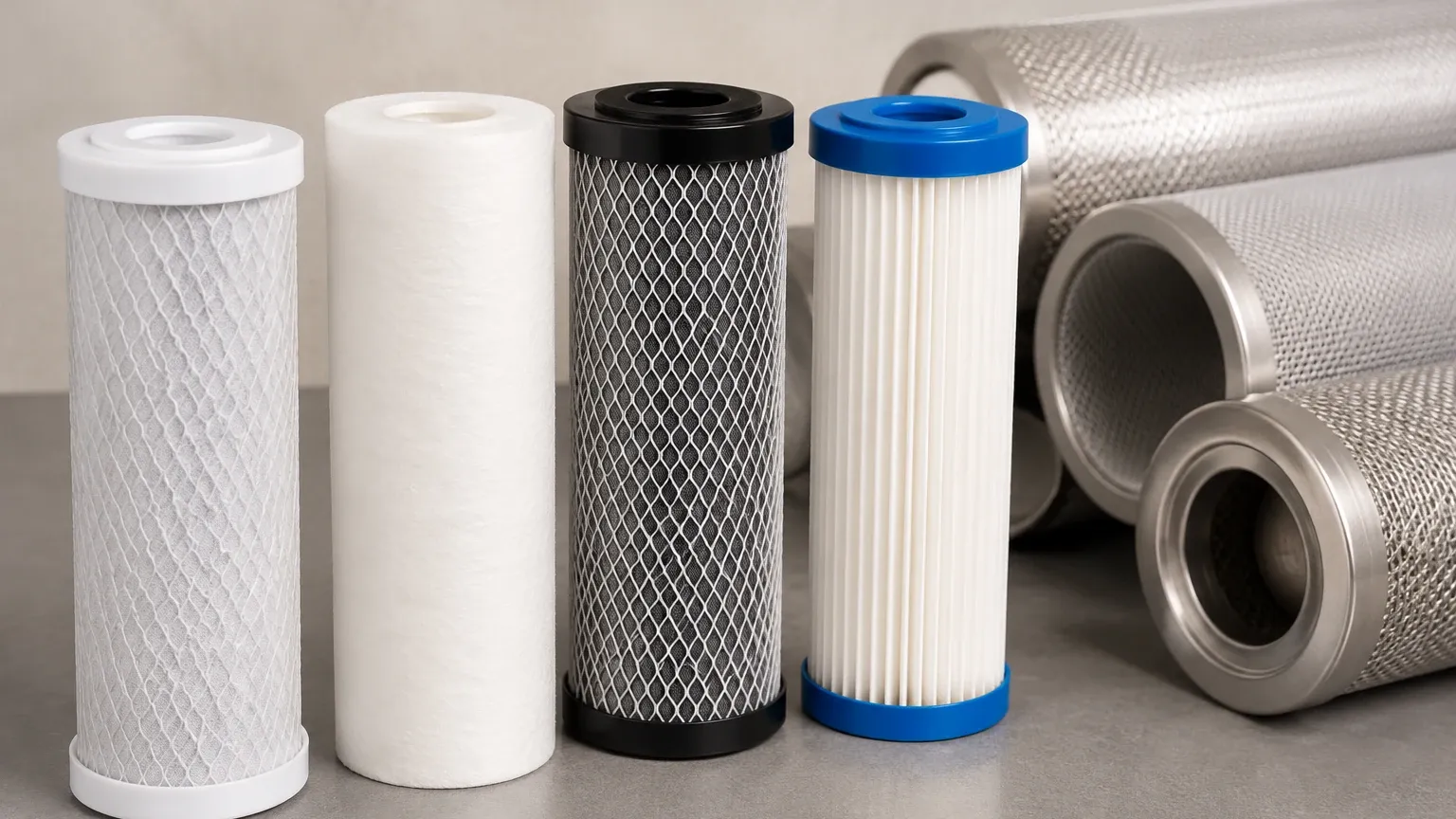
For facilities utilizing high-performance Filter Cartridges, understanding these lifecycles is essential for preventing bypass, ensuring effluent quality, and optimizing the total cost of ownership. This guide examines the technical factors that determine the expiration of industrial filter cartridges from an engineering perspective.
Understanding Shelf Life vs. Service Life in Industrial Filtration
To accurately address the question of expiration, one must differentiate between the time a filter spends in storage (shelf life) and the time it spends in active operation (service life).
Shelf Life Considerations
Shelf life refers to the period an unused filter remains functional while stored in its original packaging. For stainless steel wire mesh filters, the shelf life is virtually indefinite, provided the storage environment is controlled. However, many cartridges incorporate non-metallic components such as O-rings, gaskets, and adhesives. Elastomers like EPDM, Viton (FKM), or Buna-N have specific shelf lives—typically ranging from 5 to 10 years—after which they may become brittle or lose their sealing properties. If these seals fail, the entire cartridge is effectively expired, as it can no longer guarantee a leak-proof fit within the housing.
Service Life and Operational Expiration
Service life is the duration a filter remains effective once installed in a fluid stream. In this context, "expiration" is usually defined by the terminal differential pressure (ΔP). As contaminants accumulate on the filter media, the resistance to flow increases. Once the ΔP reaches a predetermined limit set by the system designer, the filter is considered expired and must be cleaned or replaced. Failure to act at this stage can lead to media migration, structural collapse, or the release of captured contaminants back into the process stream.
The Role of Material Science: Do Stainless Steel Filter Cartridges Expire?
The material composition of a filter is the primary determinant of its longevity. While polymer-based depth filters (such as melt-blown polypropylene) are designed for single use and have a relatively short service life, stainless steel cartridges offer a different performance profile.
Corrosion Resistance and Structural Integrity
Stainless steel 304 and 316L are the industry standards for demanding filtration applications. These materials do not expire through natural degradation in the same way polymers do. However, they are susceptible to specific types of failure over long durations:
* Stress Corrosion Cracking (SCC): In high-temperature environments or in the presence of specific chemicals like chlorides, the metal can develop micro-cracks that compromise filtration accuracy.
* Fatigue: Continuous pressure pulsations in hydraulic or high-pressure water systems can cause mechanical fatigue in the wire mesh or the support core.
* Oxidation: While "stainless," these materials can oxidize if exposed to incompatible chemicals or extreme environments outside their design specifications.
Why Metal Filters Outlast Disposables
Because stainless steel is robust, these cartridges can often be cleaned and reused, effectively resetting their service life. This makes them a preferred choice in B2B applications where frequent replacement of disposable filters would be cost-prohibitive. So, while the physical media might not expire, its ability to be cleaned eventually diminishes as fine particles become permanently embedded in the mesh structure.
Operational Expiration: When Differential Pressure Dictates Change-out
In an active industrial system, the most accurate way to determine if do water filter cartridges expire is through real-time monitoring of differential pressure. Engineers use ΔP as a proxy for the filter’s remaining capacity.
The Terminal Pressure Drop
Every filtration system has a "clean ΔP" and a "terminal ΔP." For example, a system might start with a 2 psi drop across a new filter. As the filter captures solids, this drop increases. Once it hits a threshold—often between 15 and 25 psi depending on the housing and pump capacity—the filter is functionally expired. Operating beyond this point risks:
1. Pump Strain: The system must work harder to push fluid through the clogged media, increasing energy consumption.
2. Media Deformation: The high pressure can physically distort the filter pleats or mesh, creating gaps where unfiltered fluid can bypass the media.
3. Particle Shedding: High ΔP can force previously trapped particles through the media, contaminating the downstream process.
Storage Conditions and Their Impact on Filter Longevity
Even the most durable stainless steel filter cartridges can "expire" prematurely if stored incorrectly. To maximize the shelf life of inventory, technical teams must adhere to strict storage protocols.
Temperature and Humidity Control
High humidity can lead to condensation within the packaging, which may encourage microbial growth if organic dust is present, or lead to localized corrosion if the environment is saline. Ideally, filters should be stored in a cool, dry, and climate-controlled warehouse. Extreme temperature fluctuations can also cause expansion and contraction of the filter components, potentially loosening bonded joints or damaging delicate wire mesh layers.
UV Exposure and Contamination
UV radiation is particularly damaging to the elastomer seals and any plastic components (such as end caps on hybrid filters). Prolonged exposure to sunlight or high-intensity industrial lighting can cause polymers to undergo photo-degradation. Furthermore, filters should remain in their original, sealed packaging until the moment of installation to prevent atmospheric contaminants or moisture from entering the media.
Signs Your Industrial Filter Cartridges Have Reached End-of-Life
Beyond monitoring pressure gauges, there are several physical and performance-based indicators that a filter cartridge has expired and requires immediate attention.
1. Fluctuations in Effluent Quality
If the downstream turbidity increases or if particle counts rise, it is a clear sign that the filter's integrity has been compromised. This could be due to a hole in the mesh, a failed seal, or the "breakthrough" phenomenon where the pressure forces contaminants through the media.
2. Reduced Flow Rates
In systems without variable frequency drives (VFDs) on the pumps, a clogged filter will result in a noticeable drop in flow rate. If the process requires a specific flow to maintain cooling or chemical reaction rates, the filter has expired the moment it can no longer support that flow.
3. Visual Inspection Findings
During routine maintenance, cartridges should be inspected for:
* Discoloration: Signifies chemical attack or heavy oxidation.
* Pleat Bunching: Indicates that the filter was subjected to excessive flow or pressure.
* O-ring Compression Set: If the O-rings are flat or cracked, they must be replaced to ensure the cartridge still functions correctly.
Extending the Lifecycle of Reusable Metal Filter Cartridges
One of the primary advantages of stainless steel Filter Cartridges is the ability to extend their "expiration date" through professional cleaning. Unlike disposable filters, which are discarded once they reach terminal ΔP, metal filters can be restored to near-original performance.
Ultrasonic Cleaning
This is the most effective method for removing fine particles from deep within the wire mesh. High-frequency sound waves create cavitation bubbles that dislodge contaminants that manual scrubbing or backwashing cannot reach.
Chemical Cleaning and Backpulsing
Depending on the nature of the contaminant (e.g., calcium scale, organic biofilms, or polymers), chemical soaking in acids or alkalis can dissolve the blockage. In automated systems, backpulsing—briefly reversing the flow of clean fluid—can knock off the filter cake, significantly extending the time between manual cleanings.
However, it is important to note that even reusable filters have a finite number of cleaning cycles. Over time, the mechanical stress of cleaning and the cumulative effect of residual contaminants will lead to a permanent increase in the "clean ΔP," eventually signaling the final expiration of the cartridge.
Economic and Engineering Considerations for Filter Replacement Cycles
Determining when a filter expires is not just a technical necessity; it is a financial strategy. Engineers must balance the cost of replacement against the risks of failure.
Total Cost of Ownership (TCO)
When evaluating the lifecycle of filtration components, the TCO includes the initial purchase price, the labor cost of change-outs, the cost of disposal (especially for hazardous waste), and the energy costs associated with operating at high ΔP. High-quality stainless steel filters often have a higher upfront cost but a much lower TCO because they do not "expire" as frequently as disposable alternatives.
Risk Mitigation
In critical industries like pharmaceuticals or food processing, the cost of a filter failing (and the subsequent product recall) far outweighs the cost of replacing a cartridge early. In these sectors, expiration dates are often set conservatively based on time-in-service rather than just ΔP to ensure an absolute margin of safety.
Conclusion: Managing the Lifecycle of Your Filtration Assets
So, do water filter cartridges expire? The answer is a qualified yes. While the primary filtration media—especially in the case of stainless steel—is incredibly durable, the auxiliary components like seals, the accumulation of permanent contaminants, and the mechanical fatigue of the structure all create a functional end-of-life.
For engineers and purchasing managers, the key to successful filtration management lies in:
1. Selecting the right material for the specific chemical and thermal environment of the process.
2. Monitoring performance metrics such as ΔP and effluent quality to identify operational expiration.
3. Maintaining strict storage standards to protect the shelf life of inventory.
4. Implementing a cleaning regimen for reusable cartridges to maximize their service life.
By treating filter cartridges as precision engineered components with a defined lifecycle rather than simple commodities, industrial facilities can ensure consistent product quality and optimized operational costs. Whether you are managing a high-pressure hydraulic system or a sensitive chemical process, understanding the nuances of filter expiration is fundamental to engineering excellence.
