


Dura Water Filter Cartridges
In industrial water treatment and process fluid management, the term "dura"—signifying durability and endurance—is a critical performance metric for engineering and procurement teams. Selecting the right filtration components is not merely about initial particle capture; it is about the sustained integrity of the system under rigorous operating conditions. High-performance Filter Cartridges serve as the primary line of defense in protecting downstream equipment, ensuring product purity, and maintaining process efficiency.
For industrial applications, "dura water filter cartridges" represent a shift from disposable, short-lifecycle media to robust, often cleanable, and long-lasting filtration solutions. This guide examines the technical specifications, material science, and engineering considerations essential for selecting and implementing durable filtration cartridges in demanding B2B environments.
Understanding Durability in Industrial Water Filtration
Durability in a filtration context is defined by a cartridge's ability to maintain its structural integrity and filtration efficiency over extended periods, often in the face of high pressure, temperature fluctuations, and chemical exposure. Unlike residential filters, industrial-grade dura water filter cartridges must withstand mechanical stresses that would cause standard polymer filters to bypass or collapse.
Mechanical Strength and Collapse Pressure
The structural framework of a filter cartridge determines its maximum allowable differential pressure (PSID). In water treatment, as the filter cake builds up, the pressure across the media increases. A durable cartridge must feature a reinforced internal core and, in many cases, an outer cage to prevent media deformation. Stainless steel constructions typically offer significantly higher collapse pressure ratings compared to polypropylene or pleated paper alternatives, making them the preferred choice for high-viscosity fluids or high-flow water systems.
Thermal Stability
Many industrial processes involve hot water loops, steam sterilization (SIP), or high-temperature cleaning cycles. Standard plastic cartridges may soften or lose their pore structure at temperatures exceeding 60°C (140°F). Durable metal filter cartridges, particularly those manufactured from 300-series stainless steel, remain stable at temperatures exceeding 260°C (500°F), ensuring consistent micron ratings regardless of thermal shifts.
Material Selection: The Foundation of Long-Life Filtration
The longevity of dura water filter cartridges is primarily dictated by the materials used in their construction. In the realm of industrial water and chemical processing, stainless steel is the gold standard for durability.
SS304 vs. SS316L
* Stainless Steel 304: Suitable for general water filtration, including cooling towers and pre-filtration for reverse osmosis (RO) systems. It provides excellent mechanical strength and basic corrosion resistance.
* Stainless Steel 316L: The "L" stands for low carbon, which improves weldability and resistance to intergranular corrosion. SS316L contains molybdenum, making it significantly more resistant to chlorides and pitting. This is essential for brackish water, seawater desalination, and pharmaceutical-grade water systems.
Sintered vs. Wire Mesh Media
For those seeking the highest level of durability, the choice of media structure is paramount:
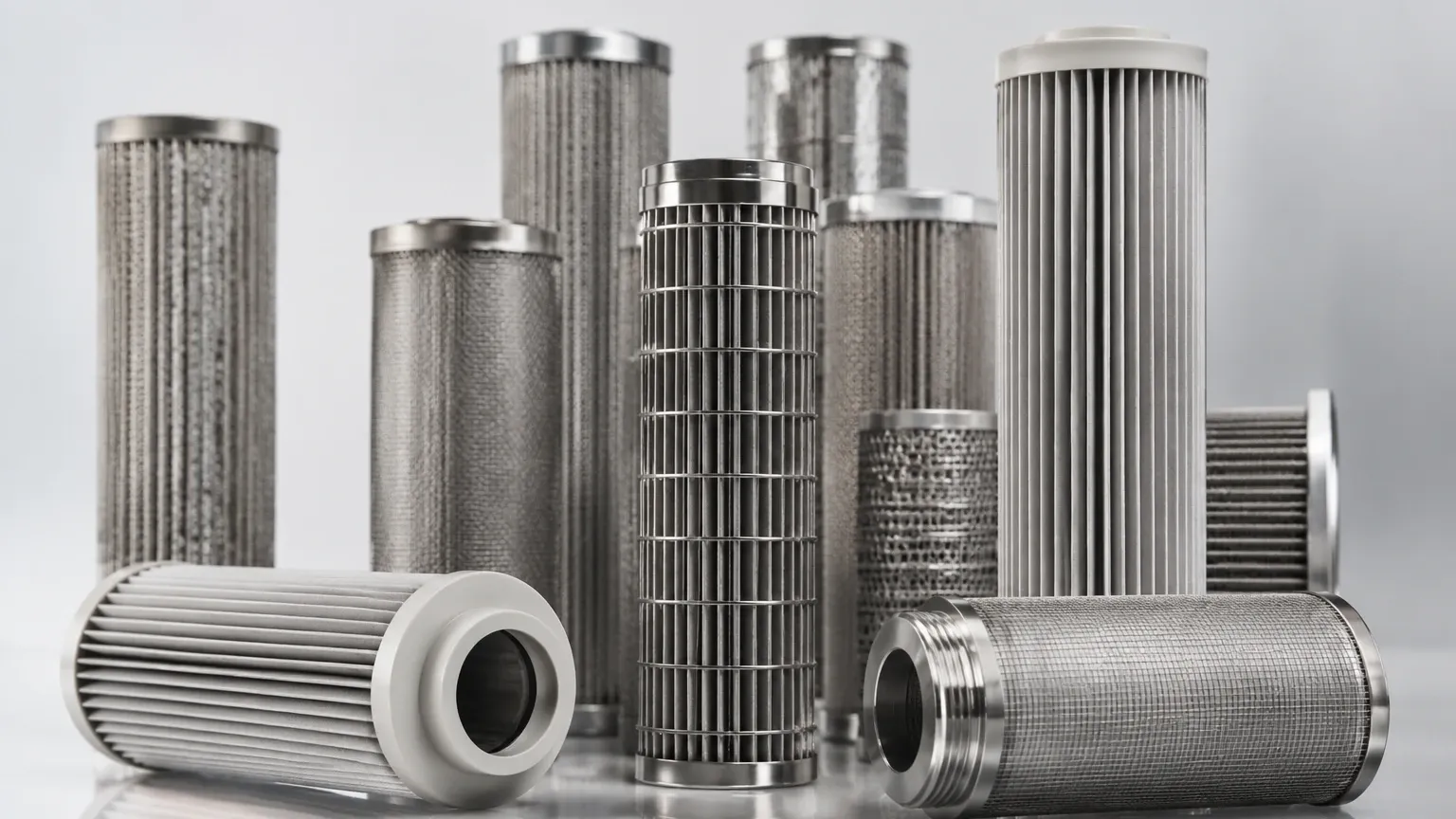
1. Sintered Metal Mesh: Multiple layers of stainless steel wire mesh are bonded together through a high-temperature vacuum sintering process. This creates a monolithic structure where the wires cannot shift, ensuring a fixed pore size and exceptional resistance to backpulsing and ultrasonic cleaning.
2. Pleated Wire Mesh: This design maximizes the surface area within the cartridge envelope. By pleating the mesh, engineers can achieve higher flow rates and lower initial pressure drops while maintaining the chemical and thermal advantages of stainless steel.
Engineering Considerations for High-Performance Filter Cartridges
When specifying Filter Cartridges for a project, engineers must look beyond the nominal micron rating. The following technical factors determine the true performance and "dura" nature of the component.
Absolute vs. Nominal Filtration
In critical water applications, nominal ratings (which might only capture 60-80% of particles at a given size) are often insufficient. Absolute-rated cartridges provide a Beta ratio (typically β=1000 or 99.9% efficiency), ensuring that the filtrate meets strict quality standards. Durable metal filters are capable of maintaining these absolute ratings even after multiple cleaning cycles, whereas fibrous media may shed or "unload" particles as they age.
Seal and End Cap Configurations
A filter is only as good as its seal. To ensure a dura water filter cartridges solution remains effective, the interface between the cartridge and the housing must be bypass-proof. Common configurations include:
* DOE (Double Open End): Uses flat gaskets at both ends; requires a compression nut in the housing.
* 222/226 O-Rings: Features a bayonet or plug-in style with double O-rings to ensure a positive, leak-proof seal, often preferred in pharmaceutical and high-purity water applications.
* Material Compatibility: O-rings and gaskets must be selected based on the fluid. Options include EPDM for hot water, Viton for chemicals, and PTFE-encapsulated silicone for high-purity environments.
Applications for Durable Water Filtration
The transition to durable, stainless steel-based dura water filter cartridges is most common in industries where downtime is costly or where disposable waste is a regulatory concern.
Chemical and Petrochemical Processing
In chemical plants, water is often used for cooling, dilution, or as a reactant. These water streams may contain aggressive solvents or be subjected to extreme pH levels. Stainless steel cartridges resist chemical degradation that would melt or swell polymer filters, providing a reliable "dura" solution for hazardous environments.
Food and Beverage Production
Water used in food production must meet FDA and 3-A sanitary standards. Durable metal filters are ideal here because they can be cleaned-in-place (CIP) and sterilized with steam. The absence of adhesives or resins in all-welded stainless steel cartridges eliminates the risk of extractables leaching into the product stream.
Hydraulic and Lube Oil Systems
While primarily used for water, the same "dura" principles apply to hydraulic systems where water ingress can cause corrosion. High-strength metal cartridges remove fine particulates and water-borne contaminants without the risk of media migration, protecting expensive pumps and valves.
Maintenance, Cleaning, and Total Cost of Ownership (TCO)
One of the most compelling arguments for investing in dura water filter cartridges is the reduction in Total Cost of Ownership. While the initial purchase price of a stainless steel cartridge is higher than a disposable polypropylene melt-blown filter, the long-term economics are often superior.
The Cleaning Cycle
Disposable filters are "one and done." Once the differential pressure reaches the change-out point (typically 20-30 PSID), they must be discarded. In contrast, durable metal cartridges can be cleaned via several methods:
* Backwashing/Backpulsing: Reversing the flow of clean water or gas through the media to dislodge surface contaminants.
* Ultrasonic Cleaning: Using high-frequency sound waves in a cleaning solution to remove deeply embedded particles from the mesh pores.
* Chemical Cleaning: Using mild acids or bases to dissolve organic or mineral scaling.
Environmental Impact
By utilizing cleanable dura water filter cartridges, facilities significantly reduce their solid waste output. This aligns with corporate sustainability goals and reduces the logistics and costs associated with the frequent purchasing, shipping, and disposal of thousands of plastic cartridges per year.
Customization and OEM Solutions
Every industrial environment has unique constraints, from flow velocity to housing dimensions. A "one-size-fits-all" approach rarely yields the best durability. Customization is a hallmark of high-quality filtration manufacturing.
Engineers should look for partners capable of providing bespoke designs, such as:
* Custom Lengths: Non-standard lengths to fit legacy filter housings.
* Reinforced Structures: Extra-thick cores for high-viscosity fluids or extreme pressure spikes.
* Specialized Coatings: Such as passivated surfaces or electro-polishing to enhance corrosion resistance and reduce particle adhesion.
When evaluating suppliers for Filter Cartridges, it is vital to confirm their manufacturing capabilities, specifically their ability to produce all-welded designs that eliminate the need for glues or binders. This ensures that the "dura" promise of the cartridge is backed by structural integrity.
Conclusion: Selecting the Right Dura Water Filter Cartridges
In the B2B industrial sector, the selection of water filtration components is a balance between performance, durability, and cost. While disposable options have their place in low-demand scenarios, the rigors of modern manufacturing often require the resilience of dura water filter cartridges.
By focusing on high-grade materials like SS316L, choosing the appropriate media structure (sintered vs. pleated), and ensuring compatibility with existing housing configurations, engineering teams can implement a filtration strategy that minimizes maintenance and maximizes uptime. Investing in durable, cleanable stainless steel filtration is not just a technical upgrade; it is a strategic decision to optimize the lifecycle of the entire fluid processing system.
