


Filter Cartridge 3 Micron
In industrial filtration, the selection of a specific micron rating is a critical engineering decision that directly impacts product purity, equipment longevity, and operational efficiency. A filter cartridge 3 micron rating occupies a specialized niche in the filtration spectrum, providing fine-particle removal that bridges the gap between general-purpose pre-filtration and high-precision sterile filtration. For engineers and technical procurement teams, understanding the mechanical properties, material constraints, and performance expectations of 3-micron media is essential for optimizing fluid processing systems.
Industrial Filter Cartridges rated at 3 microns are frequently utilized in applications where sub-visible particulate matter can cause catastrophic failure in downstream components, such as high-pressure hydraulic valves, fuel injectors, or sensitive chemical reactors. This guide examines the technical nuances of 3-micron filtration, focusing on stainless steel media and the engineering considerations required for successful implementation.
Understanding Micron Ratings: Absolute vs. Nominal
When specifying a filter cartridge 3 micron, the most important technical distinction is the difference between "absolute" and "nominal" ratings. This distinction determines the reliability of the filtration process and the consistency of the output.
Nominal Micron Rating
A nominal rating is an efficiency figure based on the weight percentage of particles of a certain size that the filter can retain. For example, a nominally rated 3-micron filter might trap 60% to 80% of particles that are 3 microns or larger. While cost-effective, nominal filters allow a significant percentage of "on-size" contaminants to pass through, which may be unacceptable for high-precision industrial processes.
Absolute Micron Rating
An absolute rating refers to the diameter of the largest hard spherical particle that will pass through the filter under specified test conditions. For a stainless steel filter cartridge, an absolute 3-micron rating typically implies a Beta ratio (β) of 1000 or higher, meaning 99.9% of particles 3 microns and larger are captured. In critical applications—such as pharmaceutical processing or the protection of high-speed bearings—absolute ratings are the industry standard to ensure predictable performance.
Material Engineering: Why Stainless Steel for 3 Micron Filtration?
While polymer-based filters (polypropylene or PES) are common, stainless steel is the preferred material for 3-micron filtration in demanding industrial environments. Kaifil specializes in manufacturing these components using high-grade 304 or 316L stainless steel, which offers several technical advantages over synthetic alternatives.
Thermal and Chemical Resistance
Stainless steel 3-micron cartridges can operate in environments exceeding 250°C (482°F), far beyond the melting point of most plastics. Furthermore, they are chemically inert to a wide range of aggressive solvents, acids, and alkalis. This makes them indispensable in chemical processing and oil and gas applications where fluid chemistry would degrade polymer fibers.
Structural Integrity and Pressure Differential
Fine filtration media naturally creates a higher resistance to flow. As a filter cartridge 3 micron accumulates debris, the differential pressure (ΔP) across the media increases. Stainless steel wire mesh and sintered fiber felt possess the structural rigidity to withstand high collapse pressures without media migration or bypass—a common failure mode in disposable depth filters.
Cleanability and Sustainability
Unlike disposable cartridges that must be incinerated or landfilled after a single use, stainless steel cartridges are cleanable. Through backwashing, ultrasonic cleaning, or chemical soaking, these filters can be restored to near-original permeability, significantly reducing the total cost of ownership (TCO) over the life of the equipment.
Technical Specifications and Design Configurations
Designing a filtration system around a 3-micron requirement involves more than just selecting the micron size. Engineers must evaluate the physical configuration of the cartridge to ensure compatibility with existing housings and flow requirements.
Media Types
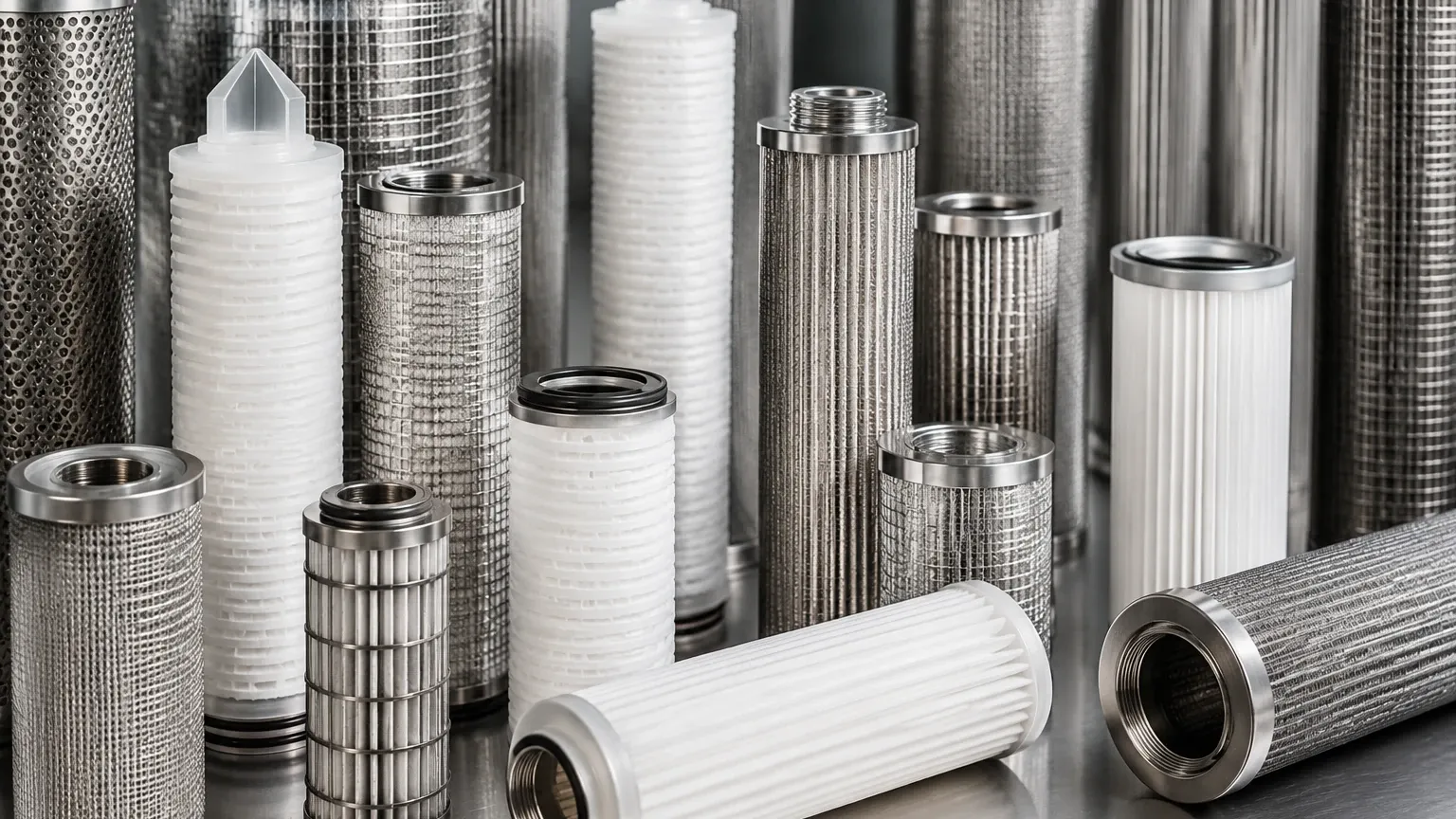
1. Sintered Metal Fiber Felt: This media consists of extremely fine stainless steel fibers that are non-woven and sintered together. It provides high porosity (up to 80%) and a high dirt-holding capacity, making it ideal for 3-micron absolute filtration of liquids and gases.
2. Multi-Layer Wire Mesh: For applications requiring precise surface filtration, multiple layers of stainless steel wire cloth are sintered together. This structure provides excellent mechanical strength and is easier to clean via backpulsing.
End Cap and Seal Options
To prevent bypass, the sealing mechanism of the cartridge must be robust. Common configurations include:
* DOE (Double Open End): Uses flat gaskets at both ends; suitable for standard housings.
* SOE (Single Open End) with Code 7: Features a finned end and double O-rings (226) for high-security locking, ensuring no bypass occurs in high-vibration environments.
* Threaded Connections: NPT or BSP threaded ends for high-pressure hydraulic or gas systems.
Key Engineering Considerations for Selection
Before purchasing a filter cartridge 3 micron, engineers should validate several operational parameters to ensure the chosen component meets the application's demands.
Flow Velocity and Viscosity
The efficiency of a 3-micron filter is sensitive to the velocity of the fluid passing through the media. High-velocity flow can force deformable particles through the pore structure. Additionally, fluid viscosity significantly impacts the initial pressure drop. For high-viscosity fluids (such as heavy oils), the surface area of the filter must be increased—often through pleating—to maintain an acceptable flow rate without exceeding the system's pressure limits.
Dirt-Holding Capacity
A 3-micron rating is relatively fine, meaning the filter will reach its terminal pressure drop faster than a 10 or 20-micron filter if the fluid has a high solids load. Engineers must evaluate the "dirt-holding capacity" of the media. Sintered fiber felt generally offers a longer service life between cleanings than plain square weave mesh because it provides depth filtration characteristics.
Compatibility with Sterilization
In the pharmaceutical and food and beverage sectors, filters must withstand SIP (Steam-in-Place) or CIP (Clean-in-Place) cycles. Stainless steel 3-micron cartridges are naturally suited for these processes, as they can endure repeated exposure to high-pressure steam without losing their pore size integrity.
Common Applications for 3 Micron Filtration
Precision filtration at the 3-micron level is utilized across various sectors where fluid purity is non-negotiable.
* Hydraulic and Lubrication Systems: Protecting servo-valves and high-speed bearings from silt-sized particles that cause abrasive wear.
* Pharmaceutical Production: Removal of carbon fines or catalyst recovery after chemical reactions.
* Food and Beverage: Polishing of syrups, spirits, and bottled water to ensure clarity and remove microscopic spoilage organisms.
* Water Treatment: Final stage filtration for high-purity process water used in semiconductor manufacturing or boiler feed systems.
* Petrochemicals: Filtration of polymer melts and aggressive catalysts where high temperatures and pressures are present.
Maintenance and Life Cycle Management
The longevity of a stainless steel filter cartridge 3 micron depends on a proactive maintenance schedule. Unlike disposable filters, which are often run until they plug completely, metal filters should be cleaned when the differential pressure reaches a pre-determined limit (typically 0.7 to 1.5 bar above the clean pressure drop).
Cleaning Methods
* Ultrasonic Cleaning: The most effective method for 3-micron media. High-frequency sound waves create cavitation bubbles that dislodge deeply embedded particles from the sintered structure.
* Chemical Cleaning: Using surfactants, acids, or caustic solutions to dissolve organic or mineral scaling.
* Backwashing: Reversing the flow of clean fluid through the cartridge to flush out surface-loaded contaminants.
By implementing a structured cleaning regimen, industrial facilities can extend the life of a single stainless steel cartridge to several years, providing a significant return on investment compared to the recurring costs of polymer disposables.
Conclusion: Selecting the Right Solution
Choosing a 3-micron filtration solution requires a balance between filtration efficiency, flow requirements, and long-term durability. While the initial cost of a stainless steel cartridge is higher than a synthetic equivalent, its ability to withstand extreme conditions and undergo repeated cleaning cycles makes it the superior choice for critical industrial processes.
Engineers should work closely with manufacturers like Kaifil to define the exact requirements of their application, including chemical compatibility, temperature ranges, and mechanical interface. For more information on specialized metal filtration components and custom designs, technical teams can Review product options and application support to find the optimal configuration for their specific system needs. Proper specification at the 3-micron level ensures that downstream equipment remains protected, product quality remains consistent, and maintenance-related downtime is minimized.
