


Filter Cartridge 30
In the landscape of industrial filtration, the designation "30" typically refers to one of two critical specifications: a 30-inch nominal length or a 30-micron filtration rating. For engineers and procurement specialists, understanding the technical implications of these specifications is vital for optimizing system performance, ensuring fluid purity, and managing the total cost of ownership. Whether integrated into chemical processing lines, hydraulic systems, or food and beverage production, the Filter Cartridges selected must align with the specific mechanical and chemical demands of the application.
This article examines the engineering considerations behind the filter cartridge 30 specification, focusing on dimensional standards, filtration efficiency, material selection, and the operational variables that influence long-term reliability.
Dimensional Standards: The 30-Inch Configuration
When "30" refers to the length of a filter, it signifies a standard industrial dimension designed to fit specific housing architectures. A 30-inch (approximately 762 mm) filter cartridge is a common choice for medium-to-high flow rate applications where a 10-inch or 20-inch element would provide insufficient surface area, leading to excessive pressure drops or frequent replacement cycles.
Surface Area and Flow Dynamics
The primary advantage of a 30-inch cartridge is the increased effective filtration area (EFA). By utilizing a longer longitudinal profile, the system can process a higher volume of fluid per unit of time while maintaining a low face velocity. This is particularly important in pleated designs, where the combination of length and pleat density significantly expands the surface area compared to cylindrical or depth-type filters. Lower face velocity reduces the risk of particle breakthrough and extends the life of the media by distributing the contaminant load across a larger region.
Housing Compatibility
Industrial filter housings are typically modular, designed to accept multiples of 10-inch increments. A 30-inch cartridge allows for a streamlined internal setup, often reducing the number of seals and connection points required compared to stacking three 10-inch cartridges. This reduction in connection points minimizes the potential for bypass—a critical failure mode where unfiltered fluid escapes around the cartridge ends.
Filtration Precision: Analyzing the 30-Micron Threshold
When the filter cartridge 30 specification refers to a 30-micron rating, it defines the size of the particles the media is designed to intercept. In the hierarchy of industrial filtration, 30 microns is generally considered a "fine-to-medium" grade, often utilized in pre-filtration stages or for the protection of downstream components like spray nozzles and low-pressure pumps.
Nominal vs. Absolute Ratings
It is essential to distinguish between nominal and absolute ratings when specifying a 30-micron filter.
- Nominal Rating: This indicates that the filter will retain a high percentage (typically 60% to 90%) of particles 30 microns or larger. Nominal filters are often used in applications where total removal is not mission-critical but protecting equipment from bulk solids is necessary.
- Absolute Rating: An absolute 30-micron rating implies a retention efficiency of 99.9% (Beta ratio of 1000) or higher. This is required in sensitive processes, such as the final filtration of industrial lubricants or the clarification of process water in pharmaceutical manufacturing.
The Role of Pore Geometry
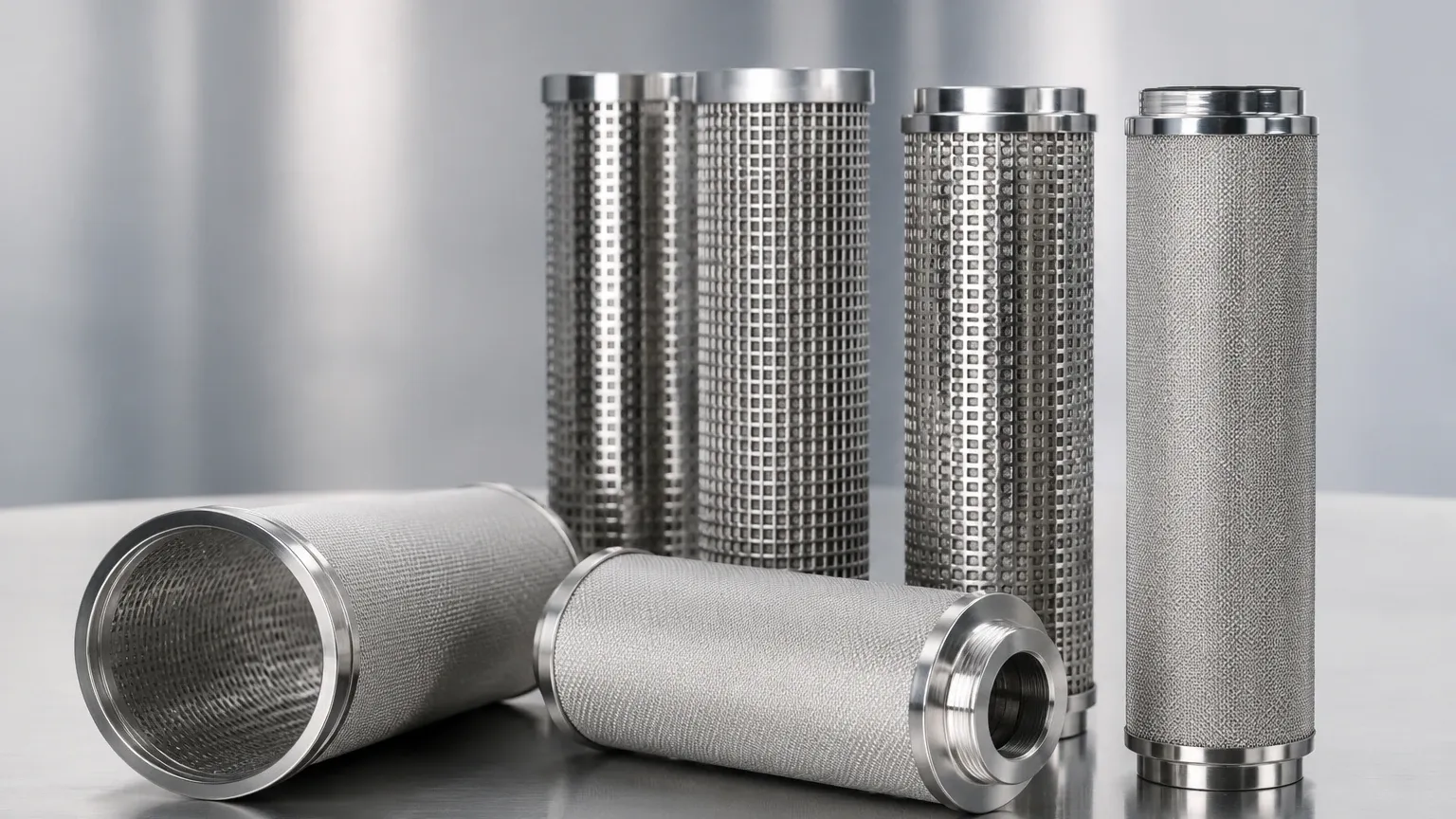
In stainless steel wire mesh filters, the 30-micron rating is achieved through precise weaving techniques. Plain weave or dutch weave patterns are engineered to create stable, uniform apertures. Unlike synthetic depth media, which may compress under high differential pressure and allow larger particles to pass, a rigid metal filter maintains its pore structure, ensuring consistent 30-micron performance throughout its service life.
Material Engineering: Stainless Steel vs. Synthetic Media
The choice of material for a filter cartridge 30 is dictated by the operating environment, including temperature, pressure, and chemical compatibility. While polymer-based filters (polypropylene or PES) are common in low-temperature, disposable applications, stainless steel remains the standard for demanding industrial environments.
304 vs. 316L Stainless Steel
For most industrial applications, Type 304 stainless steel provides adequate corrosion resistance and structural integrity. However, in environments involving high chloride concentrations, organic acids, or pharmaceutical-grade requirements, Type 316L is preferred. The addition of molybdenum in 316L enhances its resistance to pitting and crevice corrosion, making it a more durable choice for long-term installation.
Thermal and Mechanical Stability
Stainless steel filter cartridges can withstand temperatures exceeding 500°F (260°C) and high differential pressures that would cause synthetic filters to collapse or bypass. This mechanical robustness is critical in hydraulic systems where pressure spikes are common, or in steam filtration where thermal expansion and contraction occur frequently.
End-Cap Configurations and Sealing Mechanisms
A filter cartridge 30 is only as effective as its seal within the housing. The interface between the cartridge and the housing must prevent any fluid from bypassing the filtration media. Several standard end-cap configurations are used to achieve this:
1. Double Open End (DOE): Features flat gaskets on both ends. The cartridge is compressed within the housing to create a seal. This is a common, cost-effective design but requires careful alignment during installation.
2. Code 7 (226 O-Ring/Bayonet): Utilizes two 226 O-rings and a locking tab (bayonet). This provides a high-security seal and is often used in critical applications where bypass must be eliminated.
3. Code 3 (222 O-Ring/Flat): Features two 222 O-rings at one end and a flat cap at the other. This is a standard for many industrial liquid housings.
Selection of the O-ring material—such as EPDM, Viton (FKM), or PTFE—is equally important. The seal must be chemically compatible with the process fluid to prevent swelling or degradation, which would compromise the filtration integrity.
Operational Parameters and Performance Evaluation
To ensure the filter cartridge 30 performs as intended, engineers must evaluate several operational parameters during the selection process.
Clean Pressure Drop (ΔP)
The initial pressure drop across a clean filter is a function of the media's permeability, the fluid's viscosity, and the flow rate. A well-designed 30-inch cartridge should offer a low initial ΔP to maximize the available pressure for the rest of the system and to provide a longer window for contaminant loading before the terminal pressure drop is reached.
Dirt Holding Capacity (DHC)
DHC refers to the total mass of contaminants a filter can retain before the differential pressure reaches a level requiring cleaning or replacement. In 30-micron applications, the DHC is influenced by the depth of the media and the total surface area. Pleated stainless steel designs often provide superior DHC compared to simple cylindrical mesh because the pleats create a larger volume for cake formation.
Chemical Compatibility
Before finalizing a specification, the compatibility of the filter media, support structures, and adhesives (if any) with the process fluid must be verified. Stainless steel is generally inert, but certain aggressive chemicals may require specific alloys or specialized passivated finishes to prevent leaching or corrosion.
Maintenance and Longevity in Demanding Environments
One of the primary reasons for selecting stainless steel Filter Cartridges in a 30-inch or 30-micron configuration is their cleanability. Unlike disposable melt-blown or string-wound filters, metal elements can be refurbished multiple times, significantly reducing waste and long-term procurement costs.
Cleaning Methodologies
Depending on the nature of the contaminant, several cleaning methods can be employed:
- Backwashing: Reversing the flow of fluid through the filter to dislodge surface-loaded particles. This is effective for 30-micron mesh filters where particles are trapped on the surface.
- Ultrasonic Cleaning: Using high-frequency sound waves in a cleaning solvent to remove fine particulates trapped deep within the mesh or sintered structure.
- Chemical Cleaning: Utilizing acids, alkalis, or surfactants to dissolve organic or inorganic deposits that cannot be removed mechanically.
Monitoring Replacement Cycles
Even with cleanable filters, it is essential to monitor the differential pressure. A consistent increase in the "clean" pressure drop after multiple cleaning cycles indicates that the media is becoming permanently fouled or blinded. Establishing a baseline for ΔP and tracking it over time allows maintenance teams to schedule cleanings or replacements before a failure occurs.
Engineering Checklist for Filter Selection
When specifying a filter cartridge 30, engineers should confirm the following data points with their manufacturer:
* Primary Goal: Is the "30" referring to length (30") or micron rating (30μm)?
* Fluid Properties: What is the viscosity, temperature, and pH of the fluid?
* Flow Requirements: What is the maximum and nominal flow rate (GPM or LPM)?
* Contaminant Profile: What is the nature of the solids (hard, deformable, fibrous)?
* Housing Interface: What end-cap style is required for a leak-proof fit?
* Regulatory Compliance: Does the application require FDA-compliant materials or specific industrial certifications?
Conclusion
The filter cartridge 30 specification represents a versatile solution in industrial filtration, balancing physical size with targeted particle retention. By choosing high-quality stainless steel constructions, industrial operators can achieve a level of durability and precision that disposable alternatives cannot match. Whether the priority is the high flow capacity of a 30-inch element or the specific protection offered by a 30-micron mesh, careful attention to material science, seal integrity, and operational dynamics is the key to a successful filtration strategy. For complex or customized requirements, collaborating with a manufacturer capable of providing OEM designs ensures that the filtration component is perfectly matched to the unique demands of the industrial process.
