


Filter Cartridge 6
In industrial filtration, the designation of a "6-inch" component typically refers to one of two critical engineering specifications: the outer diameter of high-flow filter elements or the nominal length of compact cartridges used in specialized machinery. For engineering and procurement teams, understanding the technical nuances of the filter cartridge 6 configuration is essential for optimizing flow rates, managing differential pressure, and ensuring the structural integrity of the filtration system.
As industrial processes scale, the demand for higher throughput with a smaller hardware footprint has led to the widespread adoption of large-diameter filtration. Whether utilized in chemical processing, water treatment, or hydraulic systems, these cartridges provide the surface area necessary to handle significant contaminant loads while maintaining efficient operation. This guide examines the technical parameters, material considerations, and selection criteria for these high-capacity filtration components.
Engineering Specifications of 6-Inch Filtration Systems
The primary advantage of a 6-inch diameter filter cartridge is its significantly increased surface area compared to standard 2.5-inch or 4.5-inch alternatives. In a high-flow configuration, a single 6-inch cartridge can often replace multiple smaller elements, which simplifies housing design and reduces the time required for maintenance and replacement.
Flow Dynamics and Velocity
Large-diameter cartridges are engineered to handle flow rates that can exceed 500 gallons per minute (GPM) per element, depending on the media type and fluid viscosity. By utilizing an inside-to-outside flow pattern, these cartridges ensure that contaminants are trapped within the element, preventing debris from falling into the clean side of the filter housing during change-outs. This flow direction also allows for more uniform distribution of fluid across the pleat geometry, reducing the risk of media blinding and extending the service life.
Dimensional Standards
While "6" often refers to the diameter (specifically 6 inches or 152 mm), it is also a common length for small-batch processing filters used in pharmaceutical or laboratory settings. Engineers must verify the exact dimensional requirements of their housing—including the O-ring size and end-cap configuration (such as Code 7, 222, or 226 adapters)—to ensure a bypass-free seal. For stainless steel variants, precision machining of these end caps is vital to withstand high-pressure differentials without deformation.
Material Selection and Chemical Compatibility
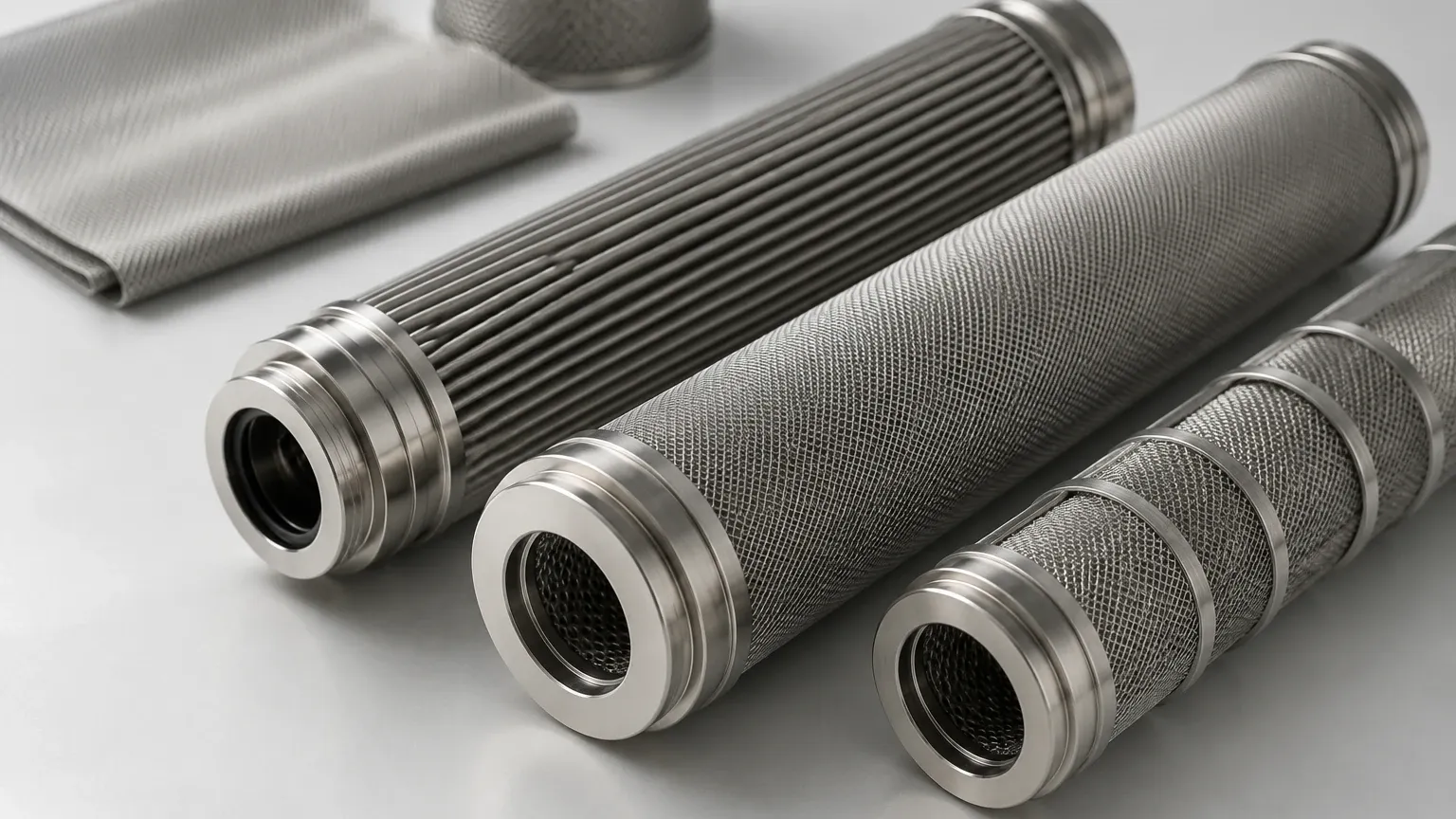
For demanding industrial environments, the material of construction for Filter Cartridges is the most critical factor in determining long-term reliability. While polymer-based filters are common for standard water applications, stainless steel is the preferred choice for aggressive chemicals, high temperatures, and high-viscosity fluids.
Stainless Steel 304 vs. 316L
* Stainless Steel 304: Suitable for general industrial use, offering good corrosion resistance and mechanical strength. It is frequently used in hydraulic oil filtration and non-corrosive chemical processing.
* Stainless Steel 316L: The "L" denotes low carbon content, which improves weldability and resistance to intergranular corrosion. This material is essential for applications involving chlorides, organic acids, and high-purity pharmaceutical processes where media migration and corrosion must be strictly avoided.
Gasket and Seal Integrity
The performance of a filter cartridge 6 element is only as reliable as its seals. Depending on the fluid chemistry, engineers must select appropriate elastomer materials:
* Viton (FKM): High temperature and chemical resistance.
* EPDM: Excellent for steam and polar solvents, though not compatible with petroleum-based oils.
* PTFE/Teflon: Near-universal chemical resistance, though with less elasticity than traditional elastomers, requiring precision-engineered seating.
Performance Evaluation: Micron Ratings and Efficiency
When specifying a filter cartridge 6, the distinction between nominal and absolute filtration ratings must be clearly defined. A nominal rating indicates the filter's ability to retain a majority of particles at a specific size, whereas an absolute rating (often expressed as a Beta ratio) defines the specific particle size at which the filter achieves 99.9% efficiency.
Dirt-Holding Capacity (DHC)
The total mass of contaminants a cartridge can retain before reaching its terminal differential pressure is known as its dirt-holding capacity. In 6-inch high-flow designs, the pleat density and depth-loading characteristics of the media are optimized to maximize DHC. For stainless steel mesh filters, the weave pattern—whether plain, twilled, or Dutch weave—determines the balance between flow permeability and particle retention. Sintered metal fiber media can offer even higher DHC by providing a porous, three-dimensional structure that traps particles throughout the depth of the material rather than just on the surface.
Pressure Drop (Delta P)
Initial pressure drop is a function of the media's resistance to flow. An oversized filter cartridge 6 can significantly lower the initial Delta P, which reduces the energy required for pumping and provides a larger "buffer" before the filter requires cleaning or replacement. Engineers should calculate the total system pressure drop, including the housing losses, to ensure the pump curve aligns with the filtration requirements.
Industrial Applications for High-Capacity Filtration
The filter cartridge 6 configuration is utilized across sectors where downtime is costly and filtration efficiency is non-negotiable.
Chemical and Petrochemical Processing
In these sectors, filters must withstand aggressive solvents and extreme thermal cycling. Stainless steel 6-inch cartridges are often used to remove catalysts, protect downstream reactors, and clarify intermediate chemical products. The ability to clean and reuse stainless steel media provides a significant advantage in hazardous waste reduction compared to disposable polymer cartridges.
Food and Beverage Production
Filtration in the food industry requires compliance with stringent hygiene standards. 6-inch cartridges are used for the bulk filtration of water, syrups, and oils. Stainless steel construction allows for Clean-in-Place (CIP) and Steam-in-Place (SIP) sterilization protocols, ensuring that the filter remains free of microbial growth without needing to be disassembled.
Hydraulic and Lube Oil Systems
High-pressure hydraulic systems require robust filtration to protect sensitive valves and pumps from wear-inducing particulates. The structural strength of a metal filter cartridge 6 allows it to handle the high-viscosity fluids and pressure surges common in heavy machinery and power generation equipment.
Maintenance and Replacement Cycles
Effective management of filtration systems requires a proactive approach to maintenance. Monitoring the differential pressure (DP) across the filter housing is the most reliable method for determining when a filter cartridge 6 has reached the end of its effective service life.
Differential Pressure Monitoring
Typically, a filter should be cleaned or replaced when the DP reaches a pre-determined limit, often between 15 and 25 psi, depending on the structural limits of the media. Operating beyond this limit risks "media migration" or structural collapse, where the pressure forces contaminants through the filter or damages the internal support core.
Cleaning Protocols for Stainless Steel
One of the primary benefits of stainless steel filter cartridges is their cleanability. Depending on the contaminant, cleaning methods may include:
* Ultrasonic Cleaning: Using high-frequency sound waves in a chemical bath to dislodge fine particles from deep within the mesh.
* Backwashing: Reversing the flow of clean fluid through the filter to flush out surface-loaded solids.
* Chemical Cleaning: Using acids or alkalis to dissolve organic or mineral deposits, followed by thorough neutralization and rinsing.
Customization and OEM Considerations
Standard off-the-shelf filters may not always meet the specific requirements of a unique industrial process. Customization of the filter cartridge 6 allows engineers to tailor the component to specific environmental constraints.
Structural Reinforcements
For applications involving high-pressure spikes or extreme temperatures, the internal core and outer cage of the cartridge can be reinforced. Heavy-duty perforated metal cores provide the necessary hoop strength to prevent collapse under high external pressure, while reinforced end caps ensure the seals remain intact during thermal expansion.
Adapter and Fitting Integration
OEMs often require specific mounting interfaces to integrate filters into proprietary machinery. Beyond standard O-rings, custom threaded connections, flange mounts, or bayonet-style fittings can be engineered to ensure a secure and leak-proof installation. Choosing a manufacturer with in-house design and machining capabilities allows for the rapid development of these specialized components.
Media Layering
In complex filtration scenarios, a single layer of mesh may not be sufficient. Multi-layered sintered wire mesh can combine different grades of filtration—such as a fine inner layer for precision and a coarse outer layer for mechanical protection—into a single, robust filter cartridge 6 element. This "graded density" approach optimizes both filtration efficiency and service life.
Conclusion: Selecting the Right Filtration Partner
Selecting a filter cartridge 6 involves more than simply matching dimensions; it requires a deep understanding of fluid dynamics, material science, and the specific rigors of the application environment. For engineers and purchasing teams, the goal is to achieve the lowest total cost of ownership through durable construction, optimized performance, and reliable technical support. By focusing on high-quality stainless steel solutions and precision engineering, industrial operations can ensure consistent product quality and minimal operational disruptions.
