


Filter Cartridge Carbon
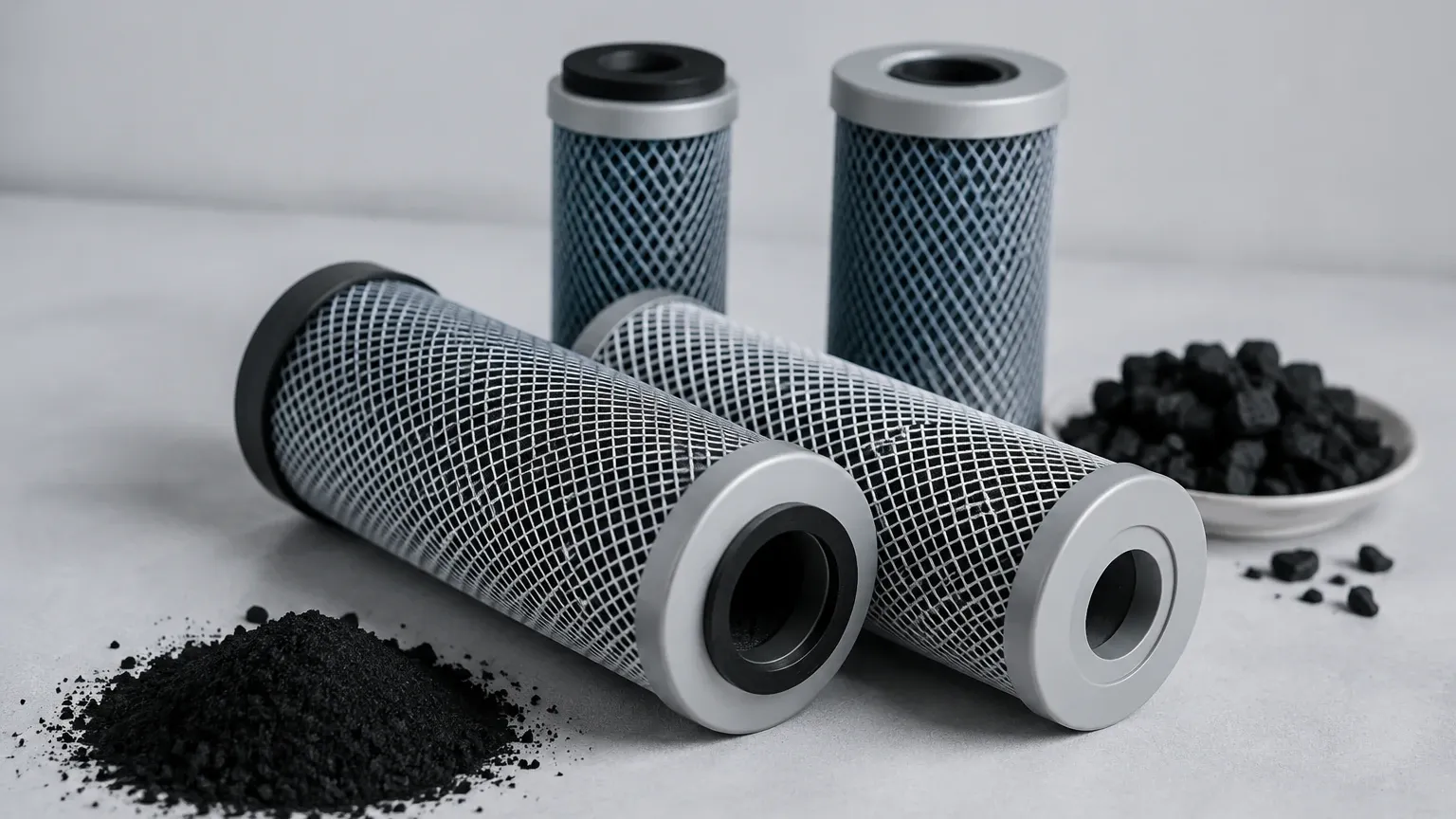
In industrial process engineering, the selection of filtration media is dictated by the specific contaminants present in the fluid stream. While mechanical filtration excels at removing suspended solids, chemical contaminants such as volatile organic compounds (VOCs), chlorine, and organic colorants require a different mechanism: adsorption. The use of a filter cartridge carbon element is a standard solution for these requirements, providing a high-surface-area medium capable of capturing dissolved molecular impurities.
For engineers and procurement teams, understanding the technical nuances of activated carbon media, its structural implementation within Filter Cartridges, and the operational parameters that govern its efficiency is essential for optimizing process outcomes and controlling total cost of ownership.
Adsorption Mechanisms in Industrial Carbon Filtration
Unlike mechanical filters that rely on physical straining, carbon-based media operate primarily through adsorption. This is a surface phenomenon where atoms, ions, or molecules from a gas or liquid adhere to the surface of the adsorbent.
Activated carbon is processed to have an incredibly high internal porosity. A single gram of activated carbon can have a surface area exceeding 1,000 square meters. This surface area is populated by various pore sizes, categorized as micropores (under 2nm), mesopores (2-50nm), and macropores (over 50nm).
In industrial applications, the effectiveness of the filter cartridge carbon is determined by the London dispersion forces (a type of Van der Waals force). As the process fluid passes through the carbon matrix, organic molecules are attracted to the pore walls and held there. The efficiency of this process depends on the molecular weight of the contaminant, its solubility in the carrier fluid, and the contact time—often referred to in engineering as Empty Bed Contact Time (EBCT).
Structural Variations: GAC vs. Carbon Block
When specifying carbon filtration for industrial systems, engineers must choose between two primary structural formats: Granular Activated Carbon (GAC) and Extruded/Molded Carbon Blocks.
Granular Activated Carbon (GAC) Cartridges
These cartridges consist of loose carbon granules packed into a plastic or stainless steel cylinder.
* Advantages: GAC typically allows for higher flow rates and lower initial pressure drops. It is often more cost-effective for high-volume applications where the primary goal is the removal of gross organic contaminants.
* Engineering Considerations: GAC is susceptible to "channeling," where the fluid finds the path of least resistance, bypassing much of the media. Additionally, GAC cartridges may release "carbon fines" (small particles of carbon) into the effluent stream, necessitating a post-filtration stage, such as a stainless steel wire mesh filter, to protect downstream equipment.
Carbon Block Cartridges
Carbon blocks are manufactured by compressing fine carbon powder and a binder into a solid, cylindrical form.
* Advantages: The compressed nature of the block eliminates channeling and provides a consistent pore structure. Because the carbon particles are smaller and more densely packed, carbon blocks offer significantly higher adsorption efficiency and can also provide mechanical filtration down to specific micron ratings (e.g., 0.5 to 10 microns).
* Engineering Considerations: Carbon blocks exhibit a higher pressure drop (ΔP) than GAC. They are also more prone to premature surface blinding if the process fluid contains high levels of suspended solids. In such cases, a pleated mechanical pre-filter is required to extend the life of the carbon block.
Media Selection: Raw Material and Activation
The performance of a filter cartridge carbon element is heavily influenced by the raw material used to create the activated carbon. Each source material produces a different pore structure distribution:
1. Coconut Shell: High in micropores, making it the preferred choice for removing small molecular weight organic chemicals, VOCs, and chlorine. It is also the cleanest and hardest form of carbon, resulting in fewer fines.
2. Coal-Based (Bituminous): Contains a mix of micro and mesopores. It is effective for a broad range of molecular sizes and is frequently used in wastewater treatment and large-scale industrial de-colorization.
3. Wood-Based: High in macropores. This is primarily used for removing large color molecules and bulky organic compounds from process liquids, such as in the food and beverage industry.
Engineers should evaluate the Iodine Number (a measure of micropore content) and the Molasses Number (a measure of macropore content) when comparing media specifications for specific chemical challenges.
Engineering Parameters for System Integration
To ensure the reliability of a filtration system utilizing carbon cartridges, several technical parameters must be calculated during the design phase:
Empty Bed Contact Time (EBCT)
EBCT is the volume of the carbon media divided by the flow rate. For effective adsorption of complex organics, an EBCT of 5 to 10 minutes may be required, whereas chlorine removal can occur with an EBCT of less than 1 minute. If the flow rate is too high, the contaminants will "break through" the cartridge before they can be adsorbed.
Pressure Drop and Flux
In industrial settings, the flux (flow per unit of surface area) must be managed to prevent structural deformation of the cartridge. For carbon blocks, exceeding the rated flux can lead to fluid bypassing the media through the end-cap seals. Monitoring the differential pressure across the housing is critical; typically, a carbon cartridge should be replaced when the ΔP reaches 1.0 to 1.5 bar, or after a predetermined volume of fluid has passed, whichever comes first.
Chemical Compatibility
While carbon itself is chemically inert to many substances, the binders used in carbon blocks or the housing materials (O-rings, end-caps) must be compatible with the process fluid. In high-temperature or corrosive environments, custom stainless steel support structures or housings are often necessary to maintain structural integrity.
Common Risks and Mitigation Strategies
Implementing carbon filtration involves specific risks that can impact process safety and product quality:
* Carbon Breakthrough: Unlike mechanical filters that show a clear increase in pressure when full, carbon media can reach a "saturation point" where they no longer adsorb contaminants. At this point, the concentration of impurities in the effluent will suddenly rise. Regular analytical testing of the effluent or the use of redundant (lead-lag) filter housings is recommended for critical applications.
* Bacterial Growth: Activated carbon adsorbs organic matter, which can serve as a food source for bacteria. In stagnant systems, the carbon bed can become a breeding ground for microbes. This is mitigated by ensuring continuous flow, using silver-impregnated carbon, or installing a UV sterilization or sub-micron mechanical filter downstream.
* Desorption: Under certain conditions, such as a change in temperature or a sudden shift in the chemical composition of the influent, previously adsorbed contaminants can be released back into the fluid stream. This is a rare but critical failure mode that requires careful process monitoring.
Pre-Purchase Checklist for Engineers
Before selecting a filter cartridge carbon solution, engineers should confirm the following technical details with their manufacturer:
1. Contaminant Profile: What are the specific molecular weights and concentrations of the target impurities?
2. Flow Requirements: What is the minimum EBCT required for the target contaminant at the desired flow rate?
3. Temperature and Pressure: Will the cartridge be subjected to thermal cycling or high-pressure surges that might necessitate reinforced stainless steel cores?
4. Regulatory Compliance: Does the media need to meet FDA, NSF, or Pharmacopeia standards for food or pharmaceutical contact?
5. Pre-filtration Strategy: Is there a mechanical filter in place to prevent the carbon media from being blinded by suspended solids?
By addressing these factors, technical teams can ensure that their Filter Cartridges provide reliable, predictable performance in demanding industrial environments. Whether the goal is protecting sensitive membranes in a water treatment plant or ensuring the purity of a chemical intermediate, the correct application of carbon technology remains a cornerstone of modern industrial filtration.
