


Filter Cartridge Clearwater
In the landscape of industrial fluid management, the term "clearwater" represents more than just a visual standard; it is a critical benchmark for process efficiency, equipment protection, and product integrity. Achieving consistent water clarity requires a sophisticated understanding of mechanical separation, particularly the role of high-performance filter cartridges. For engineers and procurement specialists, selecting the right filter cartridge clearwater solution involves balancing micron ratings, material compatibility, and flow dynamics to ensure that downstream processes remain free from damaging particulates.
Industrial water clarity is typically measured by turbidity, often expressed in Nephelometric Turbidity Units (NTU). To reach the low NTU levels required for sensitive applications—such as pharmaceutical compounding, semiconductor rinsing, or food and beverage formulation—the filtration system must utilize Filter Cartridges that offer precise pore size control and structural stability under varying pressure loads.
The Engineering Principles of Clearwater Filtration
To achieve clearwater status, a filtration system must effectively remove suspended solids (TSS) that contribute to turbidity. Filter cartridges achieve this through several mechanisms, including mechanical straining, inertial impaction, and, in some cases, adsorption. However, the efficacy of these mechanisms is heavily dependent on the cartridge design and the specific characteristics of the influent.
Nominal vs. Absolute Filtration Ratings
When specifying a filter cartridge clearwater system, the distinction between nominal and absolute ratings is paramount. A nominal rating indicates the ability of the filter to retain a majority of particles of a specific size (e.g., 90% of 5-micron particles). In contrast, an absolute rating implies a much higher efficiency, often 99.9% or greater, at the specified micron level. For critical clearwater applications where even trace amounts of particulate can cause system failure or product contamination, absolute-rated stainless steel or pleated cartridges are generally required.
Depth vs. Surface Filtration
Depth filtration involves a thick medium where particles are trapped throughout the tortuous path of the material. While effective for high dirt-holding capacity, depth filters can sometimes suffer from media migration or unloading under pressure surges. Surface filtration, often provided by precision wire mesh or pleated metal membranes, captures particles on the upstream surface of the media. This allows for easier cleaning and more predictable performance in clearwater systems where the particle size distribution is relatively uniform.
Material Selection for Industrial Clearwater Applications
The choice of material for a filter cartridge directly impacts its longevity, chemical resistance, and ability to maintain clearwater standards over time. While synthetic materials like polypropylene are common in light-duty applications, industrial environments often demand the robustness of stainless steel.
Stainless Steel 304 and 316L
Stainless steel is the gold standard for durable filtration. 316L stainless steel, in particular, offers superior corrosion resistance, making it ideal for clearwater systems involving brackish water, mild chemicals, or high-temperature sterilization cycles. Unlike polymer-based filters, stainless steel cartridges do not leach surfactants or binders into the water stream, ensuring that the "clearwater" remains chemically pure.
Sintered Metal Media
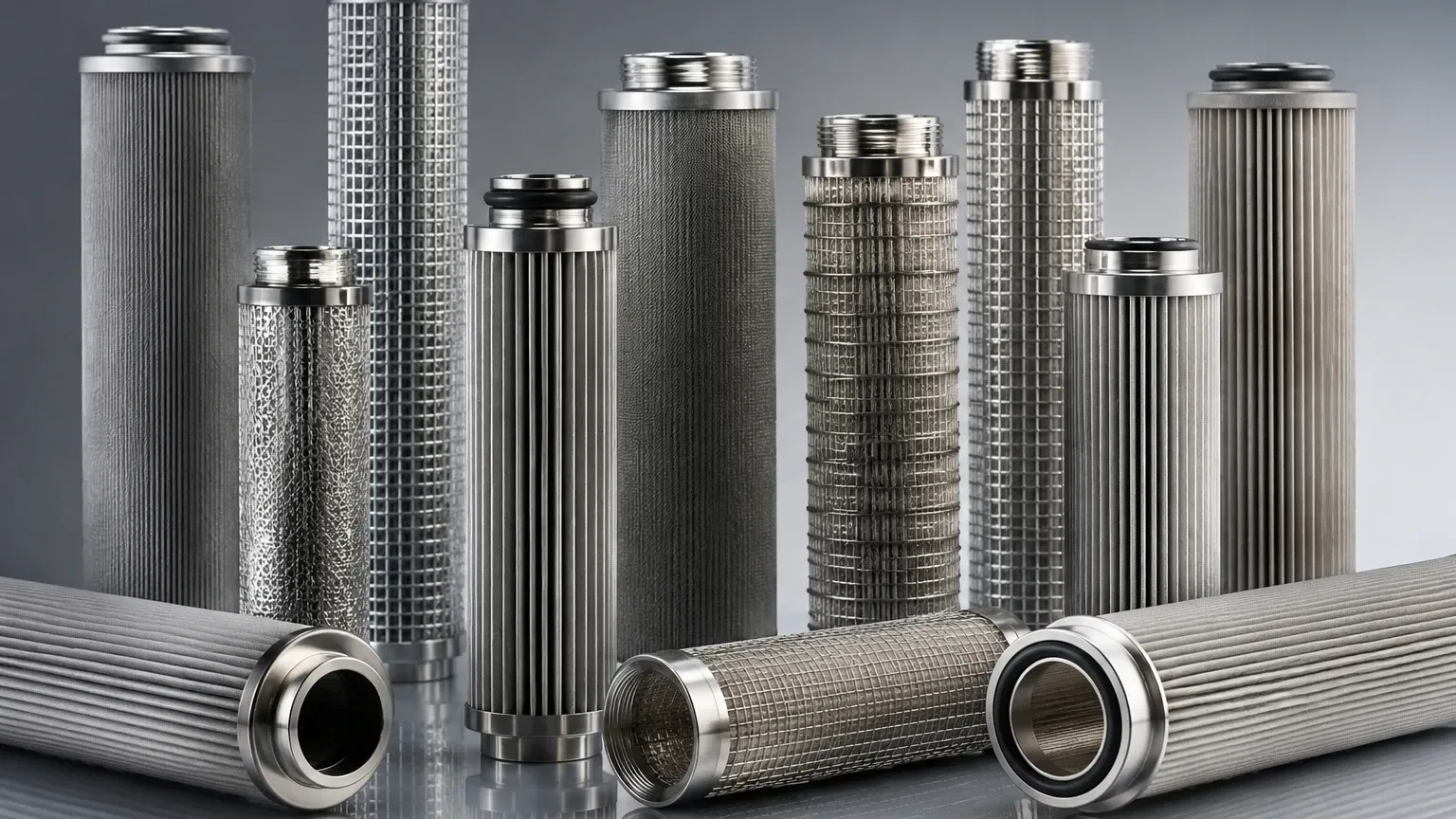
Sintered metal filter cartridges are created by fusing layers of wire mesh or metal powders under high heat and pressure. This creates a porous structure that is incredibly rigid and resistant to pressure shocks. In clearwater applications where backwashing is utilized to extend service life, sintered metal provides the structural integrity necessary to withstand reverse flow without deforming the pore structure.
Optimizing Flow Rates and Pressure Drops
A common challenge in maintaining a filter cartridge clearwater standard is the management of differential pressure ($ΔP$). As the filter captures contaminants, the resistance to flow increases. If the $ΔP$ becomes too high, it can lead to several negative outcomes:
1. Particle Breakthrough: High pressure can force flexible contaminants through the media pores.
2. Structural Failure: Excessive pressure may collapse the cartridge core or bypass the seals.
3. Reduced Flux: Lower flow rates can starve downstream processes, leading to operational downtime.
Engineers must size the filtration housing and select cartridges that offer a high effective filtration area (EFA). Pleated designs are particularly effective here, as they significantly increase the surface area within the same footprint, allowing for higher flow rates at lower initial pressure drops. This not only ensures clearwater consistency but also reduces the energy consumption of the pump systems.
The Role of Seal Integrity in Preventing Bypass
Even the highest quality filter media is ineffective if the cartridge seals are compromised. In the context of filter cartridge clearwater systems, "bypass" refers to the unfiltered fluid that leaks around the ends of the cartridge. To prevent this, cartridges must be equipped with reliable end-cap configurations and gasket materials.
Common sealing options include:
* Double Open End (DOE): Utilizes flat gaskets at both ends; requires a compression nut in the housing.
* Code 7 (226 O-rings): Features a bayonet lock and double O-rings for a high-security, leak-proof fit, common in critical pharmaceutical and food applications.
* 222 O-rings: Similar to Code 7 but without the locking tabs, providing a reliable seal for standard industrial clearwater housings.
Material compatibility for gaskets (such as EPDM, Viton, or PTFE) must be verified against the process water chemistry and temperature to prevent degradation that could introduce contaminants into the clearwater stream.
Maintenance and Life Cycle Considerations
Achieving clearwater is an ongoing process that requires diligent monitoring and maintenance. The total cost of ownership (TCO) for a filter cartridge clearwater system is not just the initial purchase price, but the sum of replacement costs, labor, and disposal fees.
Cleaning and Regeneration
One of the primary advantages of stainless steel filter cartridges is their cleanability. Unlike disposable melt-blown or string-wound filters, metal cartridges can be cleaned using ultrasonic baths, chemical soaking, or backpulsing. This regeneration capability is essential for industrial operations looking to minimize waste and maintain a steady supply of clearwater without frequent inventory turnover.
Monitoring Performance
Automated differential pressure sensors are recommended for any industrial clearwater system. By tracking the $ΔP$ trend, operators can predict when a filter is approaching its terminal pressure and schedule maintenance before a failure occurs. Sudden drops in differential pressure should also be monitored, as they may indicate a ruptured cartridge or a failed seal, both of which would immediately compromise water clarity.
Customization: Tailoring Solutions to Specific Industrial Needs
Every industrial environment presents unique challenges. A filter cartridge clearwater solution for a high-pressure hydraulic system will differ significantly from one used in a municipal water treatment secondary stage. Customization allows engineers to specify:
* Custom Lengths and Diameters: To fit existing non-standard housings.
* Reinforced Cores: For high-viscosity fluids or high-pressure differentials.
* Specific Micron Gradations: To target specific particle size distributions identified through laboratory analysis.
By working with a manufacturer that specializes in custom stainless steel filtration, such as Kaifil, companies can develop bespoke cartridges that optimize the balance between filtration efficiency and operational longevity.
Applications for Filter Cartridge Clearwater Systems
The demand for clearwater spans multiple sectors, each with its own set of regulatory and technical requirements:
* Chemical Processing: Protecting sensitive catalysts and preventing nozzle clogging in spray drying applications.
* Food and Beverage: Ensuring that ingredient water does not alter the taste, color, or safety of the final product.
* Pharmaceuticals: Providing pre-filtration for Reverse Osmosis (RO) membranes and protecting sterile filters downstream.
* Power Generation: Filtering boiler feed water to prevent scale buildup and corrosion in high-pressure steam turbines.
In each of these cases, the filter cartridge is the primary tool used to achieve the necessary clarity and purity levels.
Conclusion: Selecting the Right Partner for Clearwater Success
Achieving the "clearwater" standard is a technical challenge that requires more than just a standard off-the-shelf filter. It requires a deep understanding of fluid dynamics, material science, and the specific nuances of the industrial application. When selecting Filter Cartridges, engineers must prioritize structural integrity, precise micron ratings, and long-term durability.
By focusing on high-quality materials like stainless steel and ensuring proper system sizing and seal selection, industrial facilities can maintain consistent water clarity, protect their infrastructure, and optimize their production processes. Whether the goal is to protect a sensitive RO membrane or to ensure the purity of a chemical batch, the right filter cartridge clearwater strategy is the foundation of operational excellence.
