


Filter Cartridge Ceramic
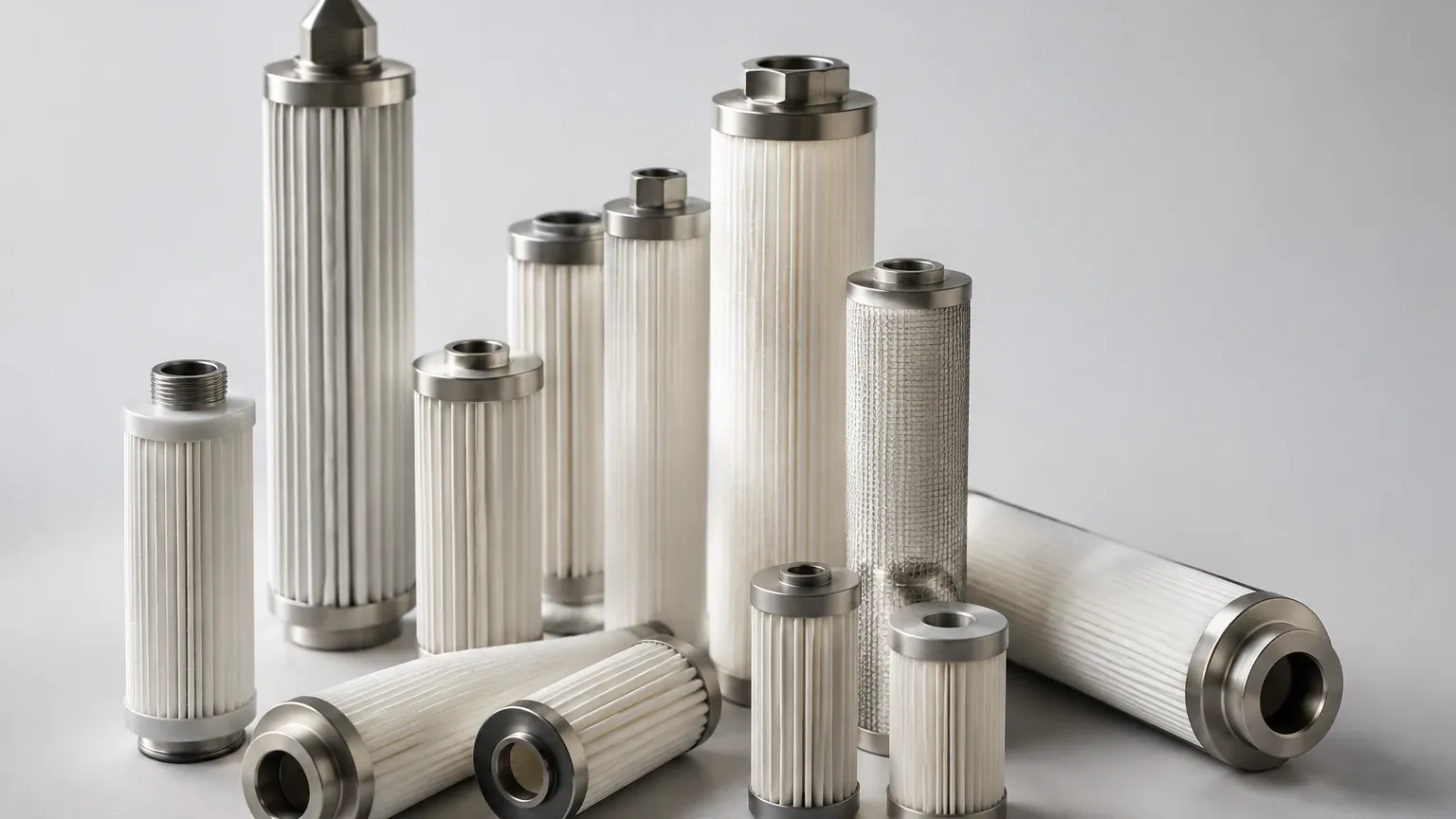
In industrial filtration, the selection of media is dictated by the chemical environment, operating temperature, and the required precision of particle separation. A filter cartridge ceramic element represents a specialized solution for applications where polymer-based media fail due to thermal degradation or chemical instability. These cartridges are engineered from inorganic, non-metallic materials—typically alumina, silica, or silicon carbide—and are valued for their rigid structure and high-porosity depth filtration capabilities.
For engineers and procurement teams, understanding the technical nuances of ceramic media is essential for optimizing process efficiency. While stainless steel remains the standard for mechanical durability and high-pressure resilience, ceramic cartridges offer distinct advantages in specific sub-micron filtration and highly corrosive contexts. This guide examines the engineering principles, performance metrics, and selection criteria for integrating ceramic filtration into industrial systems.
Technical Composition and Manufacturing of Ceramic Media
The performance of a filter cartridge ceramic element is rooted in its manufacturing process, primarily through sintering. During this process, ceramic powders are compressed and heated to temperatures just below their melting point. This causes the particles to fuse at their contact points, creating a stable, interconnected pore structure.
The resulting media is characterized by a "tortuous path" geometry. Unlike surface filters (such as certain fine wire meshes), ceramic cartridges act as depth filters. As fluid passes through the porous wall, particles are trapped not only on the surface but also within the internal matrix of the ceramic material.
Common Material Types
1. Alumina (Aluminum Oxide): The most common material for industrial ceramic filters due to its excellent mechanical strength and resistance to most acids and alkalis. It is frequently used in water treatment and chemical processing.
2. Silicon Carbide: Known for exceptional thermal shock resistance. This material is often selected for high-temperature gas filtration where rapid temperature fluctuations occur.
3. Diatomaceous Earth: Often used in "candle" style filters, these are natural siliceous sedimentary rocks. They provide extremely fine filtration, often reaching the sub-micron level (0.2 to 0.8 microns), making them suitable for removing bacteria and cysts in specialized liquid processing.
Key Performance Characteristics of Ceramic Filtration
When evaluating Filter Cartridges for a specific industrial line, engineers must weigh the physical properties of the media against the operational demands. Ceramic elements offer a unique profile of strengths and limitations.
Chemical Inertness
Ceramic materials are inherently stable. Unlike stainless steel, which may be subject to pitting or stress corrosion cracking in the presence of high concentrations of chlorides or certain aggressive acids, ceramic media remain largely unaffected. This makes the filter cartridge ceramic an ideal choice for filtering concentrated sulfuric or nitric acids at elevated temperatures.
Thermal Stability
One of the primary drivers for selecting ceramic over synthetic fibers or polymers is temperature resistance. While standard polypropylene cartridges are limited to approximately 60°C to 80°C, ceramic elements can often operate in environments exceeding 500°C, provided the housing and seals are appropriately rated. This is critical for steam filtration and hot gas emission control.
Structural Rigidity and Pore Stability
Under high differential pressure, soft media (like pleated paper or melt-blown polypropylene) can experience "pore migration" or unloading, where the pressure forces trapped contaminants through the media. Ceramic cartridges are rigid; the pore structure does not deform under pressure, ensuring consistent filtration efficiency throughout the service life of the element.
Engineering Considerations: Ceramic vs. Stainless Steel
For many industrial applications, the choice often narrows down to ceramic versus stainless steel. At Kaifil, we emphasize that the decision should be based on the "Total Cost of Ownership" and the specific mechanical risks of the process.
| Feature | Ceramic Cartridges | Stainless Steel Cartridges |
| :— | :— | :— |
| Micron Rating | Excellent for sub-micron (0.2µm+) | Typically 1µm to 200µm+ |
| Mechanical Strength | High compressive, low tensile (brittle) | High tensile and impact resistance |
| Thermal Shock | Moderate (can crack if cooled rapidly) | Excellent |
| Cleanability | Chemical soaking, ultrasonic, backwash | High-pressure wash, chemical, ultrasonic |
| Corrosion Resistance | Superior in extreme acidic/oxidizing environments | Excellent in most industrial fluids |
Stainless steel filters are generally preferred in high-vibration environments or systems subject to heavy hydraulic shock, as ceramics are brittle and prone to cracking under mechanical impact. However, if the primary requirement is absolute particle retention in a highly corrosive fluid, the filter cartridge ceramic may be the technically superior option.
Selection Criteria for Industrial Procurement
To ensure the longevity of a filtration system, technical teams should confirm the following parameters before selecting a ceramic cartridge:
1. Micron Rating and Efficiency
Industrial ceramic filters are available in absolute and nominal ratings. For critical applications, such as pharmaceutical intermediate processing or fine chemical production, an absolute rating is required to guarantee that 99.9% of particles above a specific size are removed.
2. Flow Rate and Pressure Drop (Delta P)
Because ceramic media is dense, the initial pressure drop across the filter is often higher than that of a pleated metal filter. Engineers must calculate the required surface area to ensure that the flow velocity does not exceed the manufacturer’s recommendations, which could lead to premature fouling or structural stress.
3. Seal Compatibility
The ceramic element itself may be chemically inert, but the gaskets and end caps are often the weak points. When purchasing a filter cartridge ceramic, specify the elastomer material (e.g., Viton, EPDM, or PTFE) to ensure it matches the chemical profile of the process fluid.
4. Housing Integration
Most industrial ceramic cartridges are designed to fit standard 10-inch, 20-inch, or 30-inch housings. However, due to the weight of ceramic media, specialized heavy-duty supports or "tie-rod" assemblies may be necessary to prevent the cartridges from shifting during backwashing or high-flow cycles.
Industrial Application Scenarios
Chemical and Petrochemical Processing
In the production of specialty chemicals, ceramic cartridges are used to remove catalysts or impurities from aggressive solvents. Their ability to withstand pH levels ranging from 1 to 14 (depending on the specific ceramic type) allows for versatile use across different production stages.
High-Temperature Gas Filtration
Ceramic elements are vital in power generation and waste-to-energy plants. They are used to capture fly ash and particulate matter from hot flue gases before the gas reaches downstream equipment like heat exchangers or turbines, which could otherwise be damaged by erosion.
Food and Beverage Sterilization
While stainless steel is the standard for sanitary applications, ceramic filters are sometimes employed in the filtration of brine solutions or highly acidic fruit juices where metallic ion pickup must be strictly avoided. Their ability to be steam-sterilized repeatedly without losing structural integrity is a significant advantage.
Maintenance, Cleaning, and Replacement Cycles
Unlike disposable melt-blown filters, ceramic cartridges are designed to be cleaned and reused. However, the cleaning protocol must be strictly managed to avoid damaging the media.
* Backwashing: This is the most common method for in-situ cleaning. Reversing the flow of the fluid dislodges particles from the surface and the outer layers of the depth media. It is effective for non-adhesive particulates.
* Chemical Cleaning: For organic fouling or mineral scaling, the cartridges can be soaked in caustic or acidic solutions. Because the ceramic is inert, stronger concentrations can be used compared to what might be safe for a metal filter.
* Ultrasonic Cleaning: For deep-seated contaminants within the tortuous path, ultrasonic baths can be used to vibrate particles loose.
Risk Note: The primary failure mode for a filter cartridge ceramic is mechanical breakage. Dropping an element or subjecting it to a water hammer (sudden pressure surge) can cause hairline fractures. These fractures bypass the filtration media, rendering the cartridge ineffective. Regular integrity testing, such as a bubble point test, is recommended for critical processes.
Customization and Integration with Metal Components
In many complex industrial systems, a hybrid approach is required. For example, a ceramic filter may be housed within a custom-engineered stainless steel vessel designed by Kaifil to handle high pressures. We specialize in the precision manufacturing of the metal components—such as support cores, end caps, and housings—that allow ceramic media to function reliably in demanding environments.
When designing a system, engineers must consider the thermal expansion differences between the ceramic cartridge and the metal housing. At high temperatures, the metal will expand more than the ceramic; if the design does not account for this through spring-loaded seals or expansion joints, the ceramic element may be crushed or the seal may fail.
Conclusion
The filter cartridge ceramic is a high-performance tool in the industrial filtration arsenal, offering unmatched chemical and thermal resistance for sub-micron applications. While more brittle than stainless steel alternatives, its rigidity and depth-filtration capabilities make it indispensable for aggressive chemical processing and high-temperature gas cleanup.
For technical professionals, the key to success lies in matching the specific ceramic material to the chemical environment and ensuring that the mechanical design of the housing supports the unique physical properties of the ceramic. By focusing on precise specifications and robust maintenance protocols, facilities can achieve long-term, cost-effective filtration performance in the most challenging conditions.
To explore how custom-engineered metal supports and high-performance Filter Cartridges can optimize your specific industrial application, consult with filtration specialists who understand the intersection of material science and mechanical engineering.
