


Filter Cartridge Donaldson
In the realm of industrial filtration, the name Donaldson has long been associated with high-quality air, gas, and liquid separation technologies. For engineers and procurement professionals, sourcing a filter cartridge donaldson or a compatible high-performance alternative requires a deep understanding of technical specifications, material science, and the specific demands of the operating environment. While standard off-the-shelf solutions serve many general purposes, demanding industrial applications—such as those involving high temperatures, corrosive chemicals, or stringent hygienic requirements—often necessitate a transition toward specialized stainless steel and custom-engineered filtration components.
Selecting the right filtration media is not merely a matter of matching dimensions. It involves an evaluation of filtration efficiency, pressure drop characteristics, and the total cost of ownership (TCO). This guide explores the technical parameters of industrial filter cartridges, comparing traditional media with advanced stainless steel alternatives, and providing the engineering context needed to optimize filtration performance.
Technical Specifications and Filtration Efficiency
When evaluating a filter cartridge donaldson or any industrial-grade filter, the primary metric is filtration efficiency, often expressed through micron ratings and Beta ratios. Filtration efficiency determines the percentage of particles of a specific size that the media can capture.
Nominal vs. Absolute Micron Ratings
In industrial contexts, the distinction between nominal and absolute ratings is critical. A nominal rating refers to an approximate filtration level (e.g., 90% efficiency at 10 microns), whereas an absolute rating implies a much higher capture rate (typically 99.9% or higher) at the specified micron size. For critical processes in the pharmaceutical or chemical industries, absolute-rated Filter Cartridges are essential to prevent downstream contamination.
Beta Ratios ($β$)
The Beta ratio is a more precise way to describe filter performance, specifically in hydraulic and liquid applications. It is calculated by dividing the number of particles upstream of the filter by the number of particles downstream. For example, a $β_{10} = 1000$ means that for every 1000 particles of 10 microns entering the filter, only one passes through. Understanding these ratios allows engineers to predict the cleanliness levels of their systems more accurately.
Material Selection: Beyond Synthetic and Cellulose Media
Standard industrial filter cartridges often utilize cellulose, polyester, or polypropylene media. While these materials are cost-effective for general air intake or low-temperature liquid filtration, they have inherent limitations when exposed to extreme conditions.
Limitations of Traditional Media
Synthetic and paper-based media can suffer from structural failure when subjected to high differential pressures or temperature spikes. Furthermore, they are often incompatible with aggressive solvents or high-pH cleaning agents. In these scenarios, the "disposable" nature of the cartridge leads to frequent downtime and high replacement costs.
The Advantages of Stainless Steel Wire Mesh
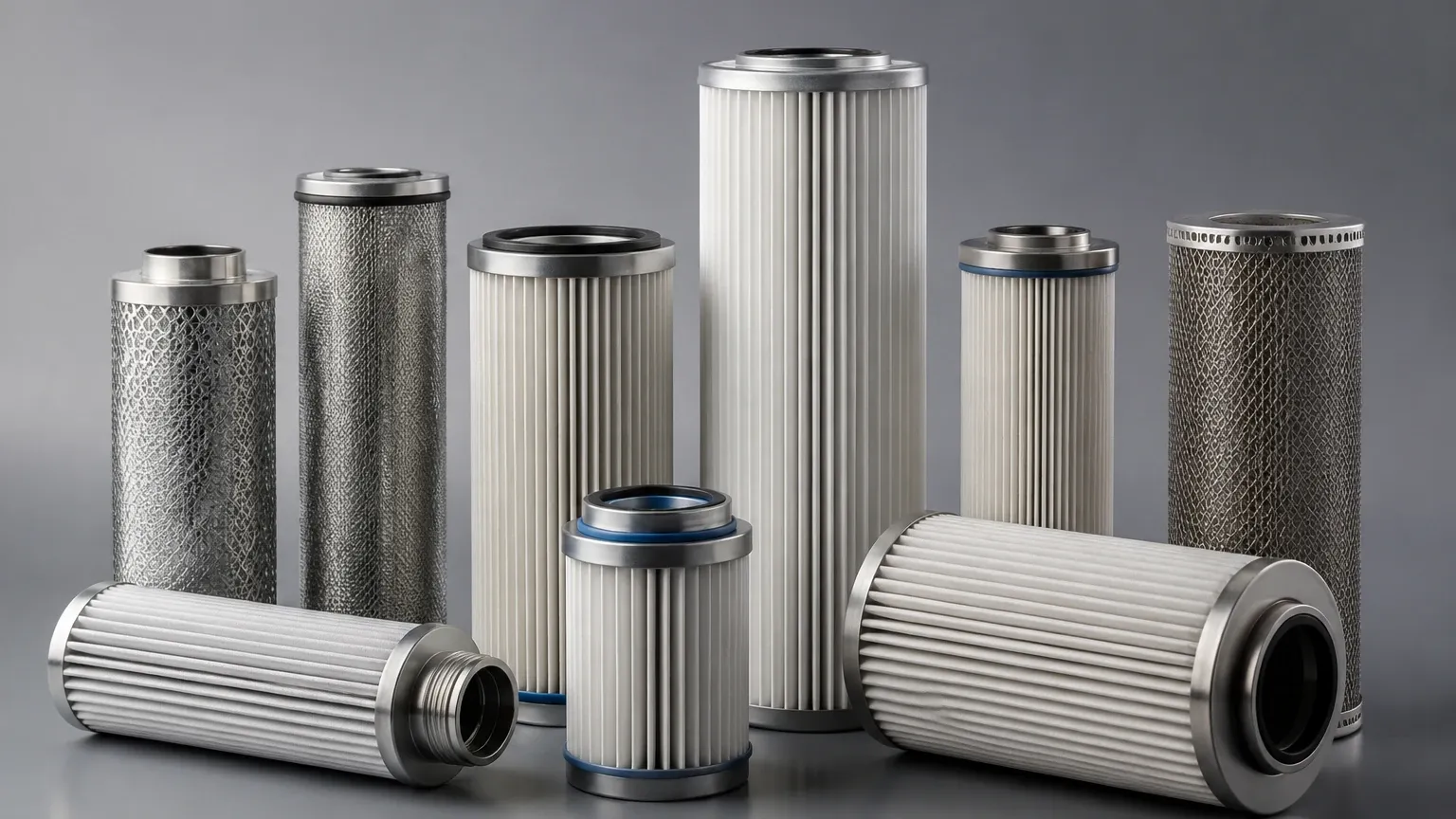
For applications where a standard filter cartridge donaldson may not provide the necessary durability, stainless steel wire mesh and sintered metal cartridges offer a robust alternative. Materials such as 304, 316, and 316L stainless steel provide:
* Temperature Resistance: Capable of operating in environments exceeding 500°C, where synthetic fibers would melt or degrade.
* Chemical Compatibility: Resistance to a wide range of acids, bases, and organic solvents, making them ideal for chemical processing and oil and gas applications.
* Mechanical Strength: The ability to withstand high collapse pressures, ensuring the filter does not bypass or rupture during pressure surges.
* Cleanability: Unlike disposable filters, stainless steel cartridges can be cleaned via backwashing, ultrasonic cleaning, or chemical baths, significantly extending their service life.
Evaluating Performance in Demanding Applications
Industrial filtration systems are often the last line of defense for expensive downstream equipment, such as turbines, compressors, and high-pressure pumps. When sourcing a filter cartridge donaldson, it is vital to consider how the cartridge interacts with the fluid dynamics of the entire system.
Pressure Drop ($ΔP$) and Flow Rates
The initial pressure drop across a clean filter cartridge is a key indicator of system efficiency. A high initial $ΔP$ means the system must work harder to move fluid, leading to increased energy consumption. Engineers must balance the need for fine filtration with the requirement for high flow rates. Stainless steel pleated cartridges are often designed to maximize surface area, which reduces the velocity of the fluid passing through the media (flux), thereby lowering the pressure drop and increasing the dirt-holding capacity.
Dirt-Holding Capacity (DHC)
DHC refers to the amount of contaminant a filter can retain before the pressure drop reaches a terminal level, necessitating a change-out or cleaning cycle. Factors affecting DHC include the pore structure of the media and the total effective filtration area. In heavy-duty industrial dust collection or liquid processing, a cartridge with optimized pleat geometry will outperform a standard flat-wrap design by providing more space for cake buildup without restricting flow.
Engineering Considerations for Custom Replacement Cartridges
Many facilities utilize Donaldson housings but require specialized performance that standard catalog items cannot meet. Custom-manufactured Filter Cartridges can be engineered to fit existing housings while upgrading the internal media and structural components.
Dimensional Accuracy and Fitment
To ensure a proper seal and prevent bypass, custom cartridges must adhere to precise tolerances. This includes the outer diameter (OD), inner diameter (ID), and overall length (OAL). Furthermore, the end cap configuration is vital. Common configurations include:
* Double Open End (DOE): Requires gaskets on both ends for sealing against the housing plates.
* Single Open End (SOE): Often features a threaded connection or a specific bayonet lock (e.g., Code 7 or Code 8) with O-rings to ensure a leak-proof seal.
Seal and Gasket Materials
The choice of sealing material is as important as the filter media itself. Depending on the chemical nature of the process fluid and the operating temperature, engineers may specify:
* Buna-N/Nitrile: Good for general oil and water applications.
* EPDM: Excellent for steam and polar solvents but poor for petroleum oils.
* Viton (FKM): High-temperature and chemical resistance.
* PTFE/Teflon: Near-universal chemical resistance, though with less elasticity.
Maintenance and Total Cost of Ownership (TCO)
In a B2B procurement context, the purchase price of a filter cartridge donaldson is only one component of the total cost. A comprehensive TCO analysis includes the cost of replacement labor, disposal fees for contaminated filters, energy costs related to pressure drop, and the potential cost of production downtime.
Disposable vs. Reusable Strategies
While the initial investment in a stainless steel filter cartridge is higher than a disposable synthetic version, the long-term savings can be substantial. In a high-volume chemical plant, replacing disposable filters every week creates a massive waste stream and labor burden. Transitioning to a cleanable stainless steel solution allows the facility to reuse the same cartridge for years. This not only reduces the cost per gallon filtered but also aligns with corporate sustainability goals by reducing industrial waste.
Monitoring and Replacement Cycles
To optimize the life of any filter cartridge, industrial systems should be equipped with differential pressure gauges. By monitoring the $ΔP$ trend, maintenance teams can perform "just-in-time" servicing rather than relying on arbitrary calendar schedules. This prevents the risk of running a blinded filter (which can cause pump cavitation or media migration) and avoids the waste of replacing a filter that still has useful life remaining.
Selecting the Right Filtration Partner
Achieving optimal filtration requires more than just a part number. It requires a partnership with a manufacturer that understands the nuances of fluid mechanics and material science. When looking for alternatives or upgrades to a filter cartridge donaldson, engineers should seek partners who offer:
1. OEM Capabilities: The ability to manufacture to exact specifications for existing equipment.
2. Material Expertise: Guidance on selecting the right grade of stainless steel or wire mesh weave (e.g., plain, twilled, or Dutch weave) for specific particle retention needs.
3. Quality Assurance: Rigorous testing protocols, including bubble point tests to verify pore size and pressure testing to ensure structural integrity.
4. Customization: The flexibility to design unique end caps, internal supports, or reinforced pleats for non-standard applications.
Kaifil specializes in these high-performance filtration solutions, providing the technical support and manufacturing precision necessary to meet the most demanding industrial requirements. Whether you are looking to replace a standard Filter Cartridges or develop a completely custom filtration component, focusing on engineering fundamentals ensures reliable, durable, and cost-effective performance.
By prioritizing technical specifications over generic marketing claims, purchasing teams and engineers can ensure that their filtration systems contribute to the overall efficiency and longevity of their industrial processes. Whether the application involves protecting a sensitive hydraulic system or ensuring the purity of a food and beverage product, the choice of filter cartridge remains a cornerstone of successful industrial engineering.
