


Filter Cartridge Drinking Water
In industrial and commercial water treatment, the selection of a filter cartridge drinking water system is a critical engineering decision that impacts water safety, system longevity, and operational costs. While residential applications often rely on simple carbon blocks or melt-blown polypropylene, industrial-scale drinking water production—such as in food and beverage processing, large-scale desalination pre-treatment, and municipal water distribution—requires more robust filtration solutions. Stainless steel filter cartridges have emerged as a primary choice for these demanding environments due to their durability, cleanability, and precise filtration performance.
Understanding the technical nuances of Filter Cartridges is essential for engineers and procurement professionals who must ensure that the filtration media can withstand high flow rates and pressure fluctuations while maintaining strict compliance with potable water standards.
Understanding the Role of Filter Cartridges in Drinking Water Systems
Filter cartridges serve as the mechanical barrier designed to remove suspended solids, sediment, and microbial contaminants from a water stream. In the context of drinking water, these cartridges are often deployed in multi-stage systems. They may act as pre-filters to protect sensitive reverse osmosis (RO) membranes or as final polishing filters to ensure the water meets specific clarity and safety benchmarks.
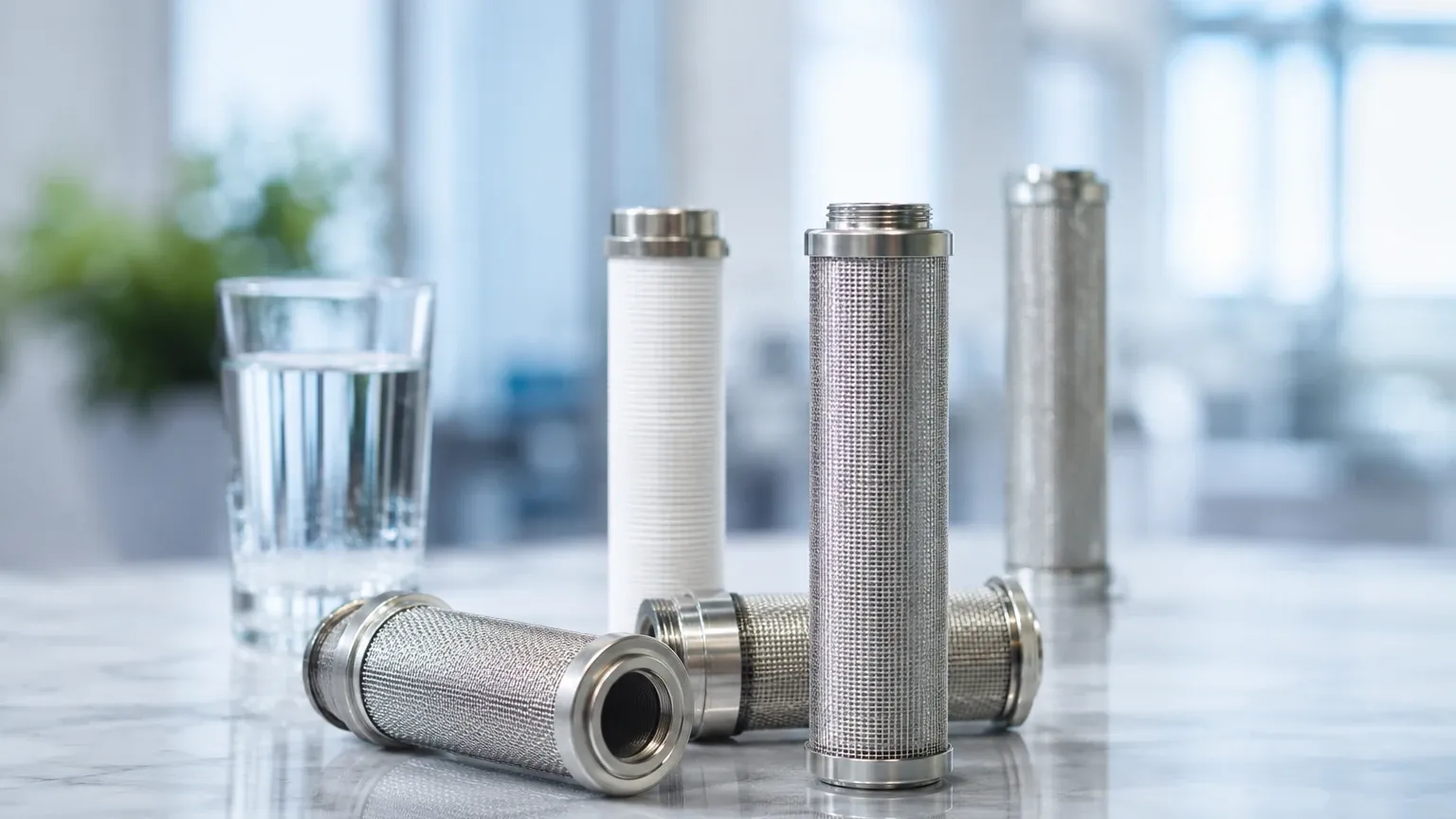
For industrial drinking water applications, the choice of material is paramount. While polymer-based cartridges are common, they are often considered consumables with a limited lifespan. Stainless steel filter cartridges, particularly those manufactured from 304 or 316L grades, offer a sustainable alternative. These metallic filters provide high mechanical strength and thermal stability, allowing them to operate in conditions where plastic filters might deform or fail. Furthermore, the non-leaching nature of high-grade stainless steel ensures that the filtration process does not introduce unwanted chemical byproducts into the water supply.
Technical Specifications for Filter Cartridge Drinking Water Applications
When evaluating a filter cartridge drinking water solution, engineers must look beyond basic dimensions and focus on the performance metrics that dictate filtration efficiency and system integration.
Micron Ratings: Absolute vs. Nominal
One of the most critical specifications is the micron rating. In drinking water filtration, a nominal rating refers to the ability of the filter to retain a major percentage (usually 60% to 80%) of particles of a specific size. However, for critical applications where the removal of specific cysts or fine particulates is required, an absolute micron rating is necessary. Absolute filtration ensures that 99.9% or more of particles above the specified size are captured. Stainless steel wire mesh and sintered metal cartridges can be engineered to provide precise absolute ratings ranging from 1 micron to several hundred microns.
Material Integrity and Corrosion Resistance
Drinking water can vary significantly in its chemical composition, including pH levels and chloride content. SS304 is often sufficient for standard potable water; however, in coastal areas or applications involving brackish water, SS316L is preferred due to its superior resistance to pitting and crevice corrosion. The structural integrity of the cartridge—including the end caps, inner support core, and outer protective cage—must be verified to ensure it can handle the hydraulic stresses of the system.
Seal and Interface Configurations
To prevent bypass, where unfiltered water escapes around the edges of the cartridge, the sealing mechanism must be robust. Common configurations include Double Open End (DOE) with flat gaskets or Single Open End (SOE) with O-ring seals (such as Code 7 or Code 3 fittings). For drinking water, the gasket and O-ring materials (typically EPDM or Silicone) must be food-grade and compliant with FDA or equivalent international standards.
Comparison of Metal Filter Media for Potable Water
Different manufacturing techniques result in various types of stainless steel media, each suited for specific challenges in drinking water filtration.
Woven Wire Mesh
This media consists of stainless steel wires woven into a precise geometric pattern. It is characterized by a uniform pore size and high open area, which translates to low pressure drop and high flow rates. Woven wire mesh is an excellent choice for removing sand, scale, and larger sediments. Its primary advantage is its ease of cleaning through backwashing or ultrasonic treatment.
Sintered Metal Fiber and Powder
Sintered media are created by bonding metal fibers or powders through a high-temperature heat treatment process without melting them. This creates a porous, rigid structure with high dirt-holding capacity. Sintered metal cartridges are ideal for fine filtration where depth-loading characteristics are required. They offer exceptional mechanical strength, making them suitable for high-pressure drinking water systems where pressure spikes may occur.
Pleated Stainless Steel Cartridges
By pleating the filter media (whether wire mesh or sintered fiber), manufacturers significantly increase the effective filtration surface area within the same footprint. For a filter cartridge drinking water application, a pleated design allows for higher flow rates and longer service intervals before the pressure differential reaches the cleaning threshold. This is particularly beneficial in systems with limited space but high volume requirements.
Engineering Selection Criteria for Industrial Water Filtration
Selecting the right filter involves a detailed analysis of the system's hydraulic and physical requirements. Engineers should consider the following factors during the design phase:
1. Flow Rate and Velocity: The velocity of the water passing through the media affects both filtration efficiency and the rate of pressure buildup. Over-sizing the filter area can lead to significantly longer cartridge life and reduced energy costs due to lower pump head requirements.
2. Pressure Differential ($ΔP$): The clean pressure drop should be kept as low as possible (typically under 2-3 psi). The terminal pressure drop—the point at which the filter must be cleaned or replaced—is usually determined by the structural limits of the media or the performance limits of the system pumps.
3. Contaminant Loading: Understanding the nature of the solids (e.g., hard sand vs. soft organic matter) helps in choosing between surface filtration (wire mesh) and depth filtration (sintered fiber).
4. Temperature and Chemical Compatibility: While drinking water is generally ambient, some industrial cleaning processes (CIP) involve hot water or mild caustic solutions. Stainless steel cartridges excel in these environments where polymer filters would degrade.
Maintenance, Cleaning, and Longevity of Stainless Steel Cartridges
One of the primary B2B advantages of stainless steel Filter Cartridges is their status as a permanent or semi-permanent asset rather than a recurring expense. Unlike disposable cartridges that contribute to landfill waste and require frequent purchasing cycles, metal cartridges can be regenerated.
Cleaning Methodologies
* Backwashing: Reversing the flow of water through the cartridge to dislodge surface-accumulated debris. This is often automated in large-scale drinking water plants.
* Ultrasonic Cleaning: For deep-seated particulates in sintered media, ultrasonic baths can restore the cartridge to near-original permeability by using high-frequency sound waves to create cavitation bubbles that scrub the metal surfaces.
* Chemical Cleaning: Using food-grade acids or bases to dissolve mineral scaling or organic bio-fouling, followed by thorough rinsing to ensure water safety.
Total Cost of Ownership (TCO)
While the initial capital expenditure for a stainless steel filter cartridge drinking water system is higher than for plastic alternatives, the TCO is often lower. Savings are realized through reduced downtime, eliminated disposal costs, lower shipping and inventory expenses for replacements, and consistent filtration performance over several years of service.
Custom OEM Solutions for Drinking Water Filtration
In many industrial settings, standard off-the-shelf cartridges may not meet the specific spatial or performance constraints of a legacy system or a specialized new build. Custom manufacturing allows for the optimization of every component of the filter.
Tailored Dimensions and End-Fittings
Customization ensures that the filter fits perfectly into existing housings, eliminating the need for expensive piping modifications. This includes custom lengths, diameters, and specialized flange or threaded connections.
Application-Specific Media Layering
For complex water profiles, manufacturers can create multi-layered sintered structures. For example, a coarse outer layer can act as a pre-filter for a fine inner layer, all within a single cartridge. This graduated density approach maximizes dirt-holding capacity and protects the finer filtration layer from premature clogging.
Quality Assurance and Compliance
For B2B partners, ensuring that the manufacturer adheres to rigorous quality control is non-negotiable. This involves bubble point testing to verify pore size integrity, material certification (MTRs) to confirm the alloy composition, and pressure testing to ensure structural reliability. When sourcing a filter cartridge drinking water component, confirming these technical benchmarks is the final step in securing a reliable filtration solution.
By focusing on high-performance materials and precise engineering, industrial operators can ensure their drinking water systems remain efficient, compliant, and cost-effective. Stainless steel filtration technology provides the necessary bridge between stringent safety requirements and the practical demands of heavy-duty industrial water processing.
