


Filter Cartridge Hydraulic
In industrial fluid power systems, the integrity of hydraulic components is directly proportional to the cleanliness of the fluid circulating through them. Contamination is the leading cause of hydraulic system failure, often resulting from particulate matter that induces abrasive wear, silt lock, or component fatigue. A high-performance filter cartridge hydraulic serves as the primary defense mechanism, ensuring that fluid cleanliness levels meet or exceed ISO 4406 standards. For engineers and maintenance professionals, selecting the appropriate filtration media and housing configuration is not merely a matter of maintenance, but a critical engineering decision that impacts the longevity and efficiency of pumps, valves, and actuators.
Understanding the Role of the Filter Cartridge Hydraulic in Fluid Power Systems
Hydraulic systems operate under varying pressures and flow rates, requiring filtration solutions that can withstand dynamic stresses while maintaining high capture efficiency. The role of a filter cartridge hydraulic extends beyond simple particle removal; it must manage fluid viscosity changes, pressure surges, and chemical interactions with the hydraulic medium.
In most industrial applications, filtration is categorized by its location within the circuit: suction side, pressure side, or return line. Suction filters protect the pump from large contaminants but must have low pressure drops to prevent cavitation. Pressure-side filters, often utilizing robust Filter Cartridges, are designed to protect sensitive downstream components like servo valves. Return-line filters capture wear debris generated within the system before the fluid returns to the reservoir. Each of these positions requires specific engineering considerations regarding collapse pressure and filtration fineness.
Engineering Considerations for Stainless Steel Media
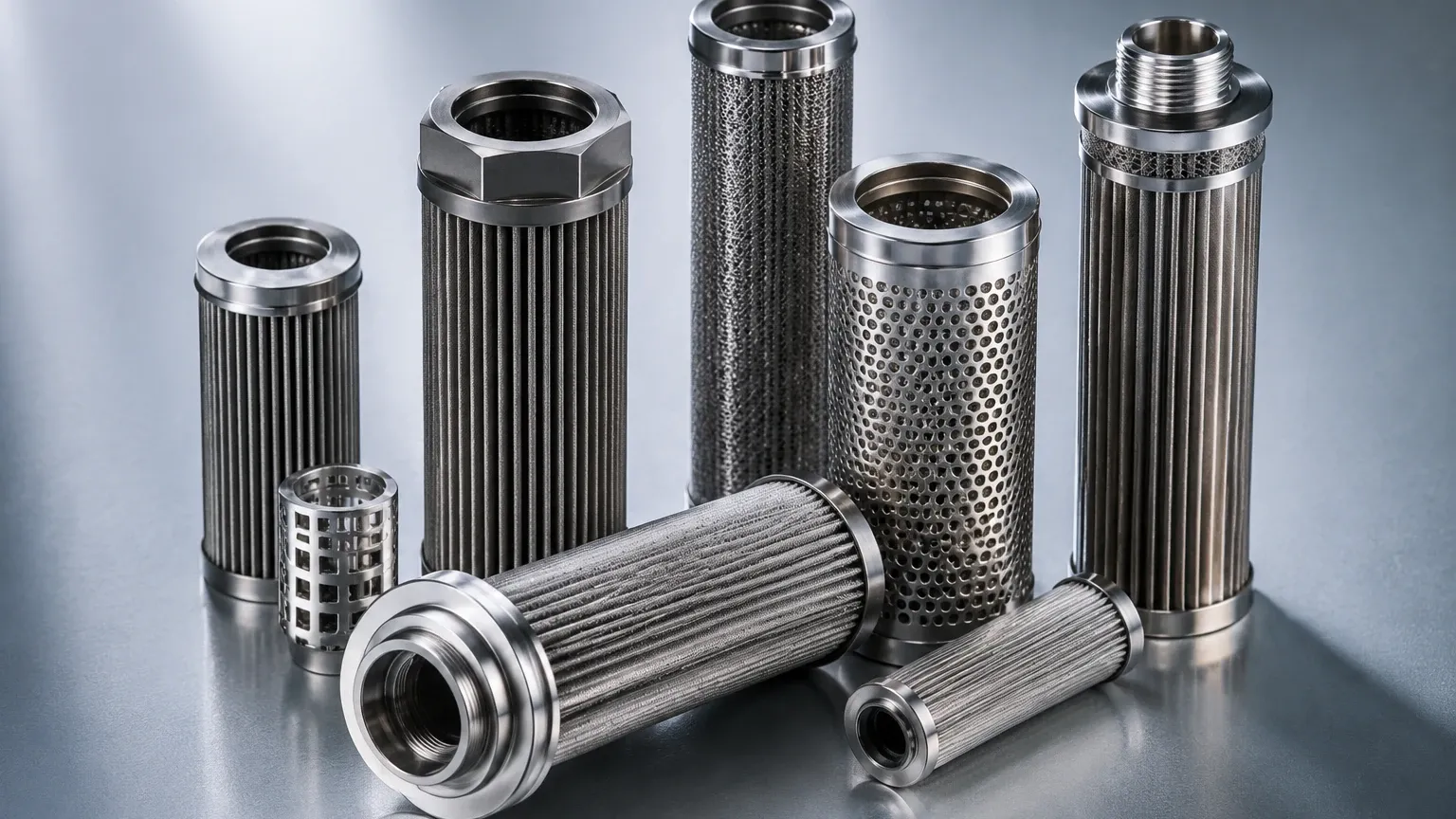
While disposable cellulose or synthetic fiber elements are common in light-duty applications, demanding industrial environments often necessitate the use of stainless steel wire mesh or sintered metal fiber. Kaifil specializes in manufacturing these durable filtration components, which offer several technical advantages over traditional media.
High Differential Pressure Tolerance
In hydraulic systems, cold starts or sudden valve closures can create significant pressure spikes. A stainless steel filter cartridge hydraulic is engineered to resist structural collapse under high differential pressure (ΔP). Unlike polymer-based media that may bypass or deform, stainless steel mesh maintains its pore geometry, ensuring consistent filtration performance even when the fluid is highly viscous or the flow rate is erratic.
Thermal and Chemical Stability
Hydraulic fluids are not limited to standard mineral oils. Many systems utilize water glycols, phosphate esters, or high-temperature synthetic fluids for fire resistance or environmental compliance. Stainless steel (typically SUS304 or 316L) provides the necessary corrosion resistance and thermal stability to operate in environments ranging from cryogenic temperatures to several hundred degrees Celsius, where organic binders in synthetic filters would fail.
Technical Specifications: Micron Ratings and Beta Ratios
When evaluating a filter cartridge hydraulic, engineers must look beyond nominal micron ratings. The industry standard for defining filtration efficiency is the Beta Ratio (β), derived from the Multi-pass Test (ISO 16889).
Absolute vs. Nominal Filtration
A nominal rating is an arbitrary micrometer value indicated by the manufacturer, often representing a 50% to 90% efficiency. In contrast, an absolute rating implies a higher efficiency, typically 98.7% or higher at a given micron size. For critical hydraulic circuits, absolute-rated cartridges are essential to prevent the "silt-sized" particles (typically 1–5 microns) from accumulating and causing premature component wear.
The Beta Ratio Explained
The Beta ratio is calculated by dividing the number of particles of a specific size upstream of the filter by the number of particles of the same size downstream. For example, a β10 = 1000 rating means that for every 1000 particles of 10 microns entering the filter, only one passes through. This represents 99.9% efficiency. High-performance hydraulic systems often require βx(c) ≥ 1000 to maintain the required fluid cleanliness levels for high-pressure piston pumps and proportional valves.
Material Compatibility and Structural Integrity
The construction of a filter cartridge hydraulic involves more than just the filtration media. The end caps, center tube, and sealing materials must all be compatible with the specific hydraulic fluid and operating conditions.
1. End Caps and Support Tubes: In heavy-duty industrial filtration, these are typically constructed from galvanized steel or stainless steel. The center tube must provide sufficient radial strength to prevent the media from collapsing inward under high flow velocities.
2. Sealing Materials: The choice of O-rings or gaskets is vital. Nitrile (Buna-N) is standard for mineral oils, while Viton (FKM) is preferred for high temperatures and aggressive synthetic fluids. EPDM may be used for specific phosphate ester applications, though it is incompatible with mineral oils.
3. Media Bonding: Kaifil utilizes advanced welding and bonding techniques to ensure that the filter media is securely attached to the end caps. This eliminates the risk of bypass, which is a common failure mode in lower-quality cartridges where adhesive bonding may degrade over time.
Customization Options for Industrial OEM Applications
Every hydraulic system has unique constraints regarding space, flow path, and environmental exposure. Off-the-shelf solutions often fail to meet the exact requirements of specialized machinery in the chemical, pharmaceutical, or food processing sectors. Customization of the filter cartridge hydraulic allows for optimized performance without compromising machine design.
Pleated vs. Cylindrical Designs
Pleating the stainless steel wire mesh significantly increases the effective filtration area within the same footprint. This results in a lower initial pressure drop and a higher dirt-holding capacity, which extends the service interval. For applications involving extremely high viscosity or low flow rates, a plain cylindrical wrap may be sufficient and more cost-effective.
Custom End Cap Configurations
OEMs often require specific mounting interfaces, such as threaded connections, bayonet styles, or specialized flange mounts. Kaifil’s manufacturing capabilities allow for the production of custom end caps that integrate seamlessly into existing housings, reducing the need for expensive system retrofits.
Performance Evaluation and Selection Criteria
To select the correct filter cartridge hydraulic, engineers should follow a systematic evaluation process that accounts for both the fluid properties and the system's sensitivity.
* Fluid Viscosity: Higher viscosity fluids (e.g., ISO VG 68 or 100) create higher pressure drops across the media. The filter surface area must be sized accordingly to ensure that the ΔP does not trigger the bypass valve during normal operation.
* Flow Velocity: Excessive velocity through the media can cause "particle migration," where captured contaminants are pushed through the pores. Sizing the filter for a lower flux (flow per unit area) improves capture efficiency.
* Target Cleanliness Level: Referencing the ISO 4406:1999 chart (e.g., 18/16/13), the filter must be capable of removing enough particles to stay below the threshold required by the most sensitive component in the system.
Maintenance and Replacement Cycles
The total cost of ownership (TCO) of a hydraulic system is heavily influenced by the maintenance strategy. Relying on fixed-time intervals for filter replacement often leads to either premature disposal of useful cartridges or, conversely, operating in a bypass state where no filtration occurs.
Differential Pressure Monitoring
The most effective way to determine when a filter cartridge hydraulic needs attention is through differential pressure monitoring. Indicators (visual or electrical) signal when the media is loaded with contaminants. For stainless steel wire mesh filters, this often indicates the need for cleaning rather than replacement. Many stainless steel elements can be ultrasonically cleaned or backwashed, providing a significant long-term cost advantage over disposable elements.
Predictive Maintenance and Oil Analysis
Regular oil analysis should complement filter maintenance. If a filter cartridge hydraulic is reaching its terminal pressure drop more quickly than usual, it may indicate an internal component failure or a breach in the system's seals, allowing external ingression. Monitoring the types of particles captured can provide early warning of pump or cylinder wear.
Conclusion: Optimizing Filtration Performance
Selecting a filter cartridge hydraulic is a balance between filtration efficiency, structural durability, and economic viability. For industrial applications where downtime is costly and equipment precision is paramount, stainless steel filtration solutions offer the reliability needed to maintain system health. By focusing on technical parameters such as Beta ratios, material compatibility, and pleated surface area, engineering teams can ensure their hydraulic systems operate at peak efficiency with minimal risk of contamination-related failure.
As a professional manufacturer, Kaifil provides the technical expertise and manufacturing flexibility required to develop customized Filter Cartridges that meet the rigorous demands of modern fluid power applications. Whether for standard hydraulic circuits or specialized industrial processes, the right filtration strategy is the foundation of mechanical reliability.
