


Filter Cartridge Hayward
In the realm of industrial and commercial water treatment, the efficiency of a filtration system is often dictated by the quality and compatibility of its internal components. Systems utilizing a filter cartridge hayward configuration are widely recognized for their reliability in high-flow applications, ranging from commercial aquatic facilities to light industrial process water management. However, for engineers and procurement professionals operating in demanding industrial environments—such as chemical processing, food and beverage production, or pharmaceutical manufacturing—understanding the technical nuances of these cartridges is essential for optimizing system performance and reducing the total cost of ownership.
Selecting the right filtration media involves more than matching dimensions. It requires a deep dive into material science, fluid dynamics, and the specific mechanical stresses of the application. While standard synthetic cartridges serve many purposes, industrial-grade upgrades, particularly those utilizing stainless steel wire mesh, offer distinct advantages in terms of durability, temperature resistance, and cleanability.
Technical Specifications and Design Principles
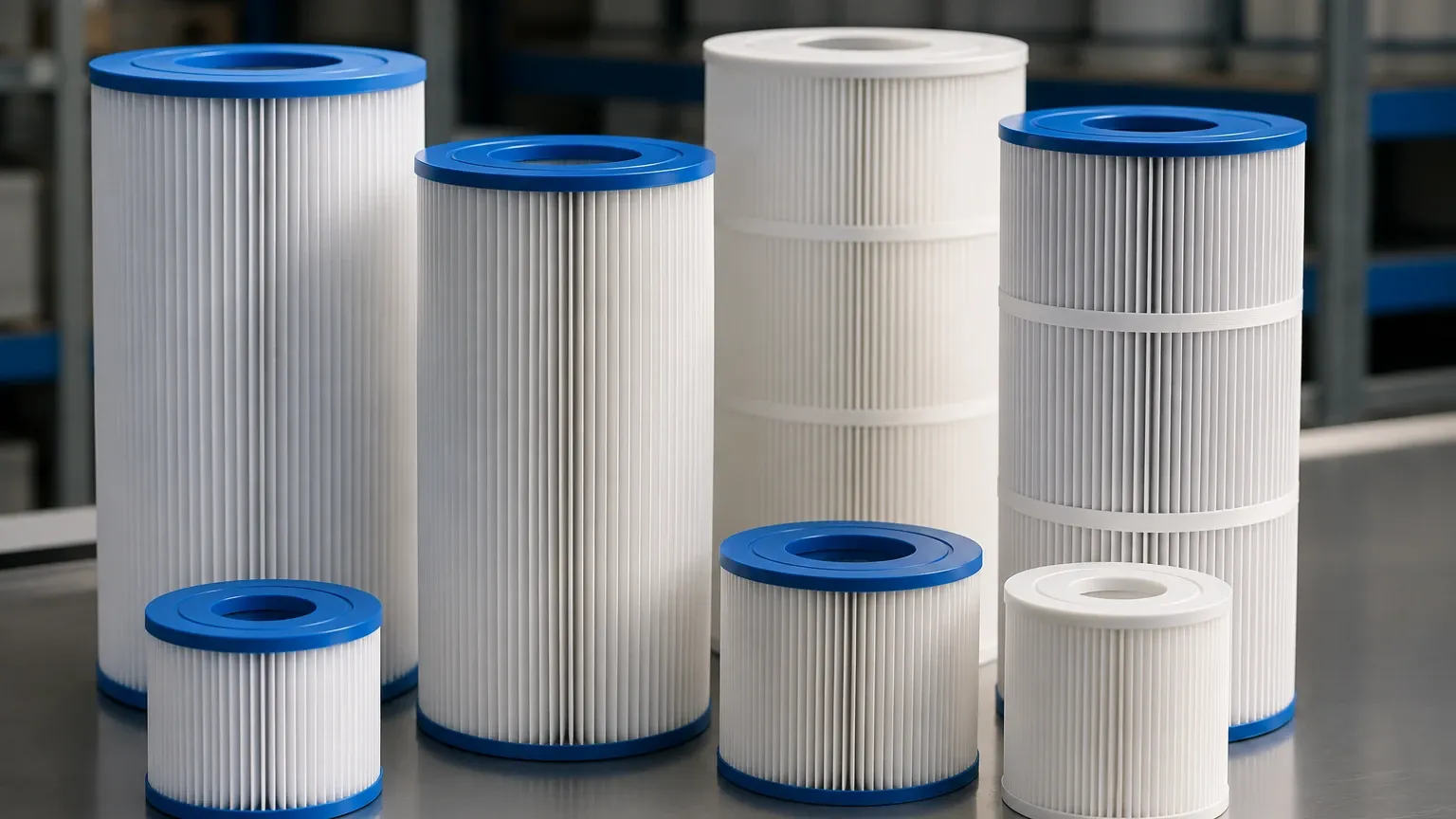
The fundamental design of a filter cartridge hayward system focuses on maximizing the effective filtration area (EFA) within a compact housing. High EFA is typically achieved through pleating the filter media. In standard configurations, this media is often a reinforced polyester or a specialized synthetic fiber. The pleat count and depth are engineered to balance two competing factors: dirt-holding capacity and initial pressure drop.
From an engineering perspective, the micron rating is the primary metric. Cartridges are available in various grades, typically ranging from 5 to 50 microns for standard water applications. However, it is critical to distinguish between nominal and absolute ratings. A nominal rating indicates the ability of the filter to retain a majority of particulates of a certain size, whereas an absolute rating (common in high-precision Filter Cartridges) guarantees the retention of nearly 100% of particles at the specified micron level.
Structural integrity is another key consideration. As a filter accumulates debris, the differential pressure ($ΔP$) across the media increases. If the cartridge core or the media itself is not sufficiently robust, the pressure can cause pleat collapse or bypass, leading to downstream contamination. Industrial users often look for reinforced cores and high-strength end caps to prevent these failures.
Material Compatibility: Synthetic vs. Stainless Steel
While polyester and other polymers are suitable for ambient temperature water filtration, they often fall short in aggressive industrial environments. This is where the transition to stainless steel filtration components becomes necessary. As a professional manufacturer, Kaifil specializes in bridging the gap between standard commercial designs and high-performance industrial requirements.
Synthetic Media Limitations
Standard synthetic cartridges used in Hayward-style housings may face challenges such as:
* Temperature Sensitivity: Most polymers lose structural integrity above 60°C (140°F).
* Chemical Degradation: Exposure to solvents, high-concentration chlorine, or extreme pH levels can embrittle synthetic fibers.
* Single-Use Nature: While some synthetic cartridges are washable, they eventually degrade and must be disposed of, increasing operational waste.
The Stainless Steel Advantage
Upgrading to stainless steel wire mesh or sintered metal cartridges provides several industrial benefits:
* Thermal Resistance: Stainless steel can operate in temperatures exceeding 250°C, making it ideal for steam filtration or hot process fluids.
* Chemical Inertness: 304 and 316L stainless steel offer superior resistance to a wide range of corrosive agents.
* Permanent Media: Unlike synthetic alternatives, stainless steel cartridges are fully cleanable via backwashing, ultrasonic cleaning, or chemical soaking, significantly extending the service life.
Optimizing Flow Rates and Pressure Management
In any system utilizing a filter cartridge hayward setup, maintaining a consistent flow rate is vital for process stability. The flow rate is influenced by the viscosity of the fluid, the micron rating of the media, and the available surface area. Engineers must calculate the flux—the flow rate per unit area—to ensure the system does not exceed the recommended face velocity for the chosen media.
Excessive flow rates through a restricted area lead to high initial pressure drops, which prematurely triggers the need for a cleaning cycle or replacement. By utilizing precision-engineered wire mesh, manufacturers can achieve high porosity levels, which allow for higher flow rates with lower resistance compared to thick felt or depth-style synthetic media.
Furthermore, monitoring the differential pressure is the most effective way to determine the health of the filter. Most industrial systems are equipped with pressure gauges on the inlet and outlet. A common rule of thumb is to initiate cleaning or replacement when the differential pressure reaches 10-15 PSI (0.7-1.0 bar) above the clean start-up pressure. For stainless steel upgrades, this threshold can often be higher due to the superior mechanical strength of the metal mesh.
Custom OEM Solutions for Industrial Housings
One of the challenges faced by maintenance engineers is sourcing high-performance replacements for proprietary housing designs. While the filter cartridge hayward dimensions are standardized for specific models, unique industrial processes often require customized internal configurations. This is where OEM manufacturing capabilities become critical.
Customization options for industrial filter cartridges include:
* Bespoke Dimensions: Modifying the length, outer diameter, and inner diameter to fit existing housings while optimizing the internal volume.
* End Cap Configurations: Providing specialized gaskets (EPDM, Viton, PTFE) and end cap styles (DOE, 222, 226) to ensure a leak-proof seal.
* Layered Filtration: Combining different mesh counts in a single cartridge to provide graduated filtration, effectively acting as a pre-filter and fine filter in one unit.
* Reinforced Support: Adding external cages or internal perforated cores to withstand high-pressure surges or vacuum conditions.
By working with a specialized manufacturer like Kaifil, companies can obtain custom stainless steel cartridges that drop directly into their existing systems, providing an immediate upgrade in durability and filtration precision.
Maintenance, Cleaning, and Lifecycle Considerations
The transition from disposable to cleanable filtration components is a significant factor in reducing the total cost of ownership. For a standard filter cartridge hayward installation in a commercial setting, replacement is the norm. However, in an industrial B2B context, the downtime and procurement costs associated with frequent replacements are often unacceptable.
Cleaning Procedures for Metal Cartridges
Stainless steel cartridges can be restored to near-original differential pressure through several methods:
1. Backwashing: Reversing the flow of clean fluid to dislodge surface particulates.
2. Ultrasonic Cleaning: Using high-frequency sound waves in a cleaning solvent to remove fine particles trapped deep within the mesh or sintered structure.
3. Chemical Cleaning: Utilizing acids or alkalis to dissolve organic or mineral scaling, provided the chemical is compatible with the stainless steel grade.
Lifecycle Analysis
When evaluating the cost of a filter cartridge, engineers should look beyond the initial purchase price. A synthetic cartridge may be cheaper upfront, but when factoring in the cost of frequent replacements, disposal fees for contaminated media, and the labor required for change-outs, a high-quality stainless steel cartridge often proves more economical over a 2-to-5-year period.
Engineering Checklist for Filter Selection
Before finalizing a purchase or specifying a replacement for a filter cartridge hayward system, technical teams should confirm the following parameters:
* Fluid Characteristics: What is the chemical composition, viscosity, and temperature of the fluid?
* Contaminant Profile: Are the particles hard, soft, fibrous, or gelatinous? What is the expected particle size distribution?
* Operating Pressure: What is the maximum system pressure and the maximum allowable differential pressure?
* Flow Requirements: What is the required gallons per minute (GPM) or cubic meters per hour ($m^3/h$)?
* Regulatory Compliance: Does the filter need to meet FDA, 3A, or other industry-specific sanitary standards?
By addressing these questions, engineers can ensure they select a filtration solution that not only fits the physical dimensions of their housing but also stands up to the rigors of their specific industrial environment.
Conclusion
Whether maintaining a standard water treatment system or upgrading a complex industrial process, the choice of filter cartridge is a pivot point for operational efficiency. While the filter cartridge hayward remains a staple for many applications, the demands of modern industry often necessitate the superior properties of stainless steel and precision-engineered metal mesh. By focusing on material compatibility, structural integrity, and cleanability, purchasing teams can secure filtration components that provide reliable, long-term performance. For those seeking specialized designs or high-durability alternatives, exploring professional Filter Cartridges solutions is the most effective path toward optimized filtration and reduced operational overhead.
