


Filter Cartridge I
In the landscape of industrial fluid processing, the selection of filtration components is a critical engineering decision that directly impacts system efficiency, product purity, and equipment longevity. The term filter cartridge i often refers to industrial-grade filtration units designed to withstand rigorous operating conditions that standard commercial filters cannot endure. For engineers and procurement specialists, understanding the technical nuances of these components is essential for optimizing process uptime and minimizing the total cost of ownership.
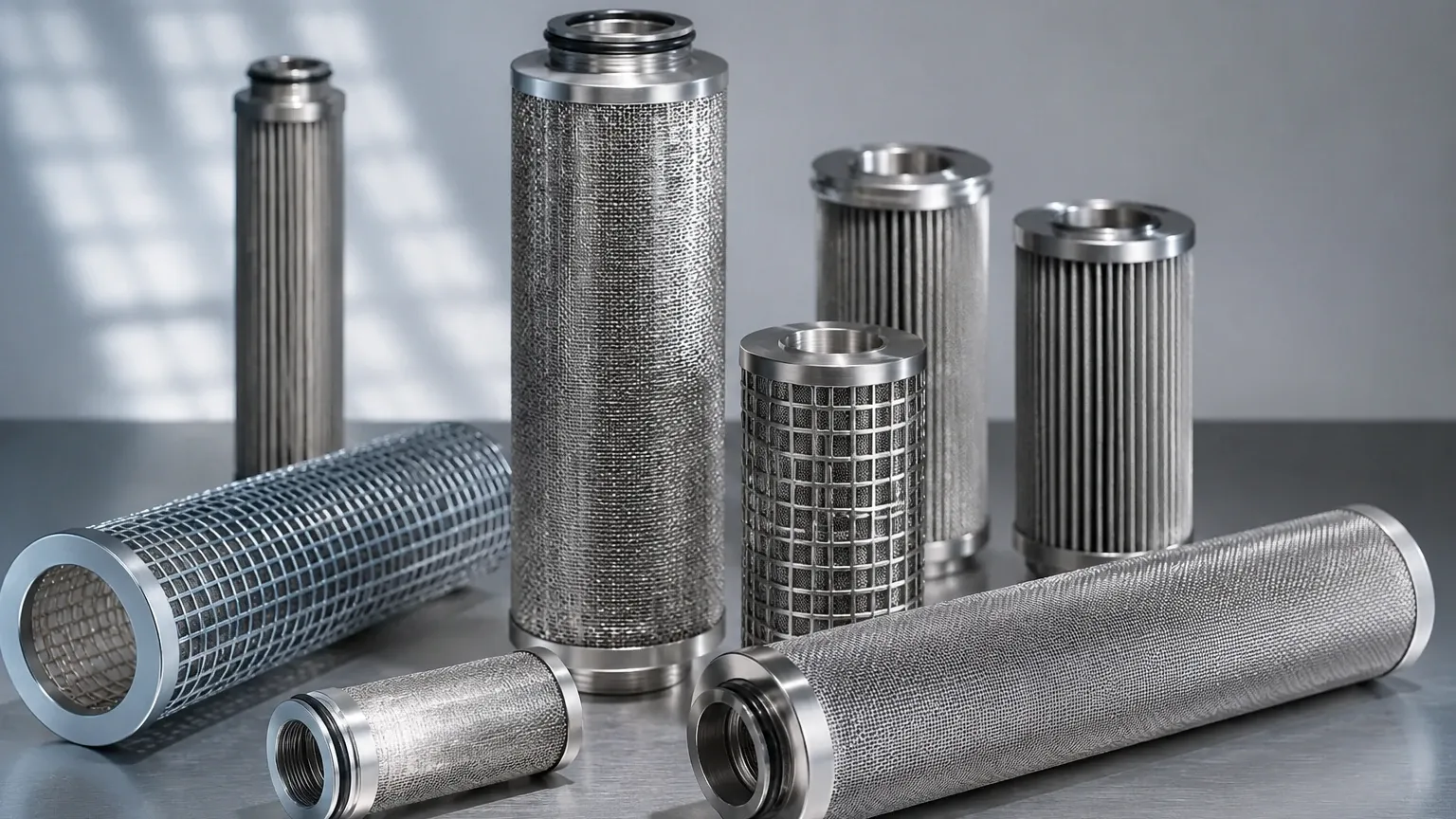
Stainless steel Filter Cartridges represent the pinnacle of durability in this category. Unlike polymer-based alternatives, metal filtration elements offer unmatched thermal stability, chemical compatibility, and mechanical strength. This guide examines the engineering fundamentals, selection criteria, and application-specific considerations for high-performance industrial filter cartridges.
Engineering Fundamentals of Industrial Filter Cartridges
Industrial filtration requires a balance between flow rate, pressure drop, and particle retention. When evaluating a filter cartridge i for heavy-duty service, the construction methodology is the first point of technical assessment. Most high-performance metal cartridges are manufactured using one of three primary media types: stainless steel wire mesh, sintered metal fiber, or sintered metal powder.
Material Selection: 304 vs. 316L Stainless Steel
The choice of alloy is the foundation of the filter’s performance. While 304 stainless steel is suitable for general industrial water treatment and mild chemical environments, 316L is the standard for more aggressive applications. The addition of molybdenum in 316L provides superior resistance to pitting and crevice corrosion, particularly in chloride-rich environments or high-temperature acidic processes. For specialized pharmaceutical or food and beverage applications, the low carbon content of 316L also ensures better weld integrity and resistance to intergranular corrosion.
Structural Design: Pleated vs. Cylindrical
The geometry of the filter medium determines the effective filtration area.
- Pleated Cartridges: By folding the stainless steel mesh or fiber felt, manufacturers significantly increase the surface area within the same footprint. This design is ideal for high-flow applications where a low initial pressure drop is required. It also extends the service life between cleaning cycles by distributing the contaminant load over a larger area.
- Cylindrical (Plain) Cartridges: These are typically used in applications where high mechanical strength is more important than surface area. They are easier to clean and are often preferred for high-viscosity fluids or processes where backwashing is frequent.
Technical Performance Criteria
To specify the correct filter cartridge i for a system, engineers must look beyond nominal dimensions and focus on performance metrics that define filtration efficiency.
Micron Ratings and Filtration Efficiency
Filtration accuracy is defined by the micron rating, but it is vital to distinguish between "nominal" and "absolute" ratings.
- Nominal Rating: This indicates the filter's ability to retain a major percentage (usually 60% to 90%) of particles of a specified size. It is a general guide but lacks precision for critical processes.
- Absolute Rating: This is the diameter of the largest hard spherical particle that will pass through the filter under specified test conditions. In industrial settings where downstream equipment protection is paramount, absolute-rated stainless steel cartridges are the industry standard.
Pressure Drop (Delta P) and Flow Dynamics
The clean pressure drop is the resistance the filter medium offers to the fluid flow. A high initial pressure drop limits the available "dirt-holding capacity" before the filter reaches its terminal pressure drop (the point where it must be cleaned or replaced). Factors influencing Delta P include the fluid viscosity, flow velocity, and the pore structure of the filter medium. Engineering a system with a larger filtration area typically results in a lower Delta P, which reduces energy consumption for pumps and extends the interval between maintenance cycles.
Customization and OEM Capabilities
One of the primary advantages of working with a specialized manufacturer like Kaifil is the ability to customize the filter cartridge i to meet specific housing requirements or process conditions. Standardized filters often fail to meet the unique demands of proprietary industrial systems.
End Cap Configurations
The sealing mechanism of a filter cartridge is as important as the media itself. Common industrial configurations include:
- DOE (Double Open End): Requires flat gaskets at both ends for sealing.
- SOE (Single Open End): Often features a 222 or 226 O-ring configuration with a bayonet lock or fin for secure positioning and bypass prevention.
- Threaded Connections: NPT or BSP threaded ends are used for high-pressure applications where a mechanical seal is necessary to prevent the cartridge from shifting under hydraulic shock.
Dimensional Customization
While 10-inch, 20-inch, and 30-inch lengths are standard, many industrial housings require non-standard diameters or lengths. Custom fabrication allows for the integration of internal support cores (to prevent collapse under high differential pressure) or external cages (to protect the delicate pleated media during handling and installation).
Selection Guide for Industrial Applications
The application environment dictates the necessary specifications for an industrial filter cartridge i. Selecting a filter without considering the chemical and thermal context can lead to premature failure or process contamination.
Chemical Processing
In the chemical industry, filters must withstand aggressive solvents, acids, and bases. Stainless steel cartridges are preferred here because they do not leach extractables into the process stream, a common issue with polymer filters. Engineers must confirm the compatibility of the O-ring material (e.g., Viton, EPDM, or PTFE) in addition to the metal alloy.
Food and Beverage Production
For food-grade applications, the filter must comply with hygiene standards. Stainless steel cartridges are inherently non-toxic and can withstand Steam-In-Place (SIP) and Clean-In-Place (CIP) sterilization processes. The smooth surface finish of sintered metal ensures that no bacteria can harbor in crevices, maintaining the integrity of the production line.
Hydraulic and Lubrication Systems
High-pressure hydraulic systems require filters that can handle rapid flow fluctuations and high viscosity. Sintered wire mesh cartridges are often used here because they provide the structural rigidity needed to resist deformation under high differential pressures, ensuring that sensitive valves and actuators remain protected from particulate wear.
Maintenance, Cleaning, and Total Cost of Ownership
A significant factor in the selection of a filter cartridge i is the transition from disposable to cleanable media. While the initial investment in a stainless steel cartridge is higher than that of a polypropylene melt-blown filter, the long-term economics often favor the metal option.
Cleaning Methods
Stainless steel cartridges can be regenerated multiple times, which drastically reduces the waste stream and recurring procurement costs. Common cleaning techniques include:
- Ultrasonic Cleaning: Uses high-frequency sound waves in a cleaning solution to dislodge fine particles from deep within the mesh or sintered pores.
- Backwashing: Reversing the flow of fluid through the filter to push contaminants off the surface.
- Chemical Cleaning: Using specific detergents or solvents to dissolve organic or inorganic scaling.
- Burn-off/Pyrolysis: For heavy polymer or organic loading, controlled heating can oxidize the contaminants without damaging the stainless steel structure.
Evaluating Replacement Cycles
Despite their cleanability, metal cartridges do have a finite lifespan. Over time, repeated cleaning and pressure cycles can lead to work hardening of the metal or permanent blinding of the pores. Engineers should monitor the "recovered" pressure drop after each cleaning. When the clean pressure drop begins to rise significantly above the original baseline, it indicates that the cartridge is reaching the end of its functional life.
Common Risks and Quality Assurance
When sourcing an industrial filter cartridge i, there are several risks that can compromise process safety. Substandard manufacturing can lead to media migration (where bits of the filter itself enter the process stream) or bypass (where fluid leaks around the seals).
Material Certification
Always demand material mill certificates to ensure the stainless steel grade is as specified. "Economy" filters may use lower-grade alloys that lack the necessary corrosion resistance, leading to rust and contamination in supposedly "stainless" systems.
Integrity Testing
For critical applications, filters should undergo integrity testing, such as the Bubble Point Test. This non-destructive test verifies that the pore size is within the specified range and that there are no defects in the welds or seals. Ensuring that the manufacturer performs these tests provides peace of mind that the Filter Cartridges will perform as expected upon installation.
Conclusion
The industrial filter cartridge i is more than a simple consumable; it is a precision-engineered component vital to the health of industrial processes. By focusing on material integrity, structural design, and specific application requirements, engineers can select filtration solutions that offer both high performance and long-term cost efficiency. Whether dealing with high temperatures, corrosive chemicals, or stringent hygiene standards, stainless steel filtration remains the most reliable choice for demanding industrial environments.
When evaluating your next filtration project, consider the benefits of customized engineering and the durability of metal media to ensure your system operates at peak efficiency.
